Building Blocks
This section contains fundamental products for the synthesis of organic and biological compounds. Building blocks are the essential starting materials used to construct complex molecules through various chemical reactions. They play a critical role in drug discovery, material science, and chemical research. At CymitQuimica, we offer a diverse range of high-quality building blocks to support your innovative research and industrial projects, ensuring you have the essential components for successful synthesis.
Subcategories of "Building Blocks"
- Boronic Acids & Boronic Acid Derivatives(5,778 products)
- Chiral Building Blocks(1,242 products)
- Hydrocarbon Building Blocks(6,098 products)
- Organic Building Blocks(61,034 products)
Found 199601 products of "Building Blocks"
Sort by
Purity (%)
0
100
|
0
|
50
|
90
|
95
|
100
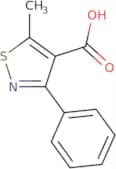
5-Methyl-3-phenyl-1,2-thiazole-4-carboxylic acid
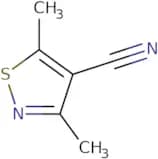
CAS:<p>Versatile small molecule scaffold</p>Formula:C11H9NO2SPurity:Min. 95%Molecular weight:219.26 g/molDimethyl-1,2-thiazole-4-carbonitrile
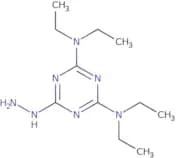
CAS:<p>Versatile small molecule scaffold</p>Formula:C6H6N2SPurity:Min. 95%Molecular weight:138.19 g/molN2,N2,N4,N4-Tetraethyl-6-hydrazinylidene-3,6-dihydro-1,3,5-triazine-2,4-diamine
CAS:Tetrodotoxin is a potent neurotoxin that blocks the transfer of nerve impulses. It is used as a pharmacological treatment for diseases of the urinary tract such as bladder and urethral spasms, bladder dysfunction, and urinary retention. Tetrodotoxin can also be used for the treatment of other conditions that affect the target tissue such as stenosis or cavity. This drug has been shown to be beneficial in autoimmune diseases, inflammatory diseases, and infections. Tetrodotoxin is implanted into the body through devices such as catheters or balloons to treat these conditions. The drug has anticholinergic properties which may cause side effects like dry mouth, blurred vision, difficulty urinating, and dizziness.Formula:C11H23N7Purity:Min. 95%Molecular weight:253.35 g/mol2-Ethylpiperazine Dihydrochloride
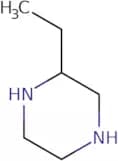
CAS:<p>2-Ethylpiperazine Dihydrochloride (2EP) is an activated form of piperazine that is used in databases for the study of reactions involving aldehydes and dehydrogenases. 2EP has been shown to be a competitive inhibitor of 11β-hydroxysteroid dehydrogenase, which is an enzyme involved in the conversion of cortisone to cortisol. It also has been shown to inhibit the production of formaldehyde from cyclooctane, as well as to catalyze the oxidation of pyridine. 2EP is an important part of optimization studies for catalysis and can also act as a catalyst itself.</p>Formula:C6H14N2ClHPurity:Min. 95%Molecular weight:187.11 g/molMethyl 1,4-dihydroxyisoquinoline-3-carboxylate
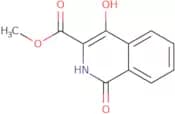
CAS:Versatile small molecule scaffoldFormula:C11H9NO4Purity:Min. 95%Molecular weight:219.19 g/mol3-bromo-5-methoxy-2-methylbenzoic acid
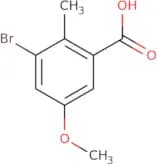
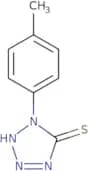
CAS:<p>Versatile small molecule scaffold</p>Formula:C9H9BrO3Purity:Min. 95%Molecular weight:245.07 g/mol1-(4-Methylphenyl)-1H-1,2,3,4-tetrazole-5-thiol
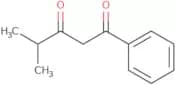
CAS:<p>Versatile small molecule scaffold</p>Formula:C8H8N4SPurity:Min. 95%Molecular weight:192.24 g/mol4-Methyl-1-phenylpentane-1,3-dione
CAS:<p>4-Methyl-1-phenylpentane-1,3-dione is a small molecule that can be used as a vaccine adjuvant. It has been shown to increase the immune response to influenza vaccination in mice and also induces an antibody response against Streptococcus pneumoniae in mice. 4MPPD also inhibits the activity of matrix metalloproteinase (MMP)-9, which is involved in chronic airway inflammation and bronchiolitis obliterans syndrome (BOS). This compound is synthesized from methyl 4-(4-methylphenyl)pentanoate by hydrolysis with subtilisin. The reaction products are then incubated with various fatty acids to produce the final product.</p>Formula:C12H14O2Purity:Min. 95%Molecular weight:190.24 g/mol5-Bromo-2-methylbenzo[b]thiophene-1,1-dioxide
CAS:<p>Versatile small molecule scaffold</p>Formula:C9H7BrO2SPurity:Min. 95%Molecular weight:259.12 g/mol[2-(Phenylsulfanyl)phenyl]methanamine
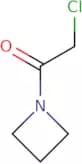
CAS:<p>Versatile small molecule scaffold</p>Formula:C13H13NSPurity:Min. 95%Molecular weight:215.32 g/mol1-Azetidin-1-yl-2-chloro-ethanone
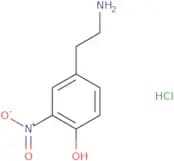
CAS:<p>Versatile small molecule scaffold</p>Formula:C5H8ClNOPurity:Min. 95%Molecular weight:133.58 g/mol4-(2-Aminoethyl)-2-nitrophenol hydrochloride
CAS:<p>Versatile small molecule scaffold</p>Formula:C8H11ClN2O3Purity:Min. 95%Molecular weight:218.6 g/molethyl 1-aminocyclohexane-1-carboxylate hydrochloride
CAS:<p>Versatile small molecule scaffold</p>Formula:C9H18ClNO2Purity:Min. 95%Molecular weight:207.7 g/mol1-Ethyl-3,5-dimethyl-1H-pyrazol-4-ylamine
CAS:<p>Versatile small molecule scaffold</p>Formula:C7H13N3Purity:Min. 95%Molecular weight:139.2 g/mol1-Cyclohexyl-3,5-dimethyl-1H-pyrazol-4-amine
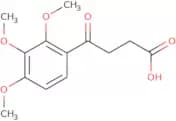
CAS:<p>Versatile small molecule scaffold</p>Formula:C11H19N3Purity:Min. 95%Molecular weight:193.29 g/mol4-(2,3,4-Trimethoxyphenyl)-4-oxobutyric acid
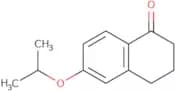
CAS:<p>Versatile small molecule scaffold</p>Formula:C13H16O6Purity:Min. 95%Molecular weight:268.26 g/mol6-iso-Propoxy-3,4-dihydro-2H-naphthalen-1-one
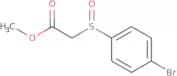
CAS:<p>Versatile small molecule scaffold</p>Formula:C13H16O2Purity:Min. 95%Molecular weight:204.27 g/molMethyl 2-(4-bromobenzenesulfinyl)acetate
CAS:<p>Versatile small molecule scaffold</p>Formula:C9H9BrO3SPurity:Min. 95%Molecular weight:277.14 g/mol2-Chloro-6-(pyridin-4-yl)pyridine-3-carbonitrile
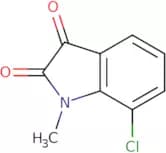
CAS:<p>Versatile small molecule scaffold</p>Formula:C11H6ClN3Purity:Min. 95%Molecular weight:215.64 g/mol7-Chloro-1-methyl-1H-indole-2,3-dione
CAS:<p>Versatile small molecule scaffold</p>Formula:C9H6ClNO2Purity:Min. 95%Molecular weight:195.6 g/mol

![5-Bromo-2-methylbenzo[b]thiophene-1,1-dioxide](/_next/image/?url=https%3A%2Fstatic.cymitquimica.com%2Fproducts%2F3D%2Fthumb-webp%2FNCA16690.webp&w=3840&q=75)
![[2-(Phenylsulfanyl)phenyl]methanamine](/_next/image/?url=https%3A%2Fstatic.cymitquimica.com%2Fproducts%2F3D%2Fthumb-webp%2FNCA16704.webp&w=3840&q=75)