Building Blocks
This section contains fundamental products for the synthesis of organic and biological compounds. Building blocks are the essential starting materials used to construct complex molecules through various chemical reactions. They play a critical role in drug discovery, material science, and chemical research. At CymitQuimica, we offer a diverse range of high-quality building blocks to support your innovative research and industrial projects, ensuring you have the essential components for successful synthesis.
Subcategories of "Building Blocks"
- Boronic Acids & Boronic Acid Derivatives(5,756 products)
- Chiral Building Blocks(1,242 products)
- Hydrocarbon Building Blocks(6,095 products)
- Organic Building Blocks(61,051 products)
Found 199813 products of "Building Blocks"
Sort by
Purity (%)
0
100
|
0
|
50
|
90
|
95
|
100
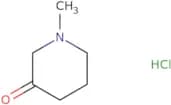
1-Methylpiperidin-3-one hydrochloride
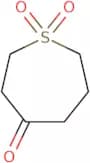
CAS:<p>Versatile small molecule scaffold</p>Formula:C6H12ClNOPurity:Min. 95%Molecular weight:149.62 g/mol4-Thiepanone 1,1-dioxide
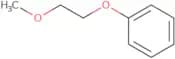
CAS:<p>Versatile small molecule scaffold</p>Formula:C6H10O3SPurity:Min. 95%Molecular weight:162.21 g/mol(2-Methoxyethoxy)benzene
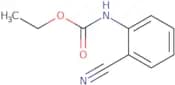
CAS:<p>2-Methoxyethoxybenzene is a supramolecular compound that is made up of two parts: a benzene ring with a methoxy group on one side and an ether group on the other. The conformers of this molecule can be studied by Raman spectroscopy and electron diffraction techniques. The resonance in the molecule gives 2-methoxyethoxybenzene its low vibrational frequency, which makes it easier to study using resonance techniques.</p>Formula:C9H12O2Purity:Min. 95%Molecular weight:152.19 g/molEthyl N-(2-cyanophenyl)carbamate
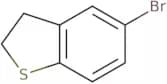
CAS:<p>Ethyl N-(2-cyanophenyl)carbamate is a cytostatic agent that binds to the alpha-tubulin monomer and inhibits its polymerization, leading to cell death. It has been shown to have an antiproliferative effect in vitro. This compound is synthesized by ring-opening of ethyl carbamic acid with 2-cyanophenyl chloroformate followed by deamination with methylamine hydrochloride. The yield of this reaction can be increased by using a microreactor for the synthesis steps.</p>Formula:C10H10N2O2Purity:Min. 95%Molecular weight:190.2 g/mol5-Bromo-2,3-dihydro-1-benzothiophene
CAS:<p>Versatile small molecule scaffold</p>Formula:C8H7BrSPurity:Min. 95%Molecular weight:215.11 g/mol5-Methyl-1,2,3,4-tetrahydroisoquinoline hydrochloride
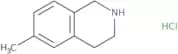
CAS:<p>Versatile small molecule scaffold</p>Formula:C10H14ClNPurity:Min. 95%Molecular weight:183.68 g/mol6-Methyl-1,2,3,4-tetrahydroisoquinoline hydrochloride
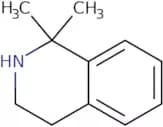
CAS:<p>Versatile small molecule scaffold</p>Formula:C10H14ClNPurity:Min. 95%Molecular weight:183.68 g/mol1,1-Dimethyl-1,2,3,4-tetrahydroisoquinoline
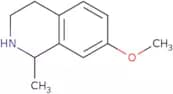
CAS:Versatile small molecule scaffoldFormula:C11H15NPurity:Min. 95%Molecular weight:161.24 g/mol7-Methoxy-1-methyl-1,2,3,4-tetrahydroisoquinoline
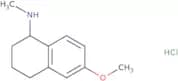
CAS:Versatile small molecule scaffoldFormula:C11H15NOPurity:Min. 95%Molecular weight:177.24 g/mol6-Methoxy-N-methyl-1,2,3,4-tetrahydronaphthalen-1-amine hydrochloride
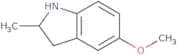
CAS:<p>Versatile small molecule scaffold</p>Formula:C12H18ClNOPurity:Min. 95%Molecular weight:227.73 g/mol5-Methoxy-2-methylindoline Hydrochloride
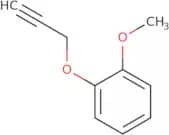
CAS:<p>Versatile small molecule scaffold</p>Formula:C10H13NO•HClPurity:Min. 95%Molecular weight:163.22 g/mol1-Methoxy-2-(prop-2-yn-1-yloxy)benzene
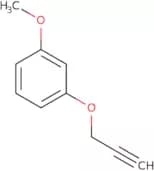
CAS:<p>Versatile small molecule scaffold</p>Formula:C10H10O2Purity:Min. 95%Molecular weight:162.19 g/mol1-Methoxy-3-(prop-2-yn-1-yloxy)benzene
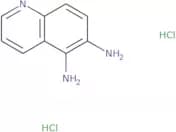
CAS:<p>Versatile small molecule scaffold</p>Formula:C10H10O2Purity:Min. 95%Molecular weight:162.18 g/molQuinoline-5,6-diamine dihydrochloride
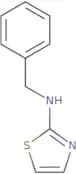
CAS:<p>Versatile small molecule scaffold</p>Formula:C9H11Cl2N3Purity:Min. 95%Molecular weight:232.11 g/molN-Benzyl-1,3-thiazol-2-amine
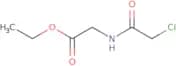
CAS:<p>Versatile small molecule scaffold</p>Formula:C10H10N2SPurity:Min. 95%Molecular weight:190.27 g/molN-(Chloroacetyl)glycine ethyl ester
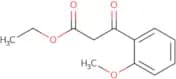
CAS:<p>N-(Chloroacetyl)glycine ethyl ester (CAGE) is a reactive, nucleophilic hydroxyl compound that has antibacterial activity. It is an amide of glycine and chloroacetic acid. CAGE has been shown to have good in vitro activity against gram-positive bacteria, such as methicillin-resistant Staphylococcus aureus and Clostridium perfringens. CAGE can be used in the preparation of polymeric matrices for drug delivery systems. N-(Chloroacetyl)glycine ethyl ester has been shown to yield chloride in the presence of protonation agents such as ethyl bromoacetate or sodium acetate.</p>Formula:C6H10ClNO3Purity:Min. 95%Molecular weight:179.6 g/molEthyl (2-Methoxybenzoyl)acetate
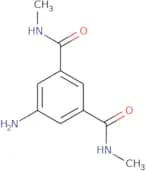
CAS:<p>Ethyl (2-methoxybenzoyl)acetate is a furan derivative that has two dihedral angles. It has a crystal structure with a benzene ring and a furan ring. Ethyl (2-methoxybenzoyl)acetate is soluble in most organic solvents and water but not in ether or hexane. It has a boiling point of 180 degrees Celsius and the molecular weight is 170.3 g/mol.</p>Formula:C12H14O4Purity:Min. 95%Molecular weight:222.24 g/mol5-Amino-N,N'-dimethylisophthalamide
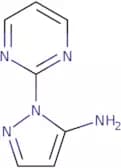
CAS:<p>Versatile small molecule scaffold</p>Formula:C10H13N3O2Purity:Min. 95%Molecular weight:207.23 g/mol1-(Pyrimidin-2-yl)-1H-pyrazol-5-amine
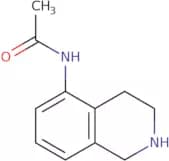
CAS:Versatile small molecule scaffoldFormula:C7H7N5Purity:Min. 95%Molecular weight:161.16 g/molN-(1,2,3,4-Tetrahydroisoquinolin-5-yl)acetamide
CAS:<p>Versatile small molecule scaffold</p>Formula:C11H14N2OPurity:Min. 95%Molecular weight:190.24 g/mol