Building Blocks
This section contains fundamental products for the synthesis of organic and biological compounds. Building blocks are the essential starting materials used to construct complex molecules through various chemical reactions. They play a critical role in drug discovery, material science, and chemical research. At CymitQuimica, we offer a diverse range of high-quality building blocks to support your innovative research and industrial projects, ensuring you have the essential components for successful synthesis.
Subcategories of "Building Blocks"
- Boronic Acids & Boronic Acid Derivatives(5,778 products)
- Chiral Building Blocks(1,242 products)
- Hydrocarbon Building Blocks(6,098 products)
- Organic Building Blocks(61,034 products)
Found 199601 products of "Building Blocks"
Sort by
Purity (%)
0
100
|
0
|
50
|
90
|
95
|
100
7,8-Dichloroquinoline
CAS:<p>7,8-Dichloroquinoline is a chlorinated quinoline that can be used as a marker for the identification of lactobacillus acidophilus. It has been shown to be an effective agent against l. acidophilus and other lactobacilli in vitro. The effect of 7,8-dichloroquinoline on the growth of lactobacillus species was studied using a nutrient agar medium containing potassium phosphate and calcium carbonate as nutrients. The results showed that 7,8-dichloroquinoline inhibited the growth of all strains tested except Lactobacillus pentosus and Lactobacillus brevis.</p>Formula:C9H5Cl2NPurity:Min. 95%Molecular weight:198.05 g/mol5,8-Dichloroquinoline
CAS:<p>Dichloroquinoline is a nitrated nitrogen heterocycle, which has been orientated to the para position. It is a precursor to a variety of other compounds, including 5,8-dichloroquinoline and 3-chloro-5,8-dichloroquinoline.</p>Formula:C9H5Cl2NPurity:Min. 95%Molecular weight:198.05 g/mol4-Bromo-N-methylbenzenesulfonamide
CAS:<p>Versatile small molecule scaffold</p>Formula:C7H8BrNO2SPurity:Min. 95%Molecular weight:250.11 g/molrac-(1R,2R)-1-(Propan-2-yl)cyclopropane-1,2-dicarboxylic acid
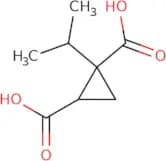
CAS:<p>Versatile small molecule scaffold</p>Formula:C8H12O4Purity:Min. 95%Molecular weight:172.2 g/mol4-Methylbicyclo[2.2.2]octane-1-carboxylic acid
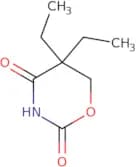
CAS:<p>Versatile small molecule scaffold</p>Formula:C10H16O2Purity:Min. 95%Molecular weight:168.23 g/mol5,5-Diethyl-1,3-oxazinane-2,4-dione
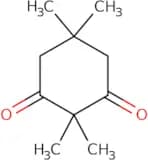
CAS:<p>5,5-Diethyl-1,3-oxazinane-2,4-dione is a water soluble plant growth regulator that belongs to the chemical class of hydroxylated dioximes. It has been shown to have biological properties in plants and is used as a soil wetting agent, but not as an herbicide. 5,5-Diethyl-1,3-oxazinane-2,4-dione has been shown to be highly resistant to microbial infection and have biocompatible properties. This compound was also found to be nonirritant in vitro and can be used as a sample preparation tool for kinetic studies. The compound is also useful for the detection of radiation in fatty acids.</p>Formula:C8H13NO3Purity:Min. 95%Molecular weight:171.19 g/mol2,2,5,5-Tetramethyl-1,3-cyclohexanedione
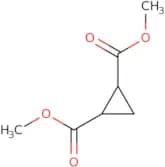
CAS:<p>Versatile small molecule scaffold</p>Formula:C10H16O2Purity:Min. 95%Molecular weight:168.23 g/molDimethyl cyclopropane-1,2-dicarboxylate
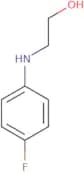
CAS:<p>Dimethyl cyclopropane-1,2-dicarboxylate (DMCPD) is a racemic antiviral agent that inhibits the synthesis of viral nucleic acids and proteins. It was developed as an intermediate for the production of allylstannanes and substituted cyclobutyls. DMCPD has been shown to inhibit the replication of influenza A virus in calf-thymus cells.</p>Formula:C7H10O4Purity:Min. 95%Molecular weight:158.15 g/mol2-(4-Fluoro-phenylamino)-ethanol
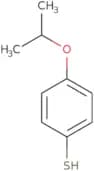
CAS:<p>Versatile small molecule scaffold</p>Formula:C8H10FNOPurity:Min. 95%Molecular weight:155.17 g/mol4-(Propan-2-yloxy)benzene-1-thiol
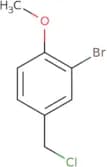
CAS:<p>4-(Propan-2-yloxy)benzene-1-thiol is a chemical that inhibits the enzyme acetyl-coa carboxylase. It is used in medicinal chemistry to create inhibitors of this enzyme. 4-(Propan-2-yloxy)benzene-1-thiol has been found to be selective for the inhibition of acetyl-coa carboxylase and not other enzymes such as malonyl coenzyme A carboxykinase. The high throughput screening of this compound has led to the discovery of new inhibitors with potential therapeutic benefits.</p>Formula:C9H12OSPurity:Min. 95%Molecular weight:168.26 g/mol2-Bromo-4-(chloromethyl)-1-methoxybenzene
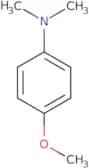
CAS:<p>2-Bromo-4-(chloromethyl)-1-methoxybenzene is a formaldehyde releaser that is used in the production of chloroacetamide. It is also used as an intermediate in organic chemistry, where it is acrylonitrile and chloride alkylation. The bromine atom in 2-bromo-4-(chloromethyl)-1-methoxybenzene can react to release formaldehyde, which may be toxic to humans. Formaldehyde exposure has been linked to cancer and other diseases.</p>Formula:C8H8BrClOPurity:Min. 95%Molecular weight:235.5 g/mol4-Methoxy-N,N-dimethylaniline
CAS:<p>4-Methoxy-N,N-dimethylaniline is a glycol ether that is used in active antiretroviral therapy. It is an effective contraceptive and has been shown to be safe for use in women. It has been shown to inhibit the polymerase chain reaction (PCR) of HIV-1 and HIV-2, as well as the DNA polymerases of hepatitis B virus and herpes simplex virus type 2. The drug does not affect the function of biological samples such as vaginal cells or semen, but does prevent water vapor from reaching them. 4-Methoxy-N,N-dimethylaniline also inhibits prostaglandin synthesis by binding to cyclooxygenase enzymes. This drug can cause stomach upset and nausea when taken orally, but these side effects are less pronounced when it is administered intravenously.</p>Formula:C9H13NOPurity:Min. 95%Molecular weight:151.21 g/mol1-(4-Fluorophenyl)propan-1-ol
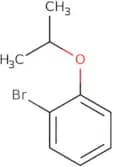
CAS:<p>Versatile small molecule scaffold</p>Formula:C9H11FOPurity:Min. 95%Molecular weight:154.18 g/mol1-Bromo-2-isopropoxybenzene
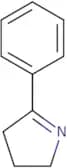
CAS:<p>Versatile small molecule scaffold</p>Formula:C9H11BrOPurity:Min. 95%Molecular weight:215.09 g/mol5-Phenyl-3,4-dihydro-2H-pyrrole
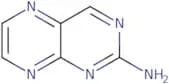
CAS:<p>5-Phenyl-3,4-dihydro-2H-pyrrole is a heterocyclic compound that is used in the synthesis of other chemicals. It can be positioned with a variety of functional groups and undergoes aromatisation by the cytochrome P450 enzyme system. 5-Phenyl-3,4-dihydro-2H-pyrrole reacts with perchlorates to form heterocycles such as pyrrolidine and activated pyrrole, which are used in supramolecular chemistry. 5PDP has been shown to react with haloalkanes to form bicyclic heterocycles such as 1,3,5-trioxane.</p>Formula:C10H11NPurity:Min. 95%Molecular weight:145.2 g/molPteridin-2-amine
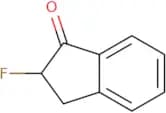
CAS:<p>Pteridin-2-amine is a calibration standard that is used to measure the covalent binding of metal ions to protein. It has been shown to have kidney toxicity and can cause liver damage. Pteridin-2-amine can be oxidized by O2 or NO3-, forming oxidation products containing nitrogen atoms, which are detected using voltammetry. The product has a high affinity for neopterin, a metabolic product that is released from eosinophils and mast cells in response to inflammatory stimuli. Pteridin-2-amine can inhibit the enzyme aldehyde oxidase and the activity of an enzyme called catalase, which helps protect cells from oxidative stress. This product has also been shown to form chromatographic peaks with oxygen atoms and sodium hydrogen when mixed with water.</p>Formula:C6H5N5Purity:Min. 95%Molecular weight:147.14 g/mol2-Fluoro-2,3-dihydro-1H-inden-1-one
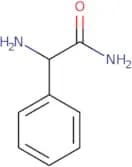
CAS:<p>2-Fluoro-2,3-dihydro-1H-inden-1-one is an enolate salt that has been shown to be effective as a ligand for palladium complexes. The compound is used in the photochemical production of cycloalkanones from allyl alcohols and ketones. 2-Fluoro-2,3-dihydro-1H-inden-1-one has also been used in the synthesis of chiral phosphine ligands. This chemical can be synthesized by reacting potassium phosphate with triflates in the presence of carbonyl compounds. It is also produced when uv irradiation interacts with enolates.</p>Formula:C9H7FOPurity:Min. 95%Molecular weight:150.15 g/mol2-Amino-2-phenylacetamide
CAS:<p>2-Amino-2-phenylacetamide is a model compound that has been used to study enzyme catalysis. It is an amide with a hydroxylamine group and an aromatic ring. 2-Amino-2-phenylacetamide inhibits the replication of DNA by binding to the protein polymerase, which blocks the transfer of amino acids from the tRNA molecule to the growing strand of DNA. This leads to apoptosis in cells that are susceptible to this type of inhibition. The synthesis of 2-Amino-2-phenylacetamide can be achieved through two methods: nitration of phenylacetic acid and oxidation of benzoic acid with nitric acid. Hydrochloric acid is required for both methods, as well as zinc chloride for the nitration method.<br>2-Amino-2-phenylacetamide is also known as succinoyl.</p>Formula:C8H10N2OPurity:Min. 95%Molecular weight:150.18 g/mol2-Cyclohexylidene-2-fluoroacetic acid
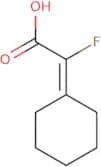
CAS:<p>2-Cyclohexylidene-2-fluoroacetic acid is a geometrically constrained molecule that has been synthesized and characterized by X-ray crystallography. The compound adopts three conformations, each of which is related to the other two by a rotation of the cyclohexane ring around the central fluoroacetate group.</p>Formula:C8H11FO2Purity:Min. 95%Molecular weight:158.17 g/mol1-(Propan-2-yl)-1,3-diazinane-2,4-dione
CAS:<p>Versatile small molecule scaffold</p>Formula:C7H12N2O2Purity:Min. 95%Molecular weight:156.18 g/mol


![4-Methylbicyclo[2.2.2]octane-1-carboxylic acid](/_next/image/?url=https%3A%2Fstatic.cymitquimica.com%2Fproducts%2F3D%2Fthumb-webp%2FAAA70267.webp&w=3840&q=75)