Building Blocks
This section contains fundamental products for the synthesis of organic and biological compounds. Building blocks are the essential starting materials used to construct complex molecules through various chemical reactions. They play a critical role in drug discovery, material science, and chemical research. At CymitQuimica, we offer a diverse range of high-quality building blocks to support your innovative research and industrial projects, ensuring you have the essential components for successful synthesis.
Subcategories of "Building Blocks"
- Boronic Acids & Boronic Acid Derivatives(5,778 products)
- Chiral Building Blocks(1,242 products)
- Hydrocarbon Building Blocks(6,098 products)
- Organic Building Blocks(61,098 products)
Found 199594 products of "Building Blocks"
Sort by
Purity (%)
0
100
|
0
|
50
|
90
|
95
|
100
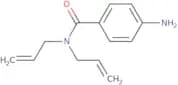
4-Amino-N,N-bis(prop-2-en-1-yl)benzamide
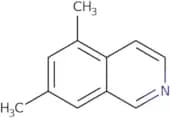
CAS:<p>Versatile small molecule scaffold</p>Formula:C13H16N2OPurity:Min. 95%Molecular weight:216.28 g/mol5,7-Dimethylisoquinoline
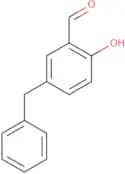
CAS:Versatile small molecule scaffoldFormula:C11H11NPurity:Min. 95%Molecular weight:157.21 g/mol5-Benzyl-2-hydroxybenzaldehyde
CAS:<p>Versatile small molecule scaffold</p>Formula:C14H12O2Purity:Min. 95%Molecular weight:212.24 g/mol6-Chloro-3-(1-methylethyl)-1,2,4-triazolo[4,3-b]pyridazine
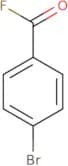
CAS:<p>Versatile small molecule scaffold</p>Formula:C8H9N4ClPurity:Min. 95%Molecular weight:196.63 g/mol4-Bromobenzoyl fluoride
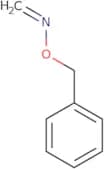
CAS:<p>Versatile small molecule scaffold</p>Formula:C7H4BrFOPurity:Min. 95%Molecular weight:203.01 g/mol(Benzyloxy)(methylidene)amine
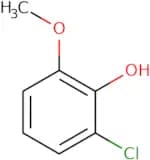
CAS:<p>Benzyloxy(methylidene)amine (BAM) is a selective and stereoselective mediator for the asymmetric synthesis of guanine. It is an amine that has been shown to cause carcinogenesis in rats. In addition, BAM is reactive and can be used at nanomolar concentrations in reactions to monitor the progress of the reaction. This mediator can form a radical coupling with piperidine, which produces a ferrocenyl-substituted guanosine.</p>Formula:C8H9NOPurity:Min. 95%Molecular weight:135.16 g/mol2-Chloro-6-methoxyphenol
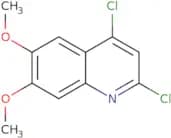
CAS:<p>2-Chloro-6-methoxyphenol is an organic compound that is used as a sample pretreatment agent. It is used in the preparation of fatty acids, which are important in the production of polymers and other materials. The reactivity of this compound can be described by a reaction mechanism involving hydroxy groups, which allows it to react with water to form 2,4-dichlorophenol and hydrochloric acid. 2-Chloro-6-methoxyphenol has been shown to inhibit the growth of many bacterial strains, including those found in wastewater. This product is also nontoxic and nonflammable. It does not contain any toxic impurities or volatile organic compounds (VOCs).</p>Formula:C7H7ClO2Purity:Min. 95%Molecular weight:158.58 g/mol2,4-dichloro-6,7-dimethoxyquinoline
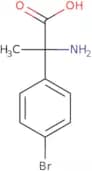
CAS:<p>2,4-Dichloro-6,7-dimethoxyquinoline is a quinoline compound that has been used to investigate the enzyme methyltransferase. This chemical was found to bind to the quinoline site of the enzyme and had a high homology with other inhibitors of this type. 2,4-Dichloro-6,7-dimethoxyquinoline also showed potency against a number of methyltransferases and inhibited methylation reactions in vitro. The thermodynamic parameters for binding were determined using isothermal titration calorimetry.</p>Formula:C11H9Cl2NO2Purity:Min. 95%Molecular weight:258.1 g/mol2-Amino-2-(4-bromophenyl)propanoic acid
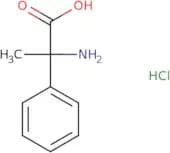
CAS:<p>Versatile small molecule scaffold</p>Formula:C9H10BrNO2Purity:Min. 95%Molecular weight:244.08 g/mol2-Amino-2-phenylpropionic Acid HCl
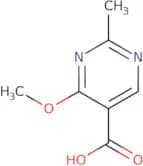
CAS:<p>Versatile small molecule scaffold</p>Formula:C9H12ClNO2Purity:Min. 95%Molecular weight:201.65 g/mol4-Methoxy-2-methylpyrimidine-5-carboxylic acid
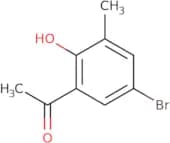
CAS:<p>Versatile small molecule scaffold</p>Formula:C7H8N2O3Purity:Min. 95%Molecular weight:168.15 g/mol1-(5-Bromo-2-hydroxy-3-methylphenyl)ethan-1-one
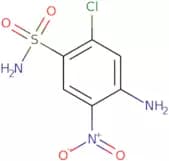
CAS:<p>Versatile small molecule scaffold</p>Formula:C9H9BrO2Purity:Min. 95%Molecular weight:229.07 g/mol4-Amino-2-chloro-5-nitrobenzene-1-sulfonamide
CAS:<p>Versatile small molecule scaffold</p>Formula:C6H6ClN3O4SPurity:Min. 95%Molecular weight:251.65 g/molrac-Methyl (1R,2S,4R)-2-acetamidobicyclo[2.2.1]hept-5-ene-2-carboxylate
CAS:<p>Versatile small molecule scaffold</p>Formula:C11H15NO3Purity:Min. 95%Molecular weight:209.2 g/molrac-Methyl (1R,2R,4R)-2-acetamidobicyclo[2.2.1]hept-5-ene-2-carboxylate
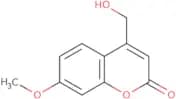
CAS:<p>Versatile small molecule scaffold</p>Formula:C11H15NO3Purity:Min. 95%Molecular weight:209.2 g/mol4-(Hydroxymethyl)-7-methoxy-2H-chromen-2-one
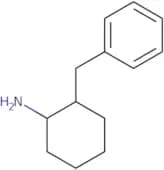
CAS:<p>4-(Hydroxymethyl)-7-methoxy-2H-chromen-2-one is a fluorescing compound with an ultraviolet absorption maximum of 330 nm and a visible absorption maximum at 420 nm. It has been shown to be soluble in methanol, chloroform, acetone, ether, and benzene. The molecule has a molecular weight of 188.4 g/mol and an esters composition of 2% fatty acid esters. It also absorbs light at 220 nm and emits light at 350 nm. 4-(Hydroxymethyl)-7-methoxy-2H-chromen-2-one has been shown to be very sensitive to the presence of fatty acids in the environment.</p>Formula:C11H10O4Purity:Min. 95%Molecular weight:206.19 g/mol2-Benzylcyclohexan-1-amine
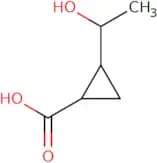
CAS:<p>2-Benzylcyclohexan-1-amine is an oxime, which is a class of organic compounds that are derived from an amine and are characterized by the presence of at least one nitrogen atom in their structures. It can be synthesized by deuteration of cyclohexanone with deuterium gas. The reaction mechanism for this process includes catalytic reduction, acetylation, pyrolytic elimination, and reductive amination. 2-Benzylcyclohexan-1-amine has been shown to have a spectrum similar to the postulated spectrum for the compound N-methylphenethylamine, which has been proposed as a possible neurotransmitter in humans.</p>Formula:C13H19NPurity:Min. 95%Molecular weight:189.3 g/mol2-(1-Hydroxyethyl)cyclopropane-1-carboxylic acid
CAS:<p>Versatile small molecule scaffold</p>Formula:C6H10O3Purity:Min. 95%Molecular weight:130.1 g/mol2-Amino-5-methyl-4H-[1,2,4]triazolo[1,5-a]-pyrimidin-7-one
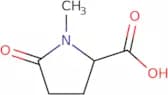
CAS:<p>Versatile small molecule scaffold</p>Formula:C6H7N5OPurity:Min. 95%Molecular weight:165.15 g/mol1-Methyl-5-oxopyrrolidine-2-carboxylic acid
CAS:1-Methyl-5-oxopyrrolidine-2-carboxylic acid is a pyroglutamate derivative that is synthesized by the reaction of methyllithium with a ketone. It is used as a reagent for the synthesis of esters and organolithium compounds. Racemization occurs when this compound reacts with an alcohol or phenol to form an ester or ether, respectively. The Grignard reagents are not reactive in the presence of air, but react readily in the presence of water or alcohol. Methyllithium (MeLi) and aryllithium (ArLi) are both organolithium reagents that react with alkyl halides to form organometallic compounds.Formula:C6H9NO3Purity:Min. 95%Molecular weight:143.14 g/mol

![6-Chloro-3-(1-methylethyl)-1,2,4-triazolo[4,3-b]pyridazine](/_next/image/?url=https%3A%2Fstatic.cymitquimica.com%2Fproducts%2F3D%2Fthumb-webp%2FXCA39297.webp&w=3840&q=75)
![rac-Methyl (1R,2S,4R)-2-acetamidobicyclo[2.2.1]hept-5-ene-2-carboxylate](/_next/image/?url=https%3A%2Fstatic.cymitquimica.com%2Fproducts%2F3D%2Fthumb-webp%2FXCA43182.webp&w=3840&q=75)
![rac-Methyl (1R,2R,4R)-2-acetamidobicyclo[2.2.1]hept-5-ene-2-carboxylate](/_next/image/?url=https%3A%2Fstatic.cymitquimica.com%2Fproducts%2F3D%2Fthumb-webp%2FXCA43185.webp&w=3840&q=75)
![2-Amino-5-methyl-4H-[1,2,4]triazolo[1,5-a]-pyrimidin-7-one](/_next/image/?url=https%3A%2Fstatic.cymitquimica.com%2Fproducts%2F3D%2Fthumb-webp%2FXCA43699.webp&w=3840&q=75)