Building Blocks
This section contains fundamental products for the synthesis of organic and biological compounds. Building blocks are the essential starting materials used to construct complex molecules through various chemical reactions. They play a critical role in drug discovery, material science, and chemical research. At CymitQuimica, we offer a diverse range of high-quality building blocks to support your innovative research and industrial projects, ensuring you have the essential components for successful synthesis.
Subcategories of "Building Blocks"
- Boronic Acids & Boronic Acid Derivatives(5,756 products)
- Chiral Building Blocks(1,242 products)
- Hydrocarbon Building Blocks(6,095 products)
- Organic Building Blocks(61,055 products)
Found 199650 products of "Building Blocks"
Sort by
Purity (%)
0
100
|
0
|
50
|
90
|
95
|
100
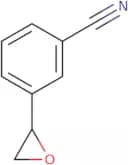
-3(oxiran-2-yl)benzonitrile
CAS:<p>Versatile small molecule scaffold</p>Formula:C9H7NOPurity:Min. 95%Molecular weight:145.16 g/mol2-Benzylaziridine
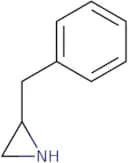
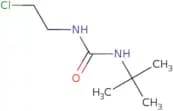
CAS:Controlled Product<p>2-Benzylaziridine is an organic compound that can be synthesized from 2-benzyloxirane and ammonia. It is used as a chromatographic stationary phase, a synthetic intermediate, and a starting material for the synthesis of other aziridines. The reaction rate of this compound depends on the energy of the reaction. Low energy reactions are generally faster than high energy reactions. In addition, ring-opening reactions are faster than aziridine synthesis because they require less activation energy. 2-Benzylaziridine can be produced in two different isomeric forms: cis and trans. This compound has been shown to have impurities such as isosafrole and aziridine which may be difficult to remove by distillation or recrystallization alone.<br>2-Benzylaziridine has been shown to have low toxicity in animal studies.END>></p>Formula:C9H11NPurity:Min. 95%Molecular weight:133.19 g/mol1-tert-Butyl-3-(2-chloroethyl)urea
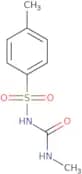
CAS:<p>Versatile small molecule scaffold</p>Formula:C7H15ClN2OPurity:Min. 95%Molecular weight:178.66 g/mol4-Methyl-N-(methylcarbamoyl)benzenesulfonamide
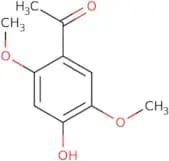
CAS:<p>Versatile small molecule scaffold</p>Formula:C9H12N2O3SPurity:Min. 95%Molecular weight:228.27 g/mol1-(4-Hydroxy-2,5-dimethoxyphenyl)ethan-1-one
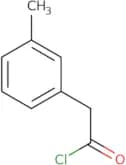
CAS:<p>Versatile small molecule scaffold</p>Formula:C10H12O4Purity:Min. 95%Molecular weight:196.2 g/molm-Tolyl-acetyl chloride
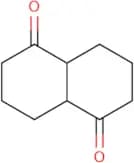
CAS:<p>Versatile small molecule scaffold</p>Formula:C9H9ClOPurity:Min. 95%Molecular weight:168.62 g/molDecahydronaphthalene-1,5-dione
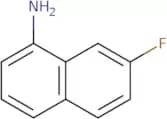
CAS:<p>Versatile small molecule scaffold</p>Formula:C10H14O2Purity:Min. 95%Molecular weight:166.22 g/mol7-Fluoronaphthalen-1-amine
CAS:<p>Versatile small molecule scaffold</p>Formula:C10H8FNPurity:Min. 95%Molecular weight:161.18 g/mol3,5-Dihydroxy-[1,2,4]triazine-6-carboxylic acid
CAS:<p>3,5-Dihydroxy-[1,2,4]triazine-6-carboxylic acid is an antibacterial agent that belongs to the group of cyclizing drugs. It has a neutralizing reaction with alkali and hydrolyzes in water to form semicarbazide. 3,5-Dihydroxy-[1,2,4]triazine-6-carboxylic acid reacts with benzyl alcohol to produce a reaction product that is hydrolyzed by water to form penicillin. This drug has been shown to be effective against bacteria such as Staphylococcus aureus and Bacillus subtilis. 3,5-Dihydroxy-[1,2,4]triazine-6-carboxylic acid can cause pollution if it is not neutralized with methanol before being disposed of.</p>Formula:C4H3N3O4Purity:Min. 95%Molecular weight:157.08 g/molMethyl 6-oxo-1,6-dihydropyrazine-2-carboxylate
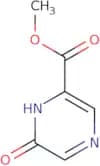
CAS:Methyl 6-oxo-1,6-dihydropyrazine-2-carboxylate is a lysine methyltransferase inhibitor. It has been shown to inhibit the DNA methylation and histone lysine methylation of mammalian cells, leading to changes in gene expression. Methyl 6-oxo-1,6-dihydropyrazine-2-carboxylate inhibits the uptake of methionine into cells and prevents its conversion to S-adenosylmethionine (SAM). SAM is an important donor of methyl groups for methylating DNA and histones. Methyl 6-oxo-1,6-dihydropyrazine-2 carboxylate also inhibits actin filament formation by preventing the binding of regulatory effector proteins such as cofilin, which is involved in nucleotide exchange on actin filaments.Formula:C6H6N2O3Purity:Min. 95%Molecular weight:154.12 g/mol2-ethyl-6-methylpyrazine
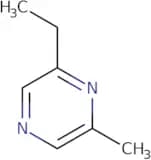
CAS:<p>2-Ethyl-6-methylpyrazine is a chemical substance with the formula CH3CONH2. It is used as a flavorant and has been shown to have tyrosinase activity in human liver cells. It can be synthesized by oxidation of ethyl pyruvate by sodium hypochlorite, followed by hydrolysis of the resulting 2-ethyl-6-methylpyruvic acid with dilute sulfuric acid. The chromatographic method for the identification of methylpyrazines was developed using a model system of fatty acids. A solid phase microextraction technique was employed for the analysis of 2-ethyl-6-methylpyrazine in acidic media, and the reaction products were analyzed by gas chromatography–mass spectrometry (GC–MS). 2-Ethyl-6-methylpyrazine was identified as an alkene and its molecular ion peak at m/z=147. Its mass spectrum showed signals at m</p>Formula:C7H10N2Purity:Min. 95%Molecular weight:122.17 g/mol4-Amino-6-methyl-2H-pyridazin-3-one
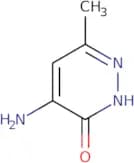
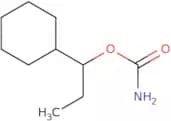
CAS:<p>Versatile small molecule scaffold</p>Formula:C5H7N3OPurity:Min. 95%Molecular weight:125.13 g/mol1-Cyclohexylpropyl carbamate
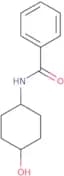
CAS:<p>1-Cyclohexylpropyl carbamate is a diagnostic agent that can be used to measure inflammatory bowel disease. It is an analog of 1-cyclohexyl-2,2,2-trifluoroethyl carbamate. The compound is insoluble in water and must be reconstituted with a diluent prior to use. The particle size of the reconstituted compound can be adjusted by varying the concentration of the diluent. 1-Cyclohexylpropyl carbamate binds to herpes simplex virus type 2 (HSV-2) with high affinity and has been shown to inhibit HSV-2 replication in cell culture. Iontophoresis is a technique for delivering ionic molecules into tissue by means of an electric field. This technique has been shown to increase the concentration of 1-cyclohexylpropyl carbamate within cells infected with HSV-2.</p>Formula:C10H19NO2Purity:Min. 95%Molecular weight:185.26 g/mol4-Benzamidocyclohexanol
CAS:<p>Versatile small molecule scaffold</p>Formula:C13H17NO2Purity:Min. 95%Molecular weight:219.28 g/mol1,4-Dioxaspiro[4.6]undecan-8-amine
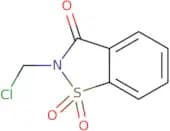
CAS:<p>Versatile small molecule scaffold</p>Formula:C9H17NO2Purity:Min. 95%Molecular weight:171.24 g/mol2-(Chloromethyl)-1,1-dioxo-1,2-benzothiazol-3-one
CAS:<p>2-(Chloromethyl)-1,1-dioxo-1,2-benzothiazol-3-one (CMTB) is a cytotoxic agent that inhibits the synthesis of DNA and RNA. CMTB has been shown to be effective against cancer cells in vitro, as well as against mycobacterial strains. The antitumor activity of CMTB is due to its ability to inhibit cancer cell proliferation by binding to DNA. This chemical has been shown as an effective treatment for lung cancer and ovarian cancer in mice. The cytotoxicity of CMTB has also been studied in human lung cancer cells.</p>Formula:C8H6ClNO3SPurity:Min. 95%Molecular weight:231.66 g/mol2-(1H-Tetrazol-5-yl)-benzoic acid
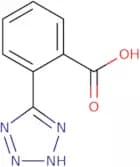
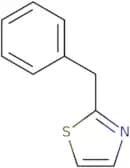
CAS:<p>2-(1H-Tetrazol-5-yl)-benzoic acid is a chloride salt of 2-(1H-tetrazol-5-yl)benzoic acid. It is soluble in water and organic solvents. The compound has a carboxylate group, which is the reactive part of the molecule. This group can be modified by reactions with other molecules, such as hydrothermal reactions that result in modifications to the structure of the carboxylate group. Tetrazole groups are found in many compounds, including those used in chemistry and octahedrally coordinated ligands. The coordination geometry of cadmium ions is tetrahedral, making it a good ligand for this type of compound. Crystal structures have been obtained for compounds containing both 2-(1H-tetrazol-5-yl)-benzoic acid and cadmium ions as ligands.</p>Formula:C8H6N4O2Purity:Min. 95%Molecular weight:190.16 g/mol2-Benzyl-1,3-thiazole
CAS:<p>2-Benzyl-1,3-thiazole (2BT) is a specific protein ligase inhibitor that has been shown to be active against various cancers in vivo. It binds to ubiquitin ligases and prevents their binding to proteins. 2BT is also an anion, which may change the electrostatic environment of the cell membrane and disrupt the lipid bilayer. This activity could lead to antiproliferation effects on tumor cells. 2BT has two different isomers, one of which has been shown to have a higher affinity for ubiquitin ligases than the other. The computational method employed in this study was DFT-B3LYP/6-31G* and used standard quantum chemistry software for geometries and energies. The conjugates of 2BT were obtained by reacting with cysteine residues using glutaraldehyde as a crosslinker. In vivo antitumor activity was observed at doses of 0.5mg/kg/day and 1</p>Formula:C10H9NSPurity:Min. 95%Molecular weight:175.25 g/molEthyl 2-oxobicyclo[4.1.0]heptane-7-carboxylate
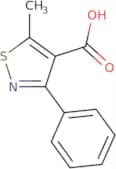
CAS:<p>Versatile small molecule scaffold</p>Formula:C10H14O3Purity:Min. 95%Molecular weight:182.22 g/mol5-Methyl-3-phenyl-1,2-thiazole-4-carboxylic acid
CAS:<p>Versatile small molecule scaffold</p>Formula:C11H9NO2SPurity:Min. 95%Molecular weight:219.26 g/mol

![3,5-Dihydroxy-[1,2,4]triazine-6-carboxylic acid](/_next/image/?url=https%3A%2Fstatic.cymitquimica.com%2Fproducts%2F3D%2Fthumb-webp%2FNAA92415.webp&w=3840&q=75)
![1,4-Dioxaspiro[4.6]undecan-8-amine](/_next/image/?url=https%3A%2Fstatic.cymitquimica.com%2Fproducts%2F3D%2Fthumb-webp%2FNAA94208.webp&w=3840&q=75)
![Ethyl 2-oxobicyclo[4.1.0]heptane-7-carboxylate](/_next/image/?url=https%3A%2Fstatic.cymitquimica.com%2Fproducts%2F3D%2Fthumb-webp%2FNAA94998.webp&w=3840&q=75)