Building Blocks
This section contains fundamental products for the synthesis of organic and biological compounds. Building blocks are the essential starting materials used to construct complex molecules through various chemical reactions. They play a critical role in drug discovery, material science, and chemical research. At CymitQuimica, we offer a diverse range of high-quality building blocks to support your innovative research and industrial projects, ensuring you have the essential components for successful synthesis.
Subcategories of "Building Blocks"
- Boronic Acids & Boronic Acid Derivatives(5,756 products)
- Chiral Building Blocks(1,242 products)
- Hydrocarbon Building Blocks(6,095 products)
- Organic Building Blocks(61,055 products)
Found 199650 products of "Building Blocks"
Sort by
Purity (%)
0
100
|
0
|
50
|
90
|
95
|
100
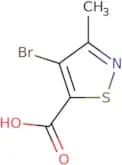
4-Bromo-3-methyl-isothiazole-5-carboxylic acid
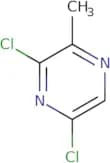
CAS:<p>Versatile small molecule scaffold</p>Formula:C5H4BrNO2SPurity:Min. 95%Molecular weight:222.06 g/mol3,5-Dichloro-2-methylpyrazine
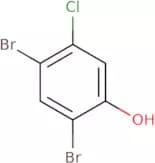
CAS:<p>Versatile small molecule scaffold</p>Formula:C5H4Cl2N2Purity:Min. 95%Molecular weight:163.01 g/mol2,4-Dibromo-5-chlorophenol
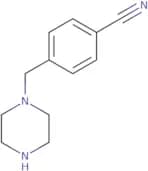
CAS:<p>Versatile small molecule scaffold</p>Formula:C6H3Br2ClOPurity:Min. 95%Molecular weight:286.35 g/mol1-(4-Cyano-benzyl)-piperazine
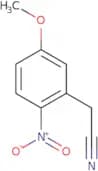
CAS:Controlled Product<p>Versatile small molecule scaffold</p>Formula:C12H15N3Purity:Min. 95%Molecular weight:201.27 g/mol(5-Methoxy-2-nitro-phenyl)-acetonitrile
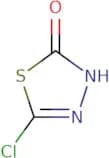
CAS:<p>5-Methoxy-2-nitro-phenyl)-acetonitrile is an analog of β-unsaturated ketones and has been synthesized from phenylmagnesium bromide, amido acid, and α-(chloromethyl)benzene. The reaction was stereoselective with the formation of a single diastereomer. 5-Methoxy-2-nitro-phenyl)-acetonitrile is a chiral compound with two asymmetric carbon atoms. The synthesis of this compound was efficient, requiring only four steps to complete the entire process.</p>Formula:C9H8N2O3Purity:Min. 95%Molecular weight:192.17 g/mol5-Chloro-2,3-dihydro-1,3,4-thiadiazol-2-one
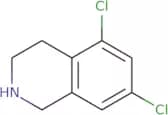
CAS:<p>Versatile small molecule scaffold</p>Formula:C2HClN2OSPurity:Min. 95%Molecular weight:136.56 g/mol5,7-Dichloro-1,2,3,4-tetrahydroisoquinoline
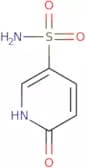
CAS:<p>5,7-Dichloro-1,2,3,4-tetrahydroisoquinoline is a crystalline organic solvent that is used industrially as a precursor to the benzyl group in organic synthesis. It can be used to synthesize lifitegrast through catalytic elimination of butyl lithium. 5,7-Dichloro-1,2,3,4-tetrahydroisoquinoline has two crystalline polymorphs: form I and form II. Form I has a melting point of 191°C and form II has a melting point of 190°C. The industrial scale production of 5,7-dichloro-1,2,3,4-tetrahydroisoquinoline is typically achieved by hydrogenation of the corresponding nitro compound.</p>Formula:C9H9Cl2NPurity:Min. 95%Molecular weight:202.08 g/mol6-Oxo-1,6-dihydropyridine-3-sulfonamide
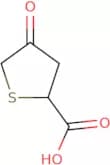
CAS:<p>Versatile small molecule scaffold</p>Formula:C5H6N2O3SPurity:Min. 95%Molecular weight:174.18 g/mol4-Oxothiolane-2-carboxylic acid
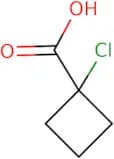
CAS:<p>Versatile small molecule scaffold</p>Formula:C5H6O3SPurity:Min. 95%Molecular weight:146.17 g/mol1-Chlorocyclobutane-1-carboxylic acid
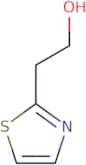
CAS:<p>Versatile small molecule scaffold</p>Formula:C5H7ClO2Purity:Min. 95%Molecular weight:134.56 g/mol2-(Thiazol-2-yl)ethanol
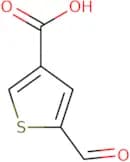
CAS:<p>2-(Thiazol-2-yl)ethanol is a molecule that belongs to the class of thiazolines. It has been shown to have a physiological effect on probiotic bacteria and is used as a prebiotic. 2-(Thiazol-2-yl)ethanol can be synthesized by coupling the corresponding acid chloride with an alcohol in the presence of an acid catalyst. This molecule is being investigated for its potential use as a therapeutic agent against infectious diseases, such as colitis. 2-(Thiazol-2-yl)ethanol also affects enzyme activities, regulatory proteins, and transcriptional regulation in model systems. This molecule may play a role in energy metabolism and protein synthesis through its interaction with enzymes, regulatory proteins, or transcriptional regulators.</p>Formula:C5H7NOSPurity:Min. 95%Molecular weight:129.18 g/mol5-Formylthiophene-3-carboxylic acid
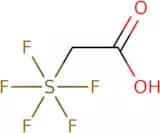
CAS:<p>5-Formylthiophene-3-carboxylic acid is an inhibitor of the cycloaddition reaction between azomethine and enamines. It has been shown to be diastereoselective, inhibiting the formation of the undesired enantiomer. The synthesis and characterization of this compound has been used in process research for drug discovery.</p>Formula:C6H4O3SPurity:Min. 95%Molecular weight:156.16 g/mol2-(Pentafluoro-sulfanyl)acetic acid
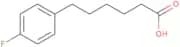
CAS:<p>Versatile small molecule scaffold</p>Formula:C2H3F5O2SPurity:Min. 95%Molecular weight:186.1 g/mol6-(4-Fluorophenyl)hexanoic acid
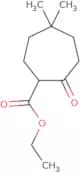
CAS:<p>Versatile small molecule scaffold</p>Formula:C12H15FO2Purity:Min. 95%Molecular weight:210.24 g/molEthyl 5,5-dimethyl-2-oxocycloheptane-1-carboxylate
CAS:<p>Versatile small molecule scaffold</p>Formula:C12H20O3Purity:Min. 95%Molecular weight:212.28 g/mol9-Bromo-1-nonene
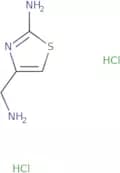
CAS:<p>9-Bromo-1-nonene is a hydroxy group, halide, and solute. It has been shown to undergo reductive elimination with cyclodehydration to form 9-bromononane. 9-Bromo-1-nonene has also been used as an actuator in phase liquid chromatography (also called high performance liquid chromatography). It is stereoselective and exhibits inhibitory activities against anomala, glycosidases, and magnetic particles. This compound is also soluble in diethyl ether.</p>Formula:C9H17BrPurity:Min. 95%Molecular weight:205.14 g/mol4-(Aminomethyl)-1,3-thiazol-2-amine dihydrochloride
CAS:<p>Versatile small molecule scaffold</p>Formula:C4H9Cl2N3SPurity:Min. 95%Molecular weight:202.11 g/mol4-(2-Aminoethyl)-1,3-thiazol-2-amine dihydrochloride
CAS:<p>Versatile small molecule scaffold</p>Formula:C5H11Cl2N3SPurity:Min. 95%Molecular weight:216.13 g/mol5-Carbamoyl-2-methoxybenzoic acid
CAS:<p>Versatile small molecule scaffold</p>Formula:C9H9NO4Purity:Min. 95%Molecular weight:195.17 g/mol1,4-Diaminobutane-2,3-diol dihydrochloride
CAS:<p>Versatile small molecule scaffold</p>Formula:C4H13ClN2O2Purity:Min. 95%Molecular weight:156.61 g/mol