Building Blocks
This section contains fundamental products for the synthesis of organic and biological compounds. Building blocks are the essential starting materials used to construct complex molecules through various chemical reactions. They play a critical role in drug discovery, material science, and chemical research. At CymitQuimica, we offer a diverse range of high-quality building blocks to support your innovative research and industrial projects, ensuring you have the essential components for successful synthesis.
Subcategories of "Building Blocks"
- Boronic Acids & Boronic Acid Derivatives(5,756 products)
- Chiral Building Blocks(1,242 products)
- Hydrocarbon Building Blocks(6,095 products)
- Organic Building Blocks(61,038 products)
Found 196817 products of "Building Blocks"
Sort by
Purity (%)
0
100
|
0
|
50
|
90
|
95
|
100
5-Azaspiro[2.5]octan-6-one
CAS:<p>Versatile small molecule scaffold</p>Formula:C7H11NOPurity:Min. 95%Molecular weight:125.17 g/mol2-(Adamantan-1-yl)-2-{[(tert-butoxy)carbonyl]amino}acetic acid
CAS:<p>Versatile small molecule scaffold</p>Formula:C17H27NO4Purity:Min. 95%Molecular weight:309.4 g/molRef: 3D-DNB06155
Discontinued product2-{[2-Formyl-4-(trifluoromethyl)phenyl](methyl)amino}acetic acid
CAS:<p>Versatile small molecule scaffold</p>Formula:C11H10F3NO3Purity:Min. 95%Molecular weight:261.2 g/mol2-Amino-4-methanesulfonyl-N-methyl-N-(pyridin-3-ylmethyl)butanamide dihydrochloride
CAS:<p>Versatile small molecule scaffold</p>Formula:C12H21Cl2N3O3SPurity:Min. 95%Molecular weight:358.3 g/molRef: 3D-HHC67773
Discontinued product3-{[3-(Trifluoromethyl)phenyl]methyl}azetidine hydrochloride
CAS:<p>Versatile small molecule scaffold</p>Formula:C11H13ClF3NPurity:Min. 95%Molecular weight:251.67 g/molRef: 3D-GXB45823
Discontinued product3-Oxaspiro[5.5]undec-9-en-8-one
CAS:<p>Versatile small molecule scaffold</p>Formula:C10H14O2Purity:Min. 95%Molecular weight:166.2 g/molRef: 3D-DVD50672
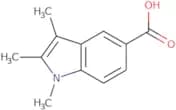
Discontinued product1,2,3-Trimethyl-1H-indole-5-carboxylic acid
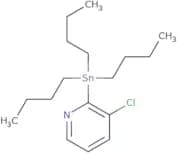
CAS:<p>Versatile small molecule scaffold</p>Formula:C12H13NO2Purity:Min. 95%Molecular weight:203.24 g/mol2-(Tributylstannyl)-3-chloropyridine
CAS:Controlled Product<p>Versatile small molecule scaffold</p>Formula:C17H30ClNSnPurity:Min. 95%Molecular weight:402.59 g/mol4'-Fluoro-1',2'-dihydrospiro[cyclobutane-1,3'-indole] hydrochloride
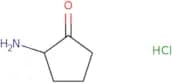
CAS:<p>Versatile small molecule scaffold</p>Formula:C11H13ClFNPurity:Min. 95%Molecular weight:213.68 g/mol2-Aminocyclopentan-1-one hydrochloride
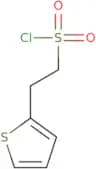
CAS:<p>Versatile small molecule scaffold</p>Formula:C5H10ClNOPurity:Min. 95%Molecular weight:135.59 g/mol2-(Thiophen-2-yl)ethane-1-sulfonyl chloride
CAS:<p>Versatile small molecule scaffold</p>Formula:C6H7ClO2S2Purity:Min. 95%Molecular weight:210.7 g/mol3-Methyl-5-(methylsulfonyl)pyridin-2-amine
CAS:<p>Versatile small molecule scaffold</p>Formula:C7H10N2O2SPurity:Min. 95%Molecular weight:186.23 g/molRef: 3D-LEC47888
Discontinued product2-Amino-N-(quinolin-8-yl)acetamide
CAS:<p>2-Amino-N-(quinolin-8-yl)acetamide is a fluorescent inorganic compound. It has been shown to have a high affinity for chloride, with nanotube structures that are able to bind the chloride ions by supramolecular interactions. This binding prevents the chloride from interacting with other biomolecules, such as proteins and DNA. The energy of this interaction can be measured using fluorophore spectroscopy, which can be used for bioassays and medical imaging. 2-Amino-N-(quinolin-8-yl)acetamide has also been shown to have an ability to interact with zinc ions (Zn2+) in electrospray experiments, resulting in the emission of fluorescence.</p>Formula:C11H11N3OPurity:Min. 95%Molecular weight:201.22 g/mol4-Aminoisothiochroman 2,2-dioxide hydrochloride
CAS:<p>Versatile small molecule scaffold</p>Formula:C9H12ClNO2SPurity:Min. 95%Molecular weight:233.72 g/molRef: 3D-MXB83061
Discontinued product4-(Benzyloxy)-3-chloro-5-methoxybenzaldehyde
CAS:<p>Versatile small molecule scaffold</p>Formula:C15H13ClO3Purity:Min. 95%Molecular weight:276.71 g/molRef: 3D-MBA68767
Discontinued product2-(Hexylamino)ethan-1-ol
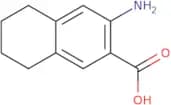
CAS:<p>Miltefosine is a cell-toxic agent that is used to treat leishmaniasis. Miltefosine has been shown to be active against the promastigotes and intracellular amastigotes of Leishmania infantum. It also has antileishmanial activity against L. major, L. tropica, and L. mexicana, as well as against the human parasite Leishmania donovani. Miltefosine is an analog of 2-(hexyloxy)ethanol that can be conjugated with a variety of functional groups for use in drug delivery systems, such as liposomes and polymeric micelles. This agent exhibits hemolytic activity when introduced into erythrocytes in vitro, which may be due to its ability to inhibit protein synthesis at the ribosome level by binding to the 50S subunit of the ribosome's large subunit and inhibiting peptide</p>Formula:C8H19NOPurity:Min. 95%Molecular weight:145.24 g/mol3-Amino-5,6,7,8-tetrahydronaphthalene-2-carboxylic acid
CAS:<p>Versatile small molecule scaffold</p>Formula:C11H13NO2Purity:Min. 95%Molecular weight:191.23 g/molRef: 3D-EEA87713
Discontinued product3-(Aminomethyl)-5-fluorophenol hydrochloride
CAS:<p>Versatile small molecule scaffold</p>Formula:C7H9ClFNOPurity:Min. 95%Molecular weight:177.6 g/mol2-Ethynyl-4-methylthiazole
CAS:<p>2-Ethynyl-4-methylthiazole is a cell-based kinase inhibitor that binds to the ATP binding site on the enzyme and inhibits phosphorylation. It was shown to inhibit cell growth in vitro by interfering with the production of TGF-β, activin, and other growth factors. The inhibitory activity of 2-Ethynyl-4-methylthiazole is selective for receptor kinases and is not effective against alk5 kinase. This drug has been shown to be an inhibitor of cellular growth in vitro and may be useful for the treatment of cancer.</p>Formula:C6H5NSPurity:Min. 95%Molecular weight:123.17 g/molRef: 3D-LIA94025
Discontinued product(3-Chlorophenyl)(cyclohexyl)methanone
CAS:<p>Versatile small molecule scaffold</p>Formula:C13H15ClOPurity:Min. 95%Molecular weight:222.71 g/mol
![5-Azaspiro[2.5]octan-6-one](/_next/image/?url=https%3A%2Fstatic.cymitquimica.com%2Fproducts%2F3D%2Fthumb-webp%2FDFC59996.webp&w=3840&q=75)

![2-(Adamantan-1-yl)-2-{[(tert-butoxy)carbonyl]amino}acetic acid](/_next/image/?url=https%3A%2Fstatic.cymitquimica.com%2Fproducts%2F3D%2Fthumb-webp%2FDNB06155.webp&w=3840&q=75)
amino}acetic acid](/_next/image/?url=https%3A%2Fstatic.cymitquimica.com%2Fproducts%2F3D%2Fthumb-webp%2FDNB06231.webp&w=3840&q=75)

![3-{[3-(Trifluoromethyl)phenyl]methyl}azetidine hydrochloride](/_next/image/?url=https%3A%2Fstatic.cymitquimica.com%2Fproducts%2F3D%2Fthumb-webp%2FGXB45823.webp&w=3840&q=75)
![3-Oxaspiro[5.5]undec-9-en-8-one](/_next/image/?url=https%3A%2Fstatic.cymitquimica.com%2Fproducts%2F3D%2Fthumb-webp%2FDVD50672.webp&w=3840&q=75)
![4'-Fluoro-1',2'-dihydrospiro[cyclobutane-1,3'-indole] hydrochloride](/_next/image/?url=https%3A%2Fstatic.cymitquimica.com%2Fproducts%2F3D%2Fthumb-webp%2FDXC57158.webp&w=3840&q=75)