Building Blocks
This section contains fundamental products for the synthesis of organic and biological compounds. Building blocks are the essential starting materials used to construct complex molecules through various chemical reactions. They play a critical role in drug discovery, material science, and chemical research. At CymitQuimica, we offer a diverse range of high-quality building blocks to support your innovative research and industrial projects, ensuring you have the essential components for successful synthesis.
Subcategories of "Building Blocks"
- Boronic Acids & Boronic Acid Derivatives(5,756 products)
- Chiral Building Blocks(1,242 products)
- Hydrocarbon Building Blocks(6,095 products)
- Organic Building Blocks(61,038 products)
Found 196817 products of "Building Blocks"
Sort by
Purity (%)
0
100
|
0
|
50
|
90
|
95
|
100
4-[(2-Chlorophenyl)sulfamoyl]benzoic acid
CAS:<p>4-[(2-Chlorophenyl)sulfamoyl]benzoic acid is a compound that has been used in research as an inhibitor of the antibody. This compound binds to the antigen binding site on the antibody, preventing it from binding to its target protein. It has also been shown to be an inhibitor of cell biology and can be used as a research tool for understanding how antibodies work. 4-[(2-Chlorophenyl)sulfamoyl]benzoic acid can be used in pharmacology as a ligand to study receptor activation and protein interactions.</p>Formula:C13H10ClNO4SPurity:Min. 95%Molecular weight:311.74 g/molRef: 3D-FQA43108
Discontinued product4H,5H,6H,7H-[1,2,4]Triazolo[1,5-a]pyrimidine-6-carboxylic acid
CAS:<p>Versatile small molecule scaffold</p>Formula:C6H8N4O2Purity:Min. 95%Molecular weight:168.2 g/molRef: 3D-BMC49356
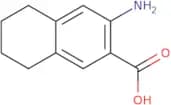
Discontinued product3-Amino-5,6,7,8-tetrahydronaphthalene-2-carboxylic acid
CAS:<p>Versatile small molecule scaffold</p>Formula:C11H13NO2Purity:Min. 95%Molecular weight:191.23 g/molRef: 3D-EEA87713
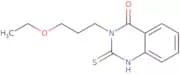
Discontinued product3-(3-Ethoxypropyl)-2-sulfanyl-3,4-dihydroquinazolin-4-one
CAS:<p>Versatile small molecule scaffold</p>Formula:C13H16N2O2SPurity:Min. 95%Molecular weight:264.35 g/molRef: 3D-FQA43696
Discontinued product2-(5-Methoxy-2-methyl-4-oxo-1,4-dihydropyridin-1-yl)acetic acid
CAS:<p>Versatile small molecule scaffold</p>Formula:C9H11NO4Purity:Min. 95%Molecular weight:197.19 g/molRef: 3D-GJB85743
Discontinued product2-[(3-Methylphenyl)formamido]-4-(methylsulfanyl)butanoic acid
CAS:<p>Versatile small molecule scaffold</p>Formula:C13H17NO3SPurity:Min. 95%Molecular weight:267.35 g/molRef: 3D-QCA05481
Discontinued productMethyl 2-(methoxymethyl)piperidine-2-carboxylate
CAS:<p>Versatile small molecule scaffold</p>Formula:C9H17NO3Purity:Min. 95%Molecular weight:187.24 g/molRef: 3D-QAD53682
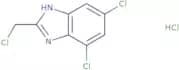
Discontinued product4,6-Dichloro-2-(chloromethyl)-1H-1,3-benzodiazole hydrochloride
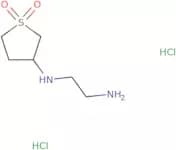
CAS:<p>Versatile small molecule scaffold</p>Formula:C8H6Cl4N2Purity:Min. 95%Molecular weight:272 g/mol3-(2-Aminoethyl)aminotetrahydrothiophene1,1-dioxide dihydrochloride
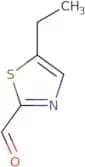
CAS:<p>Versatile small molecule scaffold</p>Formula:C6H16Cl2N2O2SPurity:Min. 95%Molecular weight:251.17 g/mol5-Ethyl-1,3-thiazole-2-carbaldehyde
CAS:<p>Versatile small molecule scaffold</p>Formula:C6H7NOSPurity:Min. 95%Molecular weight:141.19 g/molRef: 3D-PNA98968
Discontinued product1-(Pyrrolidin-2-ylmethyl)pyrrolidine
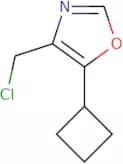
CAS:<p>1-(Pyrrolidin-2-ylmethyl)pyrrolidine is a respiratory agent that is soluble in ether and deoxygenated solvents. It has been shown to be effective for the treatment of respiratory problems, such as bronchitis, asthma, and other lung diseases. 1-(Pyrrolidin-2-ylmethyl)pyrrolidine is also used as a solvent for dyes, oils, and other organic substances.</p>Formula:C9H18N2Purity:Min. 95%Molecular weight:154.25 g/mol4-(Chloromethyl)-5-cyclobutyl-1,3-oxazole
CAS:<p>Versatile small molecule scaffold</p>Formula:C8H10ClNOPurity:Min. 95%Molecular weight:171.62 g/molRef: 3D-UKC14830
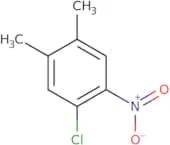
Discontinued product1-Chloro-4,5-dimethyl-2-nitrobenzene
CAS:<p>Versatile small molecule scaffold</p>Formula:C8H8ClNO2Purity:Min. 95%Molecular weight:185.61 g/mol4-Methoxy-N-(1,3-thiazol-2-yl)benzene-1-sulfonamide
CAS:<p>Versatile small molecule scaffold</p>Formula:C10H10N2O3S2Purity:Min. 95%Molecular weight:270.3 g/molRef: 3D-UGA94539
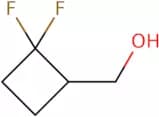
Discontinued product(2,2-difluorocyclobutyl)methanol
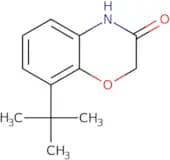
CAS:<p>Versatile small molecule scaffold</p>Formula:C5H8F2OPurity:Min. 95%Molecular weight:122.12 g/mol8-tert-Butyl-3,4-dihydro-2H-1,4-benzoxazin-3-one
CAS:<p>Versatile small molecule scaffold</p>Formula:C12H15NO2Purity:Min. 95%Molecular weight:205.25 g/molRef: 3D-RAC91566
Discontinued product4-Amino-4-phenyl-butyric acid hydrochloride
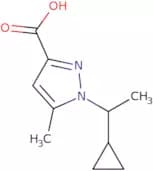
CAS:<p>Versatile small molecule scaffold</p>Formula:C10H14ClNO2Purity:Min. 95%Molecular weight:215.68 g/mol1-(1-Cyclopropylethyl)-5-methyl-1H-pyrazole-3-carboxylic acid
CAS:<p>Versatile small molecule scaffold</p>Formula:C10H14N2O2Purity:Min. 95%Molecular weight:194.23 g/molRef: 3D-HHC68082
Discontinued productPB-22 3-carboxyindole metabolite solution
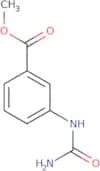
CAS:Controlled Product<p>PB-22 is a synthetic cannabinoid, which can be classified as a CB1 receptor agonist. It is one of the many cannabinoids that have been created in an attempt to circumvent drug laws by creating compounds that are similar to those found in cannabis but have different chemical structures. PB-22 has shown to increase locomotor activity and stimulate the cb1 receptor in mice. Magnetic resonance spectroscopy (MRS) and assays were used to determine the binding affinity of PB-22 for the CB1 receptor. The MRS data showed that PB-22 bound with high affinity to the CB1 receptor and had a lower affinity for CB2 receptors. This suggests that PB-22 may be more potent than other synthetic cannabinoids, such as JWH-018 and CP 55,940, which bind better with CB2 receptors than CB1 receptors.<br>PB-22 is an analog of JWH-073 and has been shown to have a stronger effect on locomotor activity than JWH</p>Formula:C14H17NO2Purity:Min. 95%Molecular weight:231.29 g/molMethyl 3-(carbamoylamino)benzoate
CAS:<p>Versatile small molecule scaffold</p>Formula:C9H10N2O3Purity:Min. 95%Molecular weight:194.19 g/mol
![4-[(2-Chlorophenyl)sulfamoyl]benzoic acid](/_next/image/?url=https%3A%2Fstatic.cymitquimica.com%2Fproducts%2F3D%2Fthumb-webp%2FFQA43108.webp&w=3840&q=75)

![4H,5H,6H,7H-[1,2,4]Triazolo[1,5-a]pyrimidine-6-carboxylic acid](/_next/image/?url=https%3A%2Fstatic.cymitquimica.com%2Fproducts%2F3D%2Fthumb-webp%2FBMC49356.webp&w=3840&q=75)

![2-[(3-Methylphenyl)formamido]-4-(methylsulfanyl)butanoic acid](/_next/image/?url=https%3A%2Fstatic.cymitquimica.com%2Fproducts%2F3D%2Fthumb-webp%2FQCA05481.webp&w=3840&q=75)