Building Blocks
This section contains fundamental products for the synthesis of organic and biological compounds. Building blocks are the essential starting materials used to construct complex molecules through various chemical reactions. They play a critical role in drug discovery, material science, and chemical research. At CymitQuimica, we offer a diverse range of high-quality building blocks to support your innovative research and industrial projects, ensuring you have the essential components for successful synthesis.
Subcategories of "Building Blocks"
- Boronic Acids & Boronic Acid Derivatives(5,756 products)
- Chiral Building Blocks(1,242 products)
- Hydrocarbon Building Blocks(6,095 products)
- Organic Building Blocks(61,051 products)
Found 199813 products of "Building Blocks"
Sort by
Purity (%)
0
100
|
0
|
50
|
90
|
95
|
100
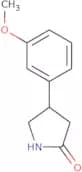
4-(3-Methoxyphenyl)pyrrolidin-2-one
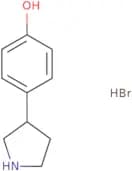
CAS:<p>Versatile small molecule scaffold</p>Formula:C11H13NO2Purity:Min. 95%Molecular weight:191.23 g/mol4-(Pyrrolidin-3-yl)phenol hydrobromide
CAS:<p>Versatile small molecule scaffold</p>Formula:C10H14BrNOPurity:Min. 95%Molecular weight:244.13 g/mol2-[4-(Acetyloxy)phenyl]acetic acid
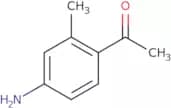
CAS:<p>2-[4-(Acetyloxy)phenyl]acetic acid is a chemical compound that can be synthesized in the laboratory. The compound has a conjugated system at the 4-position of the phenyl ring and a hydroxyl group at the 2-position. This molecule has been used as an intermediate to produce other molecules, including pharmaceuticals and agrochemicals. It is also used to study the conformational changes of protein binding sites and for evaluating the effects of ligands on allosteric binding. 2-[4-(Acetyloxy)phenyl]acetic acid can be processed at room temperature, which makes its use in industry more practical than other compounds. It has been shown to prevent cell proliferation by inhibiting transcriptional activation and by inducing apoptosis, or programmed cell death.</p>Formula:C10H10O4Purity:Min. 95%Molecular weight:194.18 g/mol1-(4-Amino-2-methylphenyl)ethanone
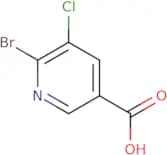
CAS:<p>Versatile small molecule scaffold</p>Formula:C9H11NOPurity:Min. 95%Molecular weight:149.19 g/mol6-Bromo-5-chloropyridine-3-carboxylic acid
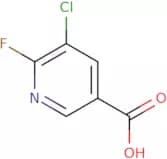
CAS:<p>Versatile small molecule scaffold</p>Formula:C6H3BrClNO2Purity:Min. 95%Molecular weight:236.45 g/mol5-Chloro-6-fluoronicotinic acid
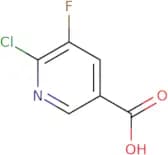
CAS:<p>Versatile small molecule scaffold</p>Formula:C6H3ClFNO2Purity:Min. 95%Molecular weight:175.55 g/mol6-Chloro-5-fluoronicotinic acid
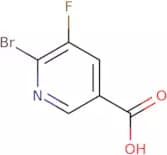
CAS:<p>Versatile small molecule scaffold</p>Formula:C6H3ClFNO2Purity:Min. 95%Molecular weight:175.55 g/mol6-Bromo-5-fluoronicotinic acid
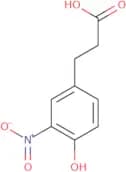
CAS:<p>Versatile small molecule scaffold</p>Formula:C6H3BrFNO2Purity:Min. 95%Molecular weight:220 g/mol3-(4-Hydroxy-3-nitrophenyl)propanoic acid
CAS:<p>Versatile small molecule scaffold</p>Formula:C9H9NO5Purity:Min. 95%Molecular weight:211.17 g/mol5-Sulfanyl-8-thia-4,6-diazatricyclo[7.4.0.0,2,7]trideca-1(9),2(7),5-trien-3-one
CAS:Versatile small molecule scaffoldFormula:C10H10N2OS2Purity:Min. 95%Molecular weight:238.3 g/mol4-Methyl-5-sulfanyl-8-thia-4,6-diazatricyclo[7.4.0.0,2,7]trideca-1(9),2(7),5-trien-3-one
CAS:<p>Versatile small molecule scaffold</p>Formula:C11H12N2OS2Purity:Min. 95%Molecular weight:252.4 g/mol5,6-Dimethyl-2-thioxo-2,3-dihydrothieno[2,3-d]pyrimidin-4(1H)-one
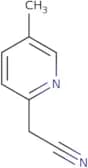
CAS:<p>Versatile small molecule scaffold</p>Formula:C8H8N2OS2Purity:Min. 95%Molecular weight:212.29 g/mol2-(5-Methylpyridin-2-yl)acetonitrile
CAS:<p>Versatile small molecule scaffold</p>Formula:C8H8N2Purity:Min. 95%Molecular weight:132.16 g/mol5-Ethyl-4-methyl-2,3-dihydro-1,3-thiazole-2-thione
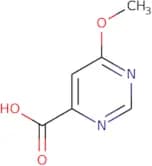
CAS:<p>Versatile small molecule scaffold</p>Formula:C6H9NS2Purity:Min. 95%Molecular weight:159.3 g/mol6-Methoxypyrimidine-4-carboxylic acid
CAS:<p>6-Methoxy pyrimidine-4-carboxylic acid is a heterocyclic carboxylic acid that has been shown to be an effective herbicide, molluscicide, and insecticide. It is used as a plant growth regulator in the treatment of rice blast disease. 6-Methoxy pyrimidine-4-carboxylic acid also has synergistic effects when combined with other herbicides, such as 2,4-D. This compound can be used as a disinfectant or insect repellent due to its ability to kill insects by interfering with their pheromones. 6-Methoxy pyrimidine-4-carboxylic acid is an insecticidal agent that belongs to the group of pyrazole derivatives. It is effective against many different types of insects including mosquitoes, cockroaches, and termites. It works by interfering with the synthesis of proteins that are necessary for cellular respiration in insects</p>Formula:C6H6N2O3Purity:Min. 95%Molecular weight:154.12 g/mol2-Amino-N-methylpropanamide hydrochloride
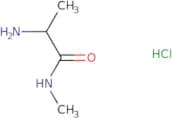
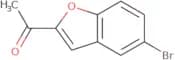
CAS:<p>Versatile small molecule scaffold</p>Formula:C4H11ClN2OPurity:Min. 95%Molecular weight:138.6 g/mol1-(5-Bromo-1-benzofuran-2-yl)ethanone
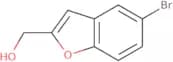
CAS:<p>1-(5-Bromo-1-benzofuran-2-yl)ethanone (5BBF) is an activated brominated benzofuran derivative. It has been shown to inhibit the formation of heterocyclic amines, which are known to be carcinogenic. 5BBF also inhibits the activation of chalcone into chloroacetone by cross-coupling reactions with hydrochloric acid and ethylidene chloride. This compound is a potential candidate for the prevention of cancer from dietary sources due to its ability to inhibit the formation of carcinogens in food.</p>Formula:C10H7BrO2Purity:Min. 95%Molecular weight:239.07 g/mol(5-Bromo-1-benzofuran-2-yl)methanol
CAS:<p>Versatile small molecule scaffold</p>Formula:C9H7BrO2Purity:Min. 95%Molecular weight:227.05 g/mol2-Chloro-6-hydroxy-3-nitrobenzaldehyde
CAS:<p>Versatile small molecule scaffold</p>Formula:C7H4ClNO4Purity:Min. 95%Molecular weight:201.56 g/mol2-Methyltetradecan-1-ol
CAS:<p>2-Methyltetradecan-1-ol is an attractant and extract that is obtained by reesterification and saponification of sawflies. It has been shown to be effective as an attractant against neodiprion, a type of insect. 2-Methyltetradecan-1-ol has also been synthesized in the laboratory. The synthesis of this chemical is racemic, which means that it can react with either enantiomer of other organic compounds. Esterification reactions are used to make esters from carboxylic acids and alcohols, which are the main building blocks for many synthetic chemicals.</p>Formula:C15H32OPurity:Min. 95%Molecular weight:228.41 g/mol

![2-[4-(Acetyloxy)phenyl]acetic acid](/_next/image/?url=https%3A%2Fstatic.cymitquimica.com%2Fproducts%2F3D%2Fthumb-webp%2FNBA17733.webp&w=3840&q=75)
![5-Sulfanyl-8-thia-4,6-diazatricyclo[7.4.0.0,2,7]trideca-1(9),2(7),5-trien-3-one](/_next/image/?url=https%3A%2Fstatic.cymitquimica.com%2Fproducts%2F3D%2Fthumb-webp%2FNBA20160.webp&w=3840&q=75)
![4-Methyl-5-sulfanyl-8-thia-4,6-diazatricyclo[7.4.0.0,2,7]trideca-1(9),2(7),5-trien-3-one](/_next/image/?url=https%3A%2Fstatic.cymitquimica.com%2Fproducts%2F3D%2Fthumb-webp%2FNBA20161.webp&w=3840&q=75)
![5,6-Dimethyl-2-thioxo-2,3-dihydrothieno[2,3-d]pyrimidin-4(1H)-one](/_next/image/?url=https%3A%2Fstatic.cymitquimica.com%2Fproducts%2F3D%2Fthumb-webp%2FNBA20164.webp&w=3840&q=75)