Building Blocks
This section contains fundamental products for the synthesis of organic and biological compounds. Building blocks are the essential starting materials used to construct complex molecules through various chemical reactions. They play a critical role in drug discovery, material science, and chemical research. At CymitQuimica, we offer a diverse range of high-quality building blocks to support your innovative research and industrial projects, ensuring you have the essential components for successful synthesis.
Subcategories of "Building Blocks"
- Boronic Acids & Boronic Acid Derivatives(5,756 products)
- Chiral Building Blocks(1,242 products)
- Hydrocarbon Building Blocks(6,095 products)
- Organic Building Blocks(61,038 products)
Found 196817 products of "Building Blocks"
Sort by
Purity (%)
0
100
|
0
|
50
|
90
|
95
|
100
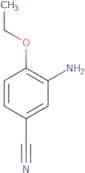
3-Amino-4-ethoxybenzonitrile
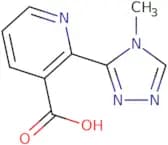
CAS:<p>Versatile small molecule scaffold</p>Formula:C9H10N2OPurity:Min. 95%Molecular weight:162.19 g/mol2-(4-Methyl-4H-1,2,4-triazol-3-yl)pyridine-3-carboxylic acid
CAS:<p>Versatile small molecule scaffold</p>Formula:C9H8N4O2Purity:Min. 95%Molecular weight:204.2 g/molRef: 3D-CVD03521
Discontinued producttert-Butyl N-benzylcarbamate
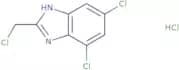
CAS:<p>Tert-Butyl N-benzylcarbamate is a synthetic compound that is being developed for the treatment of cancer. It is an analog of carmustine, a drug used for the treatment of brain tumors, and has been shown to be effective against cell lines in vitro. Tert-Butyl N-benzylcarbamate binds to DNA and inhibits protein synthesis, leading to cancer cell death. The drug also inhibits the growth of cancer cells by inhibiting chloride channels and blocking the influx of hydrogen chloride into cells. Tert-Butyl N-benzylcarbamate has not been tested in humans yet, but it has shown promising results in animal models.</p>Formula:C12H17NO2Purity:Min. 95%Molecular weight:207.27 g/mol4,6-Dichloro-2-(chloromethyl)-1H-1,3-benzodiazole hydrochloride
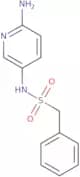
CAS:<p>Versatile small molecule scaffold</p>Formula:C8H6Cl4N2Purity:Min. 95%Molecular weight:272 g/molN-(6-Aminopyridin-3-yl)-1-phenylmethanesulfonamide
CAS:<p>Versatile small molecule scaffold</p>Formula:C12H13N3O2SPurity:Min. 95%Molecular weight:263.32 g/molRef: 3D-JXB24681
Discontinued producttert-Butyl N-(3-amino-2-methylbutan-2-yl)carbamate
CAS:<p>Versatile small molecule scaffold</p>Formula:C10H22N2O2Purity:Min. 95%Molecular weight:202.3 g/molRef: 3D-SLC84728
Discontinued product2-{[4-Phenyl-5-(pyridin-4-yl)-4H-1,2,4-triazol-3-yl]sulfanyl}acetic acid
CAS:<p>Versatile small molecule scaffold</p>Formula:C15H12N4O2SPurity:Min. 95%Molecular weight:312.3 g/mol4-(4-Bromophenyl)piperidine-2,6-dione
CAS:<p>Versatile small molecule scaffold</p>Formula:C11H10BrNO2Purity:Min. 95%Molecular weight:268.11 g/molRef: 3D-BAA13760
Discontinued product[2-(Piperidin-1-yl)pyridin-3-yl]methanamine dihydrochloride
CAS:<p>Versatile small molecule scaffold</p>Formula:C11H19Cl2N3Purity:Min. 95%Molecular weight:264.19 g/molRef: 3D-FDD50657
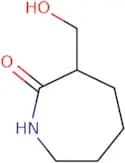
Discontinued product3-(Hydroxymethyl)azepan-2-one
CAS:<p>3-(Hydroxymethyl)azepan-2-one is a monomer that belongs to the class of organic solvents. It is used as an additive in agrochemical formulations, where it functions as a viscosity regulator and stabilizer. 3-(Hydroxymethyl)azepan-2-one has also been shown to be a bioactive substance with antimicrobial properties, which is due to its ability to interfere with protein synthesis by inhibiting the synthesis of RNA. 3-(Hydroxymethyl)azepan-2-one has also been shown to have anti-inflammatory effects, which may be due to its ability to inhibit prostaglandin synthesis.</p>Formula:C7H13NO2Purity:Min. 95%Molecular weight:143.18 g/molRef: 3D-GWC90059
Discontinued product(5-Fluoro-2,3-dihydro-1-benzofuran-2-yl)methanol
CAS:<p>Versatile small molecule scaffold</p>Formula:C9H9FO2Purity:Min. 95%Molecular weight:168.16 g/molRef: 3D-KFA63427
Discontinued productEthyl 2-imino-2-oxo-2λ6-thiabicyclo[2.1.1]hexane-4-carboxylate hydrochloride
CAS:<p>Versatile small molecule scaffold</p>Formula:C8H14ClNO3SPurity:Min. 95%Molecular weight:239.7 g/molRef: 3D-AVD26952
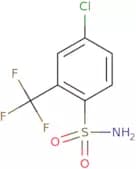
Discontinued product4-Chloro-2-(trifluoromethyl)benzene sulfonamide
CAS:<p>Versatile small molecule scaffold</p>Formula:C7H5ClF3NO2SPurity:Min. 95%Molecular weight:259.63 g/molRef: 3D-NEA82398
Discontinued product2-{2-Azabicyclo[2.2.1]heptan-2-yl}ethan-1-amine
CAS:<p>Versatile small molecule scaffold</p>Formula:C8H16N2Purity:Min. 95%Molecular weight:140.2 g/molRef: 3D-DKB15547
Discontinued product6-Methyl-[1,2,4]triazolo[1,5-a]pyrimidine-2-carboxylic acid
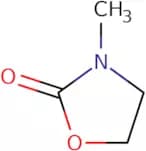
CAS:<p>Versatile small molecule scaffold</p>Formula:C7H6N4O2Purity:Min. 95%Molecular weight:178.15 g/mol3-Methyl-2-oxazolidone
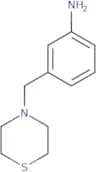
CAS:<p>3-Methyl-2-oxazolidone is an organic compound that is soluble in water and has a molecular weight of 114.3 g/mol. It can be produced by the reaction of methanol with oxalic acid, acetic acid, or malonic acid. 3-Methyl-2-oxazolidone is used as a solvent to dissolve other compounds and is used in the manufacture of sulfa drugs, hydrogen chloride, glycol ethers, and tetraphenylborates. 3-Methyl-2-oxazolidone has been shown to have electrochemical properties including proton conductivity and hydroxyl group oxidation. It also exhibits magnetic resonance properties due to its solute nature.</p>Formula:C4H7NO2Purity:Min. 95%3-(Thiomorpholin-4-ylmethyl)aniline
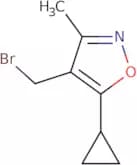
CAS:<p>Versatile small molecule scaffold</p>Formula:C11H16N2SPurity:Min. 95%Molecular weight:208.33 g/mol4-(Bromomethyl)-5-cyclopropyl-3-methyl-1,2-oxazole
CAS:<p>Versatile small molecule scaffold</p>Formula:C8H10BrNOPurity:Min. 95%Molecular weight:216.07 g/molRef: 3D-DKB20450
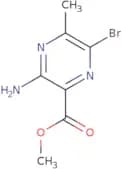
Discontinued productMethyl 3-amino-6-bromo-5-methylpyrazine-2-carboxylate
CAS:<p>Versatile small molecule scaffold</p>Formula:C7H8BrN3O2Purity:Min. 95%Molecular weight:246.06 g/mol1-Bromo-3-(2,4-difluorophenyl)propan-2-one
CAS:<p>Versatile small molecule scaffold</p>Formula:C9H7BrF2OPurity:Min. 95%Molecular weight:249.05 g/molRef: 3D-IBC18016
Discontinued product


![2-{[4-Phenyl-5-(pyridin-4-yl)-4H-1,2,4-triazol-3-yl]sulfanyl}acetic acid](/_next/image/?url=https%3A%2Fstatic.cymitquimica.com%2Fproducts%2F3D%2Fthumb-webp%2FTAA19982.webp&w=3840&q=75)

![[2-(Piperidin-1-yl)pyridin-3-yl]methanamine dihydrochloride](/_next/image/?url=https%3A%2Fstatic.cymitquimica.com%2Fproducts%2F3D%2Fthumb-webp%2FFDD50657.webp&w=3840&q=75)

![Ethyl 2-imino-2-oxo-2λ6-thiabicyclo[2.1.1]hexane-4-carboxylate hydrochloride](/_next/image/?url=https%3A%2Fstatic.cymitquimica.com%2Fproducts%2F3D%2Fthumb-webp%2FAVD26952.webp&w=3840&q=75)
![2-{2-Azabicyclo[2.2.1]heptan-2-yl}ethan-1-amine](/_next/image/?url=https%3A%2Fstatic.cymitquimica.com%2Fproducts%2F3D%2Fthumb-webp%2FDKB15547.webp&w=3840&q=75)
![6-Methyl-[1,2,4]triazolo[1,5-a]pyrimidine-2-carboxylic acid](/_next/image/?url=https%3A%2Fstatic.cymitquimica.com%2Fproducts%2F3D%2Fthumb-webp%2FTQB14412.webp&w=3840&q=75)