Building Blocks
This section contains fundamental products for the synthesis of organic and biological compounds. Building blocks are the essential starting materials used to construct complex molecules through various chemical reactions. They play a critical role in drug discovery, material science, and chemical research. At CymitQuimica, we offer a diverse range of high-quality building blocks to support your innovative research and industrial projects, ensuring you have the essential components for successful synthesis.
Subcategories of "Building Blocks"
- Boronic Acids & Boronic Acid Derivatives(5,756 products)
- Chiral Building Blocks(1,242 products)
- Hydrocarbon Building Blocks(6,095 products)
- Organic Building Blocks(61,038 products)
Found 196817 products of "Building Blocks"
Sort by
Purity (%)
0
100
|
0
|
50
|
90
|
95
|
100
6-Bromo-4-hydroxy-8-methylquinoline-3-carbonitrile
CAS:<p>Versatile small molecule scaffold</p>Formula:C11H7BrN2OPurity:Min. 95%Molecular weight:263.09 g/molRef: 3D-SCA64341
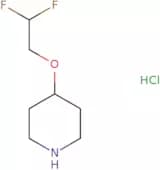
Discontinued product4-(2,2-Difluoroethoxy)piperidine
CAS:<p>Versatile small molecule scaffold</p>Formula:C7H14ClF2NOPurity:Min. 95%Molecular weight:201.64 g/molN-Methyl-N-phenylpiperidin-4-amine hydrochloride
CAS:<p>Versatile small molecule scaffold</p>Formula:C12H19ClN2Purity:Min. 95%Molecular weight:226.74 g/mol2-Amino-N-(quinolin-8-yl)acetamide
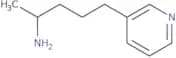
CAS:<p>2-Amino-N-(quinolin-8-yl)acetamide is a fluorescent inorganic compound. It has been shown to have a high affinity for chloride, with nanotube structures that are able to bind the chloride ions by supramolecular interactions. This binding prevents the chloride from interacting with other biomolecules, such as proteins and DNA. The energy of this interaction can be measured using fluorophore spectroscopy, which can be used for bioassays and medical imaging. 2-Amino-N-(quinolin-8-yl)acetamide has also been shown to have an ability to interact with zinc ions (Zn2+) in electrospray experiments, resulting in the emission of fluorescence.</p>Formula:C11H11N3OPurity:Min. 95%Molecular weight:201.22 g/mol5-(Pyridin-3-yl)pentan-2-amine
CAS:<p>Versatile small molecule scaffold</p>Formula:C10H16N2Purity:Min. 95%Molecular weight:164.25 g/molRef: 3D-LEA84881
Discontinued producttert-Butyl 6-amino-5H,6H,7H,8H,9H-imidazo[1,2-a][1,4]diazepine-8-carboxylate
CAS:<p>Versatile small molecule scaffold</p>Formula:C12H20N4O2Purity:Min. 95%Molecular weight:252.3 g/molRef: 3D-MRD28171
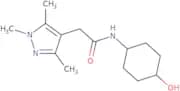
Discontinued productN-(4-Hydroxycyclohexyl)-2-(trimethyl-1H-pyrazol-4-yl)acetamide
CAS:<p>Versatile small molecule scaffold</p>Formula:C14H23N3O2Purity:Min. 95%Molecular weight:265.35 g/molRef: 3D-HWB10740
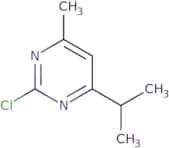
Discontinued product2-Chloro-4-methyl-6-(propan-2-yl)pyrimidine
CAS:<p>Versatile small molecule scaffold</p>Formula:C8H11ClN2Purity:Min. 95%Molecular weight:170.64 g/molRef: 3D-HTB65826
Discontinued product2-(2-Methyloxolan-2-yl)piperidine hydrochloride
CAS:<p>Versatile small molecule scaffold</p>Formula:C10H20ClNOPurity:Min. 95%Molecular weight:205.7 g/molRef: 3D-MRD28919
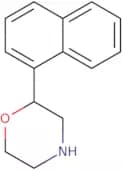
Discontinued product2-(Naphthalen-1-yl)morpholine
CAS:<p>Versatile small molecule scaffold</p>Formula:C14H15NOPurity:Min. 95%Molecular weight:213.27 g/molRef: 3D-XTB79703
Discontinued product3-(2,5-Dioxo-2,5-dihydro-1H-pyrrol-1-yl)-2,2-dimethylpropanoic acid
CAS:<p>Versatile small molecule scaffold</p>Formula:C9H11NO4Purity:Min. 95%Molecular weight:197.19 g/molRef: 3D-XLC39286
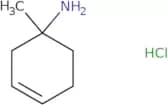
Discontinued product1-Methylcyclohex-3-en-1-amine hydrochloride
CAS:<p>Versatile small molecule scaffold</p>Formula:C7H14ClNPurity:Min. 95%Molecular weight:147.64 g/molRef: 3D-XAA18976
Discontinued productN-[(Pyridin-2-yl)methyl]pyridin-3-amine
CAS:<p>N-[(Pyridin-2-yl)methyl]pyridin-3-amine (NMP) is a nitrate salt that belongs to the class of anions. It forms complexes with metal cations and has been shown to be an effective ligand for lanthanide ions. NMP has also been shown to have luminescent properties, which are mediated by its ability to bind to metal cations. The crystal structure of NMP in the solid state was determined by single crystal x-ray diffraction. The molecule adopts a polyhedral geometry with two unsymmetrical geometries; one is a square pyramid and the other is a distorted octahedron. These two structures are related through a symmetry operation called glide reflection, which transforms one structure into the other. This transformation can be used to generate infinite architectural variations.</p>Formula:C11H11N3Purity:Min. 95%Molecular weight:185.22 g/mol4-Aminoisothiochroman 2,2-dioxide hydrochloride
CAS:<p>Versatile small molecule scaffold</p>Formula:C9H12ClNO2SPurity:Min. 95%Molecular weight:233.72 g/molRef: 3D-MXB83061
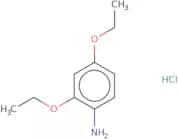
Discontinued product2,4-Diethoxyaniline hydrochloride
CAS:<p>Versatile small molecule scaffold</p>Formula:C10H16ClNO2Purity:Min. 95%Molecular weight:217.7 g/molRef: 3D-UND37108
Discontinued product3-(Aminomethyl)-5-fluorophenol hydrochloride
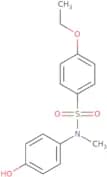
CAS:<p>Versatile small molecule scaffold</p>Formula:C7H9ClFNOPurity:Min. 95%Molecular weight:177.6 g/mol4-Ethoxy-N-(4-hydroxyphenyl)-N-methylbenzene-1-sulfonamide
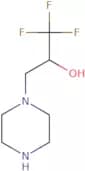
CAS:<p>Versatile small molecule scaffold</p>Formula:C15H17NO4SPurity:Min. 95%Molecular weight:307.4 g/mol1,1,1-Trifluoro-3-(piperazin-1-yl)propan-2-ol
CAS:<p>Versatile small molecule scaffold</p>Formula:C7H13F3N2OPurity:Min. 95%Molecular weight:198.19 g/molRef: 3D-JAB57649
Discontinued product2-Hydroxy-[1,1'-biphenyl]-3-carboxylic acid
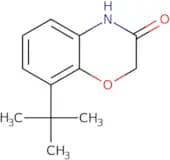
CAS:<p>2-Hydroxy-[1,1'-biphenyl]-3-carboxylic acid (2HBC) is a monomer that belongs to the group of ester compounds. It has been shown to inhibit the growth of trichophyton mentagrophytes and other fungi by forming hydrogen bonds with the enzyme activities in the cell wall. 2HBC also inhibits microbial growth by binding to enzymes such as phospholipase A2, cyclooxygenase, and lipoxygenase, which are involved in inflammatory processes. This drug also inhibits bacterial growth by binding to the ribosome, preventing protein synthesis and leading to cell death. The inhibition of microbial growth is not limited to bacteria; it also occurs in fungi and protozoa. 2HBC has been shown to be active against both extracellular and intracellular microbial infections.</p>Formula:C13H10O3Purity:Min. 95%Molecular weight:214.22 g/mol8-tert-Butyl-3,4-dihydro-2H-1,4-benzoxazin-3-one
CAS:<p>Versatile small molecule scaffold</p>Formula:C12H15NO2Purity:Min. 95%Molecular weight:205.25 g/molRef: 3D-RAC91566
Discontinued product




![tert-Butyl 6-amino-5H,6H,7H,8H,9H-imidazo[1,2-a][1,4]diazepine-8-carboxylate](/_next/image/?url=https%3A%2Fstatic.cymitquimica.com%2Fproducts%2F3D%2Fthumb-webp%2FMRD28171.webp&w=3840&q=75)

![N-[(Pyridin-2-yl)methyl]pyridin-3-amine](/_next/image/?url=https%3A%2Fstatic.cymitquimica.com%2Fproducts%2F3D%2Fthumb-webp%2FCJA01797.webp&w=3840&q=75)


![2-Hydroxy-[1,1'-biphenyl]-3-carboxylic acid](/_next/image/?url=https%3A%2Fstatic.cymitquimica.com%2Fproducts%2F3D%2Fthumb-webp%2FAAA30406.webp&w=3840&q=75)