Building Blocks
This section contains fundamental products for the synthesis of organic and biological compounds. Building blocks are the essential starting materials used to construct complex molecules through various chemical reactions. They play a critical role in drug discovery, material science, and chemical research. At CymitQuimica, we offer a diverse range of high-quality building blocks to support your innovative research and industrial projects, ensuring you have the essential components for successful synthesis.
Subcategories of "Building Blocks"
- Boronic Acids & Boronic Acid Derivatives(5,756 products)
- Chiral Building Blocks(1,242 products)
- Hydrocarbon Building Blocks(6,095 products)
- Organic Building Blocks(61,055 products)
Found 199650 products of "Building Blocks"
Sort by
Purity (%)
0
100
|
0
|
50
|
90
|
95
|
100
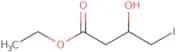
Ethyl 3-hydroxy-4-iodobutanoate
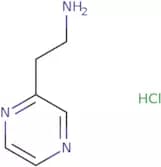
CAS:<p>Versatile small molecule scaffold</p>Formula:C6H11O3IPurity:Min. 95%Molecular weight:258.05 g/mol2-Pyrazin-2-yl-ethylamine HCl
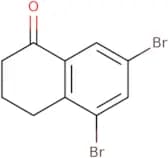
CAS:<p>Versatile small molecule scaffold</p>Formula:C6H10ClN3Purity:Min. 95%Molecular weight:159.62 g/mol5,7-dibromo-1,2,3,4-tetrahydronaphthalen-1-one
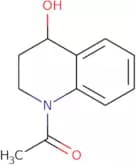
CAS:<p>Versatile small molecule scaffold</p>Formula:C10H8Br2OPurity:Min. 95%Molecular weight:304 g/mol1-(4-Hydroxy-1,2,3,4-tetrahydroquinolin-1-yl)ethan-1-one
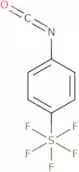
CAS:<p>Versatile small molecule scaffold</p>Formula:C11H13NO2Purity:Min. 95%Molecular weight:191.23 g/mol4-(Pentafluorosulfanyl)phenyl isocyanate
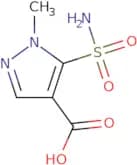
CAS:Versatile small molecule scaffoldFormula:C7H4F5NOSPurity:Min. 95%Molecular weight:245.17 g/mol1-Methyl-5-sulfamoyl-1H-pyrazole-4-carboxylic acid
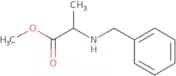
CAS:<p>Versatile small molecule scaffold</p>Formula:C5H7N3O4SPurity:Min. 95%Molecular weight:205.19 g/molN-Benzylalanine methyl ester
CAS:<p>N-Benzylalanine methyl ester is a natural product that is used for the treatment of Parkinson's disease. It has been shown to have an anti-inflammatory effect, which may be due to inhibition of amines and neurotransmitters, as well as its ability to inhibit enzymes that break down these compounds. N-Benzylalanine methyl ester is produced by asymmetric synthesis and has been shown to be enantiopure. It can be synthesized through enzymatic methods or via synthetic methods. N-Benzylalanine methyl ester can also be made by skeleton rearrangement and chiral synthesis.br>br><br>N-Benzylalanine methyl ester is synthesized in the human body from L-phenylalanine and benzoic acid. The molecule contains a benzene ring with a nitrogen atom attached to it. This benzene ring is substituted with an amino group at one end and a carboxylic acid group at the</p>Formula:C11H15NO2Purity:Min. 95%Molecular weight:193.24 g/mol2-bromo-4-(pentafluorosulfanyl)aniline
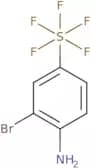
CAS:<p>2-bromo-4-(pentafluorosulfanyl)aniline is a synthetic intermediate that has been used as an insecticide. This agent is also used as a diagnostic agent to determine the presence of cardiac arrhythmias, such as ventricular tachycardia, and can be utilized in the diagnosis of cardiovascular diseases. 2-Bromo-4-(pentafluorosulfanyl)aniline has been shown to have water solubility and can be synthesized by a number of methods, including the functionalization of bromobenzene with pentafluorosulfanyl chloride. This chemical has been shown to inhibit the sodium ion channel and block the conduction of cardiac impulses.</p>Formula:C6H5BrF5NSPurity:Min. 95%Molecular weight:298.1 g/mol2-(7-Methyl-1H-indol-3-yl)ethan-1-amine hydrochloride
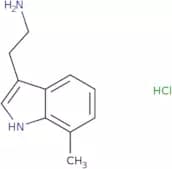
CAS:Controlled Product<p>Adjuvants are substances that are used to stimulate a person's immune system in order to produce a stronger and more effective immune response. Adjuvants may be used as part of an immunization program or to help treat certain diseases, such as pneumonia. 2-(7-Methyl-1H-indol-3-yl)ethan-1-amine hydrochloride is a biochemical adjuvant that is used in the treatment of gram-negative bacterial infections. It inhibits the growth of drug resistant bacteria by binding to lipopolysaccharide and inhibiting cell wall synthesis. This drug has been shown to be clinically useful in the treatment of pneumoniae caused by gram negative bacteria with breakpoints for erythromycin resistance between 0.25 and 1 μg/ml.</p>Formula:C11H15ClN2Purity:Min. 95%Molecular weight:210.7 g/molEthyl 5-(bromomethyl)-3-methyl-1,2-oxazole-4-carboxylate
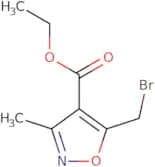
CAS:<p>Versatile small molecule scaffold</p>Formula:C8H10BrNO3Purity:Min. 95%Molecular weight:248.07 g/mol4-(bromomethyl)-3,5-dichloropyridine
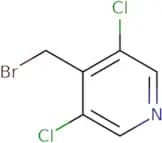
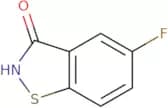
CAS:<p>Versatile small molecule scaffold</p>Formula:C6H4BrCl2NPurity:Min. 95%Molecular weight:240.91 g/mol5-Fluoro-2,3-dihydro-1,2-benzothiazol-3-one
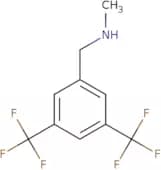
CAS:<p>Versatile small molecule scaffold</p>Formula:C7H4FNOSPurity:Min. 95%Molecular weight:169.18 g/mol1-(3,5-Bis(trifluoromethyl)phenyl)-N-methylmethanamine
CAS:<p>Versatile small molecule scaffold</p>Formula:C10H9F6NPurity:Min. 95%Molecular weight:257.18 g/mol[(4S)-4-(Prop-1-en-2-yl)cyclohex-1-en-1-yl]methanamine
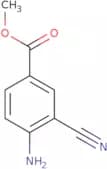
CAS:<p>Versatile small molecule scaffold</p>Formula:C10H17NPurity:Min. 95%Molecular weight:151.2 g/molMethyl 4-amino-3-cyanobenzoate
CAS:<p>Versatile small molecule scaffold</p>Formula:C9H8N2O2Purity:Min. 95%Molecular weight:176.17 g/moltert-Butyl 6-benzyl-octahydro-1H-pyrrolo[3,4-b]pyridine-1-carboxylate
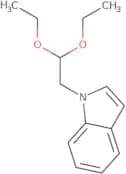
CAS:<p>Versatile small molecule scaffold</p>Formula:C19H28N2O2Purity:Min. 95%Molecular weight:316.4 g/mol1-(2,2-Diethoxyethyl)-1H-indole
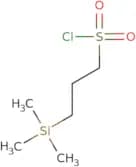
CAS:<p>Versatile small molecule scaffold</p>Formula:C14H19NO2Purity:Min. 95%Molecular weight:233.31 g/mol3-(Trimethylsilyl)propane-1-sulfonyl chloride
CAS:<p>Versatile small molecule scaffold</p>Formula:C6H15ClO2SSiPurity:Min. 95%Molecular weight:214.79 g/molMethyl 4-[2-(2-aminophenyl)ethynyl]benzoate
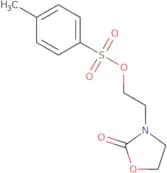
CAS:<p>Versatile small molecule scaffold</p>Formula:C16H13NO2Purity:Min. 95%Molecular weight:251.3 g/mol2-(2-Oxo-1,3-oxazolidin-3-yl)ethyl toluene-4-sulphonate
CAS:<p>Versatile small molecule scaffold</p>Formula:C12H15NO5SPurity:Min. 95%Molecular weight:285.32 g/mol

![[(4S)-4-(Prop-1-en-2-yl)cyclohex-1-en-1-yl]methanamine](/_next/image/?url=https%3A%2Fstatic.cymitquimica.com%2Fproducts%2F3D%2Fthumb-webp%2FJGA82294.webp&w=3840&q=75)
![tert-Butyl 6-benzyl-octahydro-1H-pyrrolo[3,4-b]pyridine-1-carboxylate](/_next/image/?url=https%3A%2Fstatic.cymitquimica.com%2Fproducts%2F3D%2Fthumb-webp%2FJGA87735.webp&w=3840&q=75)
![Methyl 4-[2-(2-aminophenyl)ethynyl]benzoate](/_next/image/?url=https%3A%2Fstatic.cymitquimica.com%2Fproducts%2F3D%2Fthumb-webp%2FJGA97012.webp&w=3840&q=75)