Building Blocks
This section contains fundamental products for the synthesis of organic and biological compounds. Building blocks are the essential starting materials used to construct complex molecules through various chemical reactions. They play a critical role in drug discovery, material science, and chemical research. At CymitQuimica, we offer a diverse range of high-quality building blocks to support your innovative research and industrial projects, ensuring you have the essential components for successful synthesis.
Subcategories of "Building Blocks"
- Boronic Acids & Boronic Acid Derivatives(5,756 products)
- Chiral Building Blocks(1,242 products)
- Hydrocarbon Building Blocks(6,095 products)
- Organic Building Blocks(61,038 products)
Found 196817 products of "Building Blocks"
Sort by
Purity (%)
0
100
|
0
|
50
|
90
|
95
|
100
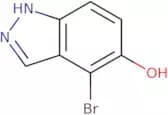
4-Bromo-1H-indazol-5-ol
CAS:<p>Versatile small molecule scaffold</p>Formula:C7H5BrN2OPurity:Min. 95%Molecular weight:213.03 g/molRef: 3D-DUA83852
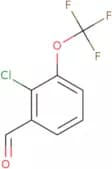
Discontinued product2-Chloro-3-(trifluoromethoxy)benzaldehyde
CAS:<p>Versatile small molecule scaffold</p>Formula:C8H4ClF3O2Purity:Min. 95%Molecular weight:224.56 g/mol2-(2-Bromoethyl)-1,4-dichlorobenzene
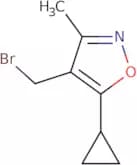
CAS:<p>Versatile small molecule scaffold</p>Formula:C8H7BrCl2Purity:Min. 95%Molecular weight:253.95 g/mol4-(Bromomethyl)-5-cyclopropyl-3-methyl-1,2-oxazole
CAS:<p>Versatile small molecule scaffold</p>Formula:C8H10BrNOPurity:Min. 95%Molecular weight:216.07 g/molRef: 3D-DKB20450
Discontinued product2-{2-Azabicyclo[2.2.1]heptan-2-yl}ethan-1-amine
CAS:<p>Versatile small molecule scaffold</p>Formula:C8H16N2Purity:Min. 95%Molecular weight:140.2 g/molRef: 3D-DKB15547
Discontinued product2-[2-(Trimethylsilyl)ethynyl]benzenamine
CAS:<p>2-[2-(Trimethylsilyl)ethynyl]benzenamine is an aromatic compound that is used as a starting material for the synthesis of other chemicals. It is prepared by reaction of 2-bromobenzene with ethynylmagnesium bromide and p-toluenesulfonic acid in the presence of aluminum chloride. The yield of the reaction product depends on the time and temperature. Elemental analysis reveals that the compound contains an alkyne group, which facilitates its conversion to quinoline derivatives. The chemical has been shown to react with x-rays to produce diffraction patterns, which can be analyzed to determine the structure of the molecule. X-ray diffraction analysis also revealed that this compound contains a quinoline ring system, which may contribute to its anti-inflammatory effects.</p>Formula:C11H15NSiPurity:Min. 95%Molecular weight:189.33 g/mol4,7-Dibromo-2,3-dihydro-1H-inden-1-one
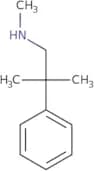
CAS:<p>Versatile small molecule scaffold</p>Formula:C9H6Br2OPurity:Min. 95%Molecular weight:289.95 g/molMethyl(2-methyl-2-phenylpropyl)amine
CAS:<p>Versatile small molecule scaffold</p>Formula:C11H17NPurity:Min. 95%Molecular weight:163.26 g/mol1-[(tert-Butoxy)carbonyl]-1,4,5,6-tetrahydropyridine-3-carboxylic acid
CAS:<p>Versatile small molecule scaffold</p>Formula:C11H17NO4Purity:Min. 95%Molecular weight:227.26 g/molRef: 3D-CKC07438
Discontinued product2-Boc-8-amino-5-thia-2-azaspiro[3.4]octane 5,5-dioxide
CAS:<p>Versatile small molecule scaffold</p>Formula:C11H20N2O4SPurity:Min. 95%Molecular weight:276.35 g/molRef: 3D-QDC48183
Discontinued product2-[(4-Oxo-3,4-dihydroquinazolin-2-yl)methyl]benzoic acid
CAS:<p>2-[(4-Oxo-3,4-dihydroquinazolin-2-yl)methyl]benzoic acid is an acylating agent that forms a covalent bond with the amino group of a protein. It has been shown to react with both aromatic and aliphatic groups, but not with hydroxyl groups. 2-[(4-Oxo-3,4-dihydroquinazolin-2-yl)methyl]benzoic acid is commonly used in the synthesis of isoquinolines. This chemical is soluble in water and can be obtained as a yellow solid.</p>Formula:C16H12N2O3Purity:Min. 95%Molecular weight:280.28 g/molRef: 3D-QWA49574
Discontinued product(3Z)-3-(Methoxymethylidene)-1-methylpiperidine
CAS:<p>Versatile small molecule scaffold</p>Formula:C8H15NOPurity:Min. 95%Molecular weight:141.21 g/molRef: 3D-BKD19025
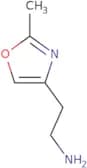
Discontinued product2-(2-Methyl-1,3-oxazol-4-yl)ethan-1-amine
CAS:<p>Versatile small molecule scaffold</p>Formula:C6H10N2OPurity:Min. 95%Molecular weight:126.2 g/molRef: 3D-SAC48361
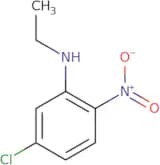
Discontinued product5-Chloro-N-ethyl-2-nitroaniline
CAS:<p>Versatile small molecule scaffold</p>Formula:C8H9ClN2O2Purity:Min. 95%Molecular weight:200.62 g/mol3a-Phenyl-hexahydro-1H-2λ6-thieno[3,4-c]pyrrole-2,2-dione hydrochloride
CAS:<p>Versatile small molecule scaffold</p>Formula:C12H16ClNO2SPurity:Min. 95%Molecular weight:273.8 g/molRef: 3D-TPD50501
Discontinued product2-[(Carboxymethyl)amino]propanoic acidhydrochloride
CAS:<p>Versatile small molecule scaffold</p>Formula:C5H10ClNO4Purity:Min. 95%Molecular weight:183.59 g/molRef: 3D-IBA01275
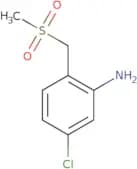
Discontinued product5-Chloro-2-(methanesulfonylmethyl)aniline
CAS:<p>Versatile small molecule scaffold</p>Formula:C8H10ClNO2SPurity:Min. 95%Molecular weight:219.69 g/molRef: 3D-AAC98811
Discontinued product2-Hydroxy-[1,1'-biphenyl]-3-carboxylic acid
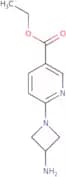
CAS:<p>2-Hydroxy-[1,1'-biphenyl]-3-carboxylic acid (2HBC) is a monomer that belongs to the group of ester compounds. It has been shown to inhibit the growth of trichophyton mentagrophytes and other fungi by forming hydrogen bonds with the enzyme activities in the cell wall. 2HBC also inhibits microbial growth by binding to enzymes such as phospholipase A2, cyclooxygenase, and lipoxygenase, which are involved in inflammatory processes. This drug also inhibits bacterial growth by binding to the ribosome, preventing protein synthesis and leading to cell death. The inhibition of microbial growth is not limited to bacteria; it also occurs in fungi and protozoa. 2HBC has been shown to be active against both extracellular and intracellular microbial infections.</p>Formula:C13H10O3Purity:Min. 95%Molecular weight:214.22 g/molEthyl 6-(3-aminoazetidin-1-yl)pyridine-3-carboxylate
CAS:<p>Versatile small molecule scaffold</p>Formula:C11H15N3O2Purity:Min. 95%Molecular weight:221.26 g/molRef: 3D-UHC10343
Discontinued product3-(2,5-Dioxo-2,5-dihydro-1H-pyrrol-1-yl)-2,2-dimethylpropanoic acid
CAS:<p>Versatile small molecule scaffold</p>Formula:C9H11NO4Purity:Min. 95%Molecular weight:197.19 g/molRef: 3D-XLC39286
Discontinued product


![2-{2-Azabicyclo[2.2.1]heptan-2-yl}ethan-1-amine](/_next/image/?url=https%3A%2Fstatic.cymitquimica.com%2Fproducts%2F3D%2Fthumb-webp%2FDKB15547.webp&w=3840&q=75)
![2-[2-(Trimethylsilyl)ethynyl]benzenamine](/_next/image/?url=https%3A%2Fstatic.cymitquimica.com%2Fproducts%2F3D%2Fthumb-webp%2FDEA52916.webp&w=3840&q=75)

![1-[(tert-Butoxy)carbonyl]-1,4,5,6-tetrahydropyridine-3-carboxylic acid](/_next/image/?url=https%3A%2Fstatic.cymitquimica.com%2Fproducts%2F3D%2Fthumb-webp%2FCKC07438.webp&w=3840&q=75)
![2-Boc-8-amino-5-thia-2-azaspiro[3.4]octane 5,5-dioxide](/_next/image/?url=https%3A%2Fstatic.cymitquimica.com%2Fproducts%2F3D%2Fthumb-webp%2FQDC48183.webp&w=3840&q=75)
![2-[(4-Oxo-3,4-dihydroquinazolin-2-yl)methyl]benzoic acid](/_next/image/?url=https%3A%2Fstatic.cymitquimica.com%2Fproducts%2F3D%2Fthumb-webp%2FQWA49574.webp&w=3840&q=75)

![3a-Phenyl-hexahydro-1H-2λ6-thieno[3,4-c]pyrrole-2,2-dione hydrochloride](/_next/image/?url=https%3A%2Fstatic.cymitquimica.com%2Fproducts%2F3D%2Fthumb-webp%2FTPD50501.webp&w=3840&q=75)
![2-[(Carboxymethyl)amino]propanoic acidhydrochloride](/_next/image/?url=https%3A%2Fstatic.cymitquimica.com%2Fproducts%2F3D%2Fthumb-webp%2FIBA01275.webp&w=3840&q=75)
![2-Hydroxy-[1,1'-biphenyl]-3-carboxylic acid](/_next/image/?url=https%3A%2Fstatic.cymitquimica.com%2Fproducts%2F3D%2Fthumb-webp%2FAAA30406.webp&w=3840&q=75)