Building Blocks
This section contains fundamental products for the synthesis of organic and biological compounds. Building blocks are the essential starting materials used to construct complex molecules through various chemical reactions. They play a critical role in drug discovery, material science, and chemical research. At CymitQuimica, we offer a diverse range of high-quality building blocks to support your innovative research and industrial projects, ensuring you have the essential components for successful synthesis.
Subcategories of "Building Blocks"
- Boronic Acids & Boronic Acid Derivatives(5,756 products)
- Chiral Building Blocks(1,242 products)
- Hydrocarbon Building Blocks(6,095 products)
- Organic Building Blocks(61,051 products)
Found 199813 products of "Building Blocks"
Sort by
Purity (%)
0
100
|
0
|
50
|
90
|
95
|
100
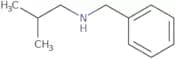
N-Benzyl-2-methylpropan-1-amine
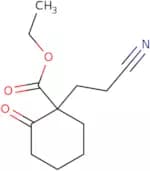
CAS:<p>N-Benzyl-2-methylpropan-1-amine is a phosphorous acid regulator that is used as a moiety in the synthesis of debenzylated benzyl amines. It can be used to regulate the pH of alkali metal esters and metal halides. N-Benzyl-2-methylpropan-1-amine also has been found to enhance the rates of amine reactions and promote the formation of ketones. This compound is also an ammonium salt with an oxidative effect on most organic substances.</p>Formula:C11H17NPurity:Min. 95%Molecular weight:163.26 g/molEthyl 1-(2-cyanoethyl)-2-oxocyclohexane-1-carboxylate
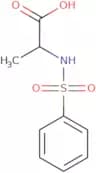
CAS:<p>Versatile small molecule scaffold</p>Formula:C12H17NO3Purity:Min. 95%Molecular weight:223.27 g/mol2-Benzenesulfonamidopropanoic acid
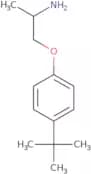
CAS:<p>Versatile small molecule scaffold</p>Formula:C9H11NO4SPurity:Min. 95%Molecular weight:229.26 g/mol1-(2-Aminopropoxy)-4-tert-butylbenzene
CAS:<p>Versatile small molecule scaffold</p>Formula:C13H21NOPurity:Min. 95%Molecular weight:207.31 g/mol1-Allyl-2-bromobenzene
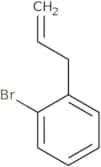
CAS:<p>1-Allyl-2-bromobenzene is an organic solvent that is used in the synthesis of fatty acids and bromophenols. It is a gaseous liquid at room temperature and pressure, but it can be condensed to liquid form by cooling. 1-Allyl-2-bromobenzene reacts with polydimethylsiloxane to produce amides or chlorides. The reaction proceeds under conditions where there are no competing reactions such as alkylation or biomolecular oxidation. It has been used extensively in the synthesis of fatty acid esters, amides, and nitriles. This organic solvent is volatile at room temperature and pressure and its boiling point is below 100 degrees Celsius. 1-Allyl-2-bromobenzene has a low viscosity and high surface tension which make it useful for certain types of chemical reactions on surfaces such as in the production of reaction products from naphthalene.br>br></p>Formula:C9H9BrPurity:Min. 95%Molecular weight:197.07 g/mol3-Phenyl-2,3-dihydrothiophene 1,1-dioxide
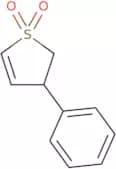
CAS:<p>Versatile small molecule scaffold</p>Formula:C10H10O2SPurity:Min. 95%Molecular weight:194.25 g/mol2-(4-Chloro-2-methylphenoxy)-2-methylpropanoic acid
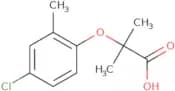
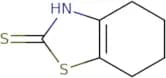
CAS:Versatile small molecule scaffoldFormula:C11H13ClO3Purity:Min. 95%Molecular weight:228.67 g/mol4,5,6,7-Tetrahydro-1,3-benzothiazole-2-thiol
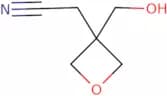
CAS:<p>Versatile small molecule scaffold</p>Formula:C7H9NS2Purity:Min. 95%Molecular weight:171.3 g/mol2-(3-(Hydroxymethyl)oxetan-3-yl)acetonitrile
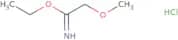
CAS:<p>Versatile small molecule scaffold</p>Formula:C6H9NO2Purity:Min. 95%Molecular weight:127.14 g/molEthyl 2-methoxyethanecarboximidate hydrochloride
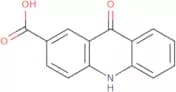
CAS:<p>Ethyl 2-methoxyethanecarboximidate hydrochloride is an amido amide with antibacterial activity. It is a carboxylic acid compound and an isomer of ethyl 2-methylpropanoate. This active form has been shown to inhibit bacterial growth by binding to the enzyme ribonucleotide reductase, which converts ribonucleotides into deoxyribonucleotides. The antimicrobial activity of this agent has been demonstrated in vitro against Escherichia coli, Pseudomonas aeruginosa, Staphylococcus epidermidis, Streptococcus pyogenes, and Enterobacter cloacae. Ethyl 2-methoxyethanecarboximidate hydrochloride also inhibits the production of bacterial endotoxin and has shown antibiotic activity against Gram-positive organisms.</p>Formula:C5H12ClNO2Purity:Min. 95%Molecular weight:153.61 g/mol9-Oxo-9,10-dihydroacridine-2-carboxylic acid
CAS:<p>9-Oxo-9,10-dihydroacridine-2-carboxylic acid is a fatty acid oxidation product that has been shown to induce apoptosis in the mitochondria of tumor cells. This process is mediated by the release of cytochrome c from the mitochondria into the cytosol. It also binds to antigens in the extracellular matrix and induces autoantibodies against these antigens. 9-Oxo-9,10-dihydroacridine-2-carboxylic acid has been found to bind to caspase family members and potentiate their activity. 9oxoacridine 2 carboxylic acid is also a potential antitumor agent that shows histological evidence of tumor regression in rats injected with sarcoma 180 cells.<br> 9oxoacridine 2 carboxylic acid also binds to DNA and inhibits protein synthesis by blocking transcriptional initiation at G</p>Formula:C14H9NO3Purity:Min. 95%Molecular weight:239.23 g/mol2-Chloro-N-[3-(dimethylamino)propyl]acetamide hydrochloride
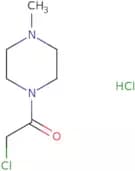
CAS:<p>Versatile small molecule scaffold</p>Formula:C7H16Cl2N2OPurity:Min. 95%Molecular weight:215.12 g/mol1-(2-Chloroacetyl)-4-methylpiperazine HCl
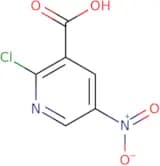
CAS:<p>Versatile small molecule scaffold</p>Formula:C7H13ClN2O·HClPurity:Min. 95%Molecular weight:213.11 g/mol2-Chloro-5-nitronicotinic acid
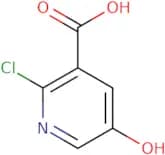
CAS:<p>2-Chloro-5-nitronicotinic acid is an inhibitor of HIV-1 reverse transcriptase. It binds reversibly to the active site of the enzyme and blocks its ability to synthesize DNA, thus inhibiting HIV replication. 2-Chloro-5-nitronicotinic acid also inhibits the activity of wild type and mutant forms of human immunodeficiency virus type 1 (HIV-1) reverse transcriptase with high potency. This drug has been shown to be effective against nevirapine resistant HIV strains. The molecular modeling studies suggest that 2-chloro-5 nitronicotinic acid binds to a hydrophobic pocket in the active site of HIV reverse transcriptase, which is different from other inhibitors such as AZT, ddI, and ddC.</p>Formula:C6H3ClN2O4Purity:Min. 95%Molecular weight:202.55 g/mol2-Chloro-5-hydroxynicotinic acid
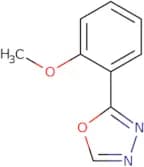
CAS:<p>2-Chloro-5-hydroxynicotinic acid is a chemical compound that has been isolated from the bark of the plant Cinchona officinalis. It is an intermediate in the biosynthesis of quinine and other cinchona alkaloids. 2-Chloro-5-hydroxynicotinic acid is also used as an intermediate in the synthesis of other compounds, including herbicides and pesticides.</p>Formula:C6H4ClNO3Purity:Min. 95%Molecular weight:173.55 g/mol2-(2-Methoxyphenyl)-1,3,4-oxadiazole
CAS:<p>Versatile small molecule scaffold</p>Formula:C9H8N2O2Purity:Min. 95%Molecular weight:176.17 g/mol4-[(Dimethylamino)methyl]-2-methoxyphenol hydrochloride
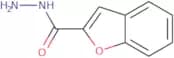
CAS:<p>Versatile small molecule scaffold</p>Formula:C10H16ClNO2Purity:Min. 95%Molecular weight:217.69 g/mol1-Benzofuran-2-carbohydrazide
CAS:<p>1-Benzofuran-2-carbohydrazide (1BFC) is an antibacterial agent that belongs to the class of nitrogenous compounds. It is a member of the benzofuran derivatives and has been shown to have significant antifungal activity against flavus, cleavage activity against s. aureus and staphylococcus, and hypoglycemic activity in mice. 1BFC has been found to be more active than fluconazole against Candida albicans, but less active than fluconazole against Saccharomyces cerevisiae.</p>Formula:C9H8N2O2Purity:Min. 95%Molecular weight:176.17 g/mol2-[(3-Methylcyclopentyl)amino]ethan-1-ol
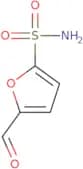
CAS:<p>Versatile small molecule scaffold</p>Formula:C8H17NOPurity:Min. 95%Molecular weight:143.23 g/mol5-Formylfuran-2-sulfonamide
CAS:<p>Versatile small molecule scaffold</p>Formula:C5H5NO4SPurity:Min. 95%Molecular weight:175.16 g/mol

![2-Chloro-N-[3-(dimethylamino)propyl]acetamide hydrochloride](/_next/image/?url=https%3A%2Fstatic.cymitquimica.com%2Fproducts%2F3D%2Fthumb-webp%2FSBA95185.webp&w=3840&q=75)
![4-[(Dimethylamino)methyl]-2-methoxyphenol hydrochloride](/_next/image/?url=https%3A%2Fstatic.cymitquimica.com%2Fproducts%2F3D%2Fthumb-webp%2FSBA97354.webp&w=3840&q=75)
![2-[(3-Methylcyclopentyl)amino]ethan-1-ol](/_next/image/?url=https%3A%2Fstatic.cymitquimica.com%2Fproducts%2F3D%2Fthumb-webp%2FSBA97777.webp&w=3840&q=75)