Building Blocks
This section contains fundamental products for the synthesis of organic and biological compounds. Building blocks are the essential starting materials used to construct complex molecules through various chemical reactions. They play a critical role in drug discovery, material science, and chemical research. At CymitQuimica, we offer a diverse range of high-quality building blocks to support your innovative research and industrial projects, ensuring you have the essential components for successful synthesis.
Subcategories of "Building Blocks"
- Boronic Acids & Boronic Acid Derivatives(5,756 products)
- Chiral Building Blocks(1,242 products)
- Hydrocarbon Building Blocks(6,095 products)
- Organic Building Blocks(61,055 products)
Found 199650 products of "Building Blocks"
Sort by
Purity (%)
0
100
|
0
|
50
|
90
|
95
|
100
2-[4-(4-Chlorophenyl)piperazin-1-yl]acetonitrile
CAS:<p>Versatile small molecule scaffold</p>Formula:C12H14ClN3Purity:Min. 95%Molecular weight:235.71 g/mol6,7,8,9-Tetrahydro-5H-benzo[7]annulene-5-carbaldehyde
CAS:<p>Versatile small molecule scaffold</p>Formula:C12H14OPurity:Min. 95%Molecular weight:174.24 g/mol3-Methoxy-6,7,8,9-tetrahydro-5H-benzo[7]annulen-6-one
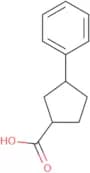
CAS:<p>Versatile small molecule scaffold</p>Formula:C12H14O2Purity:Min. 95%Molecular weight:190.24 g/mol3-Phenylcyclopentane-1-carboxylic acid
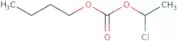
CAS:<p>3-Phenylcyclopentane-1-carboxylic acid (3PC) is a metabolite of the anticancer drug cyclopentane. 3PC inhibits mammalian cell growth in vitro and in vivo. This compound has also been shown to inhibit the activity of a number of enzymes, including cyclopentane hydrolase, cytochrome P450, and glutathione reductase. The anticancer properties of 3PC are thought to be due to its ability to inhibit steroid hormone biosynthesis or the synthesis of other cellular components that may be important for cancer cell growth.</p>Formula:C12H14O2Purity:Min. 95%Molecular weight:190.24 g/molButyl 1-chloroethyl carbonate
CAS:<p>Versatile small molecule scaffold</p>Formula:C7H13ClO3Purity:Min. 95%Molecular weight:180.63 g/mol6-Bromo-4-methoxy-1,3-dioxaindane
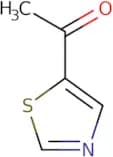
CAS:Controlled Product<p>Versatile small molecule scaffold</p>Formula:C8H7BrO3Purity:Min. 95%Molecular weight:231.04 g/mol1-(5-Thiazolyl)ethanone
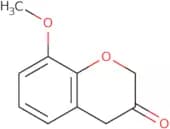
CAS:<p>1-(5-Thiazolyl)ethanone is an antimicrobial agent that has been shown to be active against staphylococcus and other bacteria. It is a nucleophilic reagent that reacts with the amine group of amino acids in proteins, which leads to the formation of protein adducts. 1-(5-Thiazolyl)ethanone has been found to be safe for use in humans and animals and does not have any significant side effects. The chemical is also able to kill cancer cells by inhibiting DNA synthesis, RNA synthesis, and protein synthesis. This drug has been shown to have antibacterial activity against a number of different bacterial strains, including methicillin-resistant Staphylococcus aureus (MRSA) isolates.</p>Formula:C5H5NOSPurity:Min. 95%Molecular weight:127.16 g/mol8-Methoxychroman-3-one
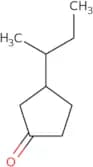
CAS:<p>8-Methoxychroman-3-one is a carboxylic acid that has been chemically modified to contain an acrylonitrile group. It can be synthesized by the reaction of nitric acid and glycidyl methacrylate. 8-Methoxychroman-3-one is used as a building block in organic synthesis. It is also used as a precursor for the production of other chemicals, such as dyes and pharmaceuticals. This compound can be converted to optically active forms by reacting with an optically active amine such as (S)-(-)-2-(tert-butyldimethylsilyl)azide or (R)-(+)-2-(tert-butyldimethylsilyl)azide. 8-Methoxychroman-3-one can be hydrolyzed with an aluminum alkoxide to produce glycidol, which is used in the production of polyureth</p>Formula:C10H10O3Purity:Min. 95%Molecular weight:178.18 g/mol3-(Butan-2-yl)cyclopentan-1-one
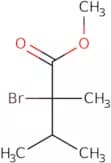
CAS:<p>Versatile small molecule scaffold</p>Formula:C9H16OPurity:Min. 95%Molecular weight:140.22 g/molMethyl 2-bromo-2,3-dimethylbutanoate
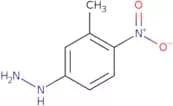
CAS:<p>Versatile small molecule scaffold</p>Formula:C7H13BrO2Purity:Min. 95%Molecular weight:209.08 g/mol(3-Methyl-4-nitrophenyl)hydrazine
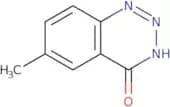
CAS:<p>3-Methyl-4-nitrophenylhydrazine is a metabolic product of clozapine and has been found to be a potent neuroleptic agent. 3-Methyl-4-nitrophenylhydrazine has been shown to inhibit the uptake of dopamine by binding to the dopamine transporter, which leads to an increase in dopaminergic activity. This compound also inhibits the synthesis of polyphosphoric acid, which may be due to its ability to act as an antidopaminergic agent.</p>Formula:C7H9N3O2Purity:Min. 95%Molecular weight:167.17 g/mol6-Methyl-3,4-dihydro-1,2,3-benzotriazin-4-one
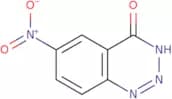
CAS:<p>Versatile small molecule scaffold</p>Formula:C8H7N3OPurity:Min. 95%Molecular weight:161.16 g/mol6-Nitro-3,4-dihydro-1,2,3-benzotriazin-4-one
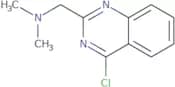
CAS:<p>Versatile small molecule scaffold</p>Formula:C7H4N4O3Purity:Min. 95%Molecular weight:192.13 g/mol4-Chloro-N,N-dimethylquinazolin-2-amine
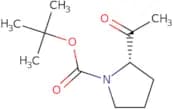
CAS:<p>4-Chloro-N,N-dimethylquinazolin-2-amine is a silicone that is used as an active substance in polydimethylsiloxane. It has a cyclic structure and transesterification reaction with alkanoic acid. This active substance has hydrophobic properties that make it suitable for use in deodorizing and encapsulated products. 4-Chloro-N,N-dimethylquinazolin-2-amine also has the ability to react with alcohols to form esters, which can be used as solvents or fragrances.</p>Formula:C11H12ClN3Purity:Min. 95%Molecular weight:221.68 g/mol(S)-tert-Butyl 2-acetylpyrrolidine-1-carboxylate
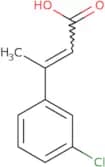
CAS:<p>Versatile small molecule scaffold</p>Formula:C11H19NO3Purity:Min. 95%Molecular weight:213.28 g/mol3-(3-Chlorophenyl)but-2-enoic acid
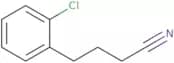
CAS:<p>Versatile small molecule scaffold</p>Formula:C10H9ClO2Purity:Min. 95%Molecular weight:196.63 g/mol4-(2-Chlorophenyl)butanenitrile
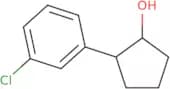
CAS:<p>Versatile small molecule scaffold</p>Formula:C10H10ClNPurity:Min. 95%Molecular weight:179.64 g/mol2-(3-Chlorophenyl)cyclopentan-1-ol
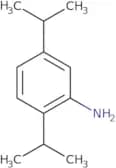
CAS:<p>Versatile small molecule scaffold</p>Formula:C11H13ClOPurity:Min. 95%Molecular weight:196.67 g/mol2,5-Diisopropylaniline
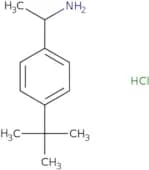
CAS:<p>Versatile small molecule scaffold</p>Formula:C12H19NPurity:Min. 95%Molecular weight:177.29 g/mol1-(4-tert-Butylphenyl)ethanamine HCl
CAS:<p>Versatile small molecule scaffold</p>Formula:C12H19N·HClPurity:Min. 95%Molecular weight:213.75 g/mol
![2-[4-(4-Chlorophenyl)piperazin-1-yl]acetonitrile](/_next/image/?url=https%3A%2Fstatic.cymitquimica.com%2Fproducts%2F3D%2Fthumb-webp%2FRDA49488.webp&w=3840&q=75)

![6,7,8,9-Tetrahydro-5H-benzo[7]annulene-5-carbaldehyde](/_next/image/?url=https%3A%2Fstatic.cymitquimica.com%2Fproducts%2F3D%2Fthumb-webp%2FRDA49546.webp&w=3840&q=75)
![3-Methoxy-6,7,8,9-tetrahydro-5H-benzo[7]annulen-6-one](/_next/image/?url=https%3A%2Fstatic.cymitquimica.com%2Fproducts%2F3D%2Fthumb-webp%2FRDA49563.webp&w=3840&q=75)