


Building Blocks
This section contains fundamental products for the synthesis of organic and biological compounds. Building blocks are the essential starting materials used to construct complex molecules through various chemical reactions. They play a critical role in drug discovery, material science, and chemical research. At CymitQuimica, we offer a diverse range of high-quality building blocks to support your innovative research and industrial projects, ensuring you have the essential components for successful synthesis.
Subcategories of "Building Blocks"
- Boronic Acids & Boronic Acid Derivatives(5,756 products)
- Chiral Building Blocks(1,242 products)
- Hydrocarbon Building Blocks(6,095 products)
- Organic Building Blocks(61,051 products)
Found 199813 products of "Building Blocks"
Sort by
Purity (%)
0
100
|
0
|
50
|
90
|
95
|
100
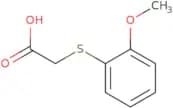
(2-Methoxy-phenylsulfanyl)-acetic acid
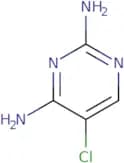
CAS:<p>Versatile small molecule scaffold</p>Formula:C9H10O3SPurity:Min. 95%Molecular weight:198.24 g/mol5-Chloropyrimidine-2,4-diamine
CAS:<p>5-Chloropyrimidine-2,4-diamine is a chemical compound that has been shown to inhibit the growth of cancer cells in vitro. The compound is an anti-cancer agent that can be used to treat lung cancer. It has been shown to have a cytotoxic effect on human lung cancer cells and to inhibit the proliferation of these cells in vitro. It also inhibits the growth of other types of human cancer cells, including those from breast, colon and prostate cancers. This substance has been shown to bind with high affinity to DNA and RNA and modulate their synthesis. 5-Chloropyrimidine-2,4-diamine also inhibits cell division by binding to the enzyme topoisomerase II, which controls the unwinding of DNA strands during replication.</p>Formula:C4H5ClN4Purity:Min. 95%Molecular weight:144.56 g/mol2-[(2-Methylphenyl)sulfanyl]-2-phenylacetic acid
CAS:<p>Versatile small molecule scaffold</p>Formula:C15H14O2SPurity:Min. 95%Molecular weight:258.3 g/mol2-[(2,4-Dimethylphenyl)sulfanyl]-2-phenylacetic acid
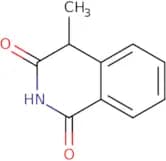
CAS:<p>Versatile small molecule scaffold</p>Formula:C16H16O2SPurity:Min. 95%Molecular weight:272.4 g/mol4-Methyl-4H-isoquinoline-1,3-dione
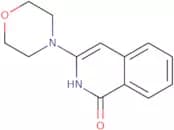
CAS:<p>Versatile small molecule scaffold</p>Formula:C10H9NO2Purity:Min. 95%Molecular weight:175.18 g/mol3-(Morpholin-4-yl)-1,2-dihydroisoquinolin-1-one
CAS:Versatile small molecule scaffoldFormula:C13H14N2O2Purity:Min. 95%Molecular weight:230.26 g/mol2-Tridecyloxirane
CAS:<p>2-Tridecyloxirane is a diagnostic agent that is used to identify hydroxy groups in collagen. It reacts with the hydroxyl group on collagen, forming an acyl chloride intermediate. This intermediate can be detected using a gas chromatography technique. The biodegradability of 2-tridecyloxirane has been studied and found to be dependent on the environment in which it is released. It was found to have a half-life of around 4 days in water, but up to 8 months in soil. The viscosity of 2-tridecyloxirane has been shown to decrease as the temperature increases, with the highest rate of change at temperatures above 150°C. This chemical has also been shown to react with primary amines and alicyclic compounds, such as ebola virus.</p>Formula:C15H30OPurity:Min. 95%Molecular weight:226.4 g/mol4-Chloro-2-oxo-2H-chromene-3-sulfonyl chloride
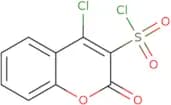
CAS:<p>4-Chloro-2-oxo-2H-chromene-3-sulfonyl chloride is a heterocyclic compound with significant biological activity. It is a salmonicida that kills bacteria by inhibiting the enzyme adenosine triphosphate (ATP). 4-Chloro-2-oxo-2H-chromene-3-sulfonyl chloride has been shown to have significant activity against Staphylococcus aureus, Streptococcus pneumoniae, and Streptococcus pyogenes. This drug also inhibits the growth of Pseudomonas aeruginosa and Escherichia coli.</p>Formula:C9H4Cl2O4SPurity:Min. 95%Molecular weight:279.1 g/mol2,3-Diaminopropionic acid monohydrobromide
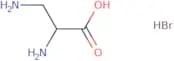
CAS:<p>2,3-Diaminopropionic acid monohydrobromide is a dibenzoylated derivative of 2,3-diaminopropionic acid. It has been shown to be an antibacterial agent. The compound inhibits bacterial growth by binding to the ribosomal protein L5 and blocking the synthesis of proteins necessary for cell division. 2,3-Diaminopropionic acid monohydrobromide has also been found to have neuropathic effects in animals. This compound can be extracted from plants such as lathyrus and eluted with ethanol or hydrobromide.</p>Formula:C3H8N2O2·HBrPurity:Min. 95%Molecular weight:185.02 g/mol1H,2H,3H,4H-Pyrazino[1,2-a]indole hydrochloride
CAS:<p>Versatile small molecule scaffold</p>Formula:C11H13ClN2Purity:Min. 95%Molecular weight:208.69 g/mol2,4-Dimethyl-3-hexanone
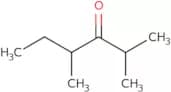
CAS:<p>Versatile small molecule scaffold</p>Formula:C8H16OPurity:Min. 95%Molecular weight:128.21 g/mol4-Fluoro-2-(trifluoromethyl)-1H-1,3-benzodiazole
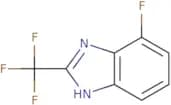
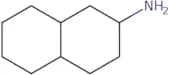
CAS:<p>Versatile small molecule scaffold</p>Formula:C8H4F4N2Purity:Min. 95%Molecular weight:204.12 g/molDecahydronaphthalen-2-amine
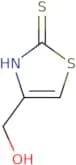
CAS:<p>Versatile small molecule scaffold</p>Formula:C10H19NPurity:Min. 95%Molecular weight:153.26 g/mol(2-Sulfanyl-1,3-thiazol-4-yl)methanol
CAS:<p>Versatile small molecule scaffold</p>Formula:C4H5NOS2Purity:Min. 95%Molecular weight:147.2 g/mol[3-(3-chlorophenyl)propyl]amine
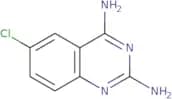
CAS:<p>Versatile small molecule scaffold</p>Formula:C9H12ClNPurity:Min. 95%Molecular weight:169.65 g/mol6-Chloroquinazoline-2,4-diamine
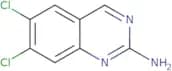
CAS:<p>Versatile small molecule scaffold</p>Formula:C8H7ClN4Purity:Min. 95%Molecular weight:194.62 g/mol6,7-Dichloroquinazolin-2-amine
CAS:<p>Versatile small molecule scaffold</p>Formula:C8H5Cl2N3Purity:Min. 95%Molecular weight:214.05 g/mol2-Methylthieno[3,2-d]pyrimidin-4-ol
CAS:<p>Versatile small molecule scaffold</p>Formula:C7H6N2OSPurity:Min. 95%Molecular weight:166.2 g/mol10-Methyl-7-thia-9,11-diazatricyclo[6.4.0.0,2,6]dodeca-1(8),2(6),9-trien-12-one
CAS:Versatile small molecule scaffoldFormula:C10H10N2OSPurity:Min. 95%Molecular weight:206.3 g/molBicyclo[2.2.2]octan-2-ol
CAS:<p>Bicyclo[2.2.2]octan-2-ol is an antiplasmodial agent that is used to treat malaria caused by Plasmodium falciparum and P. vivax. It binds to the parasite's heme, preventing its conversion of heme to protoporphyrin IX and blocking the synthesis of ATP, leading to cell death. Bicyclo[2.2.2]octan-2-ol has also been shown to be effective against multiresistant strains of plasmodium and has a low toxicity in humans. This substance can be synthesized by epimerization of 2-(bromomethyl)cyclohexanol with maleic anhydride or 2-benzoylcyclohexanol with benzoic acid. The yields from these reactions are low, but the product can be easily tracked due to its distinctive chemical properties (e.g., high boiling point</p>Formula:C8H14OPurity:Min. 95%Molecular weight:126.2 g/mol

![2-[(2-Methylphenyl)sulfanyl]-2-phenylacetic acid](/_next/image/?url=https%3A%2Fstatic.cymitquimica.com%2Fproducts%2F3D%2Fthumb-webp%2FTAA62645.webp&w=3840&q=75)
![2-[(2,4-Dimethylphenyl)sulfanyl]-2-phenylacetic acid](/_next/image/?url=https%3A%2Fstatic.cymitquimica.com%2Fproducts%2F3D%2Fthumb-webp%2FTAA62651.webp&w=3840&q=75)

![1H,2H,3H,4H-Pyrazino[1,2-a]indole hydrochloride](/_next/image/?url=https%3A%2Fstatic.cymitquimica.com%2Fproducts%2F3D%2Fthumb-webp%2FTAA63752.webp&w=3840&q=75)
![[3-(3-chlorophenyl)propyl]amine](/_next/image/?url=https%3A%2Fstatic.cymitquimica.com%2Fproducts%2F3D%2Fthumb-webp%2FTAA65549.webp&w=3840&q=75)
![2-Methylthieno[3,2-d]pyrimidin-4-ol](/_next/image/?url=https%3A%2Fstatic.cymitquimica.com%2Fproducts%2F3D%2Fthumb-webp%2FTAA67813.webp&w=3840&q=75)
![10-Methyl-7-thia-9,11-diazatricyclo[6.4.0.0,2,6]dodeca-1(8),2(6),9-trien-12-one](/_next/image/?url=https%3A%2Fstatic.cymitquimica.com%2Fproducts%2F3D%2Fthumb-webp%2FTAA67829.webp&w=3840&q=75)
![Bicyclo[2.2.2]octan-2-ol](/_next/image/?url=https%3A%2Fstatic.cymitquimica.com%2Fproducts%2F3D%2Fthumb-webp%2FTAA68463.webp&w=3840&q=75)