Building Blocks
This section contains fundamental products for the synthesis of organic and biological compounds. Building blocks are the essential starting materials used to construct complex molecules through various chemical reactions. They play a critical role in drug discovery, material science, and chemical research. At CymitQuimica, we offer a diverse range of high-quality building blocks to support your innovative research and industrial projects, ensuring you have the essential components for successful synthesis.
Subcategories of "Building Blocks"
- Boronic Acids & Boronic Acid Derivatives(5,756 products)
- Chiral Building Blocks(1,242 products)
- Hydrocarbon Building Blocks(6,095 products)
- Organic Building Blocks(61,051 products)
Found 199813 products of "Building Blocks"
Sort by
Purity (%)
0
100
|
0
|
50
|
90
|
95
|
100
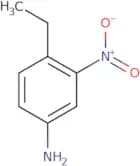
4-Ethyl-3-nitroaniline
CAS:<p>Versatile small molecule scaffold</p>Formula:C8H10N2O2Purity:Min. 95%Molecular weight:166.18 g/molThiophene-3-carboximidamide hydrochloride
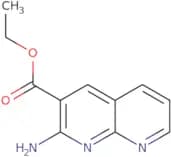
CAS:<p>Versatile small molecule scaffold</p>Formula:C5H7ClN2SPurity:Min. 95%Molecular weight:162.64 g/molEthyl 2-amino-1,8-naphthyridine-3-carboxylate
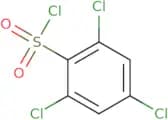
CAS:Versatile small molecule scaffoldFormula:C11H11N3O2Purity:Min. 95%Molecular weight:217.22 g/mol2,4,6-Trichlorobenzenesulfonyl chloride
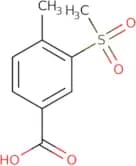
CAS:<p>2,4,6-Trichlorobenzenesulfonyl chloride is a sulfonylating agent that is used to treat metabolic disorders and iron metabolism. It is also used as an x-ray contrast agent for the detection of certain types of cancers. In addition, 2,4,6-trichlorobenzenesulfonyl chloride has been shown to have anti-inflammatory properties in chronic inflammatory diseases. This drug can be used to inhibit the synthesis of hepcidin by blocking the catalytic activity of ferrochelatase. 2,4,6-trichlorobenzenesulfonyl chloride may also be able to reduce inflammation by its ability to form reactive chlorides that react with alcohols and aldehydes. This can lead to deficiency symptoms such as chronic inflammatory disease or alcohol intolerance.</p>Formula:Cl3C6H2SO2ClPurity:Min. 95%Molecular weight:279.96 g/mol3-Methanesulfonyl-4-methylbenzoic acid
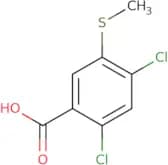
CAS:<p>Versatile small molecule scaffold</p>Formula:C9H10O4SPurity:Min. 95%Molecular weight:214.24 g/mol2,4-Dichloro-5-(methylsulfanyl)benzoic acid
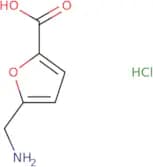
CAS:<p>Versatile small molecule scaffold</p>Formula:C8H6Cl2O2SPurity:Min. 95%Molecular weight:237.1 g/mol5-(Aminomethyl)furan-2-carboxylic acid hydrochloride
CAS:5-(Aminomethyl)furan-2-carboxylic acid hydrochloride is a monomer that belongs to the group of furans. It is soluble in solvents such as water, ethanol and acetone. 5-(Aminomethyl)furan-2-carboxylic acid hydrochloride can be used as a colorant for plastics and rubbers, or it can be used as an intermediate for other chemicals. This compound has been shown to be easily prepared by the catalyzed reaction of furfurylamine with sodium hydroxide and subsequent oxidation with sodium hypochlorite. The synthesis of this molecule requires a multistep procedure involving the preparation of 5-hydroxybenzoic acid by oxidation with nitric acid, followed by amination with ammonia in methanol, conversion to the corresponding amine salt, and finally hydrolysis of the amine salt in dilute hydrochloric acid.Formula:C6H8ClNO3Purity:Min. 95%Molecular weight:177.58 g/mol2,4-Dichloro-5-methanesulfonylbenzoic acid
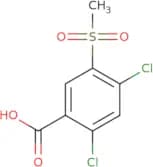
CAS:Versatile small molecule scaffoldFormula:C8H6Cl2O4SPurity:Min. 95%Molecular weight:269.1 g/mol5-(4-Hydroxyphenyl) tetrazole
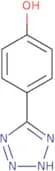
CAS:<p>5-(4-Hydroxyphenyl) tetrazole is a hydrophobic ligand that has been shown to bind to cisplatin and therefore may have potential use in cancer therapy. It has also been used as an anti-inflammatory agent with the potential to inhibit prostaglandin synthesis. 5-(4-Hydroxyphenyl) tetrazole binds to hydrogen peroxide, which is a strong oxidizing agent and produces reactive oxygen species (ROS). ROS can cause DNA damage and lead to cell death by apoptosis or necrosis. 5-(4-Hydroxyphenyl) tetrazole reacts with cisplatin, which is a chemotherapeutic agent that is used in the treatment of various types of cancer. Cisplatin binds to DNA and prevents replication, leading to cell death. Hydrophobic ligands such as 5-(4-Hydroxyphenyl) tetrazole are able to bind more tightly than other ligands because</p>Formula:C7H6N4OPurity:Min. 95%Molecular weight:162.15 g/mol2-(Ethylsulfanyl)-1,1-dimethoxyethane
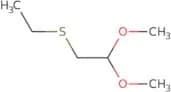
CAS:<p>Versatile small molecule scaffold</p>Formula:C6H14O2SPurity:Min. 95%Molecular weight:150.24 g/mol2-Methoxyethylsulfonyl chloride
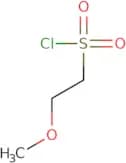
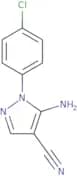
CAS:<p>2-Methoxyethylsulfonyl chloride is a hydroxide and sulfene compound. It has two forms: reversible and irreversible. The reversible form is composed of a carbanion, chloride, and organic compounds. The irreversible form is composed of a hydrolysis product, an anion, and organic compounds. 2-Methoxyethylsulfonyl chloride can be used as an intermediate in the production of other chemicals or pharmaceuticals. It also has been shown to be an effective agent for the synthesis of carboxylic acids from alcohols.</p>Formula:C3H7ClO3SPurity:Min. 95%Molecular weight:158.6 g/mol5-Amino-1-(4-chlorophenyl)-1H-pyrazole-4-carbonitrile
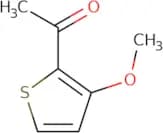
CAS:<p>Versatile small molecule scaffold</p>Formula:C10H7ClN4Purity:Min. 95%Molecular weight:218.64 g/mol1-(3-Methoxythiophen-2-yl)ethan-1-one
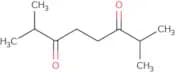
CAS:<p>Versatile small molecule scaffold</p>Formula:C7H8O2SPurity:Min. 95%Molecular weight:156.2 g/mol2,7-Dimethyloctane-3,6-dione
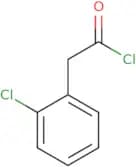
CAS:<p>Versatile small molecule scaffold</p>Formula:C10H18O2Purity:Min. 95%Molecular weight:170.25 g/mol2-Chlorophenylacetyl Chloride
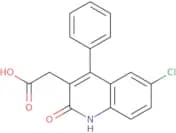
CAS:<p>2-Chlorophenylacetyl Chloride is a chlorinating agent that reacts with alkaline conditions to form a chloride. As an active ingredient in pesticides, it has been shown to have high selectivity and to be selective against fungi. The 2-chlorophenylacetyl chloride can be used as the starting material for epoxiconazole synthesis by Wittig reaction.<br>2-Chlorophenylacetyl Chloride is also a useful intermediate for the preparation of many other compounds. It can be used to synthesize dimethylchloride, which is used in the production of plastics and polymers; or it can be used to prepare formamide, which is used in the production of pharmaceuticals and agrochemicals. This compound has been shown to have catalysis properties and can be used in Wittig reactions that are selective towards different carbonyl groups.</p>Formula:C8H6Cl2OPurity:Min. 95%Molecular weight:189.04 g/mol(6-Chloro-2-oxo-4-phenyl-1,2-dihydro-quinolin-3-yl)-acetic acid
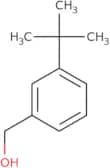
CAS:<p>Versatile small molecule scaffold</p>Formula:C17H12ClNO3Purity:Min. 95%Molecular weight:313.7 g/mol3-tert-Butylbenzyl alcohol
CAS:<p>Versatile small molecule scaffold</p>Formula:C11H16OPurity:Min. 95%Molecular weight:164.25 g/molOctahydro-1H-cyclopenta[b]pyridine
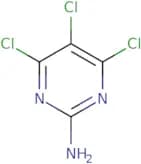
CAS:<p>Octahydro-1H-cyclopenta[b]pyridine is a pyridine with a hydrogen atom in the 1-position. It has been shown to be an analgesic and may have antihistaminic effects. Octahydro-1H-cyclopenta[b]pyridine is not active against γ-aminobutyric acid (GABA), but can act as a competitive inhibitor of α-mannosidase. The compound is an enantiomer of octahydro-2H,6H-[1,3]dioxolo[4,5-g][1,2]benzopyran and can be synthesized by catalytic reduction using hydrogen chloride gas and dioxane as the solvent.</p>Formula:C8H15NPurity:Min. 95%Molecular weight:125.21 g/mol4,5,6-Trichloropyrimidin-2-amine
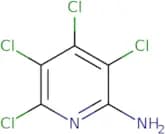
CAS:<p>4,5,6-Trichloropyrimidin-2-amine is a pyrimidine compound that can be synthesized from guanidine nitrate and chloroform. The reaction takes place in the presence of an organic base such as methanol or acetone. This compound has been shown to react with primary amines to form a guanidine derivative, which is then hydrolyzed to form the desired product. 4,5,6-Trichloropyrimidin-2-amine is an efficient synthesis for pyrimidine compounds because it does not require any purification steps before use.</p>Formula:C4H2Cl3N3Purity:Min. 95%Molecular weight:198.43 g/molTetrachloropyridin-2-amine
CAS:<p>Tetrachloropyridin-2-amine is a chemical compound. It is the product of the reaction between triphenylphosphine oxide and phosphorus pentachloride in the presence of alcohols. Tetrachloropyridine-2-amine has been shown to be effective against fungi, bacteria, and algae. It has also been used as an herbicide for agricultural purposes.</p>Formula:C5H2Cl4N2Purity:Min. 95%Molecular weight:231.9 g/mol


![Octahydro-1H-cyclopenta[b]pyridine](/_next/image/?url=https%3A%2Fstatic.cymitquimica.com%2Fproducts%2F3D%2Fthumb-webp%2FBCA50154.webp&w=3840&q=75)