


Building Blocks
This section contains fundamental products for the synthesis of organic and biological compounds. Building blocks are the essential starting materials used to construct complex molecules through various chemical reactions. They play a critical role in drug discovery, material science, and chemical research. At CymitQuimica, we offer a diverse range of high-quality building blocks to support your innovative research and industrial projects, ensuring you have the essential components for successful synthesis.
Subcategories of "Building Blocks"
- Boronic Acids & Boronic Acid Derivatives(5,756 products)
- Chiral Building Blocks(1,242 products)
- Hydrocarbon Building Blocks(6,095 products)
- Organic Building Blocks(61,055 products)
Found 199650 products of "Building Blocks"
Sort by
Purity (%)
0
100
|
0
|
50
|
90
|
95
|
100
4-Bromo-2-methylbenzene-1-thiol
CAS:<p>4-Bromo-2-methylbenzene-1-thiol is a chemical compound that is not found in nature. It can be accessed via the etoricoxib reaction with 4,4'-biphenylsulfonyl chloride in the presence of sodium hydroxide. The compound has anisotropic properties and its magnetic resonance data show methyl sulfonyl groups with Covid-19 at 3.3 ppm and Covid-19 Pandemic at 5.8 ppm as well as intermediates at 2.6 and 2.8 ppm. It also shows resonance peaks for an element at 8.0 ppm and diamagnetic properties at 1.5ppm.</p>Formula:C7H7BrSPurity:Min. 95%Molecular weight:203.1 g/mol4-Bromo-3-methyl-benzenethiol
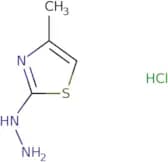
CAS:<p>4-Bromo-3-methyl-benzenethiol is an experimental compound that belongs to the class of fluorine compounds. It has a molecular weight of 221.8 and a chemical formula of C6H5BrSCH2. 4-Bromo-3-methyl-benzenethiol contains a methoxy substituent, which is located on the central carbon atom. This compound also contains two bromine atoms, which are located on either side of the central sulfur atom. 4-Bromo-3-methyl-benzenethiol has been shown to have sulfhydryl group in its structure, and can form couplings with other molecules through this group.</p>Formula:C7H7BrSPurity:Min. 95%Molecular weight:203.1 g/mol2-Hydrazino-4-methyl-1,3-thiazole Hydrochloride
CAS:<p>Versatile small molecule scaffold</p>Formula:C4H7N3S·HClPurity:Min. 95%Molecular weight:165.64 g/mol6-Chloro-2-(hydroxymethyl)-3,4-dihydroquinazolin-4-one
CAS:<p>Versatile small molecule scaffold</p>Formula:C9H7ClN2O2Purity:Min. 95%Molecular weight:210.62 g/mol(1-Hydroxy-cyclohexyl)-acetic acid
CAS:<p>1-Hydroxy-cyclohexyl)-acetic acid (1HCAA) is a polystyrene-based monomer that is used in the production of polymers such as vinyl ethers. 1HCAA has been shown to undergo mechanistic reactions with solvents and alkali metal chlorides, which are both required for its synthesis. The 1HCAA molecule can react with water molecules and form monocarboxylic acids, carboxylic acids, or recemic products. 1HCAA also catalyzes cross-linking reactions when it reacts with an oxidizing agent such as iodine.</p>Formula:C8H14O3Purity:Min. 95%Molecular weight:158.19 g/mol2-(tert-Butoxy)ethanimidamide hydrochloride
CAS:<p>Versatile small molecule scaffold</p>Formula:C6H15ClN2OPurity:Min. 95%Molecular weight:166.65 g/mol1,4-(Diamidino)benzene dihydrochloride
CAS:<p>1,4-Diamidino-benzene dihydrochloride (DABD) is a synthetic, crystalline organic compound that is insoluble in water. This chemical compound has been shown to be a reactive electron donor towards carbamazepine and its derivatives. DABD has also been immobilized on an electrode surface for use as a stable and sustainable electrode material. The immobilization of DABD on an electrode surface was done by covalently binding the DABD molecule to the surface with triazine molecules by covalent bonds. This process resulted in a stable and functional electrode material that can be used for up to 12 hours.</p>Formula:C8H12Cl2N4Purity:Min. 95%Molecular weight:235.11 g/molProp-2-ene-1-sulfonyl chloride
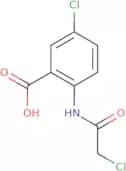
CAS:<p>Prop-2-ene-1-sulfonyl chloride is an organic compound that is used as a pharmaceutical intermediate. It has been shown to have potent inhibitory activity against pancreatic lipase, which makes it a potential treatment for inflammatory diseases such as arthritis. The active form of prop-2-ene-1-sulfonyl chloride binds to the receptor site of the molecule and prevents it from binding with other molecules, thereby blocking the inflammatory response. Prop-2-ene-1-sulfonyl chloride also binds to cholesterol esters in cells and prevents them from being transferred. This inhibits cholesterol production and reduces inflammation caused by high levels of cholesterol.</p>Formula:C3H5ClO2SPurity:Min. 95%Molecular weight:140.59 g/mol5-Chloro-2-(2-chloroacetamido)benzoic acid
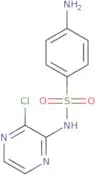
CAS:<p>Versatile small molecule scaffold</p>Formula:C9H7Cl2NO3Purity:Min. 95%Molecular weight:248.06 g/mol4-Amino-N-(3-chloropyrazin-2-yl)benzenesulfonamide
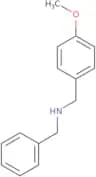
CAS:<p>Versatile small molecule scaffold</p>Formula:C10H9ClN4O2SPurity:Min. 95%Molecular weight:284.72 g/molBenzyl-(4-methoxy-benzyl)-amine
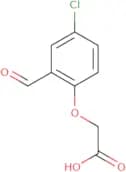
CAS:<p>Benzyl-(4-methoxy-benzyl)-amine is a chemical compound that has the molecular formula CHNO. It is an organic compound with a nitrate group, which are common in esters and phenolates. This compound can be synthesized by debenzylating benzyl amines and reacting them with nitric acid. Benzyl-(4-methoxy-benzyl)-amine may also be prepared by reacting benzaldehyde with ammonium hydroxide or ammonia gas. The synthesis of this compound is chemoselective, meaning it only reacts at one point on the molecule, rather than two. Benzyl-(4-methoxy-benzyl)-amine is used as a precursor to other compounds such as ammonium nitrate, esters, phenolates, and amides.</p>Formula:C15H17NOPurity:Min. 95%Molecular weight:227.3 g/mol2-(4-Chloro-2-formylphenoxy)acetic acid
CAS:<p>2-(4-Chloro-2-formylphenoxy)acetic acid is a chemical compound that is found in microalgae. The compound has been shown to inhibit the growth of bacteria by binding to glucose transporters and inhibiting their ability to absorb glucose. This process leads to a decrease in ATP levels, energy depletion, and cell death. In addition, this compound has been shown to have trophic effects on microalgae. This compound also inhibits the expression of malic enzyme genes and ammonium transporter genes in bacteria. 2-(4-Chloro-2-formylphenoxy)acetic acid is a steerable molecule that can be used for sectioning biological material with ultrafast lasers due to its high fluorescence.</p>Formula:C9H7ClO4Purity:Min. 95%Molecular weight:214.6 g/mol2-{[2-({2-[(2-Hydroxyethyl)sulfanyl]ethyl}sulfanyl)ethyl]sulfanyl}ethan-1-ol
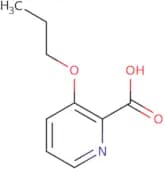
CAS:<p>2-{[2-({2-[(2-Hydroxyethyl)sulfanyl]ethyl}sulfanyl)ethyl]sulfanyl}ethan-1-ol is a polymer with a heterocyclic ring that is soluble in organic solvents. It has been used as an activator, coactivator and/or stabilizer for the thermal treatment of inorganic acids to produce imidazolines and halogens. 2-{[2-({2-[(2-Hydroxyethyl)sulfanyl]ethyl}sulfanyl)ethyl]sulfanyl}ethan-1-ol has been shown to be effective in the production of polymeric materials with good stability and low volatility.</p>Formula:C8H18O2S3Purity:Min. 95%Molecular weight:242.4 g/mol3-Propoxypyridine-2-carboxylic acid
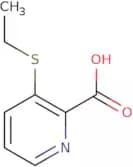
CAS:<p>3-Propoxypyridine-2-carboxylic acid is a benzene ring containing piperidine with a carboxamide substituent. It has shown to be selective for human eosinophils, and is an antagonist at the benzodiazepine site of GABAA receptors. 3-Propoxypyridine-2-carboxylic acid can also be derivatized to form a potent antagonist of benzodiazepine sites on GABAA receptors.</p>Formula:C9H11NO3Purity:Min. 95%Molecular weight:181.19 g/mol3-(Ethylsulfanyl)pyridine-2-carboxylic acid
CAS:Versatile small molecule scaffoldFormula:C8H9NO2SPurity:Min. 95%Molecular weight:183.23 g/mol3-{[(Benzyloxy)carbonyl]amino}-3-phenylpropanoic acid
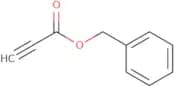
CAS:<p>Versatile small molecule scaffold</p>Formula:C17H17NO4Purity:Min. 95%Molecular weight:299.32 g/molBenzyl propiolate
CAS:<p>Benzyl propiolate is a molecule that is structurally related to propiolic acid. It has been shown to act as an adrenergic receptor agonist, which leads to platelet aggregation and thrombocytopenia. Benzyl propiolate also forms methyl esters with alcohols and is synthesized by methyl esterification of benzyl alcohol and propionic acid. This compound is electron deficient, which allows it to react with electron-rich substances, such as thromboplastin in the reaction solution for heparin-induced thrombocytopenia.</p>Formula:C10H8O2Purity:Min. 95%Molecular weight:160.17 g/molBenzyl 2-cyanoacetate
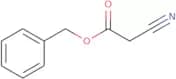
CAS:<p>Benzyl 2-cyanoacetate is an aliphatic hydrocarbon that has been used in the synthesis of various quinoline derivatives. It can be prepared by the reaction of malonic acid with hydrochloric acid, followed by borohydride reduction and the addition of active methylene. Benzyl 2-cyanoacetate is also a precursor to a number of other compounds, including β-amino acids, which are used as pharmaceutical preparations. The chloride ions in benzyl 2-cyanoacetate react with nitro groups to form chloroquinolines. This compound is also an efflux pump inhibitor that blocks bacterial cells from exporting antibiotic molecules out of the cell.</p>Formula:C10H9NO2Purity:Min. 95%Molecular weight:175.19 g/molN-Methyl-5,6,7,8-tetrahydronaphthalen-1-amine
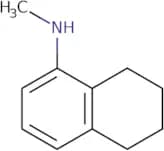
CAS:<p>Versatile small molecule scaffold</p>Formula:C11H15NPurity:Min. 95%Molecular weight:161.24 g/mol4-[(4-Methoxyphenyl)sulfanyl]aniline
CAS:<p>Versatile small molecule scaffold</p>Formula:C13H13NOSPurity:Min. 95%Molecular weight:231.32 g/mol




![2-{[2-({2-[(2-Hydroxyethyl)sulfanyl]ethyl}sulfanyl)ethyl]sulfanyl}ethan-1-ol](/_next/image/?url=https%3A%2Fstatic.cymitquimica.com%2Fproducts%2F3D%2Fthumb-webp%2FPAA44077.webp&w=3840&q=75)
![3-{[(Benzyloxy)carbonyl]amino}-3-phenylpropanoic acid](/_next/image/?url=https%3A%2Fstatic.cymitquimica.com%2Fproducts%2F3D%2Fthumb-webp%2FPAA44098.webp&w=3840&q=75)
![4-[(4-Methoxyphenyl)sulfanyl]aniline](/_next/image/?url=https%3A%2Fstatic.cymitquimica.com%2Fproducts%2F3D%2Fthumb-webp%2FPAA45385.webp&w=3840&q=75)