Building Blocks
This section contains fundamental products for the synthesis of organic and biological compounds. Building blocks are the essential starting materials used to construct complex molecules through various chemical reactions. They play a critical role in drug discovery, material science, and chemical research. At CymitQuimica, we offer a diverse range of high-quality building blocks to support your innovative research and industrial projects, ensuring you have the essential components for successful synthesis.
Subcategories of "Building Blocks"
- Boronic Acids & Boronic Acid Derivatives(5,778 products)
- Chiral Building Blocks(1,242 products)
- Hydrocarbon Building Blocks(6,098 products)
- Organic Building Blocks(61,034 products)
Found 199601 products of "Building Blocks"
Sort by
Purity (%)
0
100
|
0
|
50
|
90
|
95
|
100
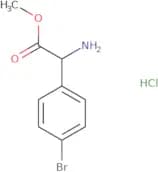
Methyl 2-amino-2-(4-bromophenyl)acetate hydrochloride
CAS:<p>Versatile small molecule scaffold</p>Formula:C9H11BrClNO2Purity:Min. 95%Molecular weight:280.55 g/mol5-Benzyl-1,3-oxazolidin-2-one
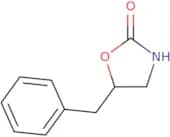
CAS:<p>5-Benzyl-1,3-oxazolidin-2-one is a nonsteroidal antiinflammatory drug that acts as an analgesic and antipyretic. It inhibits the enzyme cyclooxygenase to reduce prostaglandin synthesis. 5-Benzyl-1,3-oxazolidin-2-one is a prodrug that is metabolized to its active form by hydrolysis of the ester linkage. The hydrolysis of this bond requires the presence of acid such as carbonic acid or trifluoromethyl acid. This drug also has antiinflammatory properties and has been shown to be effective in the treatment of muscle pain.<br>5-Benzyl-1,3-oxazolidin-2-one binds to phenoxy and aralkyl groups in proteins, which may account for its analgesic effects.</p>Formula:C10H11NO2Purity:Min. 95%Molecular weight:177.2 g/mol2-[(Dimethylamino)methyl]cyclopentan-1-one hydrochloride
CAS:<p>Versatile small molecule scaffold</p>Formula:C8H16ClNOPurity:Min. 95%Molecular weight:177.67 g/molMethyl 5-aminosalicylate
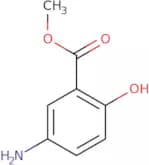
CAS:<p>Methyl 5-aminosalicylate is a molecule that belongs to the class of nonsteroidal anti-inflammatory drugs. It is used for the treatment of bowel diseases and has been shown to inhibit inflammation in neurodegenerative diseases. Methyl 5-aminosalicylate can be converted from salicylic acid by aminopropionase, which converts choline into methylmalonyl CoA. The molecule is cytotoxic and has been shown to activate microglial cells in vitro. Methyl 5-aminosalicylate is also a dietary carbon source for some organisms.</p>Formula:C8H9NO3Purity:Min. 95%Molecular weight:167.16 g/mol6-Chloro-1H-pyrazolo[3,4-d]pyrimidin-4(7H)-one
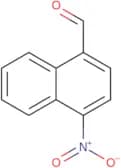
CAS:<p>Versatile small molecule scaffold</p>Formula:C5H3ClN4OPurity:Min. 95%Molecular weight:170.56 g/mol4-Nitronaphthalene-1-carbaldehyde
CAS:<p>Versatile small molecule scaffold</p>Formula:C11H7NO3Purity:Min. 95%Molecular weight:201.18 g/mol4,5,6,7-Tetrahydro-1-benzofuran
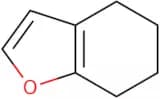
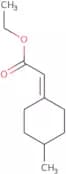
CAS:<p>Tetrahydro-1-benzofuran is a heterocyclic compound with the chemical formula C4H6O. It is a furan derivative, and is classified as an alkylene. Tetrahydro-1-benzofuran has been shown to have anti-amnesic properties in animal studies for Alzheimer's disease. It also has been found to be useful as a reagent for organic synthesis. Tetrahydro-1-benzofuran can be used as a starting material for the synthesis of other heterocyclic compounds such as pyrrole and furanosesquiterpenes.</p>Formula:C8H10OPurity:Min. 95%Molecular weight:122.16 g/molAcetic acid, 2-(4-methylcyclohexylidene)-, ethyl ester
CAS:<p>Versatile small molecule scaffold</p>Formula:C11H18O2Purity:Min. 95%Molecular weight:182.26 g/mol2-[1-(4-Chlorophenyl)-2,5-dimethyl-1H-pyrrol-3-yl]acetic acid
CAS:<p>2-[1-(4-Chlorophenyl)-2,5-dimethyl-1H-pyrrol-3-yl]acetic acid is a chemical substance that has been used as an analog to 2-[1-(4-chlorophenyl)-2,5-dimethyl-1H-pyrrol-3-yl]acetic acid. It has been shown to be biocompatible in the form of a polymer and has undergone double blind cross over studies. It has also been shown to have biological properties such as repair mechanisms for skin cancer, inflammatory bowel disease, and congestive heart disease. This chemical substance has a chemical stability in pharmaceutical preparations and is nanoparticulate in compositions.</p>Formula:C14H14ClNO2Purity:Min. 95%Molecular weight:263.72 g/mol2-[1-(4-Fluorophenyl)-2,5-dimethyl-1H-pyrrol-3-yl]acetic acid
CAS:<p>Versatile small molecule scaffold</p>Formula:C14H14FNO2Purity:Min. 95%Molecular weight:247.26 g/mol2-[2,5-Dimethyl-1-(4-methylphenyl)-1H-pyrrol-3-yl]acetic acid
CAS:<p>Versatile small molecule scaffold</p>Formula:C15H17NO2Purity:Min. 95%Molecular weight:243.3 g/mol2-[1-(4-Chlorophenyl)-2,5-dimethyl-1H-pyrrol-3-yl]acetonitrile
CAS:Versatile small molecule scaffoldFormula:C14H13ClN2Purity:Min. 95%Molecular weight:244.72 g/mol2-[1-(3,5-Dimethylphenyl)-2,5-dimethyl-1H-pyrrol-3-yl]acetonitrile
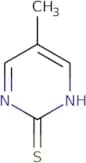
CAS:<p>Versatile small molecule scaffold</p>Formula:C16H18N2Purity:Min. 95%Molecular weight:238.33 g/mol5-Methyl-1,2-dihydropyrimidine-2-thione
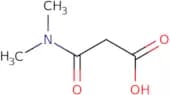
CAS:<p>Versatile small molecule scaffold</p>Formula:C5H6N2SPurity:Min. 95%Molecular weight:126.18 g/mol2-(Dimethylcarbamoyl)acetic acid
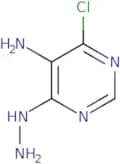
CAS:<p>2-(Dimethylcarbamoyl)acetic acid is a heterocyclic compound that contains a 5-membered, nitrogen-containing heterocycle. This molecule is used in the synthesis of pharmaceuticals and other organic compounds.</p>Formula:C5H9NO3Purity:Min. 95%Molecular weight:131.13 g/mol4-Chloro-6-hydrazino-pyrimidin-5-ylamine
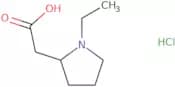
CAS:<p>Versatile small molecule scaffold</p>Formula:C4H6ClN5Purity:Min. 95%Molecular weight:159.58 g/mol2-(1-Ethylpyrrolidin-2-yl)acetic acid hydrochloride
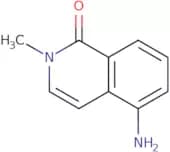
CAS:<p>Versatile small molecule scaffold</p>Formula:C8H16ClNO2Purity:Min. 95%Molecular weight:193.67 g/mol5-Amino-2-methyl-1,2-dihydroisoquinolin-1-one
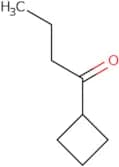
CAS:Versatile small molecule scaffoldFormula:C10H10N2OPurity:Min. 95%Molecular weight:174.2 g/mol1-Cyclobutylbutan-1-one
CAS:<p>Versatile small molecule scaffold</p>Formula:C8H14OPurity:Min. 95%Molecular weight:126.2 g/mol6-Methylhept-1-en-3-one
CAS:<p>Versatile small molecule scaffold</p>Formula:C8H14OPurity:Min. 95%Molecular weight:126.2 g/mol

![2-[(Dimethylamino)methyl]cyclopentan-1-one hydrochloride](/_next/image/?url=https%3A%2Fstatic.cymitquimica.com%2Fproducts%2F3D%2Fthumb-webp%2FSBA74687.webp&w=3840&q=75)
![6-Chloro-1H-pyrazolo[3,4-d]pyrimidin-4(7H)-one](/_next/image/?url=https%3A%2Fstatic.cymitquimica.com%2Fproducts%2F3D%2Fthumb-webp%2FSBA75497.webp&w=3840&q=75)
![2-[1-(4-Chlorophenyl)-2,5-dimethyl-1H-pyrrol-3-yl]acetic acid](/_next/image/?url=https%3A%2Fstatic.cymitquimica.com%2Fproducts%2F3D%2Fthumb-webp%2FSBA77982.webp&w=3840&q=75)
![2-[1-(4-Fluorophenyl)-2,5-dimethyl-1H-pyrrol-3-yl]acetic acid](/_next/image/?url=https%3A%2Fstatic.cymitquimica.com%2Fproducts%2F3D%2Fthumb-webp%2FSBA77983.webp&w=3840&q=75)
![2-[2,5-Dimethyl-1-(4-methylphenyl)-1H-pyrrol-3-yl]acetic acid](/_next/image/?url=https%3A%2Fstatic.cymitquimica.com%2Fproducts%2F3D%2Fthumb-webp%2FSBA77984.webp&w=3840&q=75)
![2-[1-(4-Chlorophenyl)-2,5-dimethyl-1H-pyrrol-3-yl]acetonitrile](/_next/image/?url=https%3A%2Fstatic.cymitquimica.com%2Fproducts%2F3D%2Fthumb-webp%2FSBA78048.webp&w=3840&q=75)
![2-[1-(3,5-Dimethylphenyl)-2,5-dimethyl-1H-pyrrol-3-yl]acetonitrile](/_next/image/?url=https%3A%2Fstatic.cymitquimica.com%2Fproducts%2F3D%2Fthumb-webp%2FSBA78092.webp&w=3840&q=75)