Building Blocks
This section contains fundamental products for the synthesis of organic and biological compounds. Building blocks are the essential starting materials used to construct complex molecules through various chemical reactions. They play a critical role in drug discovery, material science, and chemical research. At CymitQuimica, we offer a diverse range of high-quality building blocks to support your innovative research and industrial projects, ensuring you have the essential components for successful synthesis.
Subcategories of "Building Blocks"
- Boronic Acids & Boronic Acid Derivatives(5,756 products)
- Chiral Building Blocks(1,242 products)
- Hydrocarbon Building Blocks(6,095 products)
- Organic Building Blocks(61,051 products)
Found 199813 products of "Building Blocks"
Sort by
Purity (%)
0
100
|
0
|
50
|
90
|
95
|
100
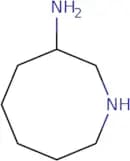
Azocan-3-amine
CAS:<p>Azocan-3-amine is a third-generation, small molecule inhibitor of the ErbB family of receptor tyrosine kinases. It was discovered by a team of scientists at AstraZeneca and has been evaluated in clinical trials for the treatment of various cancers. Azocan-3-amine inhibits the activity of EGFR and its two most common mutations, T790M and C797S. This drug is currently in Phase I/II trials for EGFR T790M mutation positive non-small cell lung cancer (NSCLC) and metastatic breast cancer patients with EGFR c797s mutation.</p>Formula:C7H16N2Purity:Min. 95%Molecular weight:128.22 g/molN-[(1-Methyl-1H-pyrazol-4-yl)methylidene]hydroxylamine
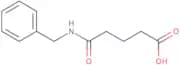
CAS:<p>Versatile small molecule scaffold</p>Formula:C5H7N3OPurity:Min. 95%Molecular weight:125.13 g/mol4-(Benzylcarbamoyl)butanoic acid
CAS:<p>Versatile small molecule scaffold</p>Formula:C12H15NO3Purity:Min. 95%Molecular weight:221.25 g/mol1-[3-(Oxiran-2-ylmethoxy)phenyl]ethanone
CAS:Versatile small molecule scaffoldFormula:C11H12O3Purity:Min. 95%Molecular weight:192.21 g/mol2-[1-(3,5-Dimethylphenyl)-2,5-dimethyl-1H-pyrrol-3-yl]acetic acid
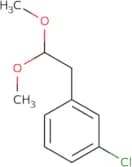
CAS:<p>Versatile small molecule scaffold</p>Formula:C16H19NO2Purity:Min. 95%Molecular weight:257.33 g/mol1-Chloro-3-(2,2-dimethoxyethyl)benzene
CAS:<p>Versatile small molecule scaffold</p>Formula:C10H13ClO2Purity:Min. 95%Molecular weight:200.66 g/molN-Methylcycloheptanamine
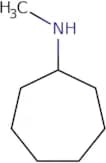
CAS:<p>N-Methylcycloheptanamine (NMCA) is a pyrimidine compound that has inhibitory activities against hexamethylenetetramine and aminopeptidase. NMCA also inhibits the immunosuppressive effect of cyclophosphamide, which is an anticancer drug. NMCA has been shown to be effective in treating autoimmune diseases and cancer. The inhibitory activity of NMCA on hexamethylenetetramine and aminopeptidase is due to its ability to react with these enzymes in nanomolar concentrations. Structural analysis has shown that NMCA binds to the enzyme by coordinating with the catalytic metal ions and the amino acid residues of the active site, forming a covalent bond with glutamic acid residue. This binding prevents substrate binding or product release, inhibiting enzyme activity.</p>Formula:C8H17NPurity:Min. 95%Molecular weight:127.23 g/mol4-(Cyclohexyloxy)phenol
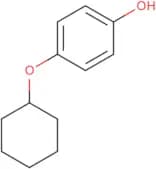
CAS:<p>Versatile small molecule scaffold</p>Formula:C12H16O2Purity:Min. 95%Molecular weight:192.25 g/mol2-(2-aminophenoxy)ethanol
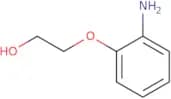
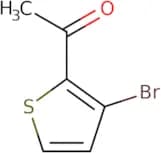
CAS:<p>2-(2-aminophenoxy)ethanol (2-APOE) is an alkylating agent that has been shown to be mutagenic in bacterial strains. It is a direct-acting mutagen and can cause mutations by reacting with DNA bases or proteins. It also has the ability to cleave DNA chains, which may lead to carcinogenic effects. This product is not known to cause cancer in humans and has been found to be safe for use as a food additive at levels up to 0.1%. 2-APOE is used in the production of other chemicals and as an intermediate in chemical synthesis.</p>Formula:C8H11NO2Purity:Min. 95%Molecular weight:153.17 g/mol2-Acetyl-3-bromothiophene
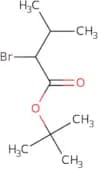
CAS:<p>2-Acetyl-3-bromothiophene is a dihedral molecule that has been shown to have photovoltaic properties. The molecule has two primary amines, which function as electron donors and an interleukin, which functions as an electron acceptor. 2-Acetyl-3-bromothiophene also has a chalcone group, a carbonyl group, and yields of primary alcohols. In the experimentally determined vibration frequencies, the most intense peaks were found at 1760 cm−1 (vibrational) and 1128 cm−1 (rotational).</p>Formula:C6H5BrOSPurity:Min. 95%Molecular weight:205.07 g/moltert-Butyl 2-bromo-3-methylbutanoate
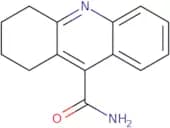
CAS:<p>Versatile small molecule scaffold</p>Formula:C9H17BrO2Purity:Min. 95%Molecular weight:237.13 g/mol1,2,3,4-Tetrahydroacridine-9-carboxamide
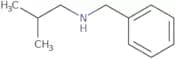
CAS:<p>Versatile small molecule scaffold</p>Formula:C14H14N2OPurity:Min. 95%Molecular weight:226.27 g/molN-Benzyl-2-methylpropan-1-amine
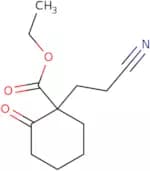
CAS:<p>N-Benzyl-2-methylpropan-1-amine is a phosphorous acid regulator that is used as a moiety in the synthesis of debenzylated benzyl amines. It can be used to regulate the pH of alkali metal esters and metal halides. N-Benzyl-2-methylpropan-1-amine also has been found to enhance the rates of amine reactions and promote the formation of ketones. This compound is also an ammonium salt with an oxidative effect on most organic substances.</p>Formula:C11H17NPurity:Min. 95%Molecular weight:163.26 g/molEthyl 1-(2-cyanoethyl)-2-oxocyclohexane-1-carboxylate
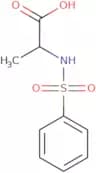
CAS:<p>Versatile small molecule scaffold</p>Formula:C12H17NO3Purity:Min. 95%Molecular weight:223.27 g/mol2-Benzenesulfonamidopropanoic acid
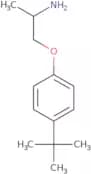
CAS:<p>Versatile small molecule scaffold</p>Formula:C9H11NO4SPurity:Min. 95%Molecular weight:229.26 g/mol1-(2-Aminopropoxy)-4-tert-butylbenzene
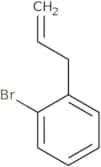
CAS:<p>Versatile small molecule scaffold</p>Formula:C13H21NOPurity:Min. 95%Molecular weight:207.31 g/mol1-Allyl-2-bromobenzene
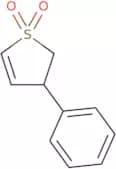
CAS:<p>1-Allyl-2-bromobenzene is an organic solvent that is used in the synthesis of fatty acids and bromophenols. It is a gaseous liquid at room temperature and pressure, but it can be condensed to liquid form by cooling. 1-Allyl-2-bromobenzene reacts with polydimethylsiloxane to produce amides or chlorides. The reaction proceeds under conditions where there are no competing reactions such as alkylation or biomolecular oxidation. It has been used extensively in the synthesis of fatty acid esters, amides, and nitriles. This organic solvent is volatile at room temperature and pressure and its boiling point is below 100 degrees Celsius. 1-Allyl-2-bromobenzene has a low viscosity and high surface tension which make it useful for certain types of chemical reactions on surfaces such as in the production of reaction products from naphthalene.br>br></p>Formula:C9H9BrPurity:Min. 95%Molecular weight:197.07 g/mol3-Phenyl-2,3-dihydrothiophene 1,1-dioxide
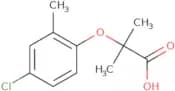
CAS:<p>Versatile small molecule scaffold</p>Formula:C10H10O2SPurity:Min. 95%Molecular weight:194.25 g/mol2-(4-Chloro-2-methylphenoxy)-2-methylpropanoic acid
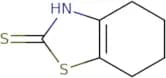
CAS:Versatile small molecule scaffoldFormula:C11H13ClO3Purity:Min. 95%Molecular weight:228.67 g/mol4,5,6,7-Tetrahydro-1,3-benzothiazole-2-thiol
CAS:<p>Versatile small molecule scaffold</p>Formula:C7H9NS2Purity:Min. 95%Molecular weight:171.3 g/mol

![N-[(1-Methyl-1H-pyrazol-4-yl)methylidene]hydroxylamine](/_next/image/?url=https%3A%2Fstatic.cymitquimica.com%2Fproducts%2F3D%2Fthumb-webp%2FSBA84980.webp&w=3840&q=75)
![1-[3-(Oxiran-2-ylmethoxy)phenyl]ethanone](/_next/image/?url=https%3A%2Fstatic.cymitquimica.com%2Fproducts%2F3D%2Fthumb-webp%2FSBA86503.webp&w=3840&q=75)
![2-[1-(3,5-Dimethylphenyl)-2,5-dimethyl-1H-pyrrol-3-yl]acetic acid](/_next/image/?url=https%3A%2Fstatic.cymitquimica.com%2Fproducts%2F3D%2Fthumb-webp%2FSBA86602.webp&w=3840&q=75)