Building Blocks
This section contains fundamental products for the synthesis of organic and biological compounds. Building blocks are the essential starting materials used to construct complex molecules through various chemical reactions. They play a critical role in drug discovery, material science, and chemical research. At CymitQuimica, we offer a diverse range of high-quality building blocks to support your innovative research and industrial projects, ensuring you have the essential components for successful synthesis.
Subcategories of "Building Blocks"
- Boronic Acids & Boronic Acid Derivatives(5,756 products)
- Chiral Building Blocks(1,242 products)
- Hydrocarbon Building Blocks(6,095 products)
- Organic Building Blocks(61,051 products)
Found 199813 products of "Building Blocks"
Sort by
Purity (%)
0
100
|
0
|
50
|
90
|
95
|
100
(2S)-3-(3,4-Dimethoxyphenyl)-2-acetamido-2-methylpropanoic acid
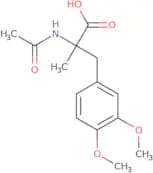
CAS:<p>Versatile small molecule scaffold</p>Formula:C14H19NO5Purity:Min. 95%Molecular weight:281.3 g/mol1,2-Dihydronaphthalene-1-carboxylic acid
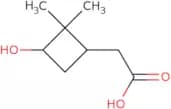
CAS:<p>Versatile small molecule scaffold</p>Formula:C11H10O2Purity:Min. 95%Molecular weight:174.2 g/mol2-(3-Hydroxy-2,2-dimethylcyclobutyl)acetic acid
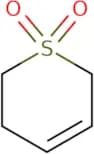
CAS:<p>Versatile small molecule scaffold</p>Formula:C8H14O3Purity:Min. 95%Molecular weight:158.19 g/molThiacyclohex-3-ene, 1,1-dioxide
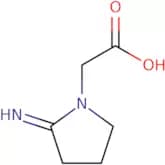
CAS:<p>Versatile small molecule scaffold</p>Formula:C5H8O2SPurity:Min. 95%Molecular weight:132.18 g/mol2-(2-Iminopyrrolidin-1-yl)acetic acid
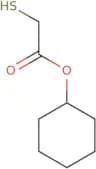
CAS:<p>Versatile small molecule scaffold</p>Formula:C6H10N2O2Purity:Min. 95%Molecular weight:142.16 g/molCyclohexyl 2-sulfanylacetate
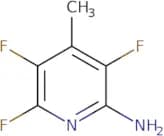
CAS:<p>Cyclohexyl 2-sulfanylacetate is an organic compound that belongs to the class of polycarboxylic acids. It is soluble in glycol ether and insoluble in water. Cyclohexyl 2-sulfanylacetate has a high melting point, which makes it a good conditioning agent. It also has functional groups that make it suitable for use as a modifier or colorant. This chemical can be used as a functional ingredient in hair care products, such as shampoos and conditioners, because of its cationic surfactant properties.</p>Formula:C8H14O2SPurity:Min. 95%Molecular weight:174.26 g/mol3,5,6-Trifluoro-4-methylpyridin-2-amine
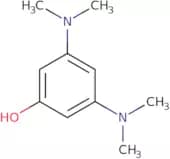
CAS:<p>Versatile small molecule scaffold</p>Formula:C6H5F3N2Purity:Min. 95%Molecular weight:162.11 g/mol3,5-Bis(dimethylamino)phenol
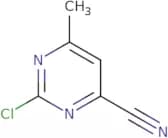
CAS:<p>Versatile small molecule scaffold</p>Formula:C10H16N2OPurity:Min. 95%Molecular weight:180.25 g/mol2-Chloro-6-methyl-pyrimidine-4-carbonitrile
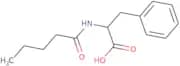
CAS:<p>Versatile small molecule scaffold</p>Formula:C6H4ClN3Purity:Min. 95%Molecular weight:153.57 g/mol2-Pentanamido-3-phenylpropanoic acid
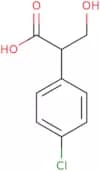
CAS:<p>Versatile small molecule scaffold</p>Formula:C14H19NO3Purity:Min. 95%Molecular weight:249.3 g/mol2-(4-Chlorophenyl)-3-hydroxypropanoic acid
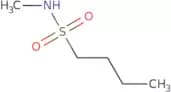
CAS:<p>Versatile small molecule scaffold</p>Formula:C9H9ClO3Purity:Min. 95%Molecular weight:200.62 g/molN-Methylbutane-1-sulfonamide
CAS:<p>Versatile small molecule scaffold</p>Formula:C5H13NO2SPurity:Min. 95%Molecular weight:151.23 g/molEthyl 7-chloro-4-oxo-4H-pyrido[1,2-a]pyrimidine-3-carboxylate
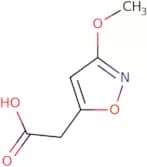
CAS:<p>Versatile small molecule scaffold</p>Formula:C11H9ClN2O3Purity:Min. 95%Molecular weight:252.65 g/mol2-(3-Methoxy-1,2-oxazol-5-yl)acetic acid
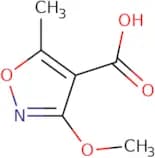
CAS:<p>Versatile small molecule scaffold</p>Formula:C6H7NO4Purity:Min. 95%Molecular weight:157.12 g/mol3-Methoxy-5-methyl-1,2-oxazole-4-carboxylic acid
CAS:<p>3-Methoxy-5-methyl-1,2-oxazole-4-carboxylic acid hydrobromide is an excitatory drug that belongs to the group of carboxylic acids. It has been shown to increase the firing rate of neurons in the cerebral cortex. 3-Methoxy-5-methyl-1,2-oxazole-4-carboxylic acid hydrobromide is used as a research tool for studying nervous system function and as a diagnostic agent for epilepsy.</p>Formula:C6H7NO4Purity:Min. 95%Molecular weight:157.12 g/molDecahydroquinolin-6-ol
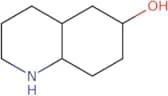
CAS:<p>Versatile small molecule scaffold</p>Formula:C9H17NOPurity:Min. 95%Molecular weight:155.24 g/mol2-Bromo-4,6-dimethylpyrimidine
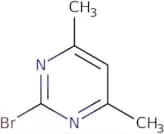
CAS:<p>2-Bromo-4,6-dimethylpyrimidine (2-BDMP) is a chemical compound that is synthesised by reacting acetonitrile with methylene bromide in the presence of copper. The 2-BDMP has a molecular weight of 136.22, melting point of 117°C and boiling point of 165°F. It has an ambident nature with respect to anions, which means it is soluble in water and organic solvents such as acetonitrile and tetrahydrofuran. 2-BDMP can be used as a building block for synthesising other compounds such as amidines or dioxanes. This chemical can also be used to produce yields of bromoalkyls in the presence of alkylating agents such as chloromethyl methyl ether or methanol.</p>Formula:C6H7BrN2Purity:Min. 95%Molecular weight:187.04 g/mol2-phenylpyrimidine-4-carboxylic acid
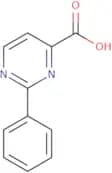
CAS:<p>2-Phenylpyrimidine-4-carboxylic acid is a luminescent copper complex that has been synthesized as a ligand in coordination complexes. It is soluble in dilute solutions and can be used to prepare the complexes of other metals. 2-Phenylpyrimidine-4-carboxylic acid has been shown to have an affinity for lanthanide metal ions and can be used as a sensitizer for lanthanides. The magnetic properties of this compound were determined using x-ray diffraction on single crystals. It was found that the compound is paramagnetic and has a weak antiferromagnetic interaction with dysprosium, which was confirmed by elemental analysis and diffraction measurements.</p>Formula:C11H8N2O2Purity:Min. 95%Molecular weight:200.19 g/mol6-Methyl-2-(pyridin-3-yl)pyrimidin-4-ol
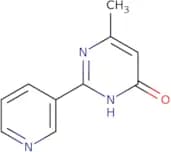
CAS:<p>Versatile small molecule scaffold</p>Formula:C10H9N3OPurity:Min. 95%Molecular weight:187.2 g/mol3-Hydroxy-5-methyl-1,2-oxazole-4-carboxylic acid
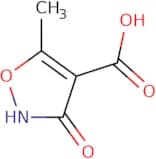
CAS:<p>Versatile small molecule scaffold</p>Formula:C5H5NO4Purity:Min. 95%Molecular weight:143.1 g/mol

![Ethyl 7-chloro-4-oxo-4H-pyrido[1,2-a]pyrimidine-3-carboxylate](/_next/image/?url=https%3A%2Fstatic.cymitquimica.com%2Fproducts%2F3D%2Fthumb-webp%2FRAA86755.webp&w=3840&q=75)