


Building Blocks
This section contains fundamental products for the synthesis of organic and biological compounds. Building blocks are the essential starting materials used to construct complex molecules through various chemical reactions. They play a critical role in drug discovery, material science, and chemical research. At CymitQuimica, we offer a diverse range of high-quality building blocks to support your innovative research and industrial projects, ensuring you have the essential components for successful synthesis.
Subcategories of "Building Blocks"
- Boronic Acids & Boronic Acid Derivatives(5,778 products)
- Chiral Building Blocks(1,242 products)
- Hydrocarbon Building Blocks(6,098 products)
- Organic Building Blocks(61,098 products)
Found 199594 products of "Building Blocks"
Sort by
Purity (%)
0
100
|
0
|
50
|
90
|
95
|
100
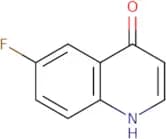
6-Fluoroquinolin-4-ol
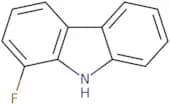
CAS:<p>Versatile small molecule scaffold</p>Formula:C9H6FNOPurity:Min. 95%Molecular weight:163.15 g/mol1-Fluoro-9H-carbazole
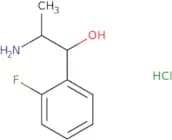
CAS:<p>1-Fluoro-9H-carbazole is a fluorescent dye that has been shown to bind to the mineralocorticoid receptor, which is found in many types of cancer cells. 1-Fluoro-9H-carbazole has also been used in the treatment of chronic bronchitis and inflammatory bowel disease. In addition, it has been shown to be an effective inhibitor of epidermal growth factor (EGF) and fatty acid synthase (FAS), which are involved in inflammation. This compound has also been shown to have estrogen receptor modulator activity.</p>Formula:C12H8FNPurity:Min. 95%Molecular weight:185.2 g/mol2-Amino-1-(2-fluorophenyl)propan-1-ol hydrochloride
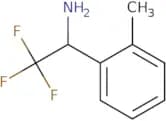
CAS:Controlled Product<p>Versatile small molecule scaffold</p>Formula:C9H13ClFNOPurity:Min. 95%Molecular weight:205.66 g/mol2,2,2-Trifluoro-1-(o-tolyl)ethanamine
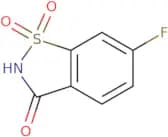
CAS:<p>Versatile small molecule scaffold</p>Formula:C9H10F3NPurity:Min. 95%Molecular weight:189.18 g/mol6-Fluoro-2,3-dihydro-1,2-benzothiazole-1,1,3-trione
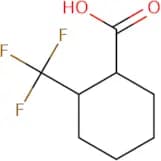
CAS:Versatile small molecule scaffoldFormula:C7H4FNO3SPurity:Min. 95%Molecular weight:201.18 g/mol2-(Trifluoromethyl)cyclohexane-1-carboxylic acid
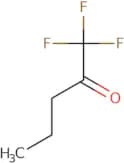
CAS:Versatile small molecule scaffoldFormula:C8H11F3O2Purity:Min. 95%Molecular weight:196.17 g/mol1,1,1-Trifluoropentan-2-one
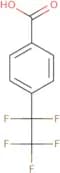
CAS:<p>Versatile small molecule scaffold</p>Formula:C5H7F3OPurity:Min. 95%Molecular weight:140.1 g/mol4-(1,1,2,2,2-Pentafluoroethyl)benzoic acid
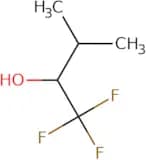
CAS:<p>Versatile small molecule scaffold</p>Formula:C9H5F5O2Purity:Min. 95%Molecular weight:240.13 g/mol1,1,1-Trifluoro-3-methylbutan-2-ol
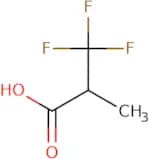
CAS:<p>Versatile small molecule scaffold</p>Formula:C5H9F3OPurity:Min. 95%Molecular weight:142.12 g/mol3,3,3-Trifluoro-2-methylpropanoic acid
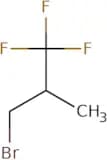
CAS:<p>3,3,3-Trifluoro-2-methylpropanoic acid is a racemic mixture of 3,3,3-trifluoro-2-methylpropanoic acid and its enantiomer. It is an organic compound that is used as a reagent in organic synthesis. It has the property of being hydrolyzed by lipase mediated by hydrolytic enzymes to form 3,3,3-trifluoroethanol and propanoic acid. The enantiomers are racemic mixtures of 3,3,3-trifluoropropionic acid and (R)-(+)-3,3,3-trifluoropropionic acid. Both enantiomers have the same chemical properties but their kinetic behavior differs because one is a substrate for lipase while the other is not.</p>Formula:C4H5F3O2Purity:Min. 95%Molecular weight:142.08 g/mol3-Bromo-1,1,1-trifluoro-2-methylpropane
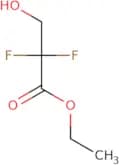
CAS:<p>Versatile small molecule scaffold</p>Formula:C4H6BrF3Purity:Min. 95%Molecular weight:190.99 g/molEthyl 2,2-difluoro-3-hydroxypropanoate
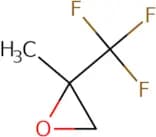
CAS:<p>Versatile small molecule scaffold</p>Formula:C5H8F2O3Purity:Min. 95%Molecular weight:154.11 g/mol2-Methyl-2-(trifluoromethyl)oxirane
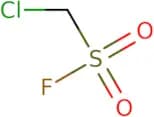
CAS:Versatile small molecule scaffoldFormula:C4H5F3OPurity:Min. 95%Molecular weight:126.08 g/molChloromethanesulfonyl fluoride
CAS:<p>Chloromethanesulfonyl fluoride is an organofluorine compound with the chemical formula ClSOF. It is a colorless gas that reacts with water and alcohols to form hydrogen fluoride and hydrochloric acid. Chloromethanesulfonyl fluoride is used as a reagent in organic chemistry, specifically for the synthesis of sulfonyl chlorides. The reaction occurs by adding sulfur to chloromethanesulfonyl fluoride in the presence of base, which yields sulfonyl chloride and hydrogen chloride. This reaction can be carried out on a large scale using the Suzuki reaction.</p>Formula:CH2ClFO2SPurity:Min. 95%Molecular weight:132.54 g/mol1,8-Diaminooctane
CAS:<p>1,8-Diaminooctane is an organic compound that contains a hydroxyl group and a phosphotungstic acid group. It has been shown to be cytotoxic to tumour cell lines in the presence of x-ray irradiation. The mechanism for this cytotoxicity is thought to be due to the production of radicals from the hydrogen bonds in 1,8-diaminooctane. 1,8-Diaminooctane has also been shown to react with diphenyl ethers in the presence of light to produce phosphine gas. The reaction was studied by quantum theory and X-ray diffraction data.</p>Formula:C8H20N2Purity:Min. 95%Molecular weight:144.26 g/mol1-Bromo-6-fluorohexane
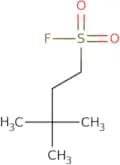
CAS:<p>Versatile small molecule scaffold</p>Formula:C6H12BrFPurity:Min. 95%Molecular weight:183.06 g/mol3,3-Dimethylbutane-1-sulfonyl fluoride
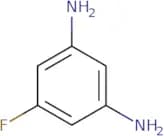
CAS:<p>Versatile small molecule scaffold</p>Formula:C6H13FO2SPurity:Min. 95%Molecular weight:168.23 g/mol5-Fluorobenzene-1,3-diamine
CAS:<p>Versatile small molecule scaffold</p>Formula:C6H7FN2Purity:Min. 95%Molecular weight:126.13 g/mol1-Iodo-4-[(trifluoromethyl)sulfanyl]benzene
CAS:Versatile small molecule scaffoldFormula:C7H4F3ISPurity:Min. 95%Molecular weight:304.07 g/molN-[(3-Fluoro-4-methoxyphenyl)methylidene]hydroxylamine
CAS:<p>Versatile small molecule scaffold</p>Formula:C8H8FNO2Purity:Min. 95%Molecular weight:169.15 g/mol



![1-Iodo-4-[(trifluoromethyl)sulfanyl]benzene](/_next/image/?url=https%3A%2Fstatic.cymitquimica.com%2Fproducts%2F3D%2Fthumb-webp%2FAAA37215.webp&w=3840&q=75)
![N-[(3-Fluoro-4-methoxyphenyl)methylidene]hydroxylamine](/_next/image/?url=https%3A%2Fstatic.cymitquimica.com%2Fproducts%2F3D%2Fthumb-webp%2FAAA37060.webp&w=3840&q=75)