Building Blocks
This section contains fundamental products for the synthesis of organic and biological compounds. Building blocks are the essential starting materials used to construct complex molecules through various chemical reactions. They play a critical role in drug discovery, material science, and chemical research. At CymitQuimica, we offer a diverse range of high-quality building blocks to support your innovative research and industrial projects, ensuring you have the essential components for successful synthesis.
Subcategories of "Building Blocks"
- Boronic Acids & Boronic Acid Derivatives(5,778 products)
- Chiral Building Blocks(1,243 products)
- Hydrocarbon Building Blocks(6,098 products)
- Organic Building Blocks(61,057 products)
Found 200710 products of "Building Blocks"
Sort by
Purity (%)
0
100
|
0
|
50
|
90
|
95
|
100
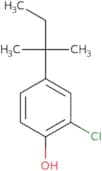
2-Chloro-4-(tert-pentyl)phenol
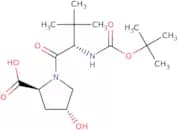
CAS:2-Chloro-4-(tert-pentyl)phenol is an aromatic compound. It has a cyclic, unsaturated alkyl group with a biphenyl and 6-membered heterocycle. This compound also has a haloalkyl group that can be substituted by nitro or benzoxazine groups. 2-Chloro-4-(tert-pentyl)phenol is used as an intermediate in the production of pharmaceuticals, dyes, and pesticides.Formula:C11H15ClOPurity:Min. 95%Molecular weight:198.69 g/mol1-(Boc-L-tert-leucinyl)-(4R)-4-hydroxy-L-proline
CAS:Versatile small molecule scaffoldFormula:C16H28N2O6Purity:Min. 95%Molecular weight:344.4 g/mol1-[(tert-butoxy)carbonyl]-5,5-difluoropiperidine-3-carboxylic acid
CAS:<p>Versatile small molecule scaffold</p>Formula:C11H17F2NO4Purity:Min. 95%Molecular weight:265.3 g/mol3-Bromo-2-fluoro-6-methylpyridine
CAS:<p>Please enquire for more information about 3-Bromo-2-fluoro-6-methylpyridine including the price, delivery time and more detailed product information at the technical inquiry form on this page</p>Formula:C6H5BrFNPurity:Min. 95%Molecular weight:190.01 g/mol5-Bromo-2-fluoro-1,3-dimethylbenzene
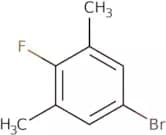
CAS:Please enquire for more information about 5-Bromo-2-fluoro-1,3-dimethylbenzene including the price, delivery time and more detailed product information at the technical inquiry form on this pageFormula:C8H8BrFPurity:Min. 95%Color and Shape:Clear Colourless To Yellow LiquidMolecular weight:203.05 g/mol4-Bromobenzaldehyde
CAS:<p>4-Bromobenzaldehyde is a chemical compound that belongs to the group of aromatic compounds. It has been shown to have a potent stimulatory effect on locomotor activity in mice, which may be due to its ability to increase levels of epidermal growth factor and gamma-aminobutyric acid in the brain. 4-Bromobenzaldehyde can be synthesized from 2,4-dibromophenol and anhydrous copper chloride in the presence of sodium hydroxide. The reaction mechanism for this synthesis is believed to involve an intermediate enamine form of 4-bromobenzaldehyde, which can then undergo hydrolysis into 2,4-dibromophenol and benzaldehyde. This product is used as a reagent in organic synthesis because it can be used to form esters with trifluoroacetic acid or hydrochloric acid in high yield.</p>Formula:C7H5BrOPurity:Min. 90 Area-%Color and Shape:White PowderMolecular weight:185.02 g/mol1-Benzofuran-5-carbaldehyde
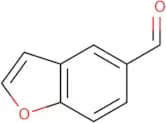
CAS:1-Benzofuran-5-carbaldehyde is a synthetic compound that inhibits the enzyme ido1. It has been shown to have potent cytotoxicity, potent inhibition, and neurotrophic properties in a number of cell lines. 1-Benzofuran-5-carbaldehyde also exhibits inhibitory effects on the enzymes hydrolyzing dopamine, which is involved in the synthesis of norepinephrine and epinephrine. The chemical structure of 1-benzofuran-5-carbaldehyde closely resembles that of dopamine and its derivatives, and can be used for the treatment of neurodegenerative diseases such as Parkinson's disease.Formula:C9H6O2Purity:Min. 95%Color and Shape:Yellow To Brown SolidMolecular weight:146.14 g/moltert-Butyl 3-(4-aminophenyl)pyrrolidine-1-carboxylate
CAS:Versatile small molecule scaffoldFormula:C15H22N2O2Purity:Min. 95%Molecular weight:262.35 g/molTimonacic
CAS:<p>Timonacic is an analog of nicotinamide that has been shown to be an effective inhibitor of energy metabolism in the mitochondria. It has antioxidative properties and can protect against the development of heart disease by inhibiting the production of reactive oxygen species. Timonacic's anti-inflammatory properties may be due to its ability to inhibit prostaglandin synthesis. It also has a high affinity for fatty acids, which may contribute to its inhibitory effects on lipid peroxidation. This drug has a carboxy terminal and is used as a sodium salt, which may play a role in its enzyme inhibition activity. Timonacic inhibits the activities of enzymes such as carnitine acetyltransferase and pyruvate dehydrogenase kinase, which are involved in the biosynthesis of fatty acids. The intramolecular hydrogen bonds formed with timonacic may contribute to its inhibitory effect on these enzymes.</p>Formula:C4H7NO2SPurity:Min. 95%Molecular weight:133.17 g/molEthyl 4-(hydroxymethyl)-1H-pyrazole-3-carboxylate
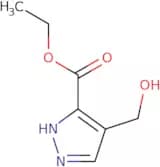
CAS:Versatile small molecule scaffoldFormula:C7H10N2O3Purity:Min. 95%Molecular weight:170.17 g/mol1-(piperazin-1-yl)butan-1-one
CAS:1-(Piperazin-1-yl)butan-1-one is a neoplastic cell growth inhibitor that inhibits the proliferation of myeloid, k562 and HL60 cells. It has been shown to inhibit the growth of tumor cells in vitro. 1-(Piperazin-1-yl)butan-1-one is an analog of piperazine, which is known to be a cytotoxic agent with anticancer activity. The mechanism of action is not known, but it may be due to its ability to inhibit DNA synthesis or its inhibition of protein synthesis.Formula:C8H16N2OPurity:Min. 95%Molecular weight:156.23 g/mol2-Cyano-5-fluorophenol
CAS:<p>2-Cyano-5-fluorophenol is an organic compound that is used as a precursor to medicines and other chemicals. It reacts with calcium hydroxide in water to form 2-cyano-5-hydroxyfluorobenzene, which can be hydrolyzed to form 2-cyano-5-chlorofluorobenzene. This compound can also react with sodium hydroxide to produce sodium cyanate, which can be hydrolyzed to form sodium chloride and hydrogen cyanide gas. The alkali metal ions are needed for this reaction, which is why the product should not be exposed to water or moisture. 2-Cyano-5-fluorophenol has been shown to have liquid crystal properties and is used in the production of certain types of polymers. 2Cyano-5Fluorophenol crystals are also used in some medicines such as acetaminophen (paracetamol).</p>Formula:C7H4FNOPurity:Min. 95%Molecular weight:137.11 g/molMethyl 4-chloropyrimidine-2-carboxylate
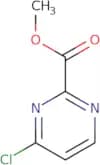
CAS:Versatile small molecule scaffoldFormula:C6H5ClN2O2Purity:Min. 95%Molecular weight:172.57 g/mol5-Chloro-1H-pyrrolo[2,3-c]pyridine-3-carboxylic acid
CAS:Versatile small molecule scaffoldFormula:C8H5ClN2O2Purity:Min. 95%Molecular weight:196.59 g/moltert-Butyl 3-(trifluoromethyl)piperazine-1-carboxylate
CAS:<p>Versatile small molecule scaffold</p>Formula:C10H17F3N2O2Purity:Min. 95%Molecular weight:254.25 g/molTert-Butyl 2-(Trifluoromethyl)Piperazine-1-Carboxylate
CAS:Versatile small molecule scaffoldFormula:C10H17N2O2F3Purity:Min. 95%Molecular weight:254.24 g/molMethyl 2-(6-chloropyridin-3-yl)acetate
CAS:<p>Versatile small molecule scaffold</p>Formula:C8H8ClNO2Purity:Min. 95%Molecular weight:185.61 g/mol4-Bromo-2-cyclopropylpyridine
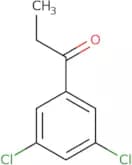
CAS:<p>Versatile small molecule scaffold</p>Formula:C8H8NBrPurity:Min. 95%Molecular weight:198.05 g/mol1-(3,5-Dichloro-phenyl)-propan-1-one
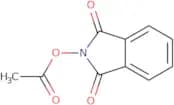
CAS:<p>Versatile small molecule scaffold</p>Formula:C9H8Cl2OPurity:Min. 95%Molecular weight:203.07 g/mol1,3-Dioxo-2,3-dihydro-1H-isoindol-2-yl acetate
CAS:1,3-Dioxo-2,3-dihydro-1H-isoindol-2-yl acetate is a reactive intermediate that can be used as a starting material for the synthesis of other organic compounds. It is synthesized by the reaction of an acid with an aldehyde or ketone in the presence of a base. The rate of this reaction depends on the functional groups present in both reactants and their relative concentrations. This intermediate can be converted to another chemical compound through various reactions, including hydroxymethylation, decarboxylation and oxidation. This chemical has been used as a cocatalyst for the production of 5-hydroxymethylfurfural (HMF).Formula:C10H7NO4Purity:Min. 95%Molecular weight:205.17 g/mol

![1-[(tert-butoxy)carbonyl]-5,5-difluoropiperidine-3-carboxylic acid](/_next/image/?url=https%3A%2Fstatic.cymitquimica.com%2Fproducts%2F3D%2Fthumb-webp%2FFAC66686.webp&w=3840&q=75)






![5-Chloro-1H-pyrrolo[2,3-c]pyridine-3-carboxylic acid](/_next/image/?url=https%3A%2Fstatic.cymitquimica.com%2Fproducts%2F3D%2Fthumb-webp%2FSSB19336.webp&w=3840&q=75)