Building Blocks
This section contains fundamental products for the synthesis of organic and biological compounds. Building blocks are the essential starting materials used to construct complex molecules through various chemical reactions. They play a critical role in drug discovery, material science, and chemical research. At CymitQuimica, we offer a diverse range of high-quality building blocks to support your innovative research and industrial projects, ensuring you have the essential components for successful synthesis.
Subcategories of "Building Blocks"
- Boronic Acids & Boronic Acid Derivatives(5,778 products)
- Chiral Building Blocks(1,242 products)
- Hydrocarbon Building Blocks(6,098 products)
- Organic Building Blocks(61,034 products)
Found 199601 products of "Building Blocks"
Sort by
Purity (%)
0
100
|
0
|
50
|
90
|
95
|
100
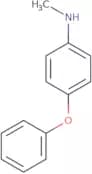
N-Methyl-4-phenoxyaniline
CAS:<p>N-Methyl-4-phenoxyaniline is a molecule that inhibits chitinase, an enzyme that catalyzes the hydrolysis of chitin, and molting. N-Methyl-4-phenoxyaniline has been shown to be potent inhibitor of the enzyme amide in vitro. It also inhibits onchocerca volvulus and in vivo, which may be due to its ability to inhibit the synthesis of fatty acids. This drug has not been tested against other parasites or mammals, but it is an anthelmintic drug.</p>Formula:C13H13NOPurity:Min. 95%Molecular weight:199.25 g/mol4-Chloro-3-methyl-[1,2]oxazolo[5,4-d]pyrimidine
CAS:<p>Versatile small molecule scaffold</p>Formula:C6H4ClN3OPurity:Min. 95%Molecular weight:169.57 g/molRef: 3D-BCA85060
Discontinued product6-benzyl-2-methyl-5,6,7,8-tetrahydropyrido[4,3-d]pyrimidin-4(3H)-one
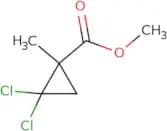
CAS:<p>Versatile small molecule scaffold</p>Formula:C15H17N3OPurity:Min. 95%Molecular weight:255.32 g/molMethyl 2,2-dichloro-1-methylcyclopropanecarboxylate
CAS:<p>Methyl 2,2-dichloro-1-methylcyclopropanecarboxylate is a cyclic compound with an effective rate of 11.6 s−1. It has been shown to be an effective catalyst for the electrochemical reduction of anthracene and other aromatic compounds in metallocomplexes. The catalytic activity of Methyl 2,2-dichloro-1-methylcyclopropanecarboxylate is dependent on the concentration and type of anion present in solution. In homogeneous systems, this compound is catalytically active for the electrochemical reduction of radical anions and polarographic oxidation of pyridine. This chemical also shows high electrochemical reductive activity towards palladium.</p>Formula:C6H8Cl2O2Purity:Min. 95%Molecular weight:183.03 g/molRef: 3D-BAA44713
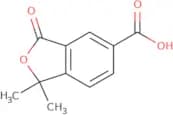
Discontinued product1,1-Dimethyl-3-oxo-1,3-dihydro-2-benzofuran-5-carboxylic acid
CAS:<p>Versatile small molecule scaffold</p>Formula:C11H10O4Purity:Min. 95%Molecular weight:206.19 g/molRef: 3D-BAA42881
Discontinued product(Pyridazin-3-yl)methanamine dihydrochloride
CAS:<p>Versatile small molecule scaffold</p>Formula:C5H9Cl2N3Purity:Min. 95%Molecular weight:182.05 g/moltert-Butyl N-[(4-amino-2-fluorophenyl)methyl]carbamate
CAS:<p>Versatile small molecule scaffold</p>Formula:C12H17FN2O2Purity:Min. 95%Molecular weight:240.27 g/molRef: 3D-ALB17492
Discontinued producttert-butyl 4-[(tetramethyl-1,3,2-dioxaborolan-2-yl)methylidene]piperidine-1-carboxylate
CAS:<p>Versatile small molecule scaffold</p>Formula:C17H30BNO4Purity:Min. 95%Molecular weight:323.2 g/mol2-Cyclopropyl-5-fluorobenzoic acid
CAS:<p>Versatile small molecule scaffold</p>Formula:C10H9FO2Purity:Min. 95%Molecular weight:180.17 g/molRef: 3D-AAC50478
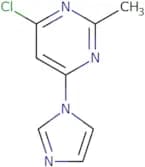
Discontinued product4-Chloro-6-(1H-imidazol-1-yl)-2-methylpyrimidine
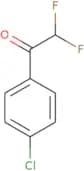
CAS:<p>Versatile small molecule scaffold</p>Formula:C8H7ClN4Purity:Min. 95%Molecular weight:194.62 g/mol1-(4-Chloro-phenyl)-2,2-difluoro-ethanone
CAS:<p>Versatile small molecule scaffold</p>Formula:C8H5ClF2OPurity:Min. 95%Molecular weight:190.57 g/mol2-Chloro-N-[2-(3-chlorophenyl)ethyl]acetamide
CAS:<p>Versatile small molecule scaffold</p>Formula:C10H11Cl2NOPurity:Min. 95%Molecular weight:232.1 g/mol5-Methyl-5H,6H,7H,8H-imidazo[1,2-a]pyridine-2-sulfonyl chloride
CAS:<p>Versatile small molecule scaffold</p>Formula:C8H11ClN2O2SPurity:Min. 95%Molecular weight:234.7 g/molQuinoline-5-carbonitrile
CAS:<p>Quinoline-5-carbonitrile is a cyanide compound that can be used in the synthesis of heterocyclic compounds. The reaction between quinoline and 5-cyanovaleric acid produces 6-nitroquinoline, which is then converted to dimethyl sulfoxide by alcoholysis. This reaction product can then be used to synthesize an amide or nucleophile. Quinoline-5-carbonitrile reacts with potassium in the presence of bifunctional hydrazide to produce a cyanide ion, which can be hydrolyzed by an acid to release hydrogen cyanide gas. This experiment has been shown as a model for reactions involving cyano compounds.</p>Formula:C10H6N2Purity:Min. 95%Molecular weight:154.17 g/molRef: 3D-JCA55102
Discontinued product1-{Bicyclo[2.2.1]heptan-2-yl}propan-1-amine
CAS:<p>Versatile small molecule scaffold</p>Formula:C10H19NPurity:Min. 95%Molecular weight:153.26 g/molRef: 3D-JMC20030
Discontinued product7-Iodo-5h-Pyrrolo[2,3-B]Pyrazine
CAS:<p>Versatile small molecule scaffold</p>Formula:C6H4N3IPurity:Min. 95%Molecular weight:245.02 g/molRef: 3D-PKB45126
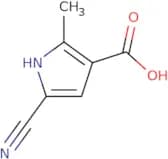
Discontinued product5-Cyano-2-methyl-1H-pyrrole-3-carboxylic acid
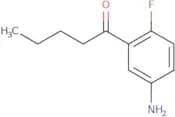
CAS:<p>Versatile small molecule scaffold</p>Formula:C7H6N2O2Purity:Min. 95%Molecular weight:150.13 g/mol1-(5-Amino-2-fluorophenyl)pentan-1-one
CAS:<p>Versatile small molecule scaffold</p>Formula:C11H14FNOPurity:Min. 95%Molecular weight:195.23 g/molRef: 3D-PZC12583
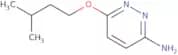
Discontinued product6-(3-Methylbutoxy)pyridazin-3-amine
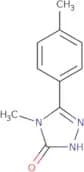
CAS:<p>Versatile small molecule scaffold</p>Formula:C9H15N3OPurity:Min. 95%Molecular weight:181.23 g/mol4-Methyl-3-(4-methylphenyl)-4,5-dihydro-1H-1,2,4-triazol-5-one
CAS:<p>Versatile small molecule scaffold</p>Formula:C10H11N3OPurity:Min. 95%Molecular weight:189.21 g/molRef: 3D-SEA25823
Discontinued product

![4-Chloro-3-methyl-[1,2]oxazolo[5,4-d]pyrimidine](/_next/image/?url=https%3A%2Fstatic.cymitquimica.com%2Fproducts%2F3D%2Fthumb-webp%2FBCA85060.webp&w=3840&q=75)
![6-benzyl-2-methyl-5,6,7,8-tetrahydropyrido[4,3-d]pyrimidin-4(3H)-one](/_next/image/?url=https%3A%2Fstatic.cymitquimica.com%2Fproducts%2F3D%2Fthumb-webp%2FBAA44840.webp&w=3840&q=75)

![tert-Butyl N-[(4-amino-2-fluorophenyl)methyl]carbamate](/_next/image/?url=https%3A%2Fstatic.cymitquimica.com%2Fproducts%2F3D%2Fthumb-webp%2FALB17492.webp&w=3840&q=75)
![tert-butyl 4-[(tetramethyl-1,3,2-dioxaborolan-2-yl)methylidene]piperidine-1-carboxylate](/_next/image/?url=https%3A%2Fstatic.cymitquimica.com%2Fproducts%2F3D%2Fthumb-webp%2FAHC97061.webp&w=3840&q=75)

![2-Chloro-N-[2-(3-chlorophenyl)ethyl]acetamide](/_next/image/?url=https%3A%2Fstatic.cymitquimica.com%2Fproducts%2F3D%2Fthumb-webp%2FJBA16215.webp&w=3840&q=75)
![5-Methyl-5H,6H,7H,8H-imidazo[1,2-a]pyridine-2-sulfonyl chloride](/_next/image/?url=https%3A%2Fstatic.cymitquimica.com%2Fproducts%2F3D%2Fthumb-webp%2FJBD31873.webp&w=3840&q=75)
![1-{Bicyclo[2.2.1]heptan-2-yl}propan-1-amine](/_next/image/?url=https%3A%2Fstatic.cymitquimica.com%2Fproducts%2F3D%2Fthumb-webp%2FJMC20030.webp&w=3840&q=75)
![7-Iodo-5h-Pyrrolo[2,3-B]Pyrazine](/_next/image/?url=https%3A%2Fstatic.cymitquimica.com%2Fproducts%2F3D%2Fthumb-webp%2FPKB45126.webp&w=3840&q=75)