


Building Blocks
This section contains fundamental products for the synthesis of organic and biological compounds. Building blocks are the essential starting materials used to construct complex molecules through various chemical reactions. They play a critical role in drug discovery, material science, and chemical research. At CymitQuimica, we offer a diverse range of high-quality building blocks to support your innovative research and industrial projects, ensuring you have the essential components for successful synthesis.
Subcategories of "Building Blocks"
- Boronic Acids & Boronic Acid Derivatives(5,778 products)
- Chiral Building Blocks(1,242 products)
- Hydrocarbon Building Blocks(6,098 products)
- Organic Building Blocks(61,034 products)
Found 199601 products of "Building Blocks"
Sort by
Purity (%)
0
100
|
0
|
50
|
90
|
95
|
100
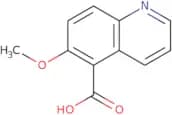
6-Methoxyquinoline-5-carboxylic acid
CAS:<p>Versatile small molecule scaffold</p>Formula:C11H9NO3Purity:Min. 95%Molecular weight:203.19 g/molRef: 3D-VLB73984
Discontinued product2-Chloro-1-[3-(trifluoromethyl)cyclohexyl]ethan-1-one
CAS:<p>Versatile small molecule scaffold</p>Formula:C9H12ClF3OPurity:Min. 95%Molecular weight:228.64 g/molRef: 3D-VLC72752
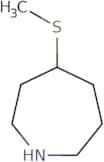
Discontinued product4-(Methylsulfanyl)azepane
CAS:<p>Versatile small molecule scaffold</p>Formula:C7H15NSPurity:Min. 95%Molecular weight:145.27 g/molRef: 3D-VSC80783
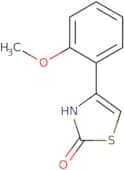
Discontinued product4-(2-Methoxyphenyl)-2,3-dihydro-1,3-thiazol-2-one
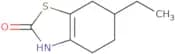
CAS:<p>Versatile small molecule scaffold</p>Formula:C10H9NO2SPurity:Min. 95%Molecular weight:207.25 g/mol6-Ethyl-2,3,4,5,6,7-hexahydro-1,3-benzothiazol-2-one
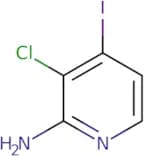
CAS:<p>Versatile small molecule scaffold</p>Formula:C9H13NOSPurity:Min. 95%Molecular weight:183.27 g/mol3-Chloro-4-iodopyridin-2-amine
CAS:<p>3-Chloro-4-iodopyridin-2-amine is a chemical compound with the formula CHI. It is a white solid that can be used in evaluating cross-coupling reactions, such as the coupling of an alkyne with a chlorine atom. This chemical has been shown to react well with chlorination reagents and to form substituted cyanides. The nature of the substituent on the chlorine atom determines its regioselectivity and reactivity, making this compound useful for regiocontrolled synthesis.</p>Formula:C5H4ClIN2Purity:Min. 95%Molecular weight:254.46 g/molN-{[2-(Prop-2-en-1-yloxy)phenyl]methyl}-1,3-dioxaindan-5-amine hydrochloride
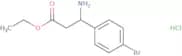
CAS:<p>Versatile small molecule scaffold</p>Formula:C17H18ClNO3Purity:Min. 95%Molecular weight:319.8 g/molEthyl 3-amino-3-(4-bromophenyl)propanoate hydrochloride
CAS:<p>Versatile small molecule scaffold</p>Formula:C11H15BrClNO2Purity:Min. 95%Molecular weight:308.6 g/molRef: 3D-CVA84192
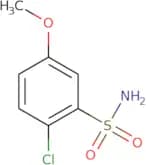
Discontinued product2-Chloro-5-methoxybenzene-1-sulfonamide
CAS:<p>2-Chloro-5-methoxybenzene-1-sulfonamide is a selective nematicide that has been shown to be effective against parasitic nematodes. It is a member of the class of compounds known as parasitic nematides. This compound is active against both larval and adult forms of these worms, but it does not affect other organisms or plants. 2-Chloro-5-methoxybenzene-1-sulfonamide is believed to act by binding to specific sites on the nematode's body and interfering with their biological properties.</p>Formula:C7H8ClNO3SPurity:Min. 95%Molecular weight:221.66 g/mol1-[(4-Bromo-2-chlorophenyl)methyl]-1H-pyrazol-4-amine
CAS:<p>Versatile small molecule scaffold</p>Formula:C10H9BrClN3Purity:Min. 95%Molecular weight:286.55 g/molRef: 3D-CPC18522
Discontinued product7-Chloro-2-[4-(chloromethyl)phenyl]-1,3-benzothiazole
CAS:<p>Versatile small molecule scaffold</p>Formula:C14H9Cl2NSPurity:Min. 95%Molecular weight:294.2 g/molRef: 3D-VTB56830
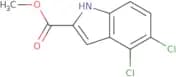
Discontinued productMethyl 4,5-dichloro-1H-indole-2-carboxylate
CAS:<p>Versatile small molecule scaffold</p>Formula:C10H7Cl2NO2Purity:Min. 95%Molecular weight:244.07 g/mol6-[3-(4-Methoxyphenyl)-1H-pyrazol-1-yl]pyridazine-3-thiol
CAS:<p>Versatile small molecule scaffold</p>Formula:C14H12N4OSPurity:Min. 95%Molecular weight:284.34 g/molRef: 3D-VWC51580
Discontinued product4-Bromo-1-methyl-1H-imidazole-2-carbonitrile
CAS:<p>Versatile small molecule scaffold</p>Formula:C5H4BrN3Purity:Min. 95%Molecular weight:186.01 g/mol{[(2S,4S)-4-Fluoro-1-[(2-methyl-1,3-thiazol-4-yl)methyl]pyrrolidin-2-yl]methyl}(methyl)amine
CAS:<p>Versatile small molecule scaffold</p>Formula:C11H18FN3SPurity:Min. 95%Molecular weight:243.35 g/molRef: 3D-VXC57248
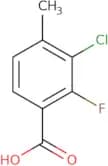
Discontinued product3-Chloro-2-fluoro-4-methylbenzoic acid
CAS:<p>Versatile small molecule scaffold</p>Formula:C8H6ClFO2Purity:Min. 95%Molecular weight:188.58 g/molImidazo[1,5-a]pyridine-7-carbonitrile
CAS:<p>Versatile small molecule scaffold</p>Formula:C8H5N3Purity:Min. 95%Molecular weight:143.15 g/molRef: 3D-CHC39809
Discontinued product8-Fluoro-3-methyl-2,3,4,5-tetrahydro-1H-1,4-benzodiazepin-5-one
CAS:<p>Versatile small molecule scaffold</p>Formula:C10H11FN2OPurity:Min. 95%Molecular weight:194.21 g/molRef: 3D-CHC38104
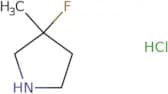
Discontinued product3-fluoro-3-methylpyrrolidine hydrochloride
CAS:<p>Versatile small molecule scaffold</p>Formula:C5H11ClFNPurity:Min. 95%Molecular weight:139.6 g/molRef: 3D-CHC38091
Discontinued productThieno[2,3-b]pyridine-5-carbonitrile
CAS:<p>Thienopyridine analogs are a class of chemical compounds that function as agonists of the receptor α. These compounds have been shown to inhibit fatty acid oxidation and ATP production in rat liver cells, which may be due to their ability to activate AMP-activated protein kinase (AMPK). Thienopyridine analogs are being investigated for use as anti-inflammatory agents and cancer treatments.</p>Formula:C8H4N2SPurity:Min. 95%Molecular weight:160.2 g/molRef: 3D-WAA34431
Discontinued product

![2-Chloro-1-[3-(trifluoromethyl)cyclohexyl]ethan-1-one](/_next/image/?url=https%3A%2Fstatic.cymitquimica.com%2Fproducts%2F3D%2Fthumb-webp%2FVLC72752.webp&w=3840&q=75)
![N-{[2-(Prop-2-en-1-yloxy)phenyl]methyl}-1,3-dioxaindan-5-amine hydrochloride](/_next/image/?url=https%3A%2Fstatic.cymitquimica.com%2Fproducts%2F3D%2Fthumb-webp%2FCVD03113.webp&w=3840&q=75)
![1-[(4-Bromo-2-chlorophenyl)methyl]-1H-pyrazol-4-amine](/_next/image/?url=https%3A%2Fstatic.cymitquimica.com%2Fproducts%2F3D%2Fthumb-webp%2FCPC18522.webp&w=3840&q=75)
![7-Chloro-2-[4-(chloromethyl)phenyl]-1,3-benzothiazole](/_next/image/?url=https%3A%2Fstatic.cymitquimica.com%2Fproducts%2F3D%2Fthumb-webp%2FVTB56830.webp&w=3840&q=75)
![6-[3-(4-Methoxyphenyl)-1H-pyrazol-1-yl]pyridazine-3-thiol](/_next/image/?url=https%3A%2Fstatic.cymitquimica.com%2Fproducts%2F3D%2Fthumb-webp%2FVWC51580.webp&w=3840&q=75)

![{[(2S,4S)-4-Fluoro-1-[(2-methyl-1,3-thiazol-4-yl)methyl]pyrrolidin-2-yl]methyl}(methyl)amine](/_next/image/?url=https%3A%2Fstatic.cymitquimica.com%2Fproducts%2F3D%2Fthumb-webp%2FVXC57248.webp&w=3840&q=75)
![Imidazo[1,5-a]pyridine-7-carbonitrile](/_next/image/?url=https%3A%2Fstatic.cymitquimica.com%2Fproducts%2F3D%2Fthumb-webp%2FCHC39809.webp&w=3840&q=75)

![Thieno[2,3-b]pyridine-5-carbonitrile](/_next/image/?url=https%3A%2Fstatic.cymitquimica.com%2Fproducts%2F3D%2Fthumb-webp%2FWAA34431.webp&w=3840&q=75)