


Building Blocks
This section contains fundamental products for the synthesis of organic and biological compounds. Building blocks are the essential starting materials used to construct complex molecules through various chemical reactions. They play a critical role in drug discovery, material science, and chemical research. At CymitQuimica, we offer a diverse range of high-quality building blocks to support your innovative research and industrial projects, ensuring you have the essential components for successful synthesis.
Subcategories of "Building Blocks"
- Boronic Acids & Boronic Acid Derivatives(5,778 products)
- Chiral Building Blocks(1,242 products)
- Hydrocarbon Building Blocks(6,098 products)
- Organic Building Blocks(61,034 products)
Found 199601 products of "Building Blocks"
Sort by
Purity (%)
0
100
|
0
|
50
|
90
|
95
|
100
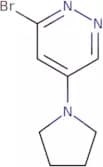
3-Bromo-5-(pyrrolidin-1-yl)pyridazine
CAS:<p>Versatile small molecule scaffold</p>Formula:C8H10BrN3Purity:Min. 95%Molecular weight:228.09 g/molRef: 3D-UPC98750
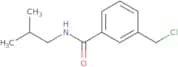
Discontinued product3-(Chloromethyl)-N-(2-methylpropyl)benzamide
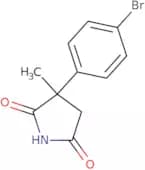
CAS:<p>Versatile small molecule scaffold</p>Formula:C12H16ClNOPurity:Min. 95%Molecular weight:225.71 g/mol3-(4-Bromophenyl)-3-methylpyrrolidine-2,5-dione
CAS:<p>Versatile small molecule scaffold</p>Formula:C11H10BrNO2Purity:Min. 95%Molecular weight:268.11 g/molRef: 3D-UTB28944
Discontinued product2-Cyclopropylbenzaldehyde
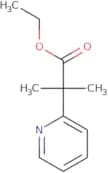
CAS:<p>Versatile small molecule scaffold</p>Formula:C10H10OPurity:Min. 95%Molecular weight:146.19 g/molEthyl 2-methyl-2-(pyridin-2-yl)propanoate
CAS:<p>Versatile small molecule scaffold</p>Formula:C11H15NO2Purity:Min. 95%Molecular weight:193.24 g/molRef: 3D-VAA09297
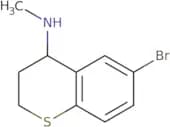
Discontinued product6-Bromo-N-methyl-3,4-dihydro-2H-1-benzothiopyran-4-amine
CAS:<p>Versatile small molecule scaffold</p>Formula:C10H12BrNSPurity:Min. 95%Molecular weight:258.18 g/molRef: 3D-GWB17719
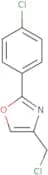
Discontinued product4-(Chloromethyl)-2-(4-chlorophenyl)-1,3-oxazole
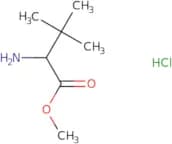
CAS:<p>Versatile small molecule scaffold</p>Formula:C10H7Cl2NOPurity:Min. 95%Molecular weight:228.07 g/molMethyl 2-amino-3,3-dimethylbutanoate hydrochloride
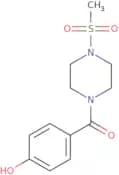
CAS:<p>Versatile small molecule scaffold</p>Formula:C7H16ClNO2Purity:Min. 95%Molecular weight:181.66 g/mol4-(4-Methanesulfonylpiperazine-1-carbonyl)phenol
CAS:<p>Versatile small molecule scaffold</p>Formula:C12H16N2O4SPurity:Min. 95%Molecular weight:284.33 g/molRef: 3D-XAC91535
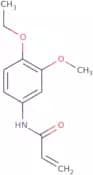
Discontinued productN-(4-Ethoxy-3-methoxyphenyl)prop-2-enamide
CAS:<p>Versatile small molecule scaffold</p>Formula:C12H15NO3Purity:Min. 95%Molecular weight:221.25 g/molRef: 3D-GWB15912
Discontinued product4-Fluoro-4-phenylpiperidine hydrochloride
CAS:<p>4-Fluoro-4-phenylpiperidine hydrochloride is a drug that is structurally related to the neurotransmitter glutamate. It binds to the same metabotropic receptor as glutamate, but with an increased affinity for the receptor. 4-Fluoro-4-phenylpiperidine hydrochloride has been shown to be orally active and is a potent allosteric modulator of this type of receptor. It has been optimized for medicinal use by modifying its hydrophobic nature and functional activity profile. The optimization process has led to an increase in binding affinity, which may lead to better therapeutic effects.</p>Formula:C11H15ClFNPurity:Min. 95%Molecular weight:215.7 g/molRef: 3D-GSB38225
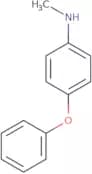
Discontinued productN-Methyl-4-phenoxyaniline
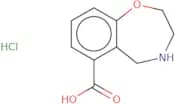
CAS:<p>N-Methyl-4-phenoxyaniline is a molecule that inhibits chitinase, an enzyme that catalyzes the hydrolysis of chitin, and molting. N-Methyl-4-phenoxyaniline has been shown to be potent inhibitor of the enzyme amide in vitro. It also inhibits onchocerca volvulus and in vivo, which may be due to its ability to inhibit the synthesis of fatty acids. This drug has not been tested against other parasites or mammals, but it is an anthelmintic drug.</p>Formula:C13H13NOPurity:Min. 95%Molecular weight:199.25 g/mol2,3,4,5-Tetrahydro-1,4-benzoxazepine-6-carboxylic acid hydrochloride
CAS:<p>Versatile small molecule scaffold</p>Formula:C10H12ClNO3Purity:Min. 95%Molecular weight:229.7 g/molRef: 3D-XLD25633
Discontinued product2-Cyclopropyl-5-fluorobenzoic acid
CAS:<p>Versatile small molecule scaffold</p>Formula:C10H9FO2Purity:Min. 95%Molecular weight:180.17 g/molRef: 3D-AAC50478
Discontinued product3-Boc-3-azabicyclo[3.2.1]octan-8-amine
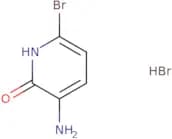
CAS:<p>Versatile small molecule scaffold</p>Formula:C12H22N2O2Purity:Min. 95%Molecular weight:226.32 g/mol3-amino-6-bromopyridin-2-ol hydrobromide
CAS:<p>Versatile small molecule scaffold</p>Formula:C5H6Br2N2OPurity:Min. 95%Molecular weight:269.9 g/mol2-Bromo-4-(4-fluorophenyl)-1,3-thiazole
CAS:<p>Versatile small molecule scaffold</p>Formula:C9H5NFSBrPurity:Min. 95%Molecular weight:258.11 g/mol3-(Methoxycarbonyl)pyridine-4-carboxylic acid
CAS:<p>Versatile small molecule scaffold</p>Formula:C8H7NO4Purity:Min. 95%Molecular weight:181.15 g/mol3-Methylbenzo[b]thiophene-2-carboxylic acid
CAS:<p>3-Methylbenzo[b]thiophene-2-carboxylic acid (MBTCA) is a heterocyclic compound that is an intermediate in the synthesis of 3-methylthiophene-2-carboxylic acid, a precursor to other drugs. MBTCA is an aerobic, nonpolar compound that has shown antimicrobial activity against some bacteria and fungi. It also has been shown to have practicality as a biomolecular probe for methyl groups in organic solvents. MBTCA can be synthesized by nitration of benzene in the presence of sulfur and sulfoxides. This reaction produces nitrobenzene, which can then be oxidized by potassium permanganate or hydrogen peroxide to produce MBTCA. The most common isomer of MBTCA is 2-(3,5-dimethoxybenzylidene)tetrahydrofuran, with three methyl groups on the</p>Formula:C10H8O2SPurity:Min. 95%Molecular weight:192.23 g/mol2-Acetylbenzoic acid
CAS:<p>2-Acetylbenzoic acid is a functional molecule that contains an acetyl group. It can form hydrogen bonds with other molecules and has been shown to induce apoptosis in cells. The reaction products of 2-acetylbenzoic acid are malonic acid, acetylsalicylic acid, and 2-benzoylbenzoic acid. These three compounds are made by the addition of hydrogen or hydroxide to the molecule 2-acetylbenzoic acid. The molecule has two functional groups: a carbonyl group and an acetyl group. The chemical structure of this molecule can be seen in the figure below.<br>2-Acetylbenzoic Acid</p>Formula:C9H8O3Purity:Min. 95%Color and Shape:PowderMolecular weight:164.16 g/molRef: 3D-FA05086
Discontinued product



![3-Boc-3-azabicyclo[3.2.1]octan-8-amine](/_next/image/?url=https%3A%2Fstatic.cymitquimica.com%2Fproducts%2F3D%2Fthumb-webp%2FFDC76351.webp&w=3840&q=75)


![3-Methylbenzo[b]thiophene-2-carboxylic acid](/_next/image/?url=https%3A%2Fstatic.cymitquimica.com%2Fproducts%2F3D%2Fthumb-webp%2FDAA13378.webp&w=3840&q=75)
