


Building Blocks
This section contains fundamental products for the synthesis of organic and biological compounds. Building blocks are the essential starting materials used to construct complex molecules through various chemical reactions. They play a critical role in drug discovery, material science, and chemical research. At CymitQuimica, we offer a diverse range of high-quality building blocks to support your innovative research and industrial projects, ensuring you have the essential components for successful synthesis.
Subcategories of "Building Blocks"
- Boronic Acids & Boronic Acid Derivatives(5,778 products)
- Chiral Building Blocks(1,242 products)
- Hydrocarbon Building Blocks(6,098 products)
- Organic Building Blocks(61,034 products)
Found 199601 products of "Building Blocks"
Sort by
Purity (%)
0
100
|
0
|
50
|
90
|
95
|
100
1-[(3-Methoxyphenyl)methyl]-3,5-dimethyl-1H-pyrazol-4-amine hydrochloride
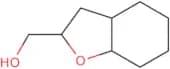
CAS:<p>Versatile small molecule scaffold</p>Formula:C13H18ClN3OPurity:Min. 95%Molecular weight:267.75 g/mol(Octahydro-1-benzofuran-2-yl)methanols
CAS:<p>Versatile small molecule scaffold</p>Formula:C9H16O2Purity:Min. 95%Molecular weight:156.2 g/molRef: 3D-VXC65097
Discontinued productThieno[2,3-b]pyridine-5-carbonitrile
CAS:<p>Thienopyridine analogs are a class of chemical compounds that function as agonists of the receptor α. These compounds have been shown to inhibit fatty acid oxidation and ATP production in rat liver cells, which may be due to their ability to activate AMP-activated protein kinase (AMPK). Thienopyridine analogs are being investigated for use as anti-inflammatory agents and cancer treatments.</p>Formula:C8H4N2SPurity:Min. 95%Molecular weight:160.2 g/molRef: 3D-WAA34431
Discontinued product2-[2-(Naphthalen-1-yl)-1,3-thiazol-4-yl]acetic acid
CAS:<p>Versatile small molecule scaffold</p>Formula:C15H11NO2SPurity:Min. 95%Molecular weight:269.3 g/mol2,6-Dichloro-N'-hydroxybenzene-1-carboximidamide
CAS:<p>Versatile small molecule scaffold</p>Formula:C7H6Cl2N2OPurity:Min. 95%Molecular weight:205.04 g/molRef: 3D-YAA50521
Discontinued product2-(3,4-Dichloro-phenyl)-pyrrolidine
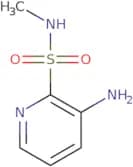
CAS:<p>Versatile small molecule scaffold</p>Formula:C10H11Cl2NPurity:Min. 95%Molecular weight:216.11 g/mol3-Amino-N-methylpyridine-2-sulfonamide
CAS:<p>Versatile small molecule scaffold</p>Formula:C6H9N3O2SPurity:Min. 95%Molecular weight:187.22 g/molRef: 3D-YSC42816
Discontinued product2-[3-(4-Methylphenyl)propanamido]acetic acid
CAS:<p>Versatile small molecule scaffold</p>Formula:C12H15NO3Purity:Min. 95%Molecular weight:221.25 g/mol4-[Bromo(phenyl)methyl]-1,2-difluorobenzene
CAS:<p>Versatile small molecule scaffold</p>Formula:C13H9BrF2Purity:Min. 95%Molecular weight:283.11 g/molRef: 3D-YZB27890
Discontinued productN-(1-Carbamothioylcyclopentyl)benzamide
CAS:<p>Versatile small molecule scaffold</p>Formula:C13H16N2OSPurity:Min. 95%Molecular weight:248.35 g/molRef: 3D-ZAC49324
Discontinued productN-tert-Butyl 4-nitrophenylsulfonamide
CAS:<p>N-tert-Butyl 4-nitrophenylsulfonamide is a versatile compound with various applications. It can be used as a research chemical in scientific studies or as an ingredient in the synthesis of other compounds. This compound has been found to exhibit antinociceptive properties, making it potentially useful in pain management. Additionally, N-tert-Butyl 4-nitrophenylsulfonamide can act as an electrode material and has been studied for its electrochemical properties. It reacts with certain chemicals such as dioscin, 5-hydroxymethylfurfural (5-HMF), and nicl2, forming new compounds with unique characteristics. Its carbonyl group allows for the formation of N-substituted carbamic acid derivatives, which have shown potential in various fields such as medicinal chemistry and materials science. With its wide range of applications and diverse reactivity, N-tert-Butyl 4-nit</p>Formula:C10H14N2O4SPurity:Min. 95%Molecular weight:258.3 g/molRef: 3D-ZBA69009
Discontinued productBenzenepropanoic acid, 3-[[(1,1-dimethylethoxy)carbonyl]amino]-
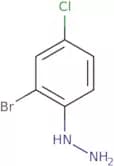
CAS:<p>Versatile small molecule scaffold</p>Formula:C14H19NO4Purity:Min. 95%Molecular weight:265.31 g/mol(2-Bromo-4-chlorophenyl)-hydrazine
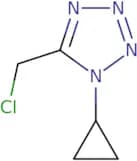
CAS:<p>Versatile small molecule scaffold</p>Formula:C6H6BrClN2Purity:Min. 95%Molecular weight:221.48 g/mol5-(Chloromethyl)-1-cyclopropyl-1H-1,2,3,4-tetrazole
CAS:<p>Versatile small molecule scaffold</p>Formula:C5H7ClN4Purity:Min. 95%Molecular weight:158.59 g/molRef: 3D-ZMB98056
Discontinued product8-chloro-2,3,4,5-tetrahydro-1λ6,2-benzothiazepine 1,1-dioxide
CAS:Versatile small molecule scaffoldFormula:C9H10ClNO2SPurity:Min. 95%Molecular weight:231.7 g/molRef: 3D-ZNC05956
Discontinued product2-(5-Chlorothiophen-2-yl)-2-oxoacetic acid
CAS:<p>Versatile small molecule scaffold</p>Formula:C6H3ClO3SPurity:Min. 95%Molecular weight:190.6 g/molRef: 3D-GCA47907
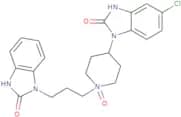
Discontinued productDomperidone N-oxide
CAS:<p>Please enquire for more information about Domperidone N-oxide including the price, delivery time and more detailed product information at the technical inquiry form on this page</p>Formula:C22H24ClN5O3Purity:Min. 95%Molecular weight:441.91 g/molRef: 3D-FD183841
Discontinued product3-Boc-3-azabicyclo[3.2.1]octan-8-amine
CAS:<p>Versatile small molecule scaffold</p>Formula:C12H22N2O2Purity:Min. 95%Molecular weight:226.32 g/mol3-(Methoxycarbonyl)pyridine-4-carboxylic acid
CAS:<p>Versatile small molecule scaffold</p>Formula:C8H7NO4Purity:Min. 95%Molecular weight:181.15 g/mol3-Methylbenzo[b]thiophene-2-carboxylic acid
CAS:<p>3-Methylbenzo[b]thiophene-2-carboxylic acid (MBTCA) is a heterocyclic compound that is an intermediate in the synthesis of 3-methylthiophene-2-carboxylic acid, a precursor to other drugs. MBTCA is an aerobic, nonpolar compound that has shown antimicrobial activity against some bacteria and fungi. It also has been shown to have practicality as a biomolecular probe for methyl groups in organic solvents. MBTCA can be synthesized by nitration of benzene in the presence of sulfur and sulfoxides. This reaction produces nitrobenzene, which can then be oxidized by potassium permanganate or hydrogen peroxide to produce MBTCA. The most common isomer of MBTCA is 2-(3,5-dimethoxybenzylidene)tetrahydrofuran, with three methyl groups on the</p>Formula:C10H8O2SPurity:Min. 95%Molecular weight:192.23 g/mol
![1-[(3-Methoxyphenyl)methyl]-3,5-dimethyl-1H-pyrazol-4-amine hydrochloride](/_next/image/?url=https%3A%2Fstatic.cymitquimica.com%2Fproducts%2F3D%2Fthumb-webp%2FVXC63920.webp&w=3840&q=75)

![Thieno[2,3-b]pyridine-5-carbonitrile](/_next/image/?url=https%3A%2Fstatic.cymitquimica.com%2Fproducts%2F3D%2Fthumb-webp%2FWAA34431.webp&w=3840&q=75)
![2-[2-(Naphthalen-1-yl)-1,3-thiazol-4-yl]acetic acid](/_next/image/?url=https%3A%2Fstatic.cymitquimica.com%2Fproducts%2F3D%2Fthumb-webp%2FYAA35315.webp&w=3840&q=75)

![2-[3-(4-Methylphenyl)propanamido]acetic acid](/_next/image/?url=https%3A%2Fstatic.cymitquimica.com%2Fproducts%2F3D%2Fthumb-webp%2FYTB36746.webp&w=3840&q=75)
![4-[Bromo(phenyl)methyl]-1,2-difluorobenzene](/_next/image/?url=https%3A%2Fstatic.cymitquimica.com%2Fproducts%2F3D%2Fthumb-webp%2FYZB27890.webp&w=3840&q=75)
![Benzenepropanoic acid, 3-[[(1,1-dimethylethoxy)carbonyl]amino]-](/_next/image/?url=https%3A%2Fstatic.cymitquimica.com%2Fproducts%2F3D%2Fthumb-webp%2FZFA50604.webp&w=3840&q=75)


![3-Boc-3-azabicyclo[3.2.1]octan-8-amine](/_next/image/?url=https%3A%2Fstatic.cymitquimica.com%2Fproducts%2F3D%2Fthumb-webp%2FFDC76351.webp&w=3840&q=75)

![3-Methylbenzo[b]thiophene-2-carboxylic acid](/_next/image/?url=https%3A%2Fstatic.cymitquimica.com%2Fproducts%2F3D%2Fthumb-webp%2FDAA13378.webp&w=3840&q=75)