Building Blocks
This section contains fundamental products for the synthesis of organic and biological compounds. Building blocks are the essential starting materials used to construct complex molecules through various chemical reactions. They play a critical role in drug discovery, material science, and chemical research. At CymitQuimica, we offer a diverse range of high-quality building blocks to support your innovative research and industrial projects, ensuring you have the essential components for successful synthesis.
Subcategories of "Building Blocks"
- Boronic Acids & Boronic Acid Derivatives(5,756 products)
- Chiral Building Blocks(1,242 products)
- Hydrocarbon Building Blocks(6,095 products)
- Organic Building Blocks(61,051 products)
Found 199813 products of "Building Blocks"
Sort by
Purity (%)
0
100
|
0
|
50
|
90
|
95
|
100
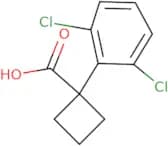
1-(2,6-Dichlorophenyl)cyclobutane-1-carboxylic acid
CAS:<p>Versatile small molecule scaffold</p>Formula:C11H10Cl2O2Purity:Min. 95%Molecular weight:245.1 g/molRef: 3D-PRB95174
Discontinued product2-{[3-(Dimethylamino)propyl]sulfanyl}aniline
CAS:<p>Versatile small molecule scaffold</p>Formula:C11H18N2SPurity:Min. 95%Molecular weight:210.34 g/molRef: 3D-BAA13477
Discontinued productN-[2-(1-Hydroxyethyl)phenyl]propanamide
CAS:<p>Versatile small molecule scaffold</p>Formula:C11H15NO2Purity:Min. 95%Molecular weight:193.24 g/molRef: 3D-GWB64243
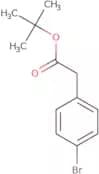
Discontinued producttert-Butyl 2-(4-bromophenyl)acetate
CAS:<p>Versatile small molecule scaffold</p>Formula:C12H15BrO2Purity:Min. 95%Molecular weight:271.15 g/molRef: 3D-IBA15558
Discontinued product2-(2,4-Dimethylbenzoyl)furan
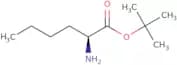
CAS:<p>Versatile small molecule scaffold</p>Formula:C13H12O2Purity:Min. 95%Molecular weight:200.23 g/moltert-butyl (2S)-2-aminohexanoate
CAS:<p>Tert-butyl (2S)-2-aminohexanoate is an intermediate that is used in the synthesis of glycine by the reaction of benzyl bromide and tert-butyl amine. The stereospecifically incorporated tert-butyl group has a high degree of enantioselectivity, which makes this intermediate useful in the synthesis of glycine. Tert-butyl (2S)-2-aminohexanoate can be synthesized using lithium diisopropylamide and a tertiary amine as an alkylating agent.</p>Formula:C10H21NO2Purity:Min. 95%Molecular weight:187.3 g/mol1-[2-(Dimethylamino)ethyl]piperazin-2-one
CAS:<p>Versatile small molecule scaffold</p>Formula:C8H17N3OPurity:Min. 95%Molecular weight:171.24 g/molRef: 3D-IMB69420
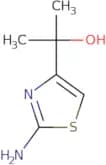
Discontinued product2-(2-Amino-1,3-thiazol-4-yl)propan-2-ol
CAS:<p>Versatile small molecule scaffold</p>Formula:C6H10N2OSPurity:Min. 95%Molecular weight:158.22 g/mol2'-Amino-[1,1'-bi(cyclopropane)]-2-carboxylic acid hydrochloride
CAS:<p>Versatile small molecule scaffold</p>Formula:C7H12ClNO2Purity:Min. 95%Molecular weight:177.6 g/molRef: 3D-CVD03476
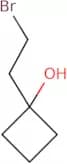
Discontinued product1-(2-Bromoethyl)cyclobutan-1-ol
CAS:<p>Versatile small molecule scaffold</p>Formula:C6H11BrOPurity:Min. 95%Molecular weight:179.05 g/molRef: 3D-JBD30961
Discontinued productQuinoline-5-carbonitrile
CAS:<p>Quinoline-5-carbonitrile is a cyanide compound that can be used in the synthesis of heterocyclic compounds. The reaction between quinoline and 5-cyanovaleric acid produces 6-nitroquinoline, which is then converted to dimethyl sulfoxide by alcoholysis. This reaction product can then be used to synthesize an amide or nucleophile. Quinoline-5-carbonitrile reacts with potassium in the presence of bifunctional hydrazide to produce a cyanide ion, which can be hydrolyzed by an acid to release hydrogen cyanide gas. This experiment has been shown as a model for reactions involving cyano compounds.</p>Formula:C10H6N2Purity:Min. 95%Molecular weight:154.17 g/molRef: 3D-JCA55102
Discontinued product6-Cyanospiro[3.3]heptane-2-carboxylic acid
CAS:<p>Versatile small molecule scaffold</p>Formula:C9H11NO2Purity:Min. 95%Molecular weight:165.19 g/molRef: 3D-DBA11489
Discontinued product5-[4-(Aminomethyl)phenyl]-5-methylimidazolidine-2,4-dione hydrochloride
CAS:<p>Versatile small molecule scaffold</p>Formula:C11H14ClN3O2Purity:Min. 95%Molecular weight:255.7 g/molRef: 3D-DXC58913
Discontinued product3,8-Dioxa-11-azaspiro[5.6]dodecane
CAS:<p>Versatile small molecule scaffold</p>Formula:C9H17NO2Purity:Min. 95%Molecular weight:171.24 g/molRef: 3D-WQC17744
Discontinued product4,5-Dihydroxy-2,3-dihydro-1H-isoindole-1,3-dione
CAS:4,5-Dihydroxy-2,3-dihydro-1H-isoindole-1,3-dione is a molybdenum compound with a hydroxyl group. It has been shown to inhibit the growth of bacteria that are resistant to penicillin by binding to the penicillin-binding proteins in their cell wall. 4,5-Dihydroxy-2,3-dihydro-1H-isoindole-1,3-dione has been found to be an effective inhibitor of polymer film formation when used in conjunction with 3 chloroperoxybenzoic acid. This compound also has been shown to have anti bacterial properties against Escherichia coli and Pseudomonas aeruginosa. 4,5-Dihydroxy -2,3 -dihydro -1H -isoindole -1,3 -dione may also have environmental applications due itsFormula:C8H5NO4Purity:Min. 95%Molecular weight:179.13 g/molRef: 3D-DGA35672
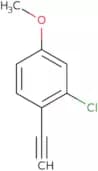
Discontinued product2-Chloro-1-ethynyl-4-methoxybenzene
CAS:<p>Versatile small molecule scaffold</p>Formula:C9H7ClOPurity:Min. 95%Molecular weight:166.6 g/molRef: 3D-DGA44068
Discontinued product3-[(2-Methyl-2-propen-1-yl)thio]-5H-1,2,4-triazino[5,6-b]indole
CAS:<p>3-[(2-Methyl-2-propen-1-yl)thio]-5H-1,2,4-triazino[5,6-b]indole is a recombinant protein that binds to the ribosomal protein L11. It has been shown to inhibit the biosynthesis of the bacterial cell wall and therefore inhibit replication of the bacterial genome. 3-[(2-Methyl-2-propen-1-yl)thio]-5H-1,2,4-triazino[5,6-b]indole also inhibits the synthesis of proteins essential for cell division. This compound has been shown to bind to ribosomes in both prokaryotic and eukaryotic cells. It may have potential as an inhibitor of cancerous cells because it inhibits protein synthesis in mammalian cells.</p>Formula:C13H12N4SPurity:Min. 95%Molecular weight:256.33 g/molRef: 3D-DNA02311
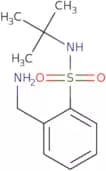
Discontinued product2-(Aminomethyl)-N-tert-butylbenzene-1-sulfonamide
CAS:<p>Versatile small molecule scaffold</p>Formula:C11H18N2O2SPurity:Min. 95%Molecular weight:242.34 g/molThieno[2,3-b]pyridine-5-carbonitrile
CAS:<p>Thienopyridine analogs are a class of chemical compounds that function as agonists of the receptor α. These compounds have been shown to inhibit fatty acid oxidation and ATP production in rat liver cells, which may be due to their ability to activate AMP-activated protein kinase (AMPK). Thienopyridine analogs are being investigated for use as anti-inflammatory agents and cancer treatments.</p>Formula:C8H4N2SPurity:Min. 95%Molecular weight:160.2 g/molRef: 3D-WAA34431
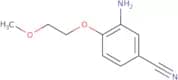
Discontinued product3-Amino-4-(2-methoxyethoxy)benzonitrile
CAS:<p>Versatile small molecule scaffold</p>Formula:C10H12N2O2Purity:Min. 95%Molecular weight:192.21 g/mol

![2-{[3-(Dimethylamino)propyl]sulfanyl}aniline](/_next/image/?url=https%3A%2Fstatic.cymitquimica.com%2Fproducts%2F3D%2Fthumb-webp%2FBAA13477.webp&w=3840&q=75)
![N-[2-(1-Hydroxyethyl)phenyl]propanamide](/_next/image/?url=https%3A%2Fstatic.cymitquimica.com%2Fproducts%2F3D%2Fthumb-webp%2FGWB64243.webp&w=3840&q=75)

![1-[2-(Dimethylamino)ethyl]piperazin-2-one](/_next/image/?url=https%3A%2Fstatic.cymitquimica.com%2Fproducts%2F3D%2Fthumb-webp%2FIMB69420.webp&w=3840&q=75)
![2'-Amino-[1,1'-bi(cyclopropane)]-2-carboxylic acid hydrochloride](/_next/image/?url=https%3A%2Fstatic.cymitquimica.com%2Fproducts%2F3D%2Fthumb-webp%2FCVD03476.webp&w=3840&q=75)
![6-Cyanospiro[3.3]heptane-2-carboxylic acid](/_next/image/?url=https%3A%2Fstatic.cymitquimica.com%2Fproducts%2F3D%2Fthumb-webp%2FDBA11489.webp&w=3840&q=75)
![5-[4-(Aminomethyl)phenyl]-5-methylimidazolidine-2,4-dione hydrochloride](/_next/image/?url=https%3A%2Fstatic.cymitquimica.com%2Fproducts%2F3D%2Fthumb-webp%2FDXC58913.webp&w=3840&q=75)
![3,8-Dioxa-11-azaspiro[5.6]dodecane](/_next/image/?url=https%3A%2Fstatic.cymitquimica.com%2Fproducts%2F3D%2Fthumb-webp%2FWQC17744.webp&w=3840&q=75)
![3-[(2-Methyl-2-propen-1-yl)thio]-5H-1,2,4-triazino[5,6-b]indole](/_next/image/?url=https%3A%2Fstatic.cymitquimica.com%2Fproducts%2F3D%2Fthumb-webp%2FDNA02311.webp&w=3840&q=75)
![Thieno[2,3-b]pyridine-5-carbonitrile](/_next/image/?url=https%3A%2Fstatic.cymitquimica.com%2Fproducts%2F3D%2Fthumb-webp%2FWAA34431.webp&w=3840&q=75)