Building Blocks
This section contains fundamental products for the synthesis of organic and biological compounds. Building blocks are the essential starting materials used to construct complex molecules through various chemical reactions. They play a critical role in drug discovery, material science, and chemical research. At CymitQuimica, we offer a diverse range of high-quality building blocks to support your innovative research and industrial projects, ensuring you have the essential components for successful synthesis.
Subcategories of "Building Blocks"
- Boronic Acids & Boronic Acid Derivatives(5,756 products)
- Chiral Building Blocks(1,242 products)
- Hydrocarbon Building Blocks(6,095 products)
- Organic Building Blocks(61,055 products)
Found 199650 products of "Building Blocks"
Sort by
Purity (%)
0
100
|
0
|
50
|
90
|
95
|
100
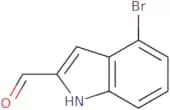
4-bromo-1H-indole-2-carbaldehyde
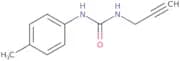
CAS:<p>Versatile small molecule scaffold</p>Formula:C9H6BrNOPurity:Min. 95%Molecular weight:224.1 g/mol1-(4-Methylphenyl)-3-(prop-2-yn-1-yl)urea
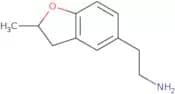
CAS:<p>1-(4-Methylphenyl)-3-(prop-2-yn-1-yl)urea is a fluorescent derivative that can be detected with certain techniques. It has been used to detect phosphatases in cervical cancer cells and tumor cells. This compound is a ligand for the surface antigen of placental alkaline phosphatase (PLAP). It can also bind to other organic ligands, such as recombinant human erythropoietin (EPO), which may be useful for redirecting the action of this protein. 1-(4-Methylphenyl)-3-(prop-2-yn-1-yl)urea is an organic bispecific molecule that binds to two receptors, one on tumor cells and one on normal cells. This binding leads to cell death by apoptosis through the release of cytochrome c from mitochondria.</p>Formula:C11H12N2OPurity:Min. 95%Molecular weight:188.23 g/mol2-(2-Methyl-2,3-dihydro-1-benzofuran-5-yl)ethan-1-amine
CAS:Controlled Product<p>Versatile small molecule scaffold</p>Formula:C11H15NOPurity:Min. 95%Molecular weight:177.24 g/molThieno[2,3-b]pyridine-5-carbonitrile
CAS:<p>Thienopyridine analogs are a class of chemical compounds that function as agonists of the receptor α. These compounds have been shown to inhibit fatty acid oxidation and ATP production in rat liver cells, which may be due to their ability to activate AMP-activated protein kinase (AMPK). Thienopyridine analogs are being investigated for use as anti-inflammatory agents and cancer treatments.</p>Formula:C8H4N2SPurity:Min. 95%Molecular weight:160.2 g/molRef: 3D-WAA34431
Discontinued product2-[3-(Difluoromethoxy)-4-methoxyphenyl]ethan-1-amine
CAS:Controlled Product<p>Versatile small molecule scaffold</p>Formula:C10H13F2NO2Purity:Min. 95%Molecular weight:217.21 g/molRef: 3D-YHB23469
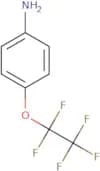
Discontinued product4-(Perfluoroethoxy)aniline
CAS:<p>Versatile small molecule scaffold</p>Formula:C8H6F5NOPurity:Min. 95%Molecular weight:227.13 g/molRef: 3D-AAA71785
Discontinued product(5-bromo-2-methoxypyridin-3-yl)methanamine
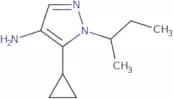
CAS:<p>Versatile small molecule scaffold</p>Formula:C7H9BrN2OPurity:Min. 95%Molecular weight:217.1 g/mol1-(Butan-2-yl)-5-cyclopropyl-1H-pyrazol-4-amine
CAS:<p>Versatile small molecule scaffold</p>Formula:C10H17N3Purity:Min. 95%Molecular weight:179.26 g/molRef: 3D-GQB45453
Discontinued productMethyl 2-[4-(2-aminoethyl)phenoxy]acetate hydrochloride
CAS:<p>Versatile small molecule scaffold</p>Formula:C11H16ClNO3Purity:Min. 95%Molecular weight:245.7 g/mol3,8-Dioxa-11-azaspiro[5.6]dodecane
CAS:<p>Versatile small molecule scaffold</p>Formula:C9H17NO2Purity:Min. 95%Molecular weight:171.24 g/molRef: 3D-WQC17744
Discontinued product3-Chloro-1,2,4-benzotriazine
CAS:<p>3-Chloro-1,2,4-benzotriazine is an organic compound that is used as an anti-cancer agent. It is a cytotoxin that inhibits the growth of cells by binding to DNA. The Suzuki reaction was used to synthesize this compound in high yields. 3-Chloro-1,2,4-benzotriazine has potential anti-cancer activity and can be used in conjunction with other cytotoxic agents to treat cancer. This drug has been shown to have cytotoxic effects on tumor cells by inhibiting DNA synthesis and cell division.</p>Formula:C7H4ClN3Purity:Min. 95%Molecular weight:165.58 g/molRef: 3D-RDA66921
Discontinued product3-{[3-(Trifluoromethyl)-1H-pyrazol-1-yl]methyl}benzoic acid
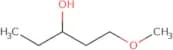
CAS:<p>Versatile small molecule scaffold</p>Formula:C12H9F3N2O2Purity:Min. 95%Molecular weight:270.21 g/mol1-Methoxypentan-3-ol
CAS:<p>Versatile small molecule scaffold</p>Formula:C6H14O2Purity:Min. 95%Molecular weight:118.17 g/molRef: 3D-CBA99999
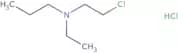
Discontinued productN-(2-Chloroethyl)-N-ethylpropan-1-amine hydrochloride
CAS:Controlled Product<p>Versatile small molecule scaffold</p>Formula:C7H17Cl2NPurity:Min. 95%Molecular weight:186.12 g/molRef: 3D-NAA10593
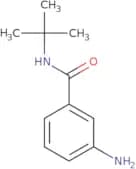
Discontinued product3-Amino-N-(tert-butyl)benzamide
CAS:<p>Versatile small molecule scaffold</p>Formula:C11H16N2OPurity:Min. 95%Molecular weight:192.26 g/molRef: 3D-ABA90062
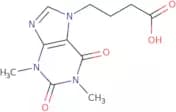
Discontinued product4-(1,3-Dimethyl-2,6-dioxo-2,3,6,7-tetrahydro-1H-purin-7-yl)butanoic acid
CAS:Controlled Product<p>Versatile small molecule scaffold</p>Formula:C11H14N4O4Purity:Min. 95%Molecular weight:266.25 g/molRef: 3D-CCA08348
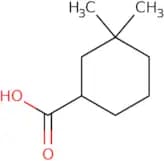
Discontinued product3,3-Dimethylcyclohexane-1-carboxylic acid
CAS:<p>Versatile small molecule scaffold</p>Formula:C9H16O2Purity:Min. 95%Molecular weight:156.22 g/molRef: 3D-CCA20977
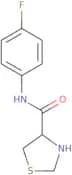
Discontinued productN-(4-Fluorophenyl)-1,3-thiazolidine-4-carboxamide
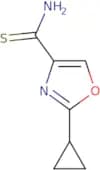
CAS:<p>Versatile small molecule scaffold</p>Formula:C10H11FN2OSPurity:Min. 95%Molecular weight:226.27 g/mol2-Cyclopropyl-1,3-oxazole-4-carbothioamide
CAS:<p>Versatile small molecule scaffold</p>Formula:C7H8N2OSPurity:Min. 95%Molecular weight:168.22 g/molRef: 3D-BKD17844
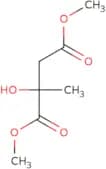
Discontinued product1,4-Dimethyl 2-hydroxy-2-methylbutanedioate
CAS:<p>1,4-Dimethyl 2-hydroxy-2-methylbutanedioate is an allylating agent that modifies the amino acid lysine residues in proteins. It has been shown to be effective in the treatment of skin lesions caused by Staphylococcus aureus and other bacteria because it inhibits bacterial growth through an antimicrobial effect. 1,4-Dimethyl 2-hydroxy-2-methylbutanedioate also has been used as a precursor for the synthesis of vitamin D3. This compound is metabolized in mammalian cells to form cysteamine, which is further converted to S-(1,4-dimethylpentadienoyl)cysteamine (DMPE). The resulting product can be used as a functional group on collagen or malic acid. 1,4-Dimethyl 2-hydroxy-2-methylbutanedioate also is used for modifications of mucocutaneous tissues such as skin and oral muc</p>Formula:C7H12O5Purity:Min. 95%Molecular weight:176.17 g/molRef: 3D-UAA02062
Discontinued product

![Thieno[2,3-b]pyridine-5-carbonitrile](/_next/image/?url=https%3A%2Fstatic.cymitquimica.com%2Fproducts%2F3D%2Fthumb-webp%2FWAA34431.webp&w=3840&q=75)
![2-[3-(Difluoromethoxy)-4-methoxyphenyl]ethan-1-amine](/_next/image/?url=https%3A%2Fstatic.cymitquimica.com%2Fproducts%2F3D%2Fthumb-webp%2FYHB23469.webp&w=3840&q=75)

![Methyl 2-[4-(2-aminoethyl)phenoxy]acetate hydrochloride](/_next/image/?url=https%3A%2Fstatic.cymitquimica.com%2Fproducts%2F3D%2Fthumb-webp%2FHFA22482.webp&w=3840&q=75)
![3,8-Dioxa-11-azaspiro[5.6]dodecane](/_next/image/?url=https%3A%2Fstatic.cymitquimica.com%2Fproducts%2F3D%2Fthumb-webp%2FWQC17744.webp&w=3840&q=75)

![3-{[3-(Trifluoromethyl)-1H-pyrazol-1-yl]methyl}benzoic acid](/_next/image/?url=https%3A%2Fstatic.cymitquimica.com%2Fproducts%2F3D%2Fthumb-webp%2FEQB64362.webp&w=3840&q=75)