Building Blocks
This section contains fundamental products for the synthesis of organic and biological compounds. Building blocks are the essential starting materials used to construct complex molecules through various chemical reactions. They play a critical role in drug discovery, material science, and chemical research. At CymitQuimica, we offer a diverse range of high-quality building blocks to support your innovative research and industrial projects, ensuring you have the essential components for successful synthesis.
Subcategories of "Building Blocks"
- Boronic Acids & Boronic Acid Derivatives(5,756 products)
- Chiral Building Blocks(1,242 products)
- Hydrocarbon Building Blocks(6,095 products)
- Organic Building Blocks(61,055 products)
Found 199650 products of "Building Blocks"
Sort by
Purity (%)
0
100
|
0
|
50
|
90
|
95
|
100
2-[3-(Difluoromethoxy)-4-methoxyphenyl]ethan-1-amine
CAS:Controlled Product<p>Versatile small molecule scaffold</p>Formula:C10H13F2NO2Purity:Min. 95%Molecular weight:217.21 g/molRef: 3D-YHB23469
Discontinued product2-Ethoxycyclopentan-1-one
CAS:<p>Versatile small molecule scaffold</p>Formula:C7H12O2Purity:Min. 95%Molecular weight:128.17 g/molRef: 3D-ZAA06581
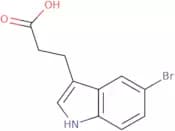
Discontinued product5-Bromo-indol-3-propionic acid
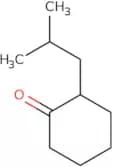
CAS:<p>Versatile small molecule scaffold</p>Formula:C11H10BrNO2Purity:Min. 95%Molecular weight:268.11 g/mol2-(2-Methylpropyl)cyclohexan-1-one
CAS:<p>2-(2-Methylpropyl)cyclohexan-1-one is a heterobicyclic compound with a hydroxyl group and two cyclohexane rings. It has a nitrogen atom with three substituents, one of which is a trifluoromethyl group. This molecule is used as a polymerization initiator for polyester and polycarbonate production. It also can be used in the production of liquid crystal compositions, aliphatic hydrocarbons, and organic solvents. 2-(2-Methylpropyl)cyclohexan-1-one is an organic solvent that can be used in the preparation of monomers such as carbonyl groups or cyanates.</p>Formula:C10H18OPurity:Min. 95%Molecular weight:154.25 g/molRef: 3D-EAA66864
Discontinued productOctahydro-pyrazino[2,1-c][1,4]thiazine 2,2-dioxide hydrochloride
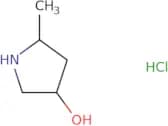
CAS:<p>Versatile small molecule scaffold</p>Formula:C7H16Cl2N2O2SPurity:Min. 95%Molecular weight:263.18 g/mol5-Methylpyrrolidin-3-ol hydrochloride
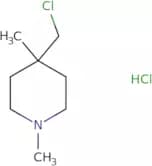
CAS:<p>Versatile small molecule scaffold</p>Formula:C5H12ClNOPurity:Min. 95%Molecular weight:137.61 g/mol4-(Chloromethyl)-1,4-dimethylpiperidine hydrochloride
CAS:<p>Versatile small molecule scaffold</p>Formula:C8H17Cl2NPurity:Min. 95%Molecular weight:198.13 g/molRef: 3D-DXC58362
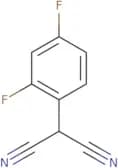
Discontinued product2-(2,4-Difluorophenyl)propanedinitrile
CAS:<p>Versatile small molecule scaffold</p>Formula:C9H4F2N2Purity:Min. 95%Molecular weight:178.14 g/molRef: 3D-DXC58290
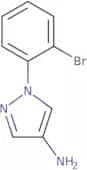
Discontinued product1-(2-Bromophenyl)-1H-pyrazol-4-amine
CAS:<p>Versatile small molecule scaffold</p>Formula:C9H8BrN3Purity:Min. 95%Molecular weight:238.08 g/molRef: 3D-DWB03945
Discontinued product3-Morpholin-4-ylmethyl-2,3-dihydro-1H-indole
CAS:<p>Versatile small molecule scaffold</p>Formula:C13H18N2OPurity:Min. 95%Molecular weight:218.29 g/molRef: 3D-DKB61741
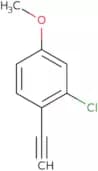
Discontinued product2-Chloro-1-ethynyl-4-methoxybenzene
CAS:<p>Versatile small molecule scaffold</p>Formula:C9H7ClOPurity:Min. 95%Molecular weight:166.6 g/molRef: 3D-DGA44068
Discontinued product4,5-Dihydroxy-2,3-dihydro-1H-isoindole-1,3-dione
CAS:4,5-Dihydroxy-2,3-dihydro-1H-isoindole-1,3-dione is a molybdenum compound with a hydroxyl group. It has been shown to inhibit the growth of bacteria that are resistant to penicillin by binding to the penicillin-binding proteins in their cell wall. 4,5-Dihydroxy-2,3-dihydro-1H-isoindole-1,3-dione has been found to be an effective inhibitor of polymer film formation when used in conjunction with 3 chloroperoxybenzoic acid. This compound also has been shown to have anti bacterial properties against Escherichia coli and Pseudomonas aeruginosa. 4,5-Dihydroxy -2,3 -dihydro -1H -isoindole -1,3 -dione may also have environmental applications due itsFormula:C8H5NO4Purity:Min. 95%Molecular weight:179.13 g/molRef: 3D-DGA35672
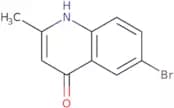
Discontinued product6-Bromo-2-methylquinolin-4-ol
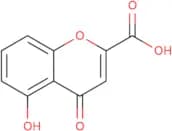
CAS:<p>Versatile small molecule scaffold</p>Formula:C10H8BrNOPurity:Min. 95%Molecular weight:238.08 g/mol5-Hydroxy-4-oxo-4H-chromene-2-carboxylic acid
CAS:<p>Versatile small molecule scaffold</p>Formula:C10H6O5Purity:Min. 95%Molecular weight:206.15 g/mol5-(Propan-2-yl)-1-(pyridin-4-yl)-1H-pyrazole-3-carboxylic acid
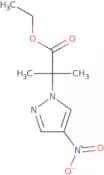
CAS:<p>Versatile small molecule scaffold</p>Formula:C12H13N3O2Purity:Min. 95%Molecular weight:231.25 g/mol2-Methyl-2-(4-nitro-pyrazol-1-yl)-propionic acid ethyl ester
CAS:<p>Versatile small molecule scaffold</p>Formula:C9H13N3O4Purity:Min. 95%Molecular weight:227.22 g/molRef: 3D-CQB24373
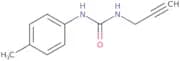
Discontinued product1-(4-Methylphenyl)-3-(prop-2-yn-1-yl)urea
CAS:<p>1-(4-Methylphenyl)-3-(prop-2-yn-1-yl)urea is a fluorescent derivative that can be detected with certain techniques. It has been used to detect phosphatases in cervical cancer cells and tumor cells. This compound is a ligand for the surface antigen of placental alkaline phosphatase (PLAP). It can also bind to other organic ligands, such as recombinant human erythropoietin (EPO), which may be useful for redirecting the action of this protein. 1-(4-Methylphenyl)-3-(prop-2-yn-1-yl)urea is an organic bispecific molecule that binds to two receptors, one on tumor cells and one on normal cells. This binding leads to cell death by apoptosis through the release of cytochrome c from mitochondria.</p>Formula:C11H12N2OPurity:Min. 95%Molecular weight:188.23 g/mol2-Aza-bicyclo[4.1.0]heptane hydrochloride
CAS:<p>Versatile small molecule scaffold</p>Formula:C6H11N·HClPurity:Min. 95%Molecular weight:133.62 g/molRef: 3D-CHC19518
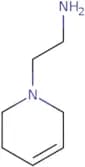
Discontinued product2-(1,2,3,6-Tetrahydropyridin-1-yl)ethan-1-amine
CAS:<p>Versatile small molecule scaffold</p>Formula:C7H14N2Purity:Min. 95%Molecular weight:126.2 g/molRef: 3D-CBA57863
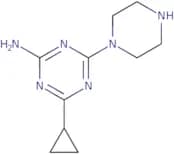
Discontinued product4-Cyclopropyl-6-(piperazin-1-yl)-1,3,5-triazin-2-amine
CAS:<p>Versatile small molecule scaffold</p>Formula:C10H16N6Purity:Min. 95%Molecular weight:220.27 g/molRef: 3D-AAD33568
Discontinued product
![2-[3-(Difluoromethoxy)-4-methoxyphenyl]ethan-1-amine](/_next/image/?url=https%3A%2Fstatic.cymitquimica.com%2Fproducts%2F3D%2Fthumb-webp%2FYHB23469.webp&w=3840&q=75)

![Octahydro-pyrazino[2,1-c][1,4]thiazine 2,2-dioxide hydrochloride](/_next/image/?url=https%3A%2Fstatic.cymitquimica.com%2Fproducts%2F3D%2Fthumb-webp%2FDXC60335.webp&w=3840&q=75)


![2-Aza-bicyclo[4.1.0]heptane hydrochloride](/_next/image/?url=https%3A%2Fstatic.cymitquimica.com%2Fproducts%2F3D%2Fthumb-webp%2FCHC19518.webp&w=3840&q=75)