Alcohols
Alcohols are a wide range of organic molecules derived from hydrocarbons that contain one or more hydroxyl groups (OH group). These compounds are essential in various chemical reactions and are widely used in laboratory settings for synthesis, as solvents, and in analytical chemistry. At CymitQuimica, we offer high-quality alcohols prepared for laboratory use, supporting your research and industrial applications with reliable and effective products. Our selection ensures you have the right alcohols for your specific needs, whether for routine laboratory work or specialized research projects.
Subcategories of "Alcohols"
Found 5814 products of "Alcohols"
Sort by
Purity (%)
0
100
|
0
|
50
|
90
|
95
|
100
Trichloroethanol
CAS:<p>Trichloroethanol is an alkanoic acid that is used as a solvent and a laboratory reagent. It is also a potential bioactive compound. Trichloroethanol has been shown to have neurotoxic effects in rats, causing histological changes in the trigeminal nerve, which may be due to its inhibition of mitochondrial energy metabolism. Trichloroethanol has been shown to inhibit the activity of matrix metalloproteinase-9 (MMP-9) in human serum and the α1 subunit of Toll-like receptor (TLR) 4 in human monocytes. This compound has also been shown to be toxic to rat liver microsomes at high concentrations.</p>Formula:C2H3Cl3OPurity:Min. 98.5%Color and Shape:Clear LiquidMolecular weight:149.4 g/mol3,3-Dimethyl-1,2-butanediol
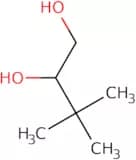
CAS:<p>3,3-Dimethyl-1,2-butanediol is a dioxolane with a constant boiling point of 110°C. This compound is synthesized from the reaction between acetone and formaldehyde, which produces a dioxolane ring. The reaction products can be profiled using gas chromatography to determine the ratio of each product. 3,3-Dimethyl-1,2-butanediol has been shown to have enantiomeric purity of greater than 99%. It has also been used as a chiral building block for the synthesis of carbohydrates with stereospecificity. 3,3-Dimethyl-1,2-butanediol's enzyme catalysis is used in the production of polyesters and polyurethanes.</p>Formula:C6H14O2Purity:Min. 90.0 Area-%Color and Shape:PowderMolecular weight:118.17 g/molTetrabromophenol blue sodium salt
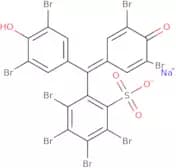
CAS:<p>Tetrabromophenol blue sodium salt is a dye that is used as an additive in the production of vinyl alcohol polymer films. Tetrabromophenol blue sodium salt can be used to measure albumin concentration and postexposure by adding phenyl groups to the molecule. The color of tetrabromophenol blue sodium salt changes upon exposure to radiation, which makes it useful for diagnostic purposes. It also has a hydrocarbon group that transforms into an insoluble form when exposed to evaporation, making it useful for titration methods. Tetrabromophenol blue sodium salt is relatively stable and labile in nature, making it susceptible to techniques such as pyrolysis, oxidation, or reduction.</p>Formula:C19H5Br8NaO5SPurity:Min. 95%Molecular weight:1,007.53 g/mol5β-Pregnan-3β,17α,21-triol-20-one
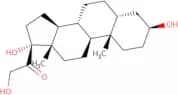
CAS:Controlled Product<p>5-b-Pregnan-3-b,17-a-,21-triol-20-one is a high quality chemical that can be used as a reagent, building block or scaffold for complex molecules. It has a CAS number of 601-03-6. This compound is useful in the synthesis of fine chemicals and speciality chemicals. It is also a versatile building block for reactions involving other organic compounds. 5-b-Pregnan-3-b,17-a-,21-triol 20 one is a useful intermediate in the production of research chemicals and pharmaceuticals.</p>Formula:C21H34O4Purity:Min. 95%Color and Shape:PowderMolecular weight:350.49 g/mol2,2,4-Trimethyl-1,2-dihydroquinoline
CAS:<p>2,2,4-Trimethyl-1,2-dihydroquinoline is a chemical compound with the formula C8H10N2. It is a white solid that is insoluble in water but soluble in nonpolar solvents such as benzene, toluene and hexane. 2,2,4-Trimethyl-1,2-dihydroquinoline has been shown to induce liver lesions in rats at doses of 1.25 g/kg/day. It also reacts with hydrogen fluoride to form calcium stearate. This compound is also used as a precursor for the synthesis of diazonium salts and has been shown to be carcinogenic in animal studies.</p>Formula:C12H15NPurity:Min. 95%Color and Shape:Clear Viscous LiquidMolecular weight:173.25 g/mol3,4-Dichlorothiophenol
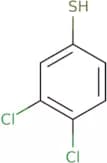
CAS:<p>3,4-Dichlorothiophenol is a chemical compound that belongs to the group of reactive compounds. It can be used as a chemical intermediate for the synthesis of other organic compounds. 3,4-Dichlorothiophenol is an inhibitor of methylating enzymes such as glyoxalase I and II and glyceraldehyde-3-phosphate dehydrogenase. This inhibition leads to the accumulation of methylglyoxal and 3-deoxyglucosone in cells, which are potent inhibitors of protein glycosylation. 3,4-Dichlorothiophenol also inhibits nucleophilic attack on DNA by epoxide hydrolases such as epoxide hydrolase 1 and 2. This inhibition results in the accumulation of reactive metabolites that are covalently adducted with DNA bases.</p>Formula:C6H4Cl2SPurity:Min. 95%Molecular weight:179.07 g/mol6,7-Dihydro-5H-quinolin-8-one
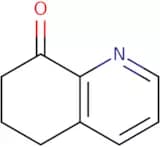
CAS:<p>6,7-Dihydro-5H-quinolin-8-one is a quinoline derivative that can be used to treat cancer. It is an inhibitor of topoisomerase II, which is an enzyme that catalyzes the formation of single stranded breaks in DNA and then reseals them. The inhibition of topoisomerase II leads to the accumulation of single strand breaks, which causes cell death. 6,7-Dihydro-5H-quinolin-8-one has been shown to have inhibitory activity against cancer cells in laboratory tests and also inhibits the growth of breast cancer cells in mice. This compound also has a number of other biological effects including being a ligand for some receptors and amine oxidases as well as having antihistamine properties.</p>Formula:C9H9NOPurity:Min. 95%Color and Shape:White PowderMolecular weight:147.17 g/mol4-Bromo-3,5-dimethylbenzyl alcohol
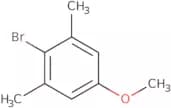
CAS:<p>4-Bromo-3,5-dimethylbenzyl alcohol is a potent anticancer agent that is synthesized from bromoarenes. It has been shown to be effective against cancer cells in the presence of activated carbon, aluminum chloride, and organotellurium. 4-Bromo-3,5-dimethylbenzyl alcohol reacts with peptide hormones and other hormones at the cellular level by inhibiting DNA synthesis. This inhibition prevents the production of proteins that are vital for cell division. The reaction rate is rapid in solvents such as acetonitrile.>>END>></p>Formula:C9H11BrOPurity:Min. 95%Color and Shape:PowderMolecular weight:215.09 g/mol4-Alkoxybenzyl alcohol resin (100-200 mesh)
CAS:<p>4-Alkoxybenzyl alcohol resin is a fine chemical that has been shown to be useful as a scaffold for the synthesis of complex compounds. It is soluble in common organic solvents, such as ethanol and acetone, and can be used as a reaction component for the synthesis of speciality chemicals. This product is also an intermediate for research chemicals, which can be synthesized by reacting 4-alkoxybenzyl alcohol with different reagents. The high quality of this product makes it ideal for use in the synthesis of other compounds and reactions.</p>Color and Shape:Powder2-(3,4-Dichlorophenyl)ethanol
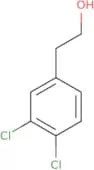
CAS:<p>2-(3,4-Dichlorophenyl)ethanol is a high quality reagent for the synthesis of complex compounds, useful as an intermediate in organic synthesis and as a building block for speciality chemicals. This chemical is also used as a research chemical in the synthesis of versatile building blocks. It can be used as a reaction component in various reactions such as Suzuki coupling, Negishi coupling, Heck reaction, and Sonogashira coupling.</p>Formula:C8H8Cl2OPurity:Min. 95%Molecular weight:191.05 g/mol2-Chloro-3-methoxyphenol
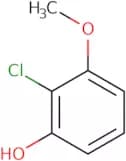
CAS:<p>Please enquire for more information about 2-Chloro-3-methoxyphenol including the price, delivery time and more detailed product information at the technical inquiry form on this page</p>Formula:C7H7ClO2Purity:Min. 95%Molecular weight:158.58 g/mol(S)-3-Pyrrolidinol
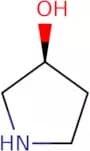
CAS:<p>3-Pyrrolidinol is a synthetic chemical that binds to the nicotinic acetylcholine receptor. It has been shown to inhibit cell growth in vitro, and may be used as an anti-cancer drug. 3-Pyrrolidinol has also been shown to have inhibitory effects on the replication of DNA in cells. The chemical reacts with hydrochloric acid to form a hydrogen bond, which enhances its ability to bind to the receptor. This reaction can be reversed by adding an acetate extract, which removes the hydrogen bond and causes the chemical to dissociate from the receptor. 3-Pyrrolidinol has a lactam ring with three functional groups (an amine group, a hydroxyl group, and a ketone group), which makes it more soluble in water than other compounds with only two functional groups. Its potential use is mainly for treating cancer or inhibiting bacterial growth.</p>Formula:C4H9NOPurity:Min. 95%Molecular weight:87.12 g/molCalcipotriol monohydrate
CAS:<p>Calcipotriol is a synthetic vitamin D3 analog that has been shown to be effective in the treatment of bone cancer. It has a film-forming property and is used in pharmaceutical preparations as well as for wastewater treatment. Calcipotriol monohydrate is made by reacting calcipotriol with hydrochloric acid, which produces an ester bond between the hydroxyl group and the carboxylic acid group. The reaction also produces water, methanol, and methyl ethyl ether. Studies have shown that calcipotriol monohydrate has a chemical stability of over 30 days at room temperature, indicating it can be stored for long periods without degradation.</p>Formula:C27H40O3·H2OPurity:(%) Min. 96%Color and Shape:PowderMolecular weight:430.62 g/mol5-Bromoquinolin-8-amine
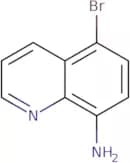
CAS:<p>5-Bromoquinolin-8-amine is a topoisomerase inhibitor that can be used as an antitumor agent. It has been shown to inhibit the growth of tumor cell lines and suppress the growth of colon carcinoma cells in rats and human colon carcinomas in mice. 5-Bromoquinolin-8-amine interacts with DNA, specifically inhibiting the formation of supercoiled DNA. This interaction may lead to the inhibition of tumor cell growth. 5-Bromoquinolin-8-amine also inhibits protein synthesis by interacting with proteins at the ribosomal level, leading to inhibited cell growth.</p>Formula:C9H7BrN2Purity:Min. 95%Molecular weight:223.07 g/molSodium 2,2,2-trifluoroethanolate
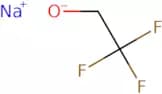
CAS:<p>Sodium 2,2,2-trifluoroethanolate is a fluorinated alcohol. It is used as an animal health drug and has been shown to have a significant inhibitory effect on the growth of bacteria. The reaction intermediate for this compound is trifluoroacetic acid, which can be formed from sodium and hydrogen fluoride in the presence of ethylene glycol. This molecule also reacts with nitrosyl chloride to form a nitrogen-containing product. Sodium 2,2,2-trifluoroethanolate has been shown to be active against both Gram-positive and Gram-negative bacteria. The FTIR spectra for this compound shows that it has two sets of absorption bands at 3,200 cm−1 (due to C–H stretching) and 3,000 cm−1 (due to C=C stretching).</p>Formula:C2H2F3NaOPurity:Min. 95%Color and Shape:PowderMolecular weight:122.02 g/mol2,2'-Biquinoline
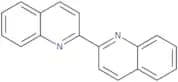
CAS:<p>2,2'-Biquinoline is a coordination compound that has been used as an analytical reagent in the determination of copper and nitrogen. It has been shown to be stable in a variety of matrices, including human serum and copper chloride. 2,2'-Biquinoline is also used as an antimicrobial agent against Gram-positive bacteria, including Staphylococcus aureus. The redox potentials of this compound are dependent on the number of nitrogen atoms present.</p>Formula:C18H12N2Purity:Min. 95%Molecular weight:256.3 g/molBisphenol A glycerolate dimethacrylate
CAS:<p>Bisphenol A glycerolate dimethacrylate is a synthetic polymer that has been used in various applications, including dental sealants and composites. It is a white or yellowish viscous liquid that is soluble in water and alcohol. Bisphenol A glycerolate dimethacrylate is used as a sealant due to its high viscosity. The molecular weight of this compound ranges from 2000 to 6000 Da. It also has an epoxy group that can form hydrogen bonds with other molecules. The major application for bisphenol A glycerolate dimethacrylate is in the dental industry as it provides an excellent sealant due to its high viscosity. This material is also used in composites due to its ability to form hydrogen bonding interactions with the polymer matrix. Bisphenol A glycerolate dimethacrylate is also known for its hemolytic activity and sugar transport properties, which are important for lactic acid</p>Formula:C29H36O8Purity:Min. 95%Color and Shape:Clear LiquidMolecular weight:512.59 g/mol6,6-Dimethyl-1-heptene-4-yn-3-ol
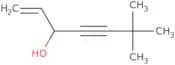
CAS:<p>6,6-Dimethyl-1-heptene-4-yn-3-ol is a chlorinating agent that is used in the production of epidermophyton. It also has antifungal properties and can be used as an antimycotic. 6,6-Dimethyl-1-heptene-4-yn-3-ol can be added to hydrochloric acid or magnesium chloride to form an acetylide. This agent has been shown to have selective chlorination activity at temperatures below 10°C. It is also capable of minimizing organometallic chloride catalysts and has been shown to reduce microsporum gypseum and microsporum titinium at pH 2.5.</p>Formula:C9H14OPurity:Min. 95%Color and Shape:Colourless To Yellow LiquidMolecular weight:138.21 g/mol6-Chloro-1,7-naphthyridin-4-ol
CAS:<p>Please enquire for more information about 6-Chloro-1,7-naphthyridin-4-ol including the price, delivery time and more detailed product information at the technical inquiry form on this page</p>Purity:Min. 95%Campestanol
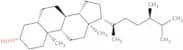
CAS:Controlled Product<p>Please enquire for more information about Campestanol including the price, delivery time and more detailed product information at the technical inquiry form on this page</p>Formula:C28H50OPurity:Min. 95%Molecular weight:402.7 g/mol