Alcohols
Alcohols are a wide range of organic molecules derived from hydrocarbons that contain one or more hydroxyl groups (OH group). These compounds are essential in various chemical reactions and are widely used in laboratory settings for synthesis, as solvents, and in analytical chemistry. At CymitQuimica, we offer high-quality alcohols prepared for laboratory use, supporting your research and industrial applications with reliable and effective products. Our selection ensures you have the right alcohols for your specific needs, whether for routine laboratory work or specialized research projects.
Subcategories of "Alcohols"
Found 5814 products of "Alcohols"
Sort by
Purity (%)
0
100
|
0
|
50
|
90
|
95
|
100
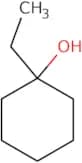
1-Ethylcyclohexanol
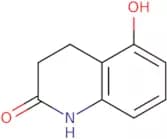
CAS:<p>1-Ethylcyclohexanol is a palladium complex that is used to crosslink polymers. It has been shown to be an effective cross-linking agent for hyaluronic acid, spartina, and ammonium nitrate. This agent can also be used as a ligand in organic synthesis reactions involving hydrosilanes. 1-Ethylcyclohexanol has been shown to react with silicon surfaces at room temperature and at elevated temperatures, forming stable silicon complexes with alkyl substituents. 1-Ethylcyclohexanol reacts with allyl ligands in acetonitrile or tetrahydrofuran solution to form oxoalkyls.</p>Formula:C8H16OPurity:Min. 95%Color and Shape:LiquidMolecular weight:128.21 g/mol5-Hydroxy-3,4-dihydro-2(1H)-quinolinone
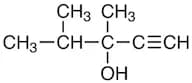
CAS:<p>5-Hydroxy-3,4-dihydro-2(1H)-quinolinone is a high quality reagent with a CAS number of 30389-33-4. It has been shown to be a useful intermediate in the synthesis of complex compounds. This compound can also be used as an important building block for the synthesis of speciality chemicals and research chemicals. 5-Hydroxy-3,4-dihydro-2(1H)-quinolinone is versatile and can be used as a reaction component in many reactions that require the introduction of oxygen into molecules.</p>Formula:C9H9NO2Purity:Min. 95%Color and Shape:White PowderMolecular weight:163.17 g/mol3,4-Dimethyl-1-pentyn-3-ol
CAS:Formula:C7H12OPurity:>96.0%(GC)Color and Shape:Colorless to Light orange to Yellow clear liquidMolecular weight:112.172-Bromo-3-fluorophenol
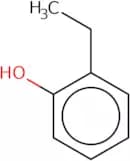
CAS:<p>2-Bromo-3-fluorophenol is a bifunctional chemical that reacts with glycols, such as ethylene glycol, to form epoxy ethers. It is also used as a stabilizer for polyurethane plastics and rubbers. 2-Bromo-3-fluorophenol is used in the production of dibenzoyl peroxide and phenolic resins. This compound has been shown to be stable when exposed to both heat and light.</p>Formula:C6H4BrFOPurity:Min. 95%Color and Shape:PowderMolecular weight:191 g/mol2-Ethylphenol
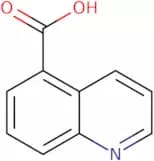
CAS:<p>2-Ethylphenol is a phenolic acid, which is a type of organic compound that contains an hydroxyl group (-OH) bonded directly to an aromatic hydrocarbon ring. 2-Ethylphenol is used in the production of polymers, such as polyurethane and polyester, as well as in the manufacture of other chemicals. It can also be found in some food products, such as coffee beans and cocoa beans. 2-Ethylphenol has been shown to have P450 activity by increasing the rate at which rat liver microsomes metabolize testosterone into estradiol. The kinetic constants for this reaction were determined using solid phase microextraction (SPME). A multi-walled carbon nanotube (MWCNT) was used to extract 2-ethylphenol from a water sample. The sample preparation was done with anhydrous sodium sulfate, which acted as a desiccant and was then heated to remove any remaining water vapor</p>Formula:C8H10OPurity:Min. 97 Area-%Color and Shape:Colorless Clear LiquidMolecular weight:122.16 g/molQuinoline-5-carboxylic acid
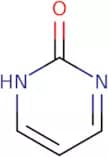
CAS:<p>Quinoline-5-carboxylic acid is a peroxide that is produced by the oxidation of quinoline derivatives. Quinoline-5-carboxylic acid has been shown to have antibacterial activity, and it also has affinity values for chloride ions. The chemical isomers of quinoline-5-carboxylic acid are called quninolines, which are produced by the hydrolysis of quinoline-5-carboxylic acid. Quinolines can be obtained by the oxidation of aniline. Quinolines have been shown to catalyze reactions with carbonyl groups in organic molecules, such as the reaction between an alkoxycarbonyl group and a hydroxyl group to form an aldehyde or ketone. Kinetic data for this reaction was obtained using titration calorimetry.</p>Formula:C10H7NO2Purity:Min. 95%Color and Shape:White To Beige To Light Brown To Grey SolidMolecular weight:173.17 g/mol2-Pyrimidinol
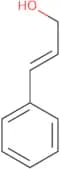
CAS:<p>2-Pyrimidinol is a sodium salt that is used as an antimicrobial agent. It has significant cytotoxicity against skin cancer cells and is also used to treat HIV infection. 2-Pyrimidinol inhibits the activity of inhibitor molecules, which are small molecules that inhibit the activity of important enzymes in cells. This inhibition results in increased production of ATP, which leads to cell death. 2-Pyrimidinol also binds to dna duplexes and prevents them from being opened by helicase, thus inhibiting cellular replication. The molecular structure of 2-pyrimidinol was determined using X-ray crystallography and molecular docking analysis. This compound has been shown to have a potential use in treating metabolic disorders due to its ability to inhibit glycolysis, or the breakdown of glucose, through competitive inhibition with phosphofructokinase (PFK).</p>Formula:C4H4N2OPurity:(%) Min. 98%Color and Shape:PowderMolecular weight:96.09 g/mol3-Phenyl-2-propen-1-ol
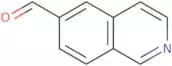
CAS:<p>3-Phenyl-2-propen-1-ol is a cinnamyl compound that is found in plants, such as cinnamon and cassia. It has been shown to have an inhibitory effect on the enzyme activities of sorbitol dehydrogenase, which is involved in the synthesis of polysaccharides. 3-Phenyl-2-propen-1-ol also has a transcriptional regulatory effect on genes that encode enzymes involved in the synthesis of polymers. The reaction mechanism for this reaction has been proposed to be through an initial nucleophilic attack by the hydroxyl group on the electrophilic carbonyl carbon atom followed by protonation and elimination of water. <br>3-Phenyl-2-propen-1-ol has also been shown to be a signal peptide, which is used to identify proteins for transport within cells. This polymerase chain reaction (PCR) model system can be used to determine</p>Formula:C9H10OPurity:Min. 95%Color and Shape:PowderMolecular weight:134.18 g/molIsoquinoline-6-carbaldehyde
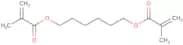
CAS:<p>Isoquinoline-6-carbaldehyde is a fine chemical that belongs to the group of research chemicals. It can be used as a reagent for organic synthesis, a speciality chemical, or a building block in complex organic molecules. Isoquinoline-6-carbaldehyde is also an intermediate for the synthesis of many pharmaceuticals and other useful compounds. Isoquinoline-6-carbaldehyde has been shown to react with 2-aminoethanol to form (2E)-3-(4-(1,1'-biphenyl)-2-yl)butanal, which is an important reaction component in the synthesis of nitroaromatics. Isoquinoline-6-carbaldehyde is also a versatile scaffold for the synthesis of other fine chemicals.</p>Formula:C10H7NOPurity:Min. 95%Color and Shape:SolidMolecular weight:157.17 g/mol1,6-Hexanediol dimethacrylate - stabilized with MEHQ
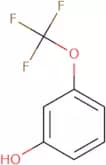
CAS:<p>1,6-Hexanediol dimethacrylate - stabilized with MEHQ is a reactive chemical that is used to generate light-sensitive particles. The light exposure of these particles causes them to react and form new bonds, which can be exploited for various applications. 1,6-Hexanediol dimethacrylate - stabilized with MEHQ has been shown to cause genotoxic effects in primary cells and cell nuclei, as well as radiation-induced DNA damage in human fibroblast cells. It has also been shown to interfere with the replication of DNA in human cancer cells. This agent is chemically similar to other known carcinogens such as allyl carbonate and benzene.</p>Formula:C14H22O4Purity:Min. 95%Color and Shape:Clear LiquidMolecular weight:254.32 g/mol3-(Trifluoromethoxy)phenol
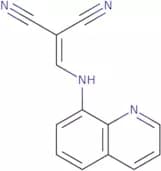
CAS:<p>3-(Trifluoromethoxy)phenol is a drug that has been shown to function as an amide and a biomolecular. It has also been used in the development of drugs for depression, but it is not known whether it is effective in humans. 3-(Trifluoromethoxy)phenol binds to the cation channel of the NMDA receptor, which may be related to its antidepressant properties. The compound has been shown to have a radiotracer effect on positron emission tomography (PET). 3-(Trifluoromethoxy)phenol yields positrons when it undergoes deamination. This reaction is catalyzed by enzymes such as acetylcholine esterase, choline oxidase, and monoamine oxidases.</p>Formula:C7H5F3O2Purity:Min. 95%Color and Shape:Clear LiquidMolecular weight:178.11 g/mol((8-Quinolylamino)methylene)methane-1,1-dicarbonitrile
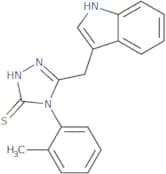
CAS:<p>Please enquire for more information about ((8-Quinolylamino)methylene)methane-1,1-dicarbonitrile including the price, delivery time and more detailed product information at the technical inquiry form on this page</p>Formula:C13H8N4Purity:Min. 95%Color and Shape:PowderMolecular weight:220.23 g/mol5-(indol-3-ylmethyl)-4-(2-methylphenyl)-1,2,4-triazole-3-thiol
CAS:<p>Please enquire for more information about 5-(indol-3-ylmethyl)-4-(2-methylphenyl)-1,2,4-triazole-3-thiol including the price, delivery time and more detailed product information at the technical inquiry form on this page</p>Formula:C18H16N4SPurity:Min. 95%Color and Shape:PowderMolecular weight:320.41 g/mol3-(4-Bromophenyl)-5-(hydroxyimino)-7,7-dimethyl-6,7,8-trihydrocinnoline
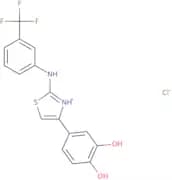
CAS:<p>Please enquire for more information about 3-(4-Bromophenyl)-5-(hydroxyimino)-7,7-dimethyl-6,7,8-trihydrocinnoline including the price, delivery time and more detailed product information at the technical inquiry form on this page</p>Formula:C16H16BrN3OPurity:Min. 95%Color and Shape:PowderMolecular weight:346.22 g/mol4-(4-((3-(trifluoromethyl)phenyl)amino)-3,5-thiazolyl)benzene-1,2-diol, hydrochloride
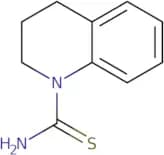
CAS:<p>Please enquire for more information about 4-(4-((3-(trifluoromethyl)phenyl)amino)-3,5-thiazolyl)benzene-1,2-diol, hydrochloride including the price, delivery time and more detailed product information at the technical inquiry form on this page</p>Formula:C16H11F3N2O2S·ClHPurity:Min. 95%Color and Shape:PowderMolecular weight:388.79 g/molAmino-1,2,3,4-tetrahydroquinol-1-ylmethane-1-thione
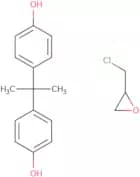
CAS:<p>Please enquire for more information about Amino-1,2,3,4-tetrahydroquinol-1-ylmethane-1-thione including the price, delivery time and more detailed product information at the technical inquiry form on this page</p>Purity:Min. 95%Poly(bisphenol-A-co-epichlorohydrin)
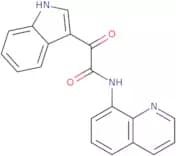
CAS:<p>Poly(bisphenol-A-co-epichlorohydrin) is an epoxy polymer that reacts with a fatty acid to form a cationic polymer. It has a high resistance to thermal expansion and inorganic acids, making it a good sealant. In addition, poly(bisphenol-A-co-epichlorohydrin) is insoluble and not reactive, which makes it resistant to structural analysis. Poly(bisphenol-A-co-epichlorohydrin)'s thermal stability also makes it suitable for use as a boron nitride coating on zirconium oxide.</p>Purity:(%) Min. 60%Color and Shape:Clear LiquidMolecular weight:1.15 g/mol2-Indol-3-yl-2-oxo-N-(8-quinolyl)ethanamide
CAS:<p>Please enquire for more information about 2-Indol-3-yl-2-oxo-N-(8-quinolyl)ethanamide including the price, delivery time and more detailed product information at the technical inquiry form on this page</p>Formula:C19H13N3O2Purity:Min. 95%Color and Shape:PowderMolecular weight:315.33 g/mol2-Chloro-1-(6-methyl(1,2,3,4-tetrahydroquinolyl))propan-1-one
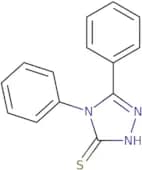
<p>Please enquire for more information about 2-Chloro-1-(6-methyl(1,2,3,4-tetrahydroquinolyl))propan-1-one including the price, delivery time and more detailed product information at the technical inquiry form on this page</p>Purity:Min. 95%4,5-Diphenyl-4H-1,2,4-triazole-3-thiol
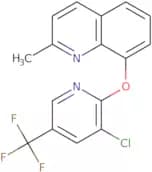
CAS:<p>4,5-Diphenyl-4H-1,2,4-triazole-3-thiol is a thione that has potent antibacterial activity against Gram positive bacteria. It is also used as a building block in the synthesis of polymers for medical use and other applications. 4,5-Diphenyl-4H-1,2,4-triazole-3-thiol has been shown to be photostable in the presence of oxygen. It is not active against Gram negative bacteria and does not show any effect on coccidiosis or cancer. 4,5-Diphenyl-4H-1,2,4-triazole-3-thiol has been shown to have a potent inhibitory effect on human adenocarcinoma cells (A549) at concentrations of 0.25 mM and higher.</p>Formula:C14H11N3SPurity:Min. 95%Molecular weight:253.32 g/mol3-Chloro-2-(2-methyl(8-quinolyloxy))-5-(trifluoromethyl)pyridine
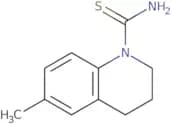
CAS:<p>Please enquire for more information about 3-Chloro-2-(2-methyl(8-quinolyloxy))-5-(trifluoromethyl)pyridine including the price, delivery time and more detailed product information at the technical inquiry form on this page</p>Formula:C16H10ClF3N2OPurity:Min. 95%Color and Shape:PowderMolecular weight:338.71 g/molAmino(6-methyl(1,2,3,4-tetrahydroquinol-1-yl))methane-1-thione
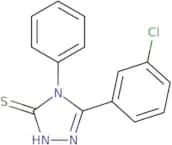
CAS:<p>Please enquire for more information about Amino(6-methyl(1,2,3,4-tetrahydroquinol-1-yl))methane-1-thione including the price, delivery time and more detailed product information at the technical inquiry form on this page</p>Purity:Min. 95%5-(3-Chlorophenyl)-4-phenyl-4H-1,2,4-triazole-3-thiol
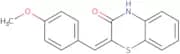
CAS:<p>Please enquire for more information about 5-(3-Chlorophenyl)-4-phenyl-4H-1,2,4-triazole-3-thiol including the price, delivery time and more detailed product information at the technical inquiry form on this page</p>Formula:C14H10ClN3SPurity:Min. 95%Color and Shape:PowderMolecular weight:287.77 g/mol3-((4-Methoxyphenyl)methylene)-1,4-dihydro-4-thiaquinolin-2-one
CAS:<p>Please enquire for more information about 3-((4-Methoxyphenyl)methylene)-1,4-dihydro-4-thiaquinolin-2-one including the price, delivery time and more detailed product information at the technical inquiry form on this page</p>Formula:C16H13NO2SPurity:Min. 95%Color and Shape:PowderMolecular weight:283.35 g/molEthyl 4-oxo-7-(benzyloxy)hydroquinoline-3-carboxylate
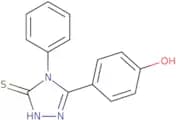
CAS:<p>Please enquire for more information about Ethyl 4-oxo-7-(benzyloxy)hydroquinoline-3-carboxylate including the price, delivery time and more detailed product information at the technical inquiry form on this page</p>Purity:Min. 95%4-(5-Phenyl-4-thioxo-2,3,5-triazolinyl)phenol
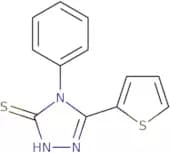
CAS:<p>Please enquire for more information about 4-(5-Phenyl-4-thioxo-2,3,5-triazolinyl)phenol including the price, delivery time and more detailed product information at the technical inquiry form on this page</p>Formula:C14H11N3OSPurity:Min. 95%Color and Shape:PowderMolecular weight:269.32 g/mol4-Phenyl-5-(2-thienyl)-4H-1,2,4-triazole-3-thiol
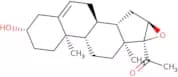
CAS:<p>Please enquire for more information about 4-Phenyl-5-(2-thienyl)-4H-1,2,4-triazole-3-thiol including the price, delivery time and more detailed product information at the technical inquiry form on this page</p>Formula:C12H9N3S2Purity:Min. 95%Color and Shape:PowderMolecular weight:259.35 g/mol16α,17α-Epoxypregnenolone
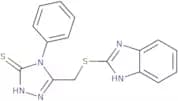
CAS:<p>16alpha,17alpha-Epoxypregnenolone is a synthetic insect odorant that binds to the odorant binding protein (OBP) and has been used in research to investigate the relationship between odorant binding and olfaction. The OBPs are thought to play an important role in the detection of odors by binding to specific odorants, which then initiate a sensory response. 16alpha,17alpha-Epoxypregnenolone has also been shown to bind with recombinant OBP and have fluorescence properties, making it useful for biosensors. This compound may be useful as an experimental or research tool for investigating olfactory receptors in insects or other organisms.</p>Formula:C21H30O3Purity:Min. 95%Molecular weight:330.47 g/mol5-(Benzimidazol-2-ylthiomethyl)-4-phenyl-1,2,4-triazole-3-thiol
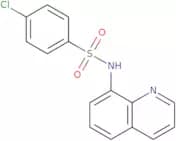
CAS:<p>Please enquire for more information about 5-(Benzimidazol-2-ylthiomethyl)-4-phenyl-1,2,4-triazole-3-thiol including the price, delivery time and more detailed product information at the technical inquiry form on this page</p>Formula:C16H13N5S2Purity:Min. 95%Color and Shape:PowderMolecular weight:339.44 g/mol((4-Chlorophenyl)sulfonyl)-8-quinolylamine
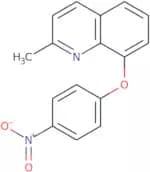
CAS:<p>Please enquire for more information about ((4-Chlorophenyl)sulfonyl)-8-quinolylamine including the price, delivery time and more detailed product information at the technical inquiry form on this page</p>Formula:C15H11ClN2O2SPurity:Min. 95%Color and Shape:PowderMolecular weight:318.78 g/mol4-(2-methyl(8-quinolyloxy))-1-nitrobenzene
CAS:<p>Please enquire for more information about 4-(2-methyl(8-quinolyloxy))-1-nitrobenzene including the price, delivery time and more detailed product information at the technical inquiry form on this page</p>Purity:Min. 95%1-(2-Methyl(8-quinolyloxy))-2-nitro-4-(trifluoromethyl)benzene
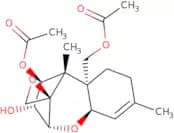
CAS:<p>Please enquire for more information about 1-(2-Methyl(8-quinolyloxy))-2-nitro-4-(trifluoromethyl)benzene including the price, delivery time and more detailed product information at the technical inquiry form on this page</p>Purity:Min. 95%Diacetoxyscirpenol
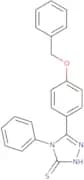
CAS:Controlled Product<p>Diacetoxyscirpenol is a mycotoxin that is found in wastewater and has been shown to have the ability to inhibit certain enzyme activities. It is a glucuronide conjugate that is excreted by humans, and can be detected in urine samples. The metabolite of Diacetoxyscirpenol, 4-hydroxy-2,3-dihydroxymethyl-5-(2H)-furanone (4OH-DMF), has been shown to induce antibody response in mice. The LC-MS/MS method for detecting Diacetoxyscirpenol uses a monoclonal antibody that recognizes the toxin. This antibody binds to the toxin and activates an enzyme cascade that leads to the production of a fluorescent dye. The intensity of fluorescence can be quantified using fluorometry or spectrophotometry. /nowiki>/pre></p>Formula:C19H26O7Purity:Min. 95%Molecular weight:366.41 g/mol4-phenyl-5-(4-(benzyloxy)phenyl)-1,2,4-triazole-3-thiol
CAS:<p>Please enquire for more information about 4-phenyl-5-(4-(benzyloxy)phenyl)-1,2,4-triazole-3-thiol including the price, delivery time and more detailed product information at the technical inquiry form on this page</p>Formula:C21H17N3OSPurity:Min. 95%Color and Shape:PowderMolecular weight:359.44 g/mol2-[(3-Phenoxyphenyl)methylene]-2H-1,4-benzothiazin-3(4H)-one
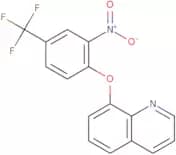
CAS:<p>Please enquire for more information about 2-[(3-Phenoxyphenyl)methylene]-2H-1,4-benzothiazin-3(4H)-one including the price, delivery time and more detailed product information at the technical inquiry form on this page</p>Formula:C21H15NO2SPurity:Min. 95%Color and Shape:Powder2-Nitro-1-(8-quinolyloxy)-4-(trifluoromethyl)benzene
CAS:<p>Please enquire for more information about 2-Nitro-1-(8-quinolyloxy)-4-(trifluoromethyl)benzene including the price, delivery time and more detailed product information at the technical inquiry form on this page</p>Formula:C16H9F3N2O3Purity:Min. 95%Color and Shape:PowderMolecular weight:334.25 g/molLinoleoyl Chloride
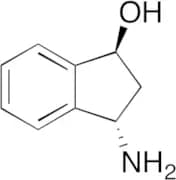
CAS:<p>Stability Moisture Sensitive<br>Applications Used in the production of antimicrobial agents.<br>References Selvin, J. et al.: App. Microbio. Biotech., 83, 439 (2009);<br></p>Formula:C18H31ClOColor and Shape:Colourless LiquidMolecular weight:298.89rac-cis-3-Amino-1-indanol
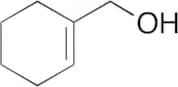
CAS:Controlled ProductFormula:C9H11NOColor and Shape:NeatMolecular weight:149.191-Cyclohexenemethanol
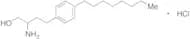
CAS:Controlled ProductFormula:C7H12OColor and Shape:NeatMolecular weight:678.765β-Amino-4-octylbenzenebutanol Hydrochloride
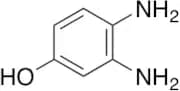
CAS:Controlled ProductFormula:C18H32ClNOColor and Shape:NeatMolecular weight:313.913,4-Diaminophenol (>80%)
CAS:Controlled Product<p>Applications 3,4-Diaminophenol (cas# 615-72-5) is a useful research chemical.<br></p>Formula:C6H8N2OPurity:>80%Color and Shape:NeatMolecular weight:124.14Amino-PEG4-alcohol
CAS:Controlled Product<p>Applications 1-Amino-3,6,9-trioxaundecanyl-11-ol (cas# 86770-74-3) is a compound useful in organic synthesis.<br></p>Formula:C8H19NO4Color and Shape:NeatMolecular weight:193.242-Hexadecyl-1-eicosanol
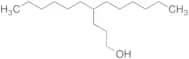
CAS:Controlled ProductFormula:C36H74OColor and Shape:NeatMolecular weight:522.9722-{[2-(Dimethylamino)ethyl]methylamino}ethanol
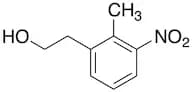
CAS:Controlled Product<p>Applications 2-{[2-(Dimethylamino)ethyl]methylamino}ethanol is a reagent in the preparation of diamino(aminoalkoxy)quinazolines.<br>References Liu, F., et al.: J. Med. Chem., 53, 5844 (2010);<br></p>Formula:C7H18N2OColor and Shape:NeatMolecular weight:146.232-Methyl-3-nitrobenzeneethanol
CAS:Controlled ProductFormula:C9H11NO3Color and Shape:NeatMolecular weight:181.189(S,S)-trans-3-Amino-1-indanol
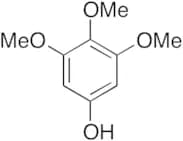
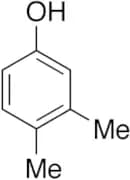
CAS:Controlled ProductFormula:C9H11NOColor and Shape:NeatMolecular weight:149.193,4,5-Trimethoxyphenol
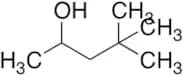
CAS:Controlled Product<p>Applications 3,4,5-Trimethoxyphenol is a useful synthetic intermediate in the synthesis of Thymonin (T413210); a flavonoid compound with potential antioxidant activity against peroxyl radicals.<br>References Dugas, A.J., et al.: J. Nat. Prod., 63, 327 (2000)<br></p>Formula:C13H24N2OColor and Shape:NeatMolecular weight:224.3434,4-Dimethylpentan-2-ol
CAS:Controlled Product<p>Applications 4,4-dimethylpentan-2-ol (cas# 6144-93-0) is a useful research chemical.<br></p>Formula:C7H16OColor and Shape:NeatMolecular weight:116.2[4-(Trimethylammonium)benzyl] Alcohol Bromide
CAS:Controlled Product<p>Applications [4-(Trimethylammonium)benzyl] Alcohol Bromide is a compound useful in organic synthesis.<br></p>Formula:C10H16NO·BrColor and Shape:NeatMolecular weight:246.1441H-Indazol-1-ylmethanol
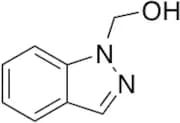
CAS:Controlled Product<p>Stability Unstable in aqueous media<br>Applications 1H-indazol-1-ylmethanol (cas# 1006-29-7) is a useful research chemical.<br></p>Formula:C8H8N2OColor and Shape:NeatMolecular weight:148.162-(2-Cyclopenten-1-yl)-phenol
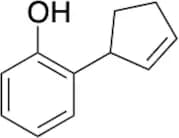
CAS:Controlled Product<p>Applications 2-(2-Cyclopenten-1-yl)-phenol is an intermediate used in the synthesis of (S)-Penbutolol Sulfate (P220505), which is an isomer of Penbutolol (P220500), a β-adrenoceptor antagonist. Antihypertensive.<br>References Lassen, J.B.: Eur. J. Pharmacol., 47, 351 (1978), Lund, J., et al.: Acta Pharmacol. Toxicol., 51, 351, (1982),<br></p>Formula:C11H12OColor and Shape:NeatMolecular weight:160.2122-Cyclohexen-1-ol
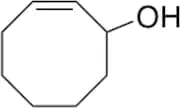
CAS:Controlled Product<p>Applications 2-Cyclohexen-1-Ol (cas# 822-67-3) is a useful research chemical.<br></p>Formula:C6H10OColor and Shape:NeatMolecular weight:98.14Benzo[c]isothiazol-5-ylmethanol
CAS:Controlled ProductFormula:C8H7NOSColor and Shape:NeatMolecular weight:165.2121-(9H-Purin-6-ylamino)propan-2-ol
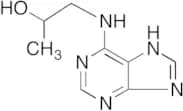
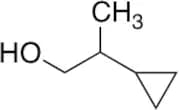
CAS:Controlled Product<p>Applications 1-(9H-Purin-6-ylamino)propan-2-ol is a reagent used for organic synthesis and also functions as a plant growth regulator.<br>References Gao, Y., et al.: J. Heterocyclic Chem., 53, 579 (2016); Oda, A., et al.: From Faming Zhuanli Shenqing (2016), CN 105503875 A 20160420; Lira, E. P.: J. Org. Chem., 33, 3355 (1968)<br></p>Formula:C8H11N5OColor and Shape:NeatMolecular weight:193.212-cyclopropylpropan-1-ol
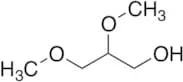
CAS:Controlled ProductFormula:C6H12OColor and Shape:NeatMolecular weight:100.1592,3-dimethoxypropan-1-ol
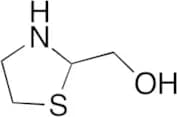
CAS:Controlled ProductFormula:C5H12O3Color and Shape:NeatMolecular weight:120.1472-Thiazolidinemethanol
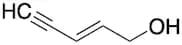
CAS:Controlled ProductFormula:C4H9NOSColor and Shape:NeatMolecular weight:119.1852-Penten-4-yn-1-ol
CAS:Controlled Product<p>Applications 2-Penten-4-yn-1-Ol is a useful reagent in the silver-catalyzed cyclization of acetylenic alcohols. It is also employed in the studies related to the field of acetylenic epoxides.<br>References Pale, P., et al.: Eur. J. Org. Chem., 10109 (2000); Malinovskii, M. S., et al.: Tezisy Dokl. - Vses. Konf. Khim. Atsetilena, 5, 82 (1975)<br></p>Formula:C5H6OColor and Shape:NeatMolecular weight:82.12-Propyl-1-heptanol
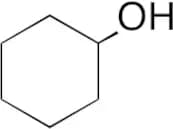
CAS:Controlled Product<p>Applications 2-Propyl-1-heptanol (cas# 10042-59-8) is a compound useful in organic synthesis.<br></p>Formula:C10H22OColor and Shape:ColourlessMolecular weight:158.28Cyclohexanol
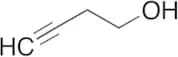
CAS:Controlled Product<p>Applications Cyclohexane is a general organic chemical solvent. It is also used as a precursor to the synthesis of nylon.<br>References Hiroshi O. et al.: J. Memb. Sci., 105, 51 (1995); Rekharsky, M.V. et al.: J. Am. Chem. Soc., 124, 12361 (2002);<br></p>Formula:C6H12OColor and Shape:ColourlessMolecular weight:100.163-Butyn-1-ol
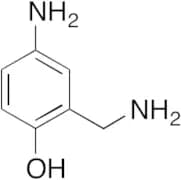
CAS:Controlled Product<p>Stability Volatile<br>Applications 3-Butyn-1-ol is an unsaturated alcohol that is used as a reagent to synthesize Kainic acid (K135000), a neuroexcitatory and neurotoxic analogue of glutamate that is utilized as a means to selectively lesion neuronal cell bodies. 3-Butyn-1-ol is also an important intermediate to prepare a variety of natural products in food and cosmetic industries.<br> Not a dangerous good if item is equal to or less than 1g/ml and there is less than 100g/ml in the package<br>References Anderson, J. & Whiting, M.: J. Org. Chem., 68, 6160 (2003); Ben-Ari, Y., et al.: Brain Res., 165, 3362 (1979); Olney, J., et al.: Brain Res., 77, 507 (1974); Yu, X., et al.: Org. Prep. Proc. Int., 38, 467 (2006)<br></p>Formula:C4H6OColor and Shape:NeatMolecular weight:70.092-Aminomethyl-4-aminophenol
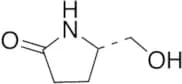
CAS:Controlled ProductFormula:C7H10N2OColor and Shape:NeatMolecular weight:138.167(S)-Pyroglutaminol
CAS:Controlled Product<p>Applications (S)-Pyroglutaminol (cas# 17342-08-4) is a compound useful in organic synthesis.<br></p>Formula:C5H9NO2Color and Shape:NeatMolecular weight:115.133,6-Dimethyl-3-heptanol
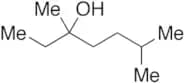
CAS:Controlled Product<p>Applications 3,6-Dimethyl-3-heptanol (cas# 1573-28-0) is a compound useful in organic synthesis.<br></p>Formula:C9H20OColor and Shape:NeatMolecular weight:144.25Tetrahydro-4-pyranol
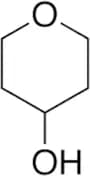
CAS:Controlled Product<p>Applications Tetrahydro-4-pyranol is a building block of various organic compounds and pharmaceuticals.<br>References Chan, A.W., et al.: J. Med. Chem., 53, 3086 (2010); Desjardins, A.E.. et al.: Phytochem., 27, 767 (1988);<br></p>Formula:C5H10O2Color and Shape:NeatMolecular weight:102.134-Phenoxyphenol
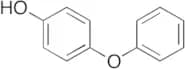
CAS:Controlled Product<p>Applications 4-Phenoxyphenol is a porous organic material with dumbbell channels that appear throughout its structure. These channels can also host solvent molecules during crystal growth. 4-Phenoxyphenol is also part of a group of phenolic compounds that have potential apoptotic activity, which can be used in the development of new treatments for cancer therapy.<br>References Hansch, C., et al.: Bioorg. Med. Chem., 11, 617 (2003); Thomas, L., et al.: Cryst. Growth. Des., 12, 1746 (2012)<br></p>Formula:C12H10O2Color and Shape:WhiteMolecular weight:186.212,2-Dimethyl-4-pentyn-1-ol
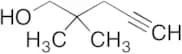
CAS:Controlled ProductFormula:C7H12OColor and Shape:NeatMolecular weight:112.17Leuco-2,6-dichlorophenolindophenol
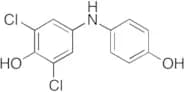
CAS:Controlled Product<p>Applications Leuco-2,6-dichlorophenolindophenol is the reduced form of DCIP and has been used to measure photocatalytic oxidation.<br>References Krysa, J.; et al.: Catalysis Today, 240, 132 (2015). Kafizas, A.; et al.: Chemistry - A European Journal, 18, 13048 (2012).<br></p>Formula:C12H9Cl2NO2Color and Shape:NeatMolecular weight:270.1115-Propylbenzene-1,3-diol
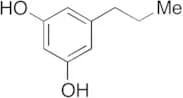
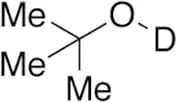
CAS:Controlled Product<p>Applications 5-Propylbenzene-1,3-diol is an intermediate used to prepare Cannabigerovarin (C175140) which stimulates thermosensitive transient receptor potential (TRP) channels of vanilloid type-4 (TRPV4)-mediated [Ca2+]i with moderate-high efficacy (30-60% of the effect of ionomycin) and potency (EC50 0.9-6.4 μM),<br>References De Petrocellis, L., et al.: Acta Physiologica, 204, 255 (2012)<br></p>Formula:C9H12O2Color and Shape:NeatMolecular weight:152.19Tert-butyl Alcohol-OD
CAS:Controlled Product<p>Applications Labelled Tert-butyl Alcohol is used as an organic solvent. Also it is used in the synthesis of proteosome inhibitors that are quite potent.<br>References Kawamura, S. et al.: J. Med. Chem., 56, 3689 (2013); Galy, N. et al.: Tetra. lett., 54, 2703 (2013);<br></p>Formula:C4DH9OColor and Shape:NeatMolecular weight:75.131,3-Bis(2-acetylphenoxy)-2-propanol
CAS:Controlled Product<p>Applications 1,3-Bis(2-acetylphenoxy)-2-propanol is a useful research intermediate.<br>References Sangwan, N. K., et al.: Indian J. Chem. B. Org. Chem. Incl. Med. Chem. ,31B, 590 (1992)<br></p>Formula:C19H20O5Color and Shape:NeatMolecular weight:328.3591,4-Oxazepan-7-ylmethanol Hydrochloride
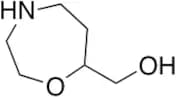
CAS:Controlled ProductFormula:C6H13NO2•HClColor and Shape:NeatMolecular weight:131.17+(36.46)2,3-Dimethylbut-2-en-1-ol
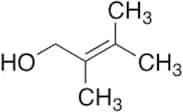
CAS:Controlled ProductFormula:C6H12OColor and Shape:NeatMolecular weight:100.1591,3-Diamino-2-propanol
CAS:Controlled Product<p>Applications 1,3-Diamino-2-propanol is a reagent used in the quantitative fluorescent detection of pyrophosphate with quinolin-ligated dinuclear zinc complexes.<br>References Mikata, Y., et al.: Inorg. Chem., 52, 10223 (2013)<br></p>Formula:C3H10N2OColor and Shape:NeatMolecular weight:90.128-Carboxyoctanol
CAS:Controlled Product<p>Applications a volatile hydroxy acid component of particular body odors<br>References Rogge, C., et al.: Biochem., 41, 10141 (2002), Natsch, A., et al.: Chem. Biodiversity, 3, 1 (2006), Liu, G., et al.: Biomacromol., 9, 949 (2008),<br></p>Formula:C9H18O3Color and Shape:NeatMolecular weight:174.24(2S,3S)-2,3-Butanediol
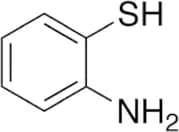
CAS:Controlled Product<p>Applications (S,S)-2,3-Butanediol is the (S,S)-isomer of 2,3-Butanediol (B690020), a naturally occurring compound found in cocoa butter.<br>References Wang, Yu., et al.: J. Biological. Chem., 289, 6080 (2014); Cheng, C., et al.: J. Org. Chem., 78, 8562 (2013);<br></p>Formula:C4H10O2Color and Shape:NeatMolecular weight:90.122-Aminothiophenol 90%
CAS:Controlled Product<p>Stability Air Sensitive<br>Applications A multifunctional compound which shows antioxidant activity in a skin cell model of UVA-induced stress.<br> Not a dangerous good if item is equal to or less than 1g/ml and there is less than 100g/ml in the package<br>References Sies, H., et al.: Eur. J. Biochem., 215, 213 (1993), Meotti, F., et al.: Environ. Res., 94, 276 (2004),<br></p>Formula:C6H7NSPurity:90%Color and Shape:NeatMolecular weight:125.194-tert-Butyl-2,6-bis(hydroxymethyl)phenol
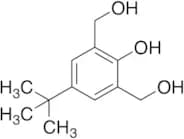
CAS:Controlled ProductFormula:C12H18O3Color and Shape:NeatMolecular weight:210.269(3aS,4R,6S,6aR)-rel-6-Aminotetrahydro-2,2-dimethyl-4H-cyclopenta-1,3-dioxol-4-ol
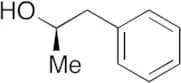
CAS:Controlled ProductFormula:C8H15NO3Color and Shape:NeatMolecular weight:173.21(R)-1-Phenyl-2-propanol
CAS:Controlled ProductFormula:C9H12OColor and Shape:NeatMolecular weight:136.1913,3-Diphenylpropanol
CAS:Controlled Product<p>Applications 3,3-DIPHENYLPROPANOL (cas# 20017-67-8) is a useful research chemical.<br></p>Formula:C15H16OColor and Shape:NeatMolecular weight:212.281-Eicosanethiol
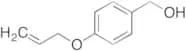
CAS:Controlled Product<p>Applications 1-EICOSANETHIOL (cas# 13373-97-2) is a useful research chemical.<br></p>Formula:C20H42SColor and Shape:NeatMolecular weight:314.61p-(Allyloxy)benzyl Alcohol
CAS:Controlled Product<p>Applications p-(Allyloxy)benzyl Alcohol is an intermediate in the synthesis of 2-amino-nicotinic acid benzyl ester derivatives as agrochemical fungicides.<br>References Jpn. Kokai Tokkyo Koho (2015), JP 2015089883 A 20150511.<br></p>Formula:C10H12O2Color and Shape:NeatMolecular weight:164.21,3-Dioleyl-2-docosahexaenoyl Glycerol
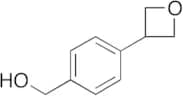
Controlled ProductFormula:C61H106O4Color and Shape:NeatMolecular weight:903.4924-(3-Oxetanyl)benzenemethanol
CAS:Controlled Product<p>Applications 4-(3-Oxetanyl)benzenemethanol is a compound useful in organic synthesis.<br></p>Formula:C10H12O2Color and Shape:NeatMolecular weight:164.2011-Amino-2-nitro-ethenol Ammonium Salt
CAS:Controlled ProductFormula:C2H4N2O3•NH3Color and Shape:NeatMolecular weight:121.09rac-trans-3-Amino-1-indanol
CAS:Controlled ProductFormula:C9H11NOColor and Shape:NeatMolecular weight:149.19trans-Benzo[a]pyrene-4,5-dihydrodiol
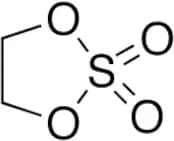
CAS:Controlled ProductFormula:C20H14O2Color and Shape:NeatMolecular weight:286.3241,3,2-Dioxathiolane 2,2-Dioxide
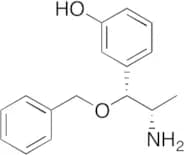
CAS:Controlled Product<p>Applications 1,3,2-Dioxathiolane 2,2-Dioxide is an alkylating agent with carcinogenic activty.<br>References Van Duuren, B.L. et al.: J. Nat. Cancer Inst., 53, 695 (1974);<br></p>Formula:C2H4O4SColor and Shape:NeatMolecular weight:124.12O-Benzylmetaraminol
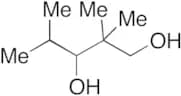
Controlled Product<p>Applications O-Benzylmetaraminol is an impurity of M225565.<br></p>Formula:C16H19NO2Color and Shape:NeatMolecular weight:257.3282,2,4-Trimethyl-1,3-pentanediol
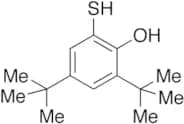
CAS:<p>Applications 2,2,4-Trimethyl-1,3-pentanediol is used in the synthesis of monoisobutyrate derivatives used in film forming auxilleries in paint substances.<br>References Li, Y. et al.: Chem. Papers, 68, 422 (2014);<br></p>Formula:C8H18O2Color and Shape:NeatMolecular weight:146.2272-Mercapto-4,6-di-tert-butylphenol
CAS:Controlled Product<p>Applications 2-Mercapto-4,6-di-tert-butylphenol (cas# 53551-74-9) is a compound useful in organic synthesis.<br></p>Formula:C14H22OSColor and Shape:NeatMolecular weight:238.391,3-Didocosahexaenoyl-2-oleoyl Glycerol
Controlled ProductFormula:C65H102O5Color and Shape:NeatMolecular weight:963.5025-Hexen-1-ol
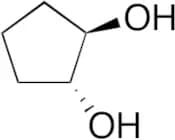
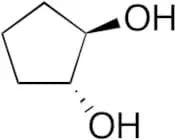
CAS:Controlled Product<p>Applications 5-Hexen-1-ol is a volatile organic compound that can be found in Brazilian chilli peppers (Capsicum spp.).<br> Not a dangerous good if item is equal to or less than 1g/ml and there is less than 100g/ml in the package<br>References Bogusz, S.Jr., et al.: Food Res. Int., 48, 98 (2012)<br></p>Formula:C6H12OColor and Shape:NeatMolecular weight:100.16(1R,2R)-rel-trans-1,2-Cyclopentanediol
CAS:Controlled Product<p>Applications (1R,2R)-rel-trans-1,2-Cyclopentanediol is a building block for the synthesis of chiral phosphine ligands. It can also be used to prepare benzoquinolines and benzoindoles via heterocyclization of naphthylamines with diols catalyzed by iridium chloride/BINAP<br>References Kündig, E., et al.: Helv. Chim. Acta, 77, 421 (1994); Aramoto, H., et al.: J. Org. Chem., 74, 628 (2009)<br></p>Formula:C5H10O2Color and Shape:NeatMolecular weight:102.132Asenapine Phenol
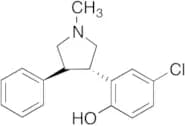
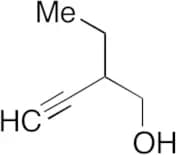
CAS:Controlled Product<p>Applications Asenapine Phenol is a research reagent used to study effect on DNA oxidation<br>References Bao, L.L., et al.: ChemMedChem, 11, 1617 (2016)<br></p>Formula:C17H18ClNOColor and Shape:NeatMolecular weight:287.7842-Ethyl-3-butyn-1-ol
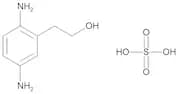
CAS:Controlled Product<p>Applications 2-Ethyl-3-butyn-1-ol is used as an additive in the synthesis of liquid crystal display adhesive.<br>References Ding, A., et al.: Faming Zhuanli Shenqing 5pp. Patent 2015 CODEN:CNXXEV;<br></p>Formula:C6H10OColor and Shape:NeatMolecular weight:98.1432-(2,5-diaminophenyl)ethanol Sulfate
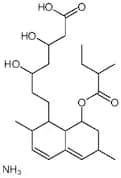
CAS:Controlled Product<p>Stability Hygroscopic<br>Applications 2-(2,5-diaminophenyl)ethanol Sulfate (cas# 93841-25-9) is a useful research chemical.<br> Not a dangerous good if item is equal to or less than 1g/ml and there is less than 100g/ml in the package<br></p>Formula:C8H12N2O·H2O4SColor and Shape:NeatMolecular weight:250.27Mevinolinic Acid, Monoammonium Salt
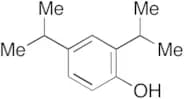
CAS:Controlled Product<p>Applications Mevinolinic Acid, Monoammonium Salt can be used as reactant/reagent in process for the preparation of the Simvastatin precursor, 2,2-dimethylbutanoic acid (1S,3R,7S,8S,8aR)-8-[(3R,5R)-7-(cyclopropylamino)-3,5-dihydroxy-7-oxoheptyl]-1,2,3,7,8,8a-hexahydro-3,7-dimethyl-1-naphthalenyl ester, via an amidation reaction.<br>References Khanna, J., et al.: Indian, IN 184809 A1 20000930 (2000)<br></p>Formula:C24H37O6·H4NColor and Shape:NeatMolecular weight:439.5852,4-Diisopropylphenol
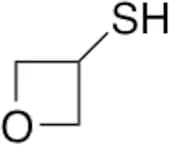
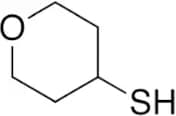
CAS:Controlled ProductFormula:C12H18OColor and Shape:ColourlessMolecular weight:178.27Tetrahydropyran-4-thiol
CAS:Controlled ProductFormula:C5H10OSColor and Shape:NeatMolecular weight:118.197[1-(4-Bromophenyl)cyclopropyl]methanol
CAS:Controlled ProductFormula:C10H11BrOColor and Shape:NeatMolecular weight:227.0982-(Ethylthio)ethanol
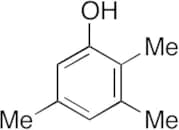
CAS:Controlled Product<p>Applications 2-(Ethylthio)ethanol is used to prepare aryldihydropyrimidinones as inhibitors of fatty acid transporter FATP4.<br> Not a dangerous good if item is equal to or less than 1g/ml and there is less than 100g/ml in the package<br>References Blackburn, C., et al.: Bioorg. Med. Chem. Lett., 16, 3504 (2006)<br></p>Formula:C4H10OSColor and Shape:NeatMolecular weight:106.192,3,5-Trimethylphenol
CAS:Controlled Product<p>Applications 2,3,5-Trimethylphenol is a reagent used in the synthesis of antibiotics. Also used in the preparation of vitamin E synthesis.<br> Not a dangerous good if item is equal to or less than 1g/ml and there is less than 100g/ml in the package<br>References Velema, W. et al.: Nat. Chem., 5, 924 (2013); Carril, M. et al.: J. Catal., 283, 55 (2011);<br></p>Formula:C9H12OColor and Shape:NeatMolecular weight:136.193-Aminocyclopentanol
CAS:Controlled ProductFormula:C5H11NOColor and Shape:NeatMolecular weight:101.1471-[(1E)-1-(Hydroxyimino)-3-phenylpropyl]cyclohexan-1-ol
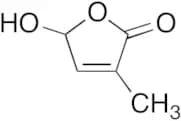
CAS:Controlled ProductFormula:C15H21NO2Color and Shape:NeatMolecular weight:247.333Hydroxybutenolide
CAS:Controlled Product<p>Applications Hydroxybutenolide can be used as reactant/reagent for synthetic preparation for enantioselective preparation of hydroxy-GR24 stereoisomers via contra-biomimetic nucleophilic cyclization.<br>References Morris, J. C., and McErlean, C. S. P.: Org. Biomol. Chem., 14, 1236-1238 (2016)<br></p>Formula:C5H6O3Color and Shape:NeatMolecular weight:114.14-(Methyl)thiochroman-4-ol
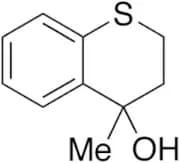
CAS:Controlled Product<p>Applications Used in the preparation of bicyclic substituted indole derivatives as steroid hormone nuclear receptor modulators.<br></p>Formula:C10H12OSColor and Shape:Light BlueMolecular weight:180.273,7-Dimethyl-1-octanol
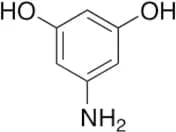
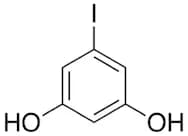
CAS:Controlled Product<p>Applications 3,7-Dimethyl-1-octanol is a useful organic reactant/reagent.<br>References Dantignana, V., et al.: ACS Cent Sci., 3, 1350-58 (2017); Jana, S., et al.: Org, Lett., 19, 746-49 (2017);<br></p>Formula:C10H22OColor and Shape:NeatMolecular weight:158.285-Aminobenzene-1,3-diol
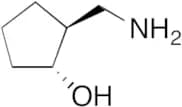
CAS:Controlled ProductFormula:C6H7NO2Color and Shape:NeatMolecular weight:125.125(1R,2S)-2-(Aminomethyl)cyclopentan-1-ol
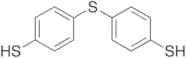
CAS:Controlled ProductFormula:C6H13NOColor and Shape:NeatMolecular weight:115.1744,4'-Thiobisbenzenethiol
CAS:Controlled Product<p>Applications 4,4'-Thiobisbenzenethiol acts as a reducing agent, and affects the catalytic activity of caspase-3 protein.<br>References Okun, I. et al.: J. Biomol. Screen., 11, 694 (2006);<br></p>Formula:C12H10S3Color and Shape:NeatMolecular weight:250.4Tert-butyl Alcohol
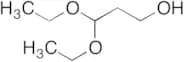
CAS:Controlled Product<p>Applications Tert-butyl Alcohol is used as an organic solvent. It is also used in the synthesis of proteosome inhibitors that are quite potent.<br> Not a dangerous good if item is equal to or less than 1g/ml and there is less than 100g/ml in the package<br>References Kawamura, S. et al.: J. Med. Chem., 56, 3689 (2013); Galy, N. et al.: Tetrahedron Lett., 54, 2703 (2013)<br></p>Formula:C4H10OColor and Shape:Single SolutionMolecular weight:74.123,3-Diethoxy-1-propanol
CAS:Controlled Product<p>Applications 3,3-Diethoxy-1-propanol is used as a reactant in the synthesis of nanoparticles.<br>References Sumitani, Shogo, et al.: Reactive & Func. Polymers, 71(7), 684-693 (2011);Kanakubo, Yurie, et al.: Colloids and Surfaces, B, 78(1), 85-91 (2010)<br></p>Formula:C7H16O3Color and Shape:NeatMolecular weight:148.22-[(Tributylstannyl)methyl]-2-propen-1-ol
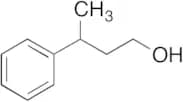
CAS:Controlled Product<p>Applications 2-[(Tributylstannyl)methyl]-2-propen-1-ol is a useful reagent for organic synthesis.<br></p>Formula:C16H34OSnColor and Shape:NeatMolecular weight:361.1513-Phenyl-1-butanol
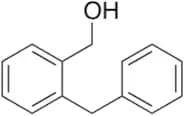
CAS:Controlled Product<p>Applications 3-Phenyl-1-butanol is a reactant with primary alcohol functional group which is oxidized to aldehyde using the nanoparticle-ferrite-palladium catalyst.<br>References Polshettiwar, V., Varma, R.: Org. Biomol. Chem., 7, 37 (2009);<br></p>Formula:C10H14OColor and Shape:NeatMolecular weight:150.222-Benzylbenzylalcohol
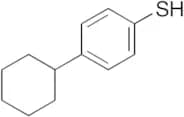
CAS:Controlled ProductFormula:C14H14OColor and Shape:NeatMolecular weight:198.264-Cyclohexyl-benzenethiol
CAS:Controlled ProductFormula:C12H16SColor and Shape:NeatMolecular weight:192.322-Aminopropane-1,3-diol
CAS:Controlled Product<p>Applications 2-Aminopropane-1,3-diol is used in the synthesis of novel potent inhibitors of human uridine phosphorylase used to reduce toxicity of 5-fluorouracil without affecting its antitumor activity.<br>References Renck, D. et al.: J. Med. Chem., 56, 8892 (2013);<br></p>Formula:C3H9NO2Color and Shape:NeatMolecular weight:91.117N-[1-(2-Carboxy)ethyl]allopurinol
CAS:Controlled Product<p>Applications 7N-[1-(2-Carboxy)ethyl]allopurinol (cas# 34397-00-7) is a compound useful in organic synthesis.<br></p>Formula:C8H8N4O3Color and Shape:NeatMolecular weight:208.17(R)-3-Aminoindan-5-ol
CAS:Controlled ProductFormula:C9H11NOColor and Shape:NeatMolecular weight:149.1910-Undecen-1-ol
CAS:Controlled Product<p>Applications 10-Undecen-1-ol (cas# 112-43-6) is a useful research chemical.<br></p>Formula:C11H22OColor and Shape:NeatMolecular weight:170.292-[(7-Nitro-2,1,3-benzoxadiazol-4-yl)amino]ethanethiol
CAS:Controlled Product<p>Applications 2-[(7-Nitro-2,1,3-benzoxadiazol-4-yl)amino]ethanethiol is used in the preparation of fluorescent N/S acyl derivatives.<br>References 2-[(7-Nitro-2,1,3-benzoxadiazol-4-yl)thio]ethanamine<br></p>Formula:C8H8N4O3SColor and Shape:NeatMolecular weight:240.2423-Azido-3,6,9,12,15,18,21-Heptaoxatricosan-1-ol
CAS:Controlled Product<p>Applications 23-Azido-3,6,9,12,15,18,21-Heptaoxatricosan-1-ol is used in the synthesis of heterobifunctionalized oligo(ethylene glycol) linkers for use in drug delivery.<br>References Goswami, L. et al.: Org. Biomol. Chem., 11, 1116 (2013);<br></p>Formula:C16H33N3O8Color and Shape:NeatMolecular weight:395.4492-Eicosyl-1-tetracosanol
CAS:Controlled ProductFormula:C44H90OColor and Shape:NeatMolecular weight:635.1852-(Ethylamino)ethanol
CAS:Controlled Product<p>Applications 2-(Ethylamino)ethanol is used in the preparation of novel indole-2-carboxamide and 3-acetamide derivatives as antioxidant protective agents. Also used in the synthesis of novel amino acid based arginase inhibitors used towards the treatments of myocardial ischemia reperfusion injury.<br>References Oelgen, S. et al.: J. Enz. Inhib. Med. Chem., 28, 58 (2013); Van Zandt, M. et al.: J. Med. Chem., 56, 2568 (2013);<br></p>Formula:C4H11NOColor and Shape:NeatMolecular weight:89.143-Furanmethanol
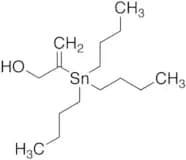
CAS:Controlled Product<p>Applications 3-Furanmethanol (cas# 4412-91-3) is a useful research chemical.<br></p>Formula:C5H6O2Color and Shape:NeatMolecular weight:98.12-Tributyltin-allyl-1-ol
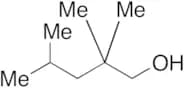
CAS:Controlled Product<p>Applications 2-Tributyltin-allyl-1-ol (cas# 84666-30-8) is a compound useful in organic synthesis.<br> Not a dangerous good if item is equal to or less than 1g/ml and there is less than 100g/ml in the package<br></p>Formula:C15H32OSnColor and Shape:NeatMolecular weight:347.122,2,4-Trimethyl-1-pentanol
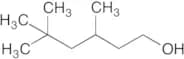
CAS:Controlled ProductFormula:C8H18OColor and Shape:NeatMolecular weight:130.2283,5,5-Trimethyl-1-hexanol
CAS:Controlled Product<p>Applications 3,5,5-Trimethyl-1-hexanol can be used as a fragrance material and a flavoring agent for food.<br>References McGinty, D., et al.: Food and Chem. Toxic., 48(Suppl. 4), S47-S50 (2010);Letizia, C. S., et al.: Food and Chem. Toxic., 38(Suppl. 3), S223-S225 (2000)<br></p>Formula:C9H20OColor and Shape:NeatMolecular weight:144.255-(Methylamino)-1,3,4-thiadiazole-2-thiol
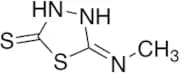
CAS:Controlled ProductFormula:C3H5N3S2Color and Shape:NeatMolecular weight:147.2222-Biphenylmethanol
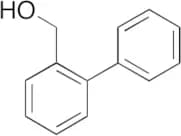
CAS:Controlled Product<p>Applications 2-Biphenylmethanol is a useful reactant in organic synthesis.<br>References Li, Zheng, et al.: Bioorg. & Med. Chem., 25(24), 6647-6652 (2017);Shi, Guangfa, et al.: Org. Let., 18(12), 2958-2961 (2016)<br></p>Formula:C13H12OColor and Shape:NeatMolecular weight:184.231-Docosanethiol
CAS:Controlled Product<p>Applications 1-Docosanethiol (cas# 7773-83-3) is a useful research chemical.<br></p>Formula:C22H46SColor and Shape:NeatMolecular weight:342.675-Amino-2-chloro-4-fluorophenol
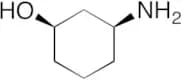
CAS:Controlled Product<p>Applications 5-Amino-2-chloro-4-fluorophenol is a reagent involved in the design and structure of potent vascular endothelial growth factor (VEGF) receptor tyrosine kinase inhibitors.<br>References Hennequin, L. F., et al.: J. Med. Chem., 42, 5369-5389 (1999);<br></p>Formula:C6H5ClFNOColor and Shape:NeatMolecular weight:161.56(1R,3S)-3-Aminocyclohexanol
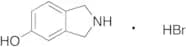
CAS:Controlled ProductFormula:C6H13NOColor and Shape:NeatMolecular weight:115.174Isoindolin-5-ol Hydrobromide
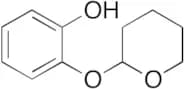
CAS:Controlled ProductFormula:C8H9NO·(HBr)Color and Shape:NeatMolecular weight:216.072-(Tetrahydropyran-2-yloxy)phenol
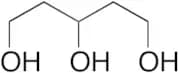
CAS:Controlled ProductFormula:C11H14O3Color and Shape:NeatMolecular weight:194.2271,3,5-Pentanetriol
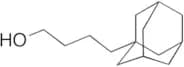
CAS:Controlled Product<p>Applications 1,3,5-Pentanetriol, is an intermediate for the synthesis of various pharmaceutical compounds, including inhibitors and Antagonist.<br>References Utech, T., et al.: Euro. J. Med. Chem., et al.: 46, 2157 (2011);<br></p>Formula:C5H12O3Color and Shape:ColourlessMolecular weight:120.151-Adamantanebutan-4-ol
CAS:Controlled Product<p>Applications 1-Adamantanebutan-4-ol is a building block used in various synthetic preparations. Adamantanealkanamines are potential antidepressant and anti-Parkinson agents.<br>References Chakrabarti, J., et al.: J. Med. Chem., 17, 602 (1974);<br></p>Formula:C14H24OColor and Shape:NeatMolecular weight:208.343-[(Dimethylamino)carbonyl]phenol
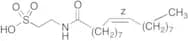
CAS:Controlled Product<p>Applications 3-[(Dimethylamino)carbonyl]phenol can be used in the synthesis of novel purine and bicyclic pyrimidine, which are factor Xa inhibitors, and also have high selectivity over thrombin and trypsin.<br>References Buckman B. O., et al.: Bio. Med. Chem. Let., 8, 2235 (1998)<br></p>Formula:C9H11NO2Color and Shape:NeatMolecular weight:165.19N-Oleoyl Taurine
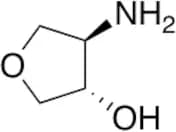
CAS:Controlled Product<p>Applications N-Oleoyl Taurine which belongs to the class of N-Acyl Taurines were detected in beta cells of Langerhans islets causing insulin secretion results beta cell dysfunction in type 2 diabetes<br>References Aichler, M., et al.: Cell Metab., 25, 1334-1347 (2017)<br></p>Formula:C20H39NO4SColor and Shape:NeatMolecular weight:389.60(3S,4R)-4-Aminooxolan-3-ol Hydrichloride Salt
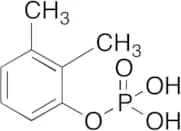
CAS:Controlled Product<p>Applications (3S,4R)-4-aminooxolan-3-ol (cas# 153610-14-1) is a useful research chemical.<br></p>Formula:C4H9NO2·xHClColor and Shape:NeatMolecular weight:139.572,3-Dimethylphenol Dihydrogen Phosphate
CAS:Controlled Product<p>Applications 2,3-Dimethylphenol Dihydrogen Phosphate is used in the development of thermochromic compounds.<br>References Kito, Tsutomu, et al.: Jpn. Kokai Tokkyo Koho, JP 61009488 A 19860117 (1986)<br></p>Formula:C8H11O4PColor and Shape:NeatMolecular weight:202.1444-(2-(tert-butylamino)-1-ethoxyethyl)-2-(hydroxymethyl)phenol
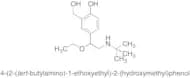
CAS:Controlled ProductFormula:C15H25NO3Color and Shape:NeatMolecular weight:267.3643-O-tert-Butyldimethylsilyl-cholest-5-ene-3-ol 24-(2-Hydroxyisopropyl) 24-Phenyl Sulfinate
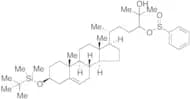
Controlled Product<p>Applications 3-O-tert-Butyldimethylsilyl-cholest-5-ene-3-ol 24-(2-hydroxyisopropyl) 24-Phenyl Sulfinate is an intermediate in the preparation of Campesterol (C155360).<br></p>Formula:C39H64O4SSiColor and Shape:NeatMolecular weight:657.0742-O-Hexadecyl Glycerol
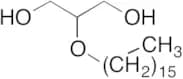
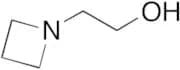
CAS:Controlled Product<p>Applications 2-O-Hexadecyl Glycerol is an important research chemical where chiral-phase HPLC/MS is used to identify its alkyl group.<br>References Yamashina, T., et al.: Bunseki Kagaku, 55, 643-650 (2006)<br></p>Formula:C19H40O3Color and Shape:NeatMolecular weight:316.5192-(Azetidin-1-yl)ethanol
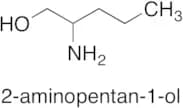
CAS:Controlled ProductFormula:C5H11NOColor and Shape:NeatMolecular weight:101.15DL-2-Amino-1-pentanol
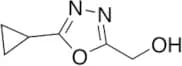
CAS:Controlled Product<p>Applications DL-2-Amino-1-pentanol is a useful intermediate for organic synthesis. It is used in the preparation of amino-substituted pyrimidine derivatives and other aminoethanethiol derivatives with potential antiradiation properties.<br>References Yoo, K. H., et al.: Korean J. Med. Chem., 9, 83 (1999); Fernandez, S., et al.: Synthesis, 9, 713 (1991)<br></p>Formula:C5H13NOColor and Shape:NeatMolecular weight:103.16(5-Cyclopropyl-1,3,4-oxadiazol-2-yl)methanol
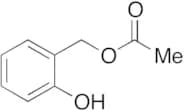
CAS:Controlled ProductFormula:C6H8N2O2Color and Shape:NeatMolecular weight:140.142-Acetoxymethylphenol
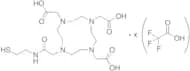
CAS:Controlled ProductFormula:C9H10O3Color and Shape:NeatMolecular weight:329.433DO3A-Thiol TFA Salt
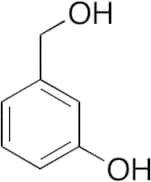
CAS:<p>Applications A TFA salt form of DO3A-Thiol (D494870), a DOTA derivative used for site-specific biomolecular modification via click chemistry.<br>References Waengler, C.; et al.: Bioorg. Med. Chem., 19, 3864 (2011).<br></p>Formula:C18H33N5O7S·x(C2HF3O2)Color and Shape:White To Off-WhiteMolecular weight:463.55 + x(114.02)3-Hydroxybenzyl Alcohol
CAS:Controlled Product<p>Applications 3-Hydroxybenzyl Alcohol, is shown to have antioxidant and free radical scavenging activity.<br>References Dhiman, S., et al.: Chemi-Bio. Interac., 182, 119 (2009); Alfaro, C., et al.: Mutation Res., 539(1-2), 187 (2003);<br></p>Formula:C7H8O2Color and Shape:NeatMolecular weight:124.141,2-Didocosahexaenoyl-3-oleoyl Glycerol
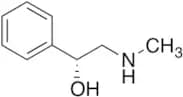
CAS:Controlled ProductFormula:C65H102O5Color and Shape:NeatMolecular weight:963.502(1R)-2-(Methylamino)-1-phenylethan-1-ol Hydrochloride
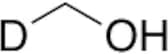
CAS:Controlled Product<p>Applications (1R)-2-(methylamino)-1-phenylethan-1-ol (cas# 495-42-1) is a useful research chemical.<br></p>Formula:C9H13NO·ClHColor and Shape:NeatMolecular weight:187.667Methanol-d
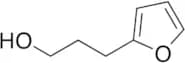
CAS:Controlled Product<p>Applications Methanol-d is an isotope labelled version of Methanol (M276585). Methanol (M276585) is a common chemical reagent in organic synthesis participating in a variety of reactions. Methanol is a bioactive component with antimicrobial activities.<br>References Keskin, D., et al.: Fresenius Env. Bull.., 27, 7991 (2018)<br></p>Formula:CDH3OColor and Shape:NeatMolecular weight:33.0483-(Furan-2-yl)propan-1-ol
CAS:Controlled ProductFormula:C7H10O2Color and Shape:NeatMolecular weight:126.1534-Nitro-benzeneethanol
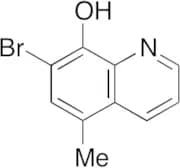
CAS:Controlled Product<p>Applications 4-Nitro-benzeneethanol is a useful synthetic intermediate. It can be used to synthesize N-phenylethylindole carboxamides as SAR study of allosteric modulators of CB1 receptor. It can also be used to prepare 2-aza-2'-deoxyinosine-containing oligodeoxyribonucleotide duplexes.<br>References Piscitelli, F., et al.: J. Med. Chem., 55, 5627 (2012); Acedo, M., et al.: J. Org. Chem., 60, 6262 (1995)<br></p>Formula:C8H9NO3Color and Shape:NeatMolecular weight:167.16Tilbroquinol
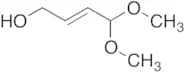
CAS:<p>Applications Tilbroquinol is used in the synthesis of o-chloro hydroxy derivatives in pyridine and quinoline.<br>References Mongin, F. et al.: Tetrahedron Lett., 37, 6695 (1996);<br></p>Formula:C10H8BrNOColor and Shape:NeatMolecular weight:238.08(2E)-4,4-Dimethoxy-2-buten-1-ol
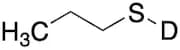
CAS:Controlled ProductFormula:C6H12O3Color and Shape:NeatMolecular weight:132.1581-Propanethiol-SD
CAS:Controlled Product<p>Applications 1-Propanethiol-SD (CAS# 64071-73-4) is a useful isotopically labeled research compound.<br></p>Formula:C3H7DSColor and Shape:NeatMolecular weight:77.164-(Decyloxy)phenol
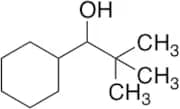
CAS:Controlled Product<p>Applications 4-(Decyloxy)phenol is used as a reactant in the preparation of liquid crystal halogen-bond dimers with substituted pyridines.<br>References Bruce, D., et al.: Chem-Eur J., 16, 9511 (2010)<br></p>Formula:C16H26O2Color and Shape:NeatMolecular weight:250.3761-Cyclohexyl-2,2-dimethylpropan-1-ol
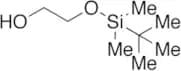
CAS:Controlled ProductFormula:C11H22OColor and Shape:NeatMolecular weight:170.2922-tert-Butyldimethylsilyloxyethanol
CAS:Controlled Product<p>Stability Acid Sensitive<br>Applications 2-tert-Butyldimethylsilyloxyethanol (cas# 102229-10-7) is a compound useful in organic synthesis.<br> Not a dangerous good if item is equal to or less than 1g/ml and there is less than 100g/ml in the package<br></p>Formula:C8H20O2SiColor and Shape:NeatMolecular weight:176.33D-Cyclohexylalaninol Hydrochloride
CAS:Controlled ProductFormula:C9H19NO·HClColor and Shape:NeatMolecular weight:193.714(1R,2R)-1-[(3,4-dimethoxyphenyl)methyl]-1,2,3,4-tetrahydro-6,7-dimethoxy-2-(3-methoxy-3-oxopropyl)-2-methylisoquinolium Benzenesulfonate
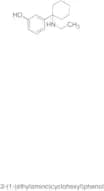
CAS:Controlled ProductFormula:C25H34NO6·C6H5O3SColor and Shape:NeatMolecular weight:601.7083-(1-(Ethylamino)cyclohexyl)phenol
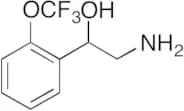
CAS:Controlled Product<p>Applications 3-(1-(Ethylamino)cyclohexyl)phenol is a useful synthesis intermediate.<br></p>Formula:C14H21NOColor and Shape:NeatMolecular weight:219.323α-(Aminomethyl)-2-(trifluoromethoxy)benzenemethanol
CAS:Controlled Product<p>Applications α-(Aminomethyl)-2-(trifluoromethoxy)benzenemethanol is an analog of α-(Aminomethyl)-3-(trifluoromethoxy)benzenemethanol (A630745); a compound that is used as a reagent in the synthesis of potent and selective ethanolamine inhibitors of bacterial phenylalanyl tRNA synthetase. It is also used as a reagent in the synthesis of 1-aryl-2-((6-aryl)pyrimidin-4-yl)amino)ethanols as competitive inhibitors of fatty acid amide hydrolase.<br>References Jarvest, R.L., et al.: Bioorg. Med. Chem. Lett., 15, 2305 (2005); Keith, J.M., et al.: Bioorg. Med. Chem. Lett., 24, 1280 (2014)<br></p>Formula:C9H10F3NO2Color and Shape:NeatMolecular weight:221.182-Amino cyclopentanol
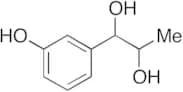
CAS:Controlled Product<p>Applications 2-Amino cyclopentanol<br></p>Formula:C5H11NOColor and Shape:NeatMolecular weight:101.1471-(3-Hydroxyphenyl)-1,2-propanediol
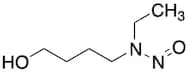
CAS:Controlled ProductFormula:C9H12O3Color and Shape:NeatMolecular weight:168.19N-Ethyl-N-butan-4-ol-nitrosamine
CAS:Controlled Product<p>Applications N-Ethyl-N-butan-4-ol-nitrosamine can be used to study lack of tumorigenic effects on rat renal pelvic transitional epithelium of life-span exposure to low doses of a bladder carcinogen<br>References Shibata, M.A., et.al.: J. Toxicol. Pathol., 6, 47-53, (1993);<br></p>Formula:C6H14N2O2Color and Shape:Colourless To Light YellowMolecular weight:146.19Ecamsule Triethanolamine
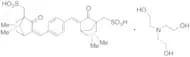
CAS:Controlled Product<p>Applications Ecamsule Triethanolamine is used in the preparation of sunscreens providing a UV filter.<br>References Salvador, A. et al.: Anal. Achim. Acta., 537, 15 (2005);<br></p>Formula:C28H34O8S2C6H15NO3Color and Shape:NeatMolecular weight:861.0711,3-Cyclohexanediol
CAS:Controlled Product<p>Applications 1,3-Cyclohexanediol (cas# 504-01-8) is a useful research chemical.<br></p>Formula:C6H12O2Color and Shape:NeatMolecular weight:116.15(2R)-1-(dimethylamino)propan-2-ol
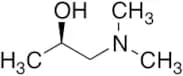
CAS:Controlled ProductFormula:C5H13NOColor and Shape:NeatMolecular weight:103.1632-Cyclopropylethanol
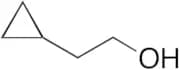
CAS:Controlled Product<p>Applications 2-Cyclopropylethanol is used as a reagent to synthesize 22-Hydroxycholesterol (H918010) derivatives, compounds that act as serum cholesterol lowering agents. 2-Bromoethylcyclopropane is also used to prepare pyridazinones, 2-Cyclopropylethanol is also used to synthesize potent 15-Hydroxyprostaglandin dehydrogenase inhibitors, which ultimately minimize excessive scarring of wounds.<br>References Choi, D., et al.: Bioorg. Med. Chem., 21, 4477 (2013); Chorvat, R., et al.: J. Med. Chem., 28, 194 (1985);<br></p>Formula:C5H10OColor and Shape:NeatMolecular weight:86.13b-Amino-cyclohexane Ethanol Hydrochloride
CAS:Controlled ProductFormula:C8H17NO·HClColor and Shape:NeatMolecular weight:179.688N-Acetylethanolamine
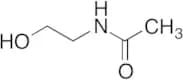
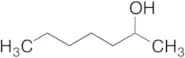
CAS:<p>Applications N-Acetylethanolamine can be used as an antistatic agent, foam boosting agent, hair conditioning humectant, skin conditioning surfactant and viscosity controlling agent in cosmetics industry. It is a non-tacky glycerine alternative for use in skin and hair care.<br>References Hough, L., et al.: J. Chem. Soc., 7923994-3997 (1957); Auzanneau, F-I, et al.: J. Chem. Soc., 10, 2831-2834 (1990);<br></p>Formula:C4H9NO2Purity:~90%Color and Shape:NeatMolecular weight:103.12(±)-2-Heptanol
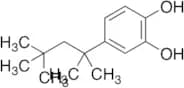
CAS:Controlled Product<p>Applications (±)-2-Heptanol, is a volatile components of various plants, and can be used as flavor and fragrance ingredients. It can also be used as building block used for the synthesis of various chemicals, such as direct synthesis of pyridines and quinolines.<br> Not a dangerous good if item is equal to or less than 1g/ml and there is less than 100g/ml in the package<br>References Gutierrez, D., et al.: Revista Colombiana de Quimica, 39 (3), 389 (2010); Srimani, D., et al.: Chem. Commu., 49 (59), 6632 (2013);<br></p>Formula:C7H16OColor and Shape:NeatMolecular weight:116.204-(2,4,4-Trimethylpentan-2-yl)benzene-1,2-diol
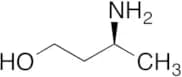
CAS:Controlled Product<p>Applications 4-(2,4,4-trimethylpentan-2-yl)benzene-1,2-diol (cas# 1139-46-4) is a useful research chemical.<br></p>Formula:C14H22O2Color and Shape:NeatMolecular weight:222.32(S)-3-Aminobutan-1-ol
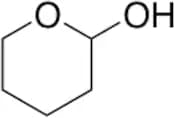
CAS:Controlled Product<p>Applications (S)-3-Aminobutan-1-ol can be used as an intermediate in the preparation of compounds having HIV integrase inhibitory activity.<br>References Johns, B. et al.: J. Med. Chem., 56, 5901 (2013);<br></p>Formula:C4H11NOColor and Shape:NeatMolecular weight:89.14Tetrahydro-2H-pyran-2-ol, >90%
CAS:Controlled Product<p>Applications Tetrahydro-2H-pyran-2-ol (cas# 694-54-2) is a useful research chemical.<br></p>Formula:C5H10O2Purity:>90%Color and Shape:NeatMolecular weight:102.13(3R,3aR,6aS)-Hexahydrofuro[2,3-b]furan-3-ol
CAS:Controlled ProductFormula:C6H10O3Color and Shape:NeatMolecular weight:130.142(2E,4E,6E)-2,4,6-Nonatrien-1-ol
CAS:Controlled Product<p>Applications (2E,4E,6E)-2,4,6-Nonatrien-1-ol is an intermediate in the synthesis of (2E,4E,6E)-2,4,6-Nonatrienal which is an unsaturated aldehyde that is a natural volatile constituent of aggregation pheromones produced by male flea beetles. (2E,4E,6E)-2,4,6-Nonatrienal is also found in licorice root, one of the widely used herbs for its<br>References Zilkowski, B., et al.: J. Agr. Food Chem., 56, 4982 (2008)<br></p>Formula:C29H37N3O6Color and Shape:NeatMolecular weight:523.621(1S,2S)-(+)-2-Amino-1-phenyl-1,3-propanediol
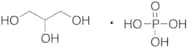
CAS:Controlled ProductFormula:C9H13NO2Color and Shape:NeatMolecular weight:167.205Glycerol Phosphate
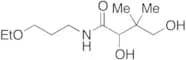
CAS:Controlled Product<p>Applications Glycerol is used both in sample preparation and gel formation for polyacrylamide gel electrophoresis. Glycerol (5-10%) increases the density of a sample so that the sample will layer at the bottom of a gel’s sample well. Glycerol is also used to aid in casting gradient gels and as a protein stabilizer and storage buffer component.<br>References Bartsch, W., et al.: Arzeim.-Forsch., 26, 1581 (1976)<br></p>Formula:C3H11O7PColor and Shape:NeatMolecular weight:190.09DL-Ethyl-panthenol
CAS:Controlled ProductFormula:C11H23NO4Color and Shape:NeatMolecular weight:233.30(1R,2R)-trans-1,2-Cyclopentanediol
CAS:Controlled ProductFormula:C5H10O2Color and Shape:NeatMolecular weight:102.1322-Butyl-1-octadecanol
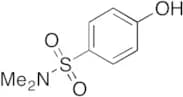
CAS:Controlled ProductFormula:C22H46OColor and Shape:NeatMolecular weight:326.64-Dimethylsulfamoylphenol
CAS:Controlled ProductFormula:C8H11NO3SColor and Shape:NeatMolecular weight:201.243N-(Trifluoroacetyl)hexanolamine
CAS:Controlled Product<p>Applications N-(Trifluoroacetyl)hexanolamine (cas# 40248-34-8) is a compound useful in organic synthesis.<br></p>Formula:C8H14F3NO2Color and Shape:NeatMolecular weight:213.202-(Furan-3-yl)ethanol
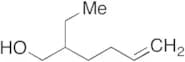
CAS:Controlled ProductFormula:C6H8O2Color and Shape:NeatMolecular weight:112.1262-Ethyl-5-hexen-1-ol
CAS:Controlled Product<p>Applications 2-Ethyl-5-hexen-1-ol is used in the synthesis of phthalates as endocrine disrupters.<br>References Nuti, F., et al.: Bioorg. Med. Chem., 13, 3461 (2005); Zlotorzynska, M., et al.: J. Org. Chem., 75, 864 (2010);<br></p>Formula:C8H16OColor and Shape:NeatMolecular weight:128.212-Picoline-3-ethanol
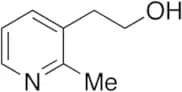
CAS:Controlled Product<p>Applications Used in the preparation of pyridine analogues of vitamin B1.<br>References Tracy, A. & Elderfield, R.; J. Org. Chem., 6, 54 (1941); Tracy, A. & Elderfield, R.; Science, 92, 180 (1940)<br></p>Formula:C8H11NOColor and Shape:NeatMolecular weight:137.18






![2-[(3-Phenoxyphenyl)methylene]-2H-1,4-benzothiazin-3(4H)-one](/_next/image/?url=https%3A%2Fstatic.cymitquimica.com%2Fproducts%2F3D%2Fthumb-webp%2FFP169832.webp&w=3840&q=75)





![2-{[2-(Dimethylamino)ethyl]methylamino}ethanol](/_next/image/?url=https%3A%2Fstatic.cymitquimica.com%2Fproducts%2FTR%2Fthumb-webp%2FD474080.webp&w=3840&q=75)
![[4-(Trimethylammonium)benzyl] Alcohol Bromide](/_next/image/?url=https%3A%2Fstatic.cymitquimica.com%2Fproducts%2FTR%2Fthumb-webp%2FT795775.webp&w=3840&q=75)

![Benzo[c]isothiazol-5-ylmethanol](/_next/image/?url=https%3A%2Fstatic.cymitquimica.com%2Fproducts%2FTR%2Fthumb-webp%2FB300303.webp&w=3840&q=75)











![trans-Benzo[a]pyrene-4,5-dihydrodiol](/_next/image/?url=https%3A%2Fstatic.cymitquimica.com%2Fproducts%2FTR%2Fthumb-webp%2FB205830.webp&w=3840&q=75)


![[1-(4-Bromophenyl)cyclopropyl]methanol](/_next/image/?url=https%3A%2Fstatic.cymitquimica.com%2Fproducts%2FTR%2Fthumb-webp%2FB686480.webp&w=3840&q=75)


![1-[(1E)-1-(Hydroxyimino)-3-phenylpropyl]cyclohexan-1-ol](/_next/image/?url=https%3A%2Fstatic.cymitquimica.com%2Fproducts%2FTR%2Fthumb-webp%2FE141721.webp&w=3840&q=75)


![2-[(Tributylstannyl)methyl]-2-propen-1-ol](/_next/image/?url=https%3A%2Fstatic.cymitquimica.com%2Fproducts%2FTR%2Fthumb-webp%2FT773200.webp&w=3840&q=75)

![7N-[1-(2-Carboxy)ethyl]allopurinol](/_next/image/?url=https%3A%2Fstatic.cymitquimica.com%2Fproducts%2FTR%2Fthumb-webp%2FC177940.webp&w=3840&q=75)


![2-[(7-Nitro-2,1,3-benzoxadiazol-4-yl)amino]ethanethiol](/_next/image/?url=https%3A%2Fstatic.cymitquimica.com%2Fproducts%2FTR%2Fthumb-webp%2FN493585.webp&w=3840&q=75)





![3-[(Dimethylamino)carbonyl]phenol](/_next/image/?url=https%3A%2Fstatic.cymitquimica.com%2Fproducts%2FTR%2Fthumb-webp%2FD461635.webp&w=3840&q=75)




![(1R,2R)-1-[(3,4-dimethoxyphenyl)methyl]-1,2,3,4-tetrahydro-6,7-dimethoxy-2-(3-me…](/_next/image/?url=https%3A%2Fstatic.cymitquimica.com%2Fproducts%2FTR%2Fthumb-webp%2FB535628.webp&w=3840&q=75)


![(3R,3aR,6aS)-Hexahydrofuro[2,3-b]furan-3-ol](/_next/image/?url=https%3A%2Fstatic.cymitquimica.com%2Fproducts%2FTR%2Fthumb-webp%2FH293985.webp&w=3840&q=75)