Alcohols
Alcohols are a wide range of organic molecules derived from hydrocarbons that contain one or more hydroxyl groups (OH group). These compounds are essential in various chemical reactions and are widely used in laboratory settings for synthesis, as solvents, and in analytical chemistry. At CymitQuimica, we offer high-quality alcohols prepared for laboratory use, supporting your research and industrial applications with reliable and effective products. Our selection ensures you have the right alcohols for your specific needs, whether for routine laboratory work or specialized research projects.
Subcategories of "Alcohols"
Found 5814 products of "Alcohols"
Sort by
Purity (%)
0
100
|
0
|
50
|
90
|
95
|
100
3-Hydroxy-1-methylpiperidine
CAS:Formula:C6H13NOPurity:95%+Color and Shape:LiquidMolecular weight:115.1735Ref: IN-DA00BY8O
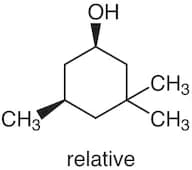
Discontinued productcis-3,3,5-Trimethylcyclohexanol
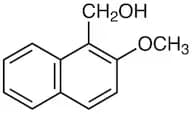
CAS:Formula:C9H18OPurity:>96.0%(GC)Color and Shape:White or Colorless to Almost white or Almost colorless powder to lump to clear liquidMolecular weight:142.242-Methoxy-1-naphthalenemethanol
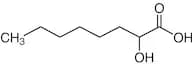
CAS:Formula:C12H12O2Purity:>98.0%(GC)Color and Shape:White to Light yellow to Dark green powder to crystalMolecular weight:188.232-Hydroxy-n-octanoic Acid
CAS:Formula:C8H16O3Purity:>98.0%(T)Color and Shape:White to Almost white powder to crystalMolecular weight:160.21cis-2-Nonen-1-ol
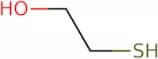
CAS:Formula:C9H18OPurity:>95.0%(GC)Color and Shape:Colorless to Light yellow clear liquidMolecular weight:142.242-Mercaptoethanol
CAS:<p>2-Mercaptoethanol, also known as β-mercaptoethanol or β-ME, is a disulfide reducing agent used in the reduction of disulfide bridges in proteins. β-ME is conveniently inexpensive, water-soluble and must be used in excess in order to drive the reduction to completion.</p>Formula:C2H6SOPurity:Min. 98 Area-%Color and Shape:Clear LiquidMolecular weight:78.13 g/molRef: 3D-FM46173
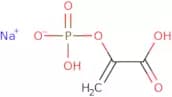
Discontinued productPhosphoenolpyruvate monosodium salt hydrate
CAS:<p>PEP is a "high-energy phosphate" compound playing a vital role in enzymatic phosphate-transfer reactions involved in ATP synthesis. It is used in conjunction with pyruvate kinase as a phosphorylating agent for ATP generation. Substrate for phosphoenolpyruvate carboxylase. Reagent for determination of glycerol.</p>Formula:C3H4NaO6P·xH2OPurity:Min. 95%Color and Shape:PowderMolecular weight:190.02 g/molRef: 3D-FP29995
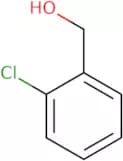
Discontinued product2-Chlorobenzyl alcohol
CAS:<p>2-Chlorobenzyl alcohol is a chemical compound that is used to synthesize other compounds. It is produced by the reaction of ethyl formate and hydrogen chloride in a reaction vessel. It reacts with benzoates to produce 2-chlorobenzoates, which are used as intermediates in the synthesis of pharmaceuticals. Hydroxyl groups can react with hydrogen fluoride to produce hydrofluoric acid, which is used as an industrial solvent. 2-Chlorobenzyl alcohol also reacts with hydroxide ions to produce ethylene glycol, which is used in making polyester fibers and plastics. This chemical compound has structural studies that show it has a proton and two hydroxyl groups that can react with hydrogen bond. Hydrogen bonds are important for the stability of DNA structures. The molecular structures of velvetleaf plants contain 2-chlorobenzyl alcohol, which may be due to its role in transferring oxygen from leaves to roots for respiration during</p>Formula:C7H7ClOPurity:Min. 95%Color and Shape:PowderMolecular weight:142.58 g/molRef: 3D-FC46928
Discontinued product2-Mesitylethanol
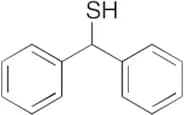
CAS:Formula:C11H16OPurity:>98.0%(GC)Color and Shape:White to Almost white powder to crystalMolecular weight:164.25Diphenylmethanethiol
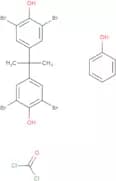
CAS:Controlled ProductFormula:C13H12SColor and Shape:NeatMolecular weight:200.299PHenoxy terminated carbonate oligomer of tetrabispHenol A
CAS:Controlled Product<p>Phenoxy-terminated carbonate oligomer of tetrabispHenol A (PCO-TBA) is a chemical that has been used as an additive in the food industry. It is a colorless, odorless solid. PCO-TBA has been shown to be toxic to humans by causing organ damage and cancer. The toxicity of PCO-TBA may be due to its ability to form polyhalogenated dibenzodioxins or biphenyls when heated at high temperatures. PCO-TBA also reacts with human serum, forming diphenyl ethers. This chemical is a potential carcinogen and, although used as a food additive, should not be consumed on a regular basis.</p>Purity:Min. 95%Color and Shape:PowderMolecular weight:736.90 g/molRef: 3D-FP39597
Discontinued product2-Diethylamino)ethanol hydrochloride
CAS:Controlled Product<p>2-Diethylamino)ethanol hydrochloride is a chemical compound that is used in analytical chemistry as a stationary phase for thin layer chromatography. Sephadex G-100 was developed by Pharmacia & Upjohn Company and marketed in the 1970s. It has been shown to be useful in plasma mass spectrometry experiments, which measure the molecular weight of proteins and other compounds. The solubility of 2-diethylamino)ethanol hydrochloride has been studied using experimental solubility data, electrochemical impedance spectroscopy, and amines. The reaction mechanism of 2-diethylamino)ethanol hydrochloride is not well understood but it appears to involve potassium dichromate, hydrochloric acid, fluoroacetic acid, benzalkonium chloride and other chemicals.</p>Formula:C6H16ClNOPurity:Min. 95%Molecular weight:153.65 g/molRef: 3D-FD21828
Discontinued product