Amines
Amines are a set of molecules containing an amino functional group (derived from ammonia). This category includes amines at any level of substitution : primary, secondary, tertiary, and ammonium salts. Amines are fundamental in organic synthesis and are widely used in pharmaceuticals, agrochemicals, and materials science. At CymitQuimica, we provide a comprehensive selection of amines to meet your research and industrial needs. Our range ensures access to various amines for diverse chemical processes and innovative research.
Subcategories of "Amines"
- Nitrosamines(2,605 products)
- Primary Amines(30,821 products)
- Quaternary Ammonium Cations and Salts(1,099 products)
- Secondary Amines(20,817 products)
- Tertiary Amines(17,117 products)
Found 8778 products of "Amines"
Sort by
Purity (%)
0
100
|
0
|
50
|
90
|
95
|
100
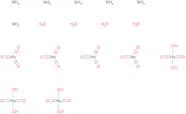
Ammonium molybdate tetrahydrate - ACS
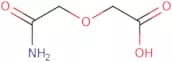
CAS:<p>Ammonium molybdate tetrahydrate (AMT) is a molybdenum compound with the chemical formula (NH4)6Mo7O24·4H2O. It is a yellow crystalline solid that is soluble in water and n-hexane. AMT has been clinically used for the treatment of Wilson's disease, an inherited disorder that causes copper to accumulate in the body. AMT binds to copper ions and prevents them from being absorbed into the bloodstream. The rate of ATP production increases when AMT is added to cells, which may be due to its effect on electron transport or because it inhibits ATPase activity.</p>Formula:(NH4)6Mo7O24•(H2O)4Purity:Min. 95%Color and Shape:White Clear LiquidMolecular weight:1,236 g/mol(2-Amino-2-oxoethoxy)acetic acid
CAS:<p>2-Amino-2-oxoethoxy)acetic acid is a product that can be used as a transport agent in the process of extracting glycosides. It has been shown to have strong adsorption properties and is able to extract glycosides from plant material. 2-Amino-2-oxoethoxy)acetic acid has a high affinity for calcium, which is an important component in the adsorption mechanism.</p>Formula:C4H7NO4Purity:Min. 95%Molecular weight:133.1 g/molTetrabutylammonium fluoride trihydrate
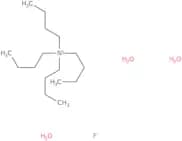
CAS:<p>Tetrabutylammonium fluoride trihydrate is an aromatic hydrocarbon with a hydroxyl group. It is soluble in water and has a strong inhibitory effect on chain reactions. Tetrabutylammonium fluoride trihydrate can be used to inhibit the oxidation of quinoline derivatives that are used as drugs or pesticides. It also has an inhibitory effect on thermodynamic data such as the heat of vaporization, heat capacity, and entropy. The addition of trifluoroacetic acid to an organic solution containing hydrogen bonding interactions increases the solubility of tetrabutylammonium fluoride trihydrate in the organic solutions.</p>Formula:C16H36FN•(H2O)3Purity:Min. 95%Color and Shape:PowderMolecular weight:315.51 g/mol4-Amino-3,5,6-trichloropyridine-2-carboxylic acid
CAS:<p>4-Amino-3,5,6-trichloropyridine-2-carboxylic acid (4ATC) is a herbicide that inhibits the activity of pyridoxal phosphate (PLP)-dependent enzymes. 4ATC has been shown to be more toxic to plants than temozolomide and is used in vitro to study the effects of herbicides on cells. It inhibits cell growth and induces apoptosis in human cancer cells. In addition, 4ATC has been shown to inhibit the enzyme activities of group P2 proteins and nucleic acid synthesis. 4ATC also inhibits protein synthesis by inhibiting RNA synthesis in eukaryotic cells. 4ATC is not active against bacteria or fungi.</p>Formula:C6H3Cl3N2O2Purity:Min. 95%Color and Shape:White To Tan SolidMolecular weight:241.46 g/mol2-(Boc-Aminomethyl)pyrrolidine
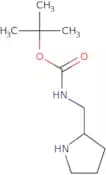
CAS:<p>Please enquire for more information about 2-(Boc-Aminomethyl)pyrrolidine including the price, delivery time and more detailed product information at the technical inquiry form on this page</p>Formula:C10H20N2O2Purity:Min. 95%Molecular weight:200.28 g/mol5-Bromo-2-dimethylaminopyridine
CAS:Controlled Product<p>Please enquire for more information about 5-Bromo-2-dimethylaminopyridine including the price, delivery time and more detailed product information at the technical inquiry form on this page</p>Formula:C7H9BrN2Purity:Min. 95%Molecular weight:201.01 g/mol7-Amino-3-vinyl-3-cephem-4-carboxylic acid
CAS:<p>7-Amino-3-vinyl-3-cephem-4-carboxylic acid (AVC) is a synthetic, inorganic acid that is used clinically. It is produced by the hydrolysis of chlorocarboxylic acids and has been shown to be effective as an antihypertensive agent. AVC has also been used as a catalyst for acylation reactions with chlorides and trifluoroacetic acid. This process yields a reaction yield that can be up to 95% with the use of catalysts such as aluminum chloride or zinc chloride. AVC has been shown to be an environmentally safe alternative to hydrogen chloride, which has been linked to environmental pollution.</p>Formula:C9H10N2O3SPurity:Min. 95 Area-%Color and Shape:PowderMolecular weight:226.25 g/molBoc-trans-4-aminocyclohexane acetic acid
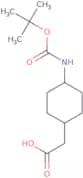
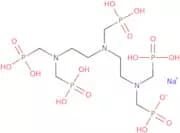
CAS:<p>Please enquire for more information about Boc-trans-4-aminocyclohexane acetic acid including the price, delivery time and more detailed product information at the technical inquiry form on this page</p>Formula:C13H23NO4Molecular weight:257.33 g/molDiethylenetriaminepenta(methylenephosphonic acid) sodiumsalt
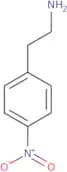
CAS:<p>Diethylenetriaminepenta(methylenephosphonic acid) sodium salt (DTPMP) is a substance that can be found in the environment. It is toxic to living organisms and may cause toxic effects if it is swallowed or inhaled. DTPMP has been classified as a toxic substance by the United States Environmental Protection Agency (EPA).</p>Formula:C9H18N3Na10O15P5Purity:Min. 95%Color and Shape:LiquidMolecular weight:793.02 g/mol4-Nitrophenethylamine
CAS:Controlled Product<p>4-Nitrophenethylamine is a synthetic chemical that is used as an antigen to raise antibodies. It is used in the detection of chemical substances that are associated with the production of histamine and acetylcholine. This chemical has been shown to inhibit the reaction between nitro and acylation, which can lead to the formation of carcinogenic nitrosamines. 4-Nitrophenethylamine also has an inhibitory effect on oxidases and amines, which are enzymes found in cells. This chemical binds to amide groups in proteins and inhibits their activity.</p>Formula:C8H10N2O2Purity:Min. 95%Color and Shape:LiquidMolecular weight:166.18 g/mol(Nle 35)-Amyloid b-Protein (1-42) ammonium salt
CAS:<p>Please enquire for more information about (Nle 35)-Amyloid b-Protein (1-42) ammonium salt including the price, delivery time and more detailed product information at the technical inquiry form on this page</p>Formula:C204H313N55O60Purity:Min. 95%Molecular weight:4,496 g/mol4-[2-(Fmoc-amino)ethyl]-1-piperazineacetic acid dihydrochloride
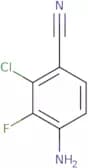
CAS:<p>Please enquire for more information about 4-[2-(Fmoc-amino)ethyl]-1-piperazineacetic acid dihydrochloride including the price, delivery time and more detailed product information at the technical inquiry form on this page</p>Formula:C23H27N3O4•2HClPurity:Min. 95%Color and Shape:PowderMolecular weight:482.4 g/mol4-Amino-2-chloro-3-fluorobenzonitrile
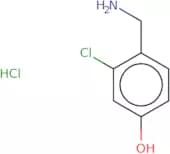
CAS:<p>Please enquire for more information about 4-Amino-2-chloro-3-fluorobenzonitrile including the price, delivery time and more detailed product information at the technical inquiry form on this page</p>Formula:C7H4ClFN2Purity:Min. 95%Molecular weight:170.57 g/mol2-Chloro-4-hydroxybenzylamine hydrochloride
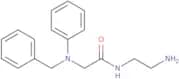
CAS:<p>2-Chloro-4-hydroxybenzylamine hydrochloride is a versatile chemical that can be used as a reaction component, reagent, or useful scaffold in the synthesis of many organic compounds. It has a CAS number of 2418727-24-7 and is a fine chemical. This compound has been shown to be useful in the manufacture of other chemical products such as pharmaceuticals, pesticides, and dyestuffs.</p>Formula:C7H8ClNO·HClPurity:Min. 95%Color and Shape:Brown PowderMolecular weight:194.06 g/molN-(2-Amino-ethyl)-2-(benzyl-phenyl-amino)-acetamide
CAS:<p>Please enquire for more information about N-(2-Amino-ethyl)-2-(benzyl-phenyl-amino)-acetamide including the price, delivery time and more detailed product information at the technical inquiry form on this page</p>Formula:C17H21N3OPurity:Min. 95%Color and Shape:White PowderMolecular weight:283.37 g/molEthyl 4-amino-2-mercaptopyrimidine-5-carboxylate
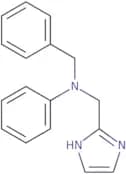
CAS:<p>Please enquire for more information about Ethyl 4-amino-2-mercaptopyrimidine-5-carboxylate including the price, delivery time and more detailed product information at the technical inquiry form on this page</p>Formula:C7H9N3O2SPurity:Min. 95%Molecular weight:199.23 g/mol2-(N-Phenyl-N-benzyl-aminomethyl)-imidazol
CAS:<p>Please enquire for more information about 2-(N-Phenyl-N-benzyl-aminomethyl)-imidazol including the price, delivery time and more detailed product information at the technical inquiry form on this page</p>Formula:C17H17N3Purity:Min. 95%Molecular weight:263.34 g/mol3-[(2-Aminoethyl)dithio]propionic acid
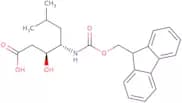
CAS:<p>Dithiobis(3-mercaptopropionate) is an analog of 3-[(2-Aminoethyl)dithio]propionic acid (DTA). It has been used as a cross-linking agent for the synthesis of polymers with acidic pH. Dithiobis(3-mercaptopropionate) is also used for the synthesis of conjugates and bifunctional molecules. Dithiobis(3-mercaptopropionate) can be synthesized by reacting bis(sulfanylmethyl)amine with sodium azide in an acidic solution. The cross-linking reaction will produce a disulfide bond, which is a covalent linkage between two cysteine residues in two different polypeptides or proteins. This crosslink is irreversible, so it cannot be broken down by chemical processes, but can be broken down by enzymatic digestion.</p>Formula:C5H11NO2S2Purity:(%) Min. 95%Color and Shape:PowderMolecular weight:181.28 g/molFmoc-(3S,4S)-4-amino-3-hydroxy-6-methylheptanoic acid
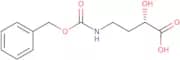
CAS:<p>Fmoc-(3S,4S)-4-amino-3-hydroxy-6-methylheptanoic acid is a pharmacokinetic drug that is under investigation for prostate cancer. It has been shown to inhibit the growth of prostate carcinoma cells and reduce the expression of prostate specific antigen (PSA) in vivo. Fmoc-(3S,4S)-4-amino-3-hydroxy-6-methylheptanoic acid has also been used in bioconjugate chemistry to produce a prodrug that can be taken orally. This prodrug is activated by viral proteases in the stomach, leading to an increase in cytotoxicity against HIV virus and other retroviruses. Fmoc-(3S,4S)-4-amino-3-hydroxy-6-methylheptanoic acid has also been shown to inhibit the production of human serum erythropoietin (EPO).</p>Formula:C23H27NO5Purity:Min. 95%Color and Shape:White To Off-White SolidMolecular weight:397.46 g/mol(S)-N-Carbobenzyloxy-4-amino-2-hydroxybutyric acid
CAS:<p>(S)-N-Carbobenzyloxy-4-amino-2-hydroxybutyric acid is a benzene ring with a carboxylic acid group. It has the ability to modify polylactic acid, polycarbonate, and other polymers. The chain can be modified to include amino groups or antibacterial groups. (S)-N-Carbobenzyloxy-4-amino-2-hydroxybutyric acid also has antibacterial properties and is compatible with polylactic acid, which makes it ideal for use in polymer modifications.</p>Formula:C12H15NO5Purity:Min. 95%Molecular weight:253.25 g/mol




![4-[2-(Fmoc-amino)ethyl]-1-piperazineacetic acid dihydrochloride](/_next/image/?url=https%3A%2Fstatic.cymitquimica.com%2Fproducts%2F3D%2Fthumb-webp%2FFF48264.webp&w=3840&q=75)

![3-[(2-Aminoethyl)dithio]propionic acid](/_next/image/?url=https%3A%2Fstatic.cymitquimica.com%2Fproducts%2F3D%2Fthumb-webp%2FFA17745.webp&w=3840&q=75)