


Amines
Amines are a set of molecules containing an amino functional group (derived from ammonia). This category includes amines at any level of substitution : primary, secondary, tertiary, and ammonium salts. Amines are fundamental in organic synthesis and are widely used in pharmaceuticals, agrochemicals, and materials science. At CymitQuimica, we provide a comprehensive selection of amines to meet your research and industrial needs. Our range ensures access to various amines for diverse chemical processes and innovative research.
Subcategories of "Amines"
- Nitrosamines(2,605 products)
- Primary Amines(30,821 products)
- Quaternary Ammonium Cations and Salts(1,099 products)
- Secondary Amines(20,817 products)
- Tertiary Amines(17,117 products)
Found 8778 products of "Amines"
Sort by
Purity (%)
0
100
|
0
|
50
|
90
|
95
|
100
tert-Butyl6-[(1e)-2-[4-(4-fluorophenyl)-6-(1-methylethyl)-2-[methyl(methylsulfonyl)amino]-5-pyrimidinyl]ethenyl]-2,2-dimethyl-1,3-di oxane-4-acetate
CAS:<p>Please enquire for more information about tert-Butyl6-[(1e)-2-[4-(4-fluorophenyl)-6-(1-methylethyl)-2-[methyl(methylsulfonyl)amino]-5-pyrimidinyl]ethenyl]-2,2-dimethyl-1,3-di oxane-4-acetate including the price, delivery time and more detailed product information at the technical inquiry form on this page</p>Formula:C29H40FN3O6SPurity:Min. 95%Molecular weight:577.71 g/molTCO-amine hydrochloride
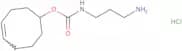
CAS:<p>Please enquire for more information about TCO-amine hydrochloride including the price, delivery time and more detailed product information at the technical inquiry form on this page</p>Formula:C12H22N2O2•HClPurity:Min. 95%Color and Shape:PowderMolecular weight:262.78 g/mol3,5-Dimethyl-4H-1,2,4-triazol-4-amine
CAS:<p>3,5-Dimethyl-4H-1,2,4-triazol-4-amine is a crystalline compound with antiproliferative and anti-inflammatory properties. It has been shown to inhibit the growth of cancer cells in vitro and in vivo. The mechanism of action is not fully understood but may be due to inhibition of DNA synthesis or by inhibiting the activity of topoisomerase II. 3,5-Dimethyl-4H-1,2,4-triazol-4-amine can also act as an antioxidant by scavenging reactive oxygen species (ROS). 3,5-Dimethyl-4H-1,2,4-triazol-4-amine has been shown to have a low toxicity in animals and humans.</p>Formula:C4H8N4Purity:Min. 95%Molecular weight:112.13 g/mol4,6-Dichloro-pyridin-3-ylamine
CAS:<p>Please enquire for more information about 4,6-Dichloro-pyridin-3-ylamine including the price, delivery time and more detailed product information at the technical inquiry form on this page</p>Formula:C5H4Cl2N2Purity:Min. 95%Color and Shape:PowderMolecular weight:163 g/molChloramine T trihydrate
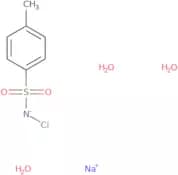
CAS:<p>Chloramine T trihydrate is a water-soluble and biodegradable chemical that is used in wastewater treatment. It reacts with chloramines to produce chloramine, which has a higher disinfectant potential than chlorine. Chloramine T trihydrate also has antimicrobial properties and can be used to control microbial growth in biological samples. In addition, it can inhibit the activity of certain enzymes, such as aziridination, which is involved in the production of nitrosamines and nitric oxide. The matrix effect for chloramine-t may be different from other antimicrobial agents because it does not have a high affinity for proteins. It was found that benzalkonium chloride had an inhibitory effect on chloramine-t activity.<br>MECHANISM OF ACTION: Chloramine T trihydrate is an oxidizing agent that reacts with organic matter to form chloramines and other oxidized products. When these reactions occur in the presence of water or organic material,</p>Formula:C7H7ClNNaO2S•(H2O)3Purity:Min. 98 Area-%Color and Shape:PowderMolecular weight:282.7 g/molAminoguanidine hydrochloride
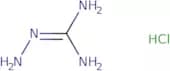
CAS:<p>Aminoguanidine hydrochloride is a basic compound that can be used as an anti-inflammatory drug. It has been shown to have a hypoglycemic effect, which may be due to its ability to increase the activity of glutathione peroxidase and glutathione reductase in experimental models. Aminoguanidine hydrochloride also inhibits the production of inflammatory cytokines such as TNF-α, IL-1β and IL-6. Experiments with transfected cells have shown that aminoguanidine hydrochloride induces neuronal death, which may be due to its ability to inhibit protein synthesis by interfering with ribosomal function.</p>Formula:CH6N4·HClPurity:Min. 95%Color and Shape:White PowderMolecular weight:110.55 g/mol2-(Aminomethyl)-2-methyl-1,3-propanediamine trihydrochloride
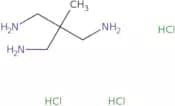
CAS:<p>Please enquire for more information about 2-(Aminomethyl)-2-methyl-1,3-propanediamine trihydrochloride including the price, delivery time and more detailed product information at the technical inquiry form on this page</p>Formula:C5H15N3•(HCl)3Purity:Min. 95%Color and Shape:PowderMolecular weight:226.57 g/mol4-Aminobenzocyclobutene
CAS:<p>4-Aminobenzocyclobutene is a monomer that can be used as a crosslinker. It has been shown to have magnetic properties and is soluble in organic solvents such as dioxane and dichloromethane. 4-Aminobenzocyclobutene readily reacts with paraformaldehyde to form the corresponding paraformaldehyde resin, which is insoluble in water and can be used for the preparation of coatings or adhesives. The hydrosilylation reaction between 4-aminobenzocyclobutene and 3-chloropropyl trimethoxysilane leads to the formation of an aminosilane resin, which exhibits a low water absorption rate and high thermal expansion coefficient. This material can also be used for coating or adhesive applications.</p>Formula:C8H7NPurity:Min. 95%Molecular weight:117.15 g/mol4-Piperidylformylaminomethyl resin (200-400 mesh)
<p>Please enquire for more information about 4-Piperidylformylaminomethyl resin (200-400 mesh) including the price, delivery time and more detailed product information at the technical inquiry form on this page</p>Purity:Min. 95%Color and Shape:SolidL-2,3-Diaminopropionicacid
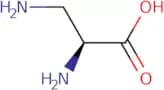
CAS:<p>L-2,3-Diaminopropionic acid is a diamine with an asymmetric carbon atom. It has been used to synthesize antimicrobial peptides and has also shown hemolytic activity in vitro. L-2,3-Diaminopropionic acid is stable when exposed to water vapor, which may make it useful for the treatment of cancer tissues. This molecule has been shown to have significant cytotoxicity against human leukemia cells and is able to inhibit the growth of various bacteria by inhibiting protein synthesis in the ribosome. L-2,3-Diaminopropionic acid also inhibits the enzyme enolase and reduces the production of ATP in cells.</p>Formula:C3H8N2O2Purity:Min. 95%Molecular weight:104.11 g/molTetraethylammonium bromide
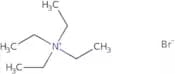
CAS:<p>Tetraethylammonium bromide is an ionic liquid that has a low viscosity and high water solubility. It is used as an antimicrobial agent in the process of producing polymers, such as polyurethane. Tetraethylammonium bromide has been shown to be effective against a broad range of bacteria, including Bacillus subtilis and Escherichia coli. It has also been shown to have a protective effect on neurons by preventing neuronal death in response to oxidative stress. This protection may be due to its ability to increase the concentration of cytosolic Ca2+ ions, which are involved in neuronal survival pathways.</p>Formula:C8H20BrNPurity:Min. 95%Color and Shape:White Off-White PowderMolecular weight:210.16 g/molN,N'-Ethane-1,2-diylidenebis(2-methylpropan-2-amine)
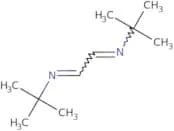
CAS:<p>Please enquire for more information about N,N'-Ethane-1,2-diylidenebis(2-methylpropan-2-amine) including the price, delivery time and more detailed product information at the technical inquiry form on this page</p>Formula:C10H20N2Purity:Min. 95%Color and Shape:PowderMolecular weight:168.28 g/moltrans-1,2-Diaminocyclohexane-N,N,N',N'-tetraacetic acid monohydrate
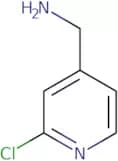
CAS:<p>Trans-1,2-Diaminocyclohexane-N,N,N',N'-tetraacetic acid monohydrate (CDTA) is a chelating agent that has been shown to be effective in the treatment of some cancers. CDTA has been shown to inhibit the growth of tumor cells by binding to lysine residues on histones and DNA and inhibiting their acetylation. CDTA also prevents the genotoxicity induced by irradiation. CDTA can be used as an adjuvant in cancer therapy due to its ability to inhibit histone deacetylase activity. Trans-1,2-Diaminocyclohexane-N,N,N',N'-tetraacetic acid monohydrate is synthesized from two amino acids: lysine and glutamic acid. This molecule is a polymeric compound composed of cyclic molecules linked together through amide bonds. These polymers are linear chains of</p>Formula:C14H22N2O8·H2OColor and Shape:White PowderMolecular weight:364.35 g/mol(2-Chloropyridin-4-yl)methanamine
CAS:<p>2-Chloropyridin-4-yl)methanamine is a hydrogenated molecule that has been shown to inhibit the activity of certain cancer cells. It inhibits the expression of the enzyme molecules involved in the synthesis of DNA and RNA. 2-Chloropyridin-4-yl)methanamine also inhibits the hydrolysis of hydrogen chloride (HCl) to produce hydrogen (H2). This drug is used as an inhibitor for medicines that require acidic pH for absorption, such as HCl.</p>Formula:C6H7ClN2Purity:Min. 95%Molecular weight:142.59 g/mol2,5-Diaminoterephthalic acid
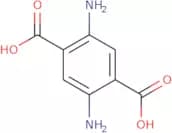
CAS:<p>2,5-Diaminoterephthalic acid is a synthetic organic compound that is used as a building block for the synthesis of polyamides. It has been shown to have high salt adsorption properties and low detection limits for certain analytes. 2,5-Diaminoterephthalic acid has also been found to have photocatalytic activity and can be used in the treatment of cancer. This chemical reacts with nitro groups on nucleophilic attack to form the carcinogenic nitrosamine. The formation rate of this nitrosamine depends on the presence of methoxy groups and nitrogen atoms in 2,5-diaminoterephthalic acid.</p>Formula:C8H8N2O4Purity:Min. 95%Molecular weight:196.16 g/molO-(2-Aminoethyl)-O’-(2-azidoethyl)triethylene glycol
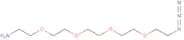
CAS:<p>O-(2-Aminoethyl)-O’-(2-azidoethyl)triethylene glycol is a programmed cell death inducer that belongs to the family of adp-ribose signaling molecules. It is active in inducing apoptosis and cellular death in both cancer cells and noncancerous cells. This molecule has been shown to be cytotoxic against breast cancer cells from MDA-MB-231 cell lines and also induces apoptosis in these cells.</p>Formula:C10H22N4O4Purity:Min. 96%Color and Shape:Colorless Slightly Yellow Clear LiquidMolecular weight:262.31 g/mol(S)-3-Amino-3-(4-chlorophenyl)-propan-1-ol
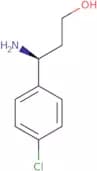
CAS:<p>Please enquire for more information about (S)-3-Amino-3-(4-chlorophenyl)-propan-1-ol including the price, delivery time and more detailed product information at the technical inquiry form on this page</p>Formula:C9H12ClNOPurity:Min. 95%Molecular weight:185.65 g/molDL-3-Amino-3-phenylpropionic acid
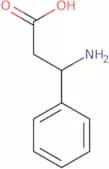
CAS:<p>DL-3-Amino-3-phenylpropionic acid is an amino acid that is synthesized by the reaction of malonic acid and ethyl ester. This compound is a competitive inhibitor of the enzyme pyruvate carboxylase and inhibits this enzyme in the conversion of pyruvic acid to acetyl CoA, which plays a key role in metabolism. DL-3-Amino-3-phenylpropionic acid has been shown to inhibit the growth of bacteria such as Escherichia coli, Salmonella typhimurium and Staphylococcus aureus. The inhibition of pyruvate carboxylase by DL-3-Amino-3-phenylpropionic acid prevents the production of acetaldehyde from pyruvate, which is toxic to cells.</p>Formula:C9H11NO2Purity:Min. 95%Molecular weight:165.19 g/mol2-Amino-6-fluorobenzoic acid ethyl ester
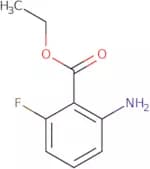
CAS:<p>2-Amino-6-fluorobenzoic acid ethyl ester is a chemical that can be used as a building block in the synthesis of more complex compounds. It is a versatile intermediate and can be used to synthesize other important compounds, such as pharmaceuticals. This compound has been shown to be useful for the preparation of 2-amino-4,6-difluorobenzoic acid ethyl ester and many other derivatives. The colorless solid is soluble in ether and dichloromethane.</p>Formula:C9H10FNO2Purity:Min. 95%Color and Shape:PowderMolecular weight:183.18 g/mol(R)-3-[((tert-Butoxy)carbonyl)amino]-4-(2,5-difluorophenyl)butanoic acid
CAS:<p>Please enquire for more information about (R)-3-[((tert-Butoxy)carbonyl)amino]-4-(2,5-difluorophenyl)butanoic acid including the price, delivery time and more detailed product information at the technical inquiry form on this page</p>Formula:C15H19F2NO4Purity:Min. 95%Molecular weight:315.31 g/mol
![tert-Butyl6-[(1e)-2-[4-(4-fluorophenyl)-6-(1-methylethyl)-2-[methyl(methylsulfonyl)amino]-5-pyrimi…](/_next/image/?url=https%3A%2Fstatic.cymitquimica.com%2Fproducts%2F3D%2Fthumb-webp%2FFB148489.webp&w=3840&q=75)





![(R)-3-[((tert-Butoxy)carbonyl)amino]-4-(2,5-difluorophenyl)butanoic acid](/_next/image/?url=https%3A%2Fstatic.cymitquimica.com%2Fproducts%2F3D%2Fthumb-webp%2FFB103971.webp&w=3840&q=75)