Amines
Amines are a set of molecules containing an amino functional group (derived from ammonia). This category includes amines at any level of substitution : primary, secondary, tertiary, and ammonium salts. Amines are fundamental in organic synthesis and are widely used in pharmaceuticals, agrochemicals, and materials science. At CymitQuimica, we provide a comprehensive selection of amines to meet your research and industrial needs. Our range ensures access to various amines for diverse chemical processes and innovative research.
Subcategories of "Amines"
- Nitrosamines(2,608 products)
- Primary Amines(30,798 products)
- Quaternary Ammonium Cations and Salts(1,099 products)
- Secondary Amines(20,785 products)
- Tertiary Amines(17,108 products)
Found 8776 products of "Amines"
Sort by
Purity (%)
0
100
|
0
|
50
|
90
|
95
|
100
Ref: 4Z-A-331106
Discontinued productRef: 4Z-A-331016
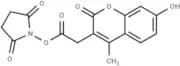
Discontinued product7-Hydroxy-4-methylcoumarin-3-acetic acid, SE
CAS:<p>7-Hydroxy-4-methylcoumarin-3-acetic acid, SE is a useful organic compound for research related to life sciences. The catalog number is T67683 and the CAS number is 96735-88-5.</p>Formula:C16H13NO7Color and Shape:SolidMolecular weight:331.28N-Cyclohexyl-6-Methoxy-2-(5-Methylfuran-2-yl)imidazo[2,1-b][1,3]benzothiazol-1-Amine
CAS:Formula:C21H23N3O2SMolecular weight:381.49Ref: 4Z-A-331070
Discontinued productRef: 4Z-A-331021
Discontinued productRef: 4Z-A-331042
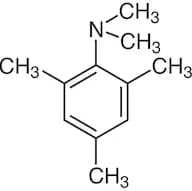
Discontinued productN,N,2,4,6-Pentamethylaniline
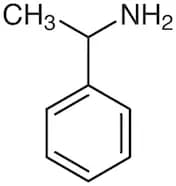
CAS:Formula:C11H17NPurity:>97.0%(GC)Color and Shape:White to Yellow to Green clear liquidMolecular weight:163.26DL-1-Phenylethylamine
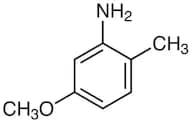
CAS:Formula:C8H11NPurity:>98.0%(GC)(T)Color and Shape:Colorless to Light yellow to Light orange clear liquidMolecular weight:121.185-Methoxy-2-methylaniline
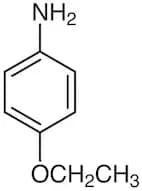
CAS:Formula:C8H11NOPurity:>98.0%(GC)(T)Color and Shape:White to Yellow to Orange powder to lumpMolecular weight:137.18p-Phenetidine
CAS:Formula:C8H11NOPurity:>98.0%(GC)Color and Shape:Colorless to Light orange to Yellow clear liquidMolecular weight:137.18Ref: 4Z-L-195036
Discontinued productRef: 4Z-A-331069
Discontinued productMonofluoroamine
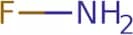
CAS:Controlled Product<p>Monofluoroamine is a chemical substance with the chemical formula NH2F. It is a colorless liquid that is stable to both acidic and basic environments, but reacts with fluorine gas to form hydrofluoric acid. Monofluoroamine is used in the synthesis of pharmaceuticals, pesticides, and other organic compounds. This compound can be prepared by reacting ammonia with hydrogen fluoride at low temperature or by reacting ammonia with hydrogen fluoride at high pressure. The Friedel-Crafts reaction of monofluoroamine with an amide produces the corresponding amine. Monofluoroamine has been used as a conditioning agent in NMR spectroscopy experiments to remove the water signal from complex NMR spectra. In addition, this compound has been shown to have antiviral effects against HIV infection through its ability to inhibit protein synthesis.</p>Formula:FH2NPurity:Min. 95%Molecular weight:35.02 g/molTryptamine hydrochloride
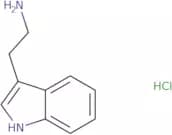
CAS:Controlled Product<p>Tryptamine hydrochloride is a tryptamine that is used in the synthesis of various drugs with antiinflammatory properties. It has been shown to be a potent and selective antagonist of 5-HT2 receptors, with a pKi value of 7.4. Tryptamine hydrochloride has also been found to have an inhibitory effect on mitochondrial membrane potential and to decrease human serum 5-HT levels at physiological doses. This drug is structurally related to serotonin, which is believed to be a cause for its antiinflammatory activity.</p>Formula:C10H12N2HClPurity:Min. 95%Color and Shape:Brown White Yellow Orange PowderMolecular weight:196.68 g/molRef: 3D-FT37087
Discontinued productDifluoroamine
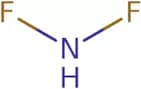
CAS:Controlled Product<p>Difluoroamine is a chemical compound that is used in the production of organic compounds. It has been shown to have high stability and detection sensitivity, which is attributed to its hydrogen bond forming ability. Difluoroamine also reacts with trifluoroacetic acid and hydrogen fluoride, both of which are strong acids. The reaction mechanism of difluoroamine involves the protonation of nitrogen atoms on the molecule followed by a nucleophilic attack on the electrophilic carbon atom that results in the formation of an amine group. This reaction can be carried out in a flow system as well as in a batch process. Difluoramine is an intermediate product during this process and can be converted into glycol ethers or nitrobenzene.</p>Formula:F2HNPurity:Min. 95%Molecular weight:53.01 g/molTryptamine
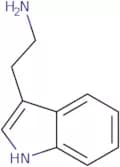
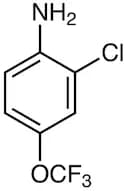
CAS:Controlled Product<p>Please enquire for more information about Tryptamine including the price, delivery time and more detailed product information at the technical inquiry form on this page</p>Formula:C10H12N2Purity:Min. 95%Color and Shape:PowderMolecular weight:160.22 g/mol2-Chloro-4-(trifluoromethoxy)aniline
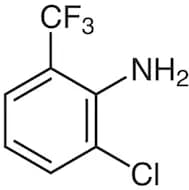
CAS:Formula:C7H5ClF3NOPurity:>97.0%(GC)(T)Color and Shape:Colorless to Light yellow to Light orange clear liquidMolecular weight:211.572-Amino-3-chlorobenzotrifluoride
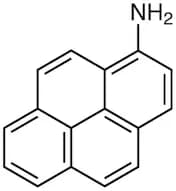
CAS:Formula:C7H5ClF3NPurity:>97.0%(GC)Color and Shape:Colorless to Almost colorless clear liquidMolecular weight:195.571-Aminopyrene (purified by sublimation)
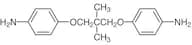
CAS:Formula:C16H11NPurity:>99.0%(T)(HPLC)Color and Shape:Light yellow to Amber to Dark green powder to crystalMolecular weight:217.27Neopentyl Glycol Bis(4-aminophenyl) Ether
CAS:Formula:C17H22N2O2Purity:>97.0%(T)Color and Shape:White to Light yellow to Light orange powder to crystalMolecular weight:286.38



![N-Cyclohexyl-6-Methoxy-2-(5-Methylfuran-2-yl)imidazo[2,1-b][1,3]benzothiazol-1-Amine](/_next/image/?url=https%3A%2Fstatic.cymitquimica.com%2Fproducts%2F4Z%2Fthumb-webp%2FA-331070.webp&w=3840&q=75)