Amines
Amines are a set of molecules containing an amino functional group (derived from ammonia). This category includes amines at any level of substitution : primary, secondary, tertiary, and ammonium salts. Amines are fundamental in organic synthesis and are widely used in pharmaceuticals, agrochemicals, and materials science. At CymitQuimica, we provide a comprehensive selection of amines to meet your research and industrial needs. Our range ensures access to various amines for diverse chemical processes and innovative research.
Subcategories of "Amines"
- Nitrosamines(2,605 products)
- Primary Amines(30,805 products)
- Quaternary Ammonium Cations and Salts(1,099 products)
- Secondary Amines(20,809 products)
- Tertiary Amines(17,111 products)
Found 8776 products of "Amines"
Sort by
Purity (%)
0
100
|
0
|
50
|
90
|
95
|
100
N,N-Dimethyl-N′-1H-pyrazol-4-ylmethanimidamide
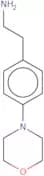
CAS:<p>2-(4-Morpholinophenyl)ethylamine is a fine chemical that is a versatile building block, useful intermediate, and research chemical. It is used in the synthesis of complex compounds, useful building blocks, and high quality reagents. The CAS registry number for 2-(4-morpholinophenyl)ethylamine is 930779-56-9.</p>Formula:C6H10N4Purity:Min. 95%Color and Shape:PowderMolecular weight:138.17 g/mol3-[2-Amino-3-(2-tert-butoxycarbonyl-ethoxy)-2-(2-tert-butoxycarbonyl-ethoxymethyl)-propoxy]-propionic acid tert-butyl ester
CAS:<p>Please enquire for more information about 3-[2-Amino-3-(2-tert-butoxycarbonyl-ethoxy)-2-(2-tert-butoxycarbonyl-ethoxymethyl)-propoxy]-propionic acid tert-butyl ester including the price, delivery time and more detailed product information at the technical inquiry form on this page</p>Formula:C25H47NO9Purity:Min. 95%Molecular weight:505.64 g/mol[[4-[[2-(4-Cyclohexylphenoxy)ethyl]ethylamino]-2-methylphenyl]methylene]malononitrile
CAS:<p>[[4-[[2-(4-Cyclohexylphenoxy)ethyl]ethylamino]-2-methylphenyl]methylene]malononitrile (CAS #: 68436-91-7) is a reactive chemical species that has been used as a crosslinking agent and an uv absorption dye. CEM is a styryl dye that absorbs radiation in the uv range, with a maximum absorption at about 275 nm. It is a substrate film for light emission and can be used to measure viscosity. CEM is also chemically related to aromatic hydrocarbons and fatty acids, and can be synthesized from hydroxyl groups.</p>Formula:C27H31N3OPurity:Min. 95%Molecular weight:413.55 g/mol2-[(Ethylamino)methyl]-4-aminophenol dihydrochloride
CAS:<p>Please enquire for more information about 2-[(Ethylamino)methyl]-4-aminophenol dihydrochloride including the price, delivery time and more detailed product information at the technical inquiry form on this page</p>Formula:C9H14N2O•(HCl)2Purity:Min. 95%Color and Shape:PowderMolecular weight:239.14 g/mol(+)(1S,2S,4R)-Bicyclo[2.2.1]heptane-2-amine
CAS:<p>(+)(1S,2S,4R)-Bicyclo[2.2.1]heptane-2-amine is a heterocyclic compound that contains a nitrogen atom and an amine group. It has been shown to be a potent inhibitor of the enzyme activities of malonic acid decarboxylase and acetylcholinesterase. This compound can be used as a diagnostic tool for chronic kidney disease, specifically in cases of renal failure and polycystic kidney disease. The palladium complexes can be used for the synthesis of (+)(1S,2S,4R)-bicyclo[2.2.1]heptane-2-amine in high yield from malonic acid and ammonia.</p>Formula:C7H13NPurity:Min. 95%Molecular weight:111.18 g/mol2-Hydroxyamino-3-methyl-3H-imidazo[4,5-f]quinoline
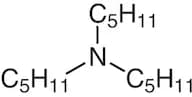
CAS:<p>2-Hydroxyamino-3-methyl-3H-imidazo[4,5-f]quinoline (2HAIQ) is a reactive compound that binds to DNA. It has been shown to be a potent inhibitor of the enzyme cytosolic protein kinase C, which plays an important role in regulating cellular metabolism. 2HAIQ also inhibits the activity of enzymes such as hydroxylases and polymerases. The binding of 2HAIQ to DNA is thought to inhibit transcription by preventing RNA polymerase from transcribing DNA. 2HAIQ may also inhibit replication by binding to the dinucleotide phosphate molecule, which is essential for DNA synthesis.</p>Formula:C11H10N4OPurity:Min. 95%Molecular weight:214.22 g/molTriamylamine (mixture of branched chain isomers)
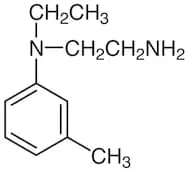
CAS:Formula:C15H33NPurity:>97.0%(T)Color and Shape:Colorless to Light yellow to Light orange clear liquidMolecular weight:227.44N-(2-Aminoethyl)-N-ethyl-m-toluidine
CAS:Formula:C11H18N2Purity:>98.0%(GC)Color and Shape:Light orange to Yellow to Green clear liquidMolecular weight:178.283-Bromo-2-methylaniline
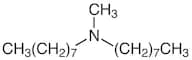
CAS:Formula:C7H8BrNPurity:>98.0%(GC)(T)Color and Shape:Colorless to Brown clear liquidMolecular weight:186.05N-Methyldi-n-octylamine
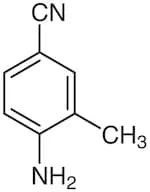
CAS:Formula:C17H37NPurity:>97.0%(GC)(T)Color and Shape:Colorless to Light yellow to Light orange clear liquidMolecular weight:255.494-Amino-3-methylbenzonitrile
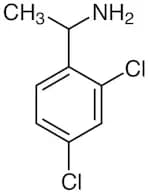
CAS:Formula:C8H8N2Purity:>97.0%(GC)Color and Shape:White to Gray to Brown powder to crystalMolecular weight:132.171-(2,4-Dichlorophenyl)ethylamine
CAS:Formula:C8H9Cl2NPurity:>98.0%(GC)(T)Color and Shape:Colorless to Light yellow clear liquidMolecular weight:190.073-Azidopropan-1-amine Hydrochloride Salt
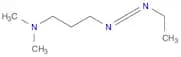
CAS:Formula:C3H9ClN4Purity:97%Color and Shape:SolidMolecular weight:136.58341-(3-Dimethylaminopropyl)-3-ethylcarbodiimide
CAS:Formula:C8H17N3Purity:98%Color and Shape:LiquidMolecular weight:155.2407Ref: IN-DA00DJ11
Discontinued product9,9'-spirobi[fluoren]-2-amine
CAS:Formula:C25H17NPurity:99%Color and Shape:SolidMolecular weight:331.4092Ref: IN-DA00920R
Discontinued productDiammonium hydrogenphosphate
CAS:Formula:H9N2O4PPurity:99%Color and Shape:SolidMolecular weight:132.056221Ref: IN-DA0057DU
Discontinued productDiisopropylamine hydrochloride
CAS:Formula:C6H16ClNPurity:97%Color and Shape:SolidMolecular weight:137.6509Tetrabutylammonium chloride
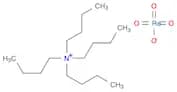
CAS:Formula:C16H36ClNPurity:95%Color and Shape:SolidMolecular weight:277.91671-Butanaminium, N,N,N-tributyl-, (T-4)-tetraoxorhenate(1-) (1:1)
CAS:Formula:C16H36NO4RePurity:98%Color and Shape:SolidMolecular weight:492.6683Ref: IN-DA001UGA
Discontinued productRef: 4Z-A-331106
Discontinued productRef: 4Z-A-331032
Discontinued productRef: 4Z-A-331042
Discontinued productRef: 4Z-A-331016
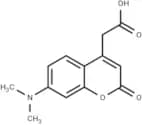
Discontinued product7-Dimethylaminocoumarin-4-acetic acid
CAS:<p>7-Dimethylaminocoumarin-4-acetic acid, catalog number T64950, CAS number 80883-54-1, is a valuable organic compound for life sciences research.</p>Formula:C13H13NO4Color and Shape:SolidMolecular weight:247.25Ref: 4Z-A-331105
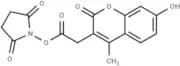
Discontinued product7-Hydroxy-4-methylcoumarin-3-acetic acid, SE
CAS:<p>7-Hydroxy-4-methylcoumarin-3-acetic acid, SE is a useful organic compound for research related to life sciences. The catalog number is T67683 and the CAS number is 96735-88-5.</p>Formula:C16H13NO7Color and Shape:SolidMolecular weight:331.28N-Cyclohexyl-6-Methoxy-2-(5-Methylfuran-2-yl)imidazo[2,1-b][1,3]benzothiazol-1-Amine
CAS:Formula:C21H23N3O2SMolecular weight:381.49Ref: 4Z-A-331070
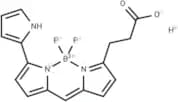
Discontinued productBODIPY 576/589
CAS:<p>BODIPY 576/589 is a long wavelength biological labeled dye.</p>Formula:C16H14BF2N3O2Color and Shape:SolidMolecular weight:329.11Ref: 4Z-A-331021
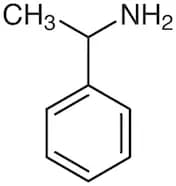
Discontinued productDL-1-Phenylethylamine
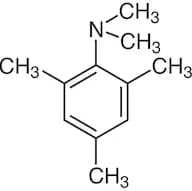
CAS:Formula:C8H11NPurity:>98.0%(GC)(T)Color and Shape:Colorless to Light yellow to Light orange clear liquidMolecular weight:121.18N,N,2,4,6-Pentamethylaniline
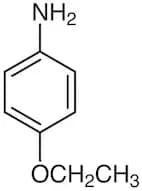
CAS:Formula:C11H17NPurity:>97.0%(GC)Color and Shape:White to Yellow to Green clear liquidMolecular weight:163.26p-Phenetidine
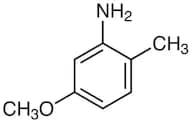
CAS:Formula:C8H11NOPurity:>98.0%(GC)Color and Shape:Colorless to Light orange to Yellow clear liquidMolecular weight:137.185-Methoxy-2-methylaniline
CAS:Formula:C8H11NOPurity:>98.0%(GC)(T)Color and Shape:White to Yellow to Orange powder to lumpMolecular weight:137.18Ref: 4Z-A-331069
Discontinued productRef: 4Z-A-331044
Discontinued productRef: 4Z-A-331049
Discontinued productRef: 4Z-L-195036
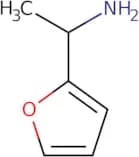
Discontinued product1-(2-Furyl)ethanamine
CAS:<p>1-(2-Furyl)ethanamine is a chiral compound that can be synthesized from readily available feedstocks. This synthetic method was developed to allow for the preparation of 1-(2-furyl)ethanamine in high yields and with good selectivity. The strategy involves the transfer of an ethyl group from an alcohol to a carbonyl group, which is catalyzed by gold nanoparticles. This process has been shown to be sustainable and provides an alternative for the use of more hazardous chemicals in the synthesis of this compound.</p>Formula:C6H9NOPurity:Min. 95%Color and Shape:Clear LiquidMolecular weight:111.14 g/molRef: 3D-FF116689
Discontinued product4-Octyloxybenzylamine
CAS:<p>4-Octyloxybenzylamine is a fine chemical that is used as a building block in research or as a reagent in the synthesis of other compounds. It has CAS No. 37806-64-7 and can be used in organic synthesis as a speciality chemical or as an intermediate or scaffold for complex organic molecules. 4-Octyloxybenzylamine has many uses, including being a versatile building block for synthesizing other compounds, such as polymers and polyesters, which are useful for commercial applications, such as textiles and plastics.</p>Formula:C15H25NOPurity:Min. 95%Color and Shape:PowderMolecular weight:235.37 g/molDifluoroamine
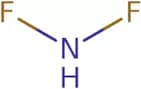
CAS:Controlled Product<p>Difluoroamine is a chemical compound that is used in the production of organic compounds. It has been shown to have high stability and detection sensitivity, which is attributed to its hydrogen bond forming ability. Difluoroamine also reacts with trifluoroacetic acid and hydrogen fluoride, both of which are strong acids. The reaction mechanism of difluoroamine involves the protonation of nitrogen atoms on the molecule followed by a nucleophilic attack on the electrophilic carbon atom that results in the formation of an amine group. This reaction can be carried out in a flow system as well as in a batch process. Difluoramine is an intermediate product during this process and can be converted into glycol ethers or nitrobenzene.</p>Formula:F2HNPurity:Min. 95%Molecular weight:53.01 g/molTrolamine salicylate
CAS:Controlled Product<p>Trolamine salicylate is a polymer film-forming drug that contains methyl anthranilate and trolamine. It is used in the treatment of skin cancer, as well as for the prevention of radiation-induced erythema. Trolamine salicylate has been shown to be effective in reducing the incidence of skin cancer caused by exposure to ultraviolet light at wavelengths below 320 nm. Trolamine salicylate forms a polymeric matrix on the surface of skin cells and acts as an anti-inflammatory agent. When applied topically, it undergoes chemical reactions with water vapor in the air and can be degraded by enzymes in human serum. The elimination rate of trolamine salicylate from body is about 1% per day and its half-life is about 20 days.<br>Trolamine salicylate is also used to treat acute dermatitis caused by contact with industrial chemicals such as phenols, amines, and ketones. It</p>Formula:C13H21NO6Purity:Min. 95%Color and Shape:PowderMolecular weight:287.31 g/molTryptamine
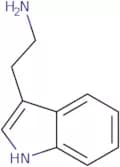
CAS:Controlled Product<p>Please enquire for more information about Tryptamine including the price, delivery time and more detailed product information at the technical inquiry form on this page</p>Formula:C10H12N2Purity:Min. 95%Color and Shape:PowderMolecular weight:160.22 g/mol

![3-[2-Amino-3-(2-tert-butoxycarbonyl-ethoxy)-2-(2-tert-butoxycarbonyl-ethoxymethyl)-propoxy]-propio…](/_next/image/?url=https%3A%2Fstatic.cymitquimica.com%2Fproducts%2F3D%2Fthumb-webp%2FFA163774.webp&w=3840&q=75)
![[[4-[[2-(4-Cyclohexylphenoxy)ethyl]ethylamino]-2-methylphenyl]methylene]malononitrile](/_next/image/?url=https%3A%2Fstatic.cymitquimica.com%2Fproducts%2F3D%2Fthumb-webp%2FFC157254.webp&w=3840&q=75)
![2-[(Ethylamino)methyl]-4-aminophenol dihydrochloride](/_next/image/?url=https%3A%2Fstatic.cymitquimica.com%2Fproducts%2F3D%2Fthumb-webp%2FFE23131.webp&w=3840&q=75)
![(+)(1S,2S,4R)-Bicyclo[2.2.1]heptane-2-amine](/_next/image/?url=https%3A%2Fstatic.cymitquimica.com%2Fproducts%2F3D%2Fthumb-webp%2FFB163197.webp&w=3840&q=75)
![2-Hydroxyamino-3-methyl-3H-imidazo[4,5-f]quinoline](/_next/image/?url=https%3A%2Fstatic.cymitquimica.com%2Fproducts%2F3D%2Fthumb-webp%2FFH24305.webp&w=3840&q=75)




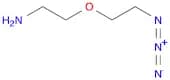
![9,9'-spirobi[fluoren]-2-amine](/_next/image/?url=https%3A%2Fstatic.cymitquimica.com%2Fproducts%2FIN%2Fthumb-webp%2FDA00920R.webp&w=3840&q=75)
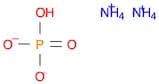
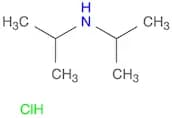
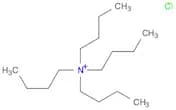




![N-Cyclohexyl-6-Methoxy-2-(5-Methylfuran-2-yl)imidazo[2,1-b][1,3]benzothiazol-1-Amine](/_next/image/?url=https%3A%2Fstatic.cymitquimica.com%2Fproducts%2F4Z%2Fthumb-webp%2FA-331070.webp&w=3840&q=75)