Amines
Amines are a set of molecules containing an amino functional group (derived from ammonia). This category includes amines at any level of substitution : primary, secondary, tertiary, and ammonium salts. Amines are fundamental in organic synthesis and are widely used in pharmaceuticals, agrochemicals, and materials science. At CymitQuimica, we provide a comprehensive selection of amines to meet your research and industrial needs. Our range ensures access to various amines for diverse chemical processes and innovative research.
Subcategories of "Amines"
- Nitrosamines(2,605 products)
- Primary Amines(30,805 products)
- Quaternary Ammonium Cations and Salts(1,098 products)
- Secondary Amines(20,809 products)
- Tertiary Amines(17,111 products)
Found 8777 products of "Amines"
Sort by
Purity (%)
0
100
|
0
|
50
|
90
|
95
|
100
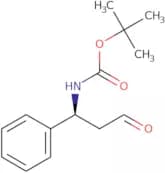
N-Boc-(3S)-3-phenyl-3-aminopropionaldehyde
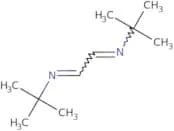
CAS:<p>N-Boc-(3S)-3-phenyl-3-aminopropionaldehyde is a synthetic chiral ligand that can be used as a building block in the synthesis of other compounds. It has been used to optimize the synthetic process, and it can be used in buffers, ammonium formate, metal chelate, and other additives to synthesize new compounds. N-Boc-(3S)-3-phenyl-3-aminopropionaldehyde is an optical isomer that can be used for supercritical fluid chromatography (SCFC) or liquid chromatography (LC). This compound has been shown to have a high affinity for ligands with a phenol group.</p>Formula:C14H19NO3Purity:Min. 95%Molecular weight:249.31 g/molN,N'-Ethane-1,2-diylidenebis(2-methylpropan-2-amine)
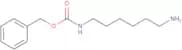
CAS:<p>Please enquire for more information about N,N'-Ethane-1,2-diylidenebis(2-methylpropan-2-amine) including the price, delivery time and more detailed product information at the technical inquiry form on this page</p>Formula:C10H20N2Purity:Min. 95%Color and Shape:PowderMolecular weight:168.28 g/molN-1-Z-1,6-diaminohexane·HCl
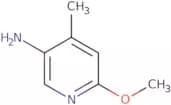
CAS:<p>Please enquire for more information about N-1-Z-1,6-diaminohexane·HCl including the price, delivery time and more detailed product information at the technical inquiry form on this page</p>Formula:C14H22N2O2·HClPurity:Min. 95%Molecular weight:286.8 g/mol5-Amino-2-methoxy-4-methylpyridine
CAS:<p>5-Amino-2-methoxy-4-methylpyridine is a small molecule that inhibits bromodomains. Bromodomains are protein domains that bind to acetylated lysine residues on histones. 5-Amino-2-methoxy-4-methylpyridine binds to the bromodomain, preventing the acetylated lysine residues from binding with other proteins and inhibiting transcription. This drug has been shown to be effective in treating prostate cancer by interacting with the androgen receptor. 5-Amino-2-methoxy-4-methylpyridine also interacts with ATPase, which may lead to increased levels of ATP production, and has been shown to have antitumor effects in vitro.</p>Formula:C7H10N2OPurity:Min. 95%Molecular weight:138.17 g/molO-Bis(2-aminoethoxy)benzene
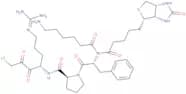
CAS:<p>O-Bis(2-aminoethoxy)benzene is a cyclic compound that has a predominantly thionyl character. It has an amide group, which is formed by the condensation of two carboxylic acids. O-Bis(2-aminoethoxy)benzene can act as a ligand for metal ions in the form of an anion or chloride ion, and it also interacts with neutral ligands. This compound can be used to prepare ferrocenyl derivatives through alkylation. The interaction between O-Bis(2-aminoethoxy)benzene and ferrocene was studied using voltammetry.</p>Formula:C10H16N2O2Purity:Min. 95%Molecular weight:196.25 g/molBiotinyl-ε-aminocaproyl-D-Phe-Pro-Arg-chloromethylketone
CAS:<p>Please enquire for more information about Biotinyl-epsilon-aminocaproyl-D-Phe-Pro-Arg-chloromethylketone including the price, delivery time and more detailed product information at the technical inquiry form on this page</p>Formula:C37H56ClN9O6SPurity:Min. 95%Molecular weight:790.42 g/mol7-Diethylamino-4-methylcoumarin
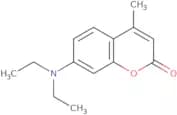
CAS:<p>7-Diethylamino-4-methylcoumarin is a fluorescence probe that can be used in applications such as the study of hydrogen bonding interactions. It is excited by laser light and emits a red-shifted fluorescent light. 7-Diethylamino-4-methylcoumarin is a hydroxyl group analogue of coumarin, which has been shown to have physiological effects on the liver cells. The absorption spectrum of 7-Diethylamino-4-methylcoumarin is sensitive to changes in pH and chemical stability. A decrease in pH increases the intensity of the emission while an increase in pH decreases the intensity of the emission. This compound can also be used to label nucleic acids during polymerase chain reactions (PCR) or for sample preparation before analysis using nuclear magnetic resonance spectroscopy (NMR).</p>Formula:C14H17NO2Purity:Min. 98 Area-%Color and Shape:PowderMolecular weight:231.29 g/mol(aR)-a-[[[2-(4-Aminophenyl)ethyl]amino]methyl]-benzenemethanol
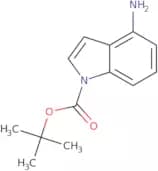
CAS:<p>Please enquire for more information about (aR)-a-[[[2-(4-Aminophenyl)ethyl]amino]methyl]-benzenemethanol including the price, delivery time and more detailed product information at the technical inquiry form on this page</p>Formula:C16H20N2OPurity:Min. 95%Color and Shape:PowderMolecular weight:256.34 g/mol1-Boc-4-aminoindole
CAS:<p>Please enquire for more information about 1-Boc-4-aminoindole including the price, delivery time and more detailed product information at the technical inquiry form on this page</p>Formula:C13H16N2O2Purity:Min. 95%Molecular weight:232.28 g/mol(R)-3-[((tert-Butoxy)carbonyl)amino]-4-(2,5-difluorophenyl)butanoic acid
CAS:<p>Please enquire for more information about (R)-3-[((tert-Butoxy)carbonyl)amino]-4-(2,5-difluorophenyl)butanoic acid including the price, delivery time and more detailed product information at the technical inquiry form on this page</p>Formula:C15H19F2NO4Purity:Min. 95%Molecular weight:315.31 g/molBenzyltributylammonium chloride
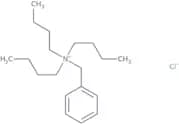
CAS:<p>Benzyltributylammonium chloride is a quaternary ammonium salt that is used as a surfactant. It is commercially available in the form of its sodium salt, which is prepared by the reaction of benzyltriethylamine with trifluoroacetic acid and sodium carbonate. The surface methodology used to characterize the adsorption properties of this compound was Langmuir adsorption isotherms. The optimum concentration for this compound was found to be 0.05 M at 25°C, where it exhibits surface adsorption kinetics at a rate of 1.1 x 10⁻⁴ mol/cm2/s. Benzyltributylammonium chloride has strong hydroxyl groups, which gives it an affinity for water molecules and makes it an excellent surfactant for use in detergent formulations. It also chelates metal ions such as chloride and metal ions (e.g., zinc) that are present in hard</p>Formula:C19H34ClNPurity:Min. 95%Color and Shape:PowderMolecular weight:311.93 g/molN-Methoxymethyl-N-(trimethylsilylmethyl)benzylamine
CAS:<p>N-Methoxymethyl-N-(trimethylsilylmethyl)benzylamine is a chiral, electron deficient reagent that reacts with aldehydes and boronic esters to form products with high chemical yields. This compound can be used as a catalyst for acylation reactions, such as the synthesis of p-nitrophenol. N-Methoxymethyl-N-(trimethylsilylmethyl)benzylamine is synthesized by the reaction of trifluoroacetic acid and an amine, followed by chloroformate displacement. The product is then reacted with acylating agents in the presence of catalysts.</p>Formula:C13H23NOSiPurity:Min. 95%Color and Shape:Clear Colourless To Pale Yellow LiquidMolecular weight:237.41 g/mol(4-((2-Methylphenyl)aminocarbonyl)-aminophenyl)acetyl-Fibronectin CS-1 Fragment (1980-1983)
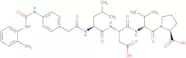
CAS:<p>Please enquire for more information about (4-((2-Methylphenyl)aminocarbonyl)-aminophenyl)acetyl-Fibronectin CS-1 Fragment (1980-1983) including the price, delivery time and more detailed product information at the technical inquiry form on this page</p>Formula:C36H48N6O9Purity:Min. 95%Molecular weight:708.8 g/molTetrabutylammonium acetate
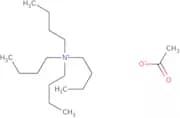
CAS:<p>Tetrabutylammonium acetate is a complex of tetrabutylammonium with the trifluoroacetate anion. It has been used as a reagent for the preparation of α-hydroxylated ketones, including natural products. Tetrabutylammonium acetate can be used in titration calorimetry to measure the heat evolved during the reaction between hydroxyl group and sodium salts. The heat released corresponds to the amount of water produced from this reaction. In this way, it can be determined whether or not a molecule contains an active hydrogen atom. Tetrabutylammonium acetate also reacts with reactive compounds such as dpp-iv inhibitors, forming a reactive intermediate that cannot be isolated due to its instability. This intermediate is detected by analytical methods such as plasma mass spectrometry or infrared spectroscopy. Tetrabutylammonium acetate also reacts with asymmetric synthesis, forming an intram</p>Formula:C16H36N•C2H3O2Purity:Min. 95%Color and Shape:PowderMolecular weight:301.51 g/mol4-Aminobutyric-2,2,3,3,4,4-D6
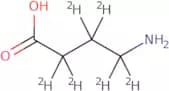
CAS:Controlled Product<p>4-Aminobutyric-2,2,3,3,4,4-D6 is a metabolic precursor to glutamate that can be used as a marker for neuronal activity. It has been found that 4-aminobutyric acid is present in the cerebrospinal fluid of mice and humans. 4-Aminobutyric acid is synthesized from l-glutamic acid by the enzyme glutamic acid decarboxylase and can be used as an indicator of neurotransmitter activity. The measurement of 4-aminobutyric acid levels can be used for biochemical studies on tissues or cells and also for the diagnosis of diseases related to neurotransmission such as epilepsy.</p>Formula:C4H3D6NO2Purity:Min. 95%Color and Shape:PowderMolecular weight:109.15 g/mol4-Aminobenzocyclobutene
CAS:<p>4-Aminobenzocyclobutene is a monomer that can be used as a crosslinker. It has been shown to have magnetic properties and is soluble in organic solvents such as dioxane and dichloromethane. 4-Aminobenzocyclobutene readily reacts with paraformaldehyde to form the corresponding paraformaldehyde resin, which is insoluble in water and can be used for the preparation of coatings or adhesives. The hydrosilylation reaction between 4-aminobenzocyclobutene and 3-chloropropyl trimethoxysilane leads to the formation of an aminosilane resin, which exhibits a low water absorption rate and high thermal expansion coefficient. This material can also be used for coating or adhesive applications.</p>Formula:C8H7NPurity:Min. 95%Molecular weight:117.15 g/mol(2-Furylmethyl)methylamine
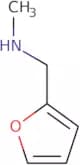
CAS:<p>(2-Furylmethyl)methylamine is a protein inhibitor that has been shown to inhibit γ-secretase, an enzyme responsible for the cleavage of amyloid precursor protein (APP) and the production of beta-amyloid. It has also been shown to be effective in treating cancer and Alzheimer's disease when administered as an intravenous injection or oral medication. The effects on animals were observed in a study involving mice with bladder cancer. (2-Furylmethyl)methylamine was found to inhibit the growth of bladder cancer cells and induce apoptosis. This compound also inhibits glycogen synthase kinase 3 (GSK3), which is involved in cell proliferation. Trichophyton mentagrophytes, a fungus that causes athlete's foot, has also been found to be sensitive to this drug. Heterocycles are not affected by this compound because they lack nitrogen atoms at their positions corresponding to those in the amide group</p>Formula:C6H9NOPurity:Min. 95%Color and Shape:Colorless Clear LiquidMolecular weight:111.14 g/molAminocaproic acid
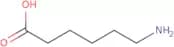
CAS:<p>Aminocaproic acid is a non-specific lysing agent that is used in the treatment of acute blood clots. Aminocaproic acid has minimal toxicity and low-dose effects, and can be used for the treatment of thrombotic disorders. It also has biological properties that are different from those of aminocaproate, which can lead to a more rapid dissolution of the clot. Aminocaproic acid is an organic compound that belongs to the class of dicarboxylic acids. It is synthesized from two molecules of aminoacetic acid by the enzyme aminocaproic acid synthetase. The synthesis occurs in a two-step process: first, caprylic acid reacts with ATP to form aminopropyl-adenylate (APA), followed by hydrolysis by APA lyase to form aminocaproic acid.</p>Formula:C6H13NO2Color and Shape:PowderMolecular weight:131.17 g/mol3-Amino-2-nitropyridine
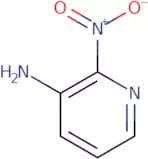
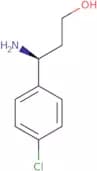
CAS:<p>3-Amino-2-nitropyridine is a heterocyclic compound that is an oxidation product of 2,4,6-trinitrotoluene. 3-Amino-2-nitropyridine is a potent inhibitor of the d4 receptor and has been shown to be active in animal models of cancer and autoimmune diseases. The mechanism of action of this drug is not well understood, but it has been found to inhibit cell proliferation in vitro by binding to nucleophilic sites on the receptor. Nitrobenzoic acid may also contribute to its activity. 3-Amino-2-nitropyridine inhibits inflammatory responses by inhibiting cell proliferation and migration.</p>Formula:C5H5N3O2Purity:Min. 95%Molecular weight:139.11 g/mol(S)-3-Amino-3-(4-chlorophenyl)-propan-1-ol
CAS:<p>Please enquire for more information about (S)-3-Amino-3-(4-chlorophenyl)-propan-1-ol including the price, delivery time and more detailed product information at the technical inquiry form on this page</p>Formula:C9H12ClNOPurity:Min. 95%Molecular weight:185.65 g/mol


![(aR)-a-[[[2-(4-Aminophenyl)ethyl]amino]methyl]-benzenemethanol](/_next/image/?url=https%3A%2Fstatic.cymitquimica.com%2Fproducts%2F3D%2Fthumb-webp%2FFA75045.webp&w=3840&q=75)
![(R)-3-[((tert-Butoxy)carbonyl)amino]-4-(2,5-difluorophenyl)butanoic acid](/_next/image/?url=https%3A%2Fstatic.cymitquimica.com%2Fproducts%2F3D%2Fthumb-webp%2FFB103971.webp&w=3840&q=75)