Amines
Amines are a set of molecules containing an amino functional group (derived from ammonia). This category includes amines at any level of substitution : primary, secondary, tertiary, and ammonium salts. Amines are fundamental in organic synthesis and are widely used in pharmaceuticals, agrochemicals, and materials science. At CymitQuimica, we provide a comprehensive selection of amines to meet your research and industrial needs. Our range ensures access to various amines for diverse chemical processes and innovative research.
Subcategories of "Amines"
- Nitrosamines(2,605 products)
- Primary Amines(30,805 products)
- Quaternary Ammonium Cations and Salts(1,099 products)
- Secondary Amines(20,809 products)
- Tertiary Amines(17,111 products)
Found 8776 products of "Amines"
Sort by
Purity (%)
0
100
|
0
|
50
|
90
|
95
|
100
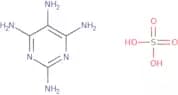
2,4,5,6-Tetraaminopyrimidine sulphate
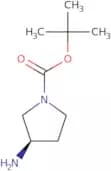
CAS:<p>2,4,5,6-Tetraaminopyrimidine sulphate is a chemical compound that is used for the treatment of leukemic mice. It has shown to have anti-inflammatory and anti-cancer properties. This drug binds to the enzyme p-hydroxybenzoic acid that is involved in the synthesis of collagen and elastin. It also suppresses the production of inflammatory cytokines such as TNF-α and IL-1β. 2,4,5,6-Tetraaminopyrimidine sulphate has been used in clinical trials for the treatment of autoimmune diseases and inflammatory diseases such as psoriasis. The drug is currently being researched for use in cancer treatments due to its ability to inhibit cell division and induce apoptosis. 2,4,5,6-Tetraaminopyrimidine sulphate has also been shown to be effective when applied topically on skin as a cosmetic agent or when administered orally as a supplement for</p>Formula:C4H10N6O4SPurity:Min. 95%Color and Shape:Slightly Yellow PowderMolecular weight:238.23 g/mol(R)-1-Boc-3-Aminopyrrolidine
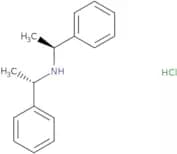
CAS:<p>(R)-1-Boc-3-Aminopyrrolidine is a small molecule that inhibits 3-kinase. It has been shown to bind to the ATP binding site of PI3Kδ and inhibit its activity. This results in the inhibition of phosphoinositide production, which leads to decreased cell proliferation and survival. (R)-1-Boc-3-Aminopyrrolidine has also been shown to have selectivity for isoform α over β, γ, and δ. The drug binds specifically to the ATP binding site on PI3Kδ, but does not disrupt other interactions such as hydrogen bonding or pi stacking interactions with residues in the vicinity of the ATP binding site. The IC50 values for (R)-1-Boc-3-Aminopyrrolidine were determined using siRNA knockdown experiments against human isoform α PI3Kδ.</p>Formula:C9H18N2O2Purity:Min. 95%Molecular weight:186.25 g/mol(S,S)-(-)-Bis(a-methylbenzyl)amine Hcl
CAS:<p>Please enquire for more information about (S,S)-(-)-Bis(a-methylbenzyl)amine Hcl including the price, delivery time and more detailed product information at the technical inquiry form on this page</p>Formula:C16H19N·HClPurity:Min. 95%Molecular weight:261.79 g/molDABCYL-(Asn670,Leu671)-Amyloid b/A4 Protein Precursor770 (667-675)-EDANS ammonium salt
CAS:<p>Please enquire for more information about DABCYL-(Asn670,Leu671)-Amyloid b/A4 Protein Precursor770 (667-675)-EDANS ammonium salt including the price, delivery time and more detailed product information at the technical inquiry form on this page</p>Formula:C71H91N15O21SPurity:Min. 95%Molecular weight:1,522.64 g/mol(3R)-3-[(tert-Butoxycarbonyl)amino]-4-(2,4-difluorophenyl)butanoic acid
CAS:<p>Please enquire for more information about (3R)-3-[(tert-Butoxycarbonyl)amino]-4-(2,4-difluorophenyl)butanoic acid including the price, delivery time and more detailed product information at the technical inquiry form on this page</p>Formula:C15H19F2NO4Purity:Min. 95%Molecular weight:315.31 g/mol4-Methyl-benzhydrylamine resin (100-200 mesh)·HCl
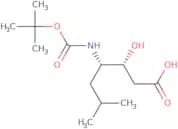
<p>Please enquire for more information about 4-Methyl-benzhydrylamine resin (100-200 mesh)·HCl including the price, delivery time and more detailed product information at the technical inquiry form on this page</p>Purity:Min. 95%Boc-epi-statine (3R,4S)-4-(Boc-amino)-3-hydroxy-6-methyl-heptanoic acid
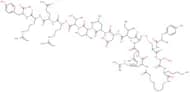
CAS:<p>Please enquire for more information about Boc-epi-statine (3R,4S)-4-(Boc-amino)-3-hydroxy-6-methyl-heptanoic acid including the price, delivery time and more detailed product information at the technical inquiry form on this page</p>Formula:C13H25NO5Purity:Min. 95%Molecular weight:275.34 g/mol(Cys2)-Neuropeptide Y (1-4)-8-aminooctanoyl-(D-Cys27)-Neuropeptide Y (25-32) trifluoroacetate salt
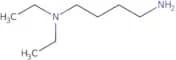
CAS:<p>Please enquire for more information about (Cys2)-Neuropeptide Y (1-4)-8-aminooctanoyl-(D-Cys27)-Neuropeptide Y (25-32) trifluoroacetate salt including the price, delivery time and more detailed product information at the technical inquiry form on this page</p>Formula:C96H158N32O23S2Purity:Min. 95%Molecular weight:2,192.62 g/mol4-(Diethylamino)butyl amine
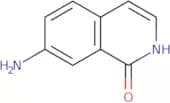
CAS:<p>4-(Diethylamino)butyl amine is a chemical that is used as a radiolabeled probe for the uptake of amines into tumors. It is used to measure tumor uptake and pharmacokinetic properties. This chemical has been found to be stable in both water and organic solvents, which makes it an excellent candidate for use in radiopharmaceuticals. 4-(Diethylamino)butyl amine also has a high affinity for cells, which may make it an ideal choice for therapeutic purposes.</p>Formula:C8H20N2Purity:Min. 95%Molecular weight:144.26 g/mol7-Amino-1(2h)-isoquinolinone
CAS:<p>Please enquire for more information about 7-Amino-1(2h)-isoquinolinone including the price, delivery time and more detailed product information at the technical inquiry form on this page</p>Formula:C9H8N2OPurity:Min. 95%Molecular weight:160.17 g/molFencamine
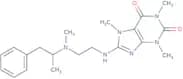
CAS:Controlled Product<p>Fencamine is a substrate molecule that is used in the synthesis of peptide hormones. It can be detected in urine samples and has been shown to be a synthetic cannabinoid. Fencamine can be used for diagnostic purposes. Fencamine has been shown to have matrix effects on the bowel disease, hepatitis, and hepatitis C., as well as exerting control analysis of the metabolite molecule. Fencamine has also been shown to have an effect on inflammatory bowel disease, hepatitis C., and toll-like receptor 2.</p>Formula:C20H28N6O2Purity:Min. 95%Color and Shape:PowderMolecular weight:384.48 g/molGastrin I (1-14) (human) ammonium salt
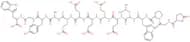
CAS:<p>Please enquire for more information about Gastrin I (1-14) (human) ammonium salt including the price, delivery time and more detailed product information at the technical inquiry form on this page</p>Formula:C79H100N16O27Purity:Min. 95%Molecular weight:1,705.73 g/molBorane dimethylamine complex
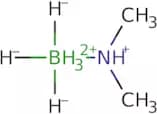
CAS:<p>Please enquire for more information about Borane dimethylamine complex including the price, delivery time and more detailed product information at the technical inquiry form on this page</p>Formula:C2H10BNPurity:Min. 95%Color and Shape:White Clear LiquidMolecular weight:58.92 g/molN-Methyl-N-((3R,4R)-4-methylpiperidin-3-yl)-7H-pyrrolo[2,3-d]pyrimidin-4-amine
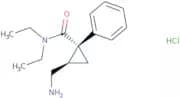
CAS:<p>Intermediate in the synthesis of tofacitinib</p>Formula:C13H19N5Purity:Min. 95%Molecular weight:245.32 g/mol(E)-2-(Aminomethyl)-N,N-diethyl-1-phenylcyclopropanecarboxamideHydrochloride
CAS:Controlled Product<p>Levomilnacipran is a serotonin-norepinephrine reuptake inhibitor (SNRI) that is used for the treatment of major depressive disorder and fibromyalgia. It has been shown to have antidepressant effects in patients with major depressive disorder and fibromyalgia. Levomilnacipran inhibits the reuptake of serotonin and norepinephrine by blocking the transporter proteins in these neurotransmitter pathways, increasing their availability to interact with receptors in the brain. Levomilnacipran also has been found to inhibit aminotransferase activity, which may be responsible for its hepatotoxicity.</p>Formula:C15H23ClN2OPurity:Min. 95%Molecular weight:282.81 g/mol(1S)-1-(3,4-Dimethoxyphenyl)ethan-1-amine
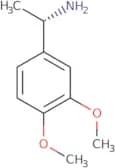
CAS:<p>Please enquire for more information about (1S)-1-(3,4-Dimethoxyphenyl)ethan-1-amine including the price, delivery time and more detailed product information at the technical inquiry form on this page</p>Formula:C10H15NO2Purity:Min. 95%Molecular weight:181.23 g/molH-Arg-ε-aminocaproyl-Arg-ε-aminocaproyl-Arg-ε-aminocaproyl-Arg-ε-aminocaproyl-Arg-ε-aminocaproyl-Arg-e psilon-aminocaproyl-Arg-OH trifluoroacetate salt
CAS:<p>Please enquire for more information about H-Arg-epsilon-aminocaproyl-Arg-epsilon-aminocaproyl-Arg-epsilon-aminocaproyl-Arg-epsilon-aminocaproyl-Arg-epsilon-aminocaproyl-Arg-e psilon-aminocaproyl-Arg-OH trifluoroacetate salt including the price, delivery time and more detailed product information at the technical inquiry form on this page</p>Formula:C78H152N34O14Purity:Min. 95%Molecular weight:1,790.26 g/molN1-Glutathionyl-spermidine disulfide [
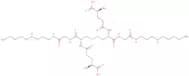
CAS:<p>N1-Glutathionyl-spermidine disulfide (N1-GS) is a molecule that has been shown to have clinical use in the treatment of chronic hepatitis C infection. The N1-GS molecule is composed of a glutathione (GSH) scaffold with two sulfhydryl groups and an amino acid side chain. N1-GS has a hydrophobic nature, which allows it to penetrate the cellular membrane and enter cells. It is also able to form hydrogen bonds and act as a catalyst for reactions. Fluorescence analysis revealed that this molecule is selective for disulfides over thiols, amines, or alcohols. Disulfides are very important in biological systems since they can be found in enzymes, proteins, and cellular membranes. The insolubility of the N1-GS molecule makes it difficult to analyze its structure using traditional methods such as gas chromatography or nuclear magnetic resonance spectroscopy. However, fluorescence</p>Formula:C34H66N12O10S2Purity:Min. 95%Molecular weight:867.09 g/molN,N-Dimethyl-cyclohexane-1,4-diamine
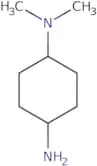
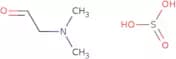
CAS:<p>Please enquire for more information about N,N-Dimethyl-cyclohexane-1,4-diamine including the price, delivery time and more detailed product information at the technical inquiry form on this page</p>Formula:C8H18N2Purity:Min. 95%Molecular weight:142.24 g/mol2-(Dimethylamino)acetaldehyde sulfite
CAS:<p>2-(Dimethylamino)acetaldehyde sulfite is a white crystalline solid with a melting point of around 100°C. It is soluble in water and slightly soluble in organic solvents. 2-(Dimethylamino)acetaldehyde sulfite can be used as a reagent to prepare alkali solutions and acid hydrochlorides. It can also be used as an intermediate for the synthesis of methacrylic acid, methyl acetate, and other organic compounds. 2-(Dimethylamino)acetaldehyde sulfite can be synthesized using a high-yield synthetic method involving lithium, acidification, and an organic solvent.</p>Purity:Min. 95%


![(3R)-3-[(tert-Butoxycarbonyl)amino]-4-(2,4-difluorophenyl)butanoic acid](/_next/image/?url=https%3A%2Fstatic.cymitquimica.com%2Fproducts%2F3D%2Fthumb-webp%2FFB99243.webp&w=3840&q=75)

![N-Methyl-N-((3R,4R)-4-methylpiperidin-3-yl)-7H-pyrrolo[2,3-d]pyrimidin-4-amine](/_next/image/?url=https%3A%2Fstatic.cymitquimica.com%2Fproducts%2F3D%2Fthumb-webp%2FFM154245.webp&w=3840&q=75)