Cyano-, Nitrile-
Cyano and nitrile compounds are organic molecules that contain cyano (C≡N) or nitrile groups in their structure, characterized by the presence of nitrogen. These groups play important roles in various chemical reactions and industrial applications. In this category, you will find a wide range of cyano and nitrile compounds, ranging from simple to complex structures. At CymitQuimica, we offer high-quality cyano and nitrile compounds tailored to meet research and industrial needs. Our compounds are suitable for a variety of synthesis and analytical applications.
Found 9618 products of "Cyano-, Nitrile-"
Sort by
Purity (%)
0
100
|
0
|
50
|
90
|
95
|
100
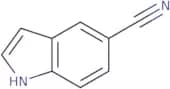
5-Cyanoindole
CAS:<p>5-Cyanoindole is a hydrophobic molecule that has been shown to have an inhibitory effect on the trifluoroacetic acid-induced fluorescence in the presence of chloride ions. It is also able to bind peptides and has been used as an antimicrobial peptide. 5-Cyanoindole can be synthesized electrochemically or by electrochemical impedance spectroscopy. The synthesis of 5-cyanoindole can be achieved through a Friedel-Crafts reaction, followed by a hydrolysis with hydrogen peroxide and then a reduction with sodium borohydride.<br>!-- END OF PRODUCT DESCRIPTION --></p>Formula:C9H6N2Color and Shape:White PowderMolecular weight:142.16 g/molBenzylamine
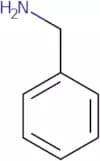
CAS:<p>Substrate of benzylamine oxidase and monoamine oxidase B</p>Formula:C7H9NPurity:Min. 98.0 Area-%Color and Shape:Colorless Slightly Yellow Clear LiquidMolecular weight:107.15 g/mol2-Benzyloxyphenylacetonitrile
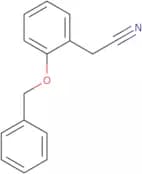
CAS:<p>2-Benzyloxyphenylacetonitrile is a compound that is used in the manufacture of polyester, fibre and crystallized products. It is also used as a solvent for dyes and oils, as well as an industrial chemical intermediate. 2-Benzyloxyphenylacetonitrile can be thermolysed to produce benzoic acid, which can then be oxidized to produce phenol. The residue obtained from this process has been found to have a calorific value of around 2500kcal/kg. This substance has been found to react with oxygen at high temperatures and form an oxygenated product.<br>2-Benzyloxyphenylacetonitrile can be synthesised by reacting benzene with styrene in the presence of water and a catalyst such as sodium hydroxide or calcium oxide. The reaction produces hydrogen gas, benzoic acid and 2-benzyloxyphenylacetonitrile.</p>Formula:C15H13NOPurity:Min. 95%Color and Shape:PowderMolecular weight:223.27 g/mol2-Cyanoacetamide
CAS:<p>2-Cyanoacetamide is an organic compound that is used in pharmaceutical preparations. It reacts with malonic acid to form a dioxime, which is a precursor of various drugs. The optimum concentration for the reaction to occur is at 10% (w/v). The reaction mechanism has not been fully elucidated and it involves the transfer of nitrogen from an amide group to a carbonyl group. 2-Cyanoacetamide has shown anti-angiogenic effects in mice by inhibiting the expression of Mcl-1 protein, which is involved in the regulation of apoptosis and inflammation. This drug also has biological functions as a precursor for dopamine, which helps regulate motor and cognitive functions.</p>Formula:C3H4N2OPurity:Min. 98%Color and Shape:White Off-White PowderMolecular weight:84.08 g/molPyridine-3-acetonitrile
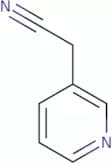
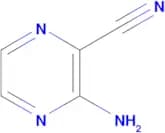
CAS:<p>Pyridine-3-acetonitrile is a coordination complex that can be used for the treatment of diabetes. It has been shown to have a high affinity for plasma glucose and to be selective for biological samples containing amino acids, such as proteins. The molecule is able to bind with carbon disulphide in order to form the active methylene, which has been shown to be an effective bifunctional ligand. The compound has also been shown to have a ph optimum of 9.8 - 10.2 and exhibits an atomic orbital with a molecular electrostatic potential of 0.5 eV. Pyridine-3-acetonitrile binds strongly to nucleophilic groups, such as amines and hydroxyls, making it suitable for use as a ligand in metal complexes. This compound may also have some interesting properties related to its morphology, which can be further investigated using functional theory and molecular electrostatic potential.br>br> br>br></p>Formula:C7H6N2Purity:Min. 95%Color and Shape:Clear LiquidMolecular weight:118.14 g/mol3-Aminopyrazine-2-carbonitrile
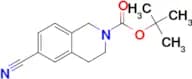
CAS:Formula:C5H4N4Purity:95%Color and Shape:SolidMolecular weight:120.115tert-Butyl 6-cyano-3,4-dihydroisoquinoline-2(1H)-carboxylate
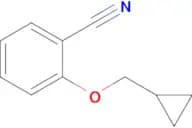
CAS:Formula:C15H18N2O2Purity:97%Color and Shape:SolidMolecular weight:258.3212-(cyclopropylmethoxy)benzonitrile
CAS:Formula:C11H11NOPurity:97%Color and Shape:LiquidMolecular weight:173.215Ref: 10-F428401
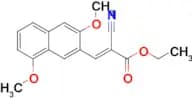
1g358.00€5g1,026.00€10g1,889.00€2.5g856.00€50mg114.00€100mg171.00€250mg234.00€500mg277.00€(E)-ETHYL 2-CYANO-3-(3,8-DIMETHOXYNAPHTHALEN-2-YL)ACRYLATE
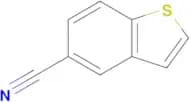
CAS:Purity:98%Molecular weight:311.33700561-Benzothiophene-5-carbonitrile
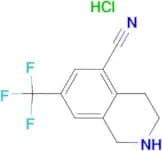
CAS:Formula:C9H5NSPurity:95%Color and Shape:SolidMolecular weight:159.217-(Trifluoromethyl)-1,2,3,4-tetrahydroisoquinoline-5-carbonitrile hydrochloride
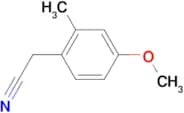
CAS:Formula:C11H10ClF3N2Purity:95%Molecular weight:262.664-Methoxy-2-methylphenylacetonitrile
CAS:Formula:C10H11NOPurity:97%Color and Shape:SolidMolecular weight:161.204