Cyano-, Nitrile-
Cyano and nitrile compounds are organic molecules that contain cyano (C≡N) or nitrile groups in their structure, characterized by the presence of nitrogen. These groups play important roles in various chemical reactions and industrial applications. In this category, you will find a wide range of cyano and nitrile compounds, ranging from simple to complex structures. At CymitQuimica, we offer high-quality cyano and nitrile compounds tailored to meet research and industrial needs. Our compounds are suitable for a variety of synthesis and analytical applications.
Found 9624 products of "Cyano-, Nitrile-"
Sort by
Purity (%)
0
100
|
0
|
50
|
90
|
95
|
100
Ethyl S-(+)-4-cyano-3-hydroxybutyrate
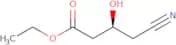
CAS:<p>Ethyl S-(+)-4-cyano-3-hydroxybutyrate is a chiral molecule that can be used as a catalyst in the transesterification reaction. It acts by binding to the enzyme and immobilizing it on a solid support, which increases its catalytic activity. The hydroxybutanoate is converted into butyric acid, which is produced at high yield using this method. This process of immobilization increases the kinetic rate of the reaction, making it possible for the product to be obtained more quickly.</p>Formula:C7H11NO3Purity:Min. 95%Molecular weight:157.17 g/mol2-Phenoxyphenylacetonitrile
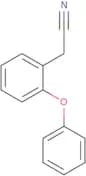
CAS:<p>2-Phenoxyphenylacetonitrile is a pyrethroid n-oxide that is chemically related to other insecticides that are used in agriculture and against insects such as mosquitoes. 2-Phenoxyphenylacetonitrile is a synthetic compound that has been shown to have an optimum pH of 5.5, which makes it difficult to dissolve in water. The compound's high stability at low pH levels means that it can be used in acidic environments. It also has been shown to have strong activity against human serum and food composition, with no detectable activity against bacteria or fungi.</p>Formula:C14H11NOPurity:Min. 95%Color and Shape:Clear LiquidMolecular weight:209.24 g/mol4-Cyanobenzylamine HCl
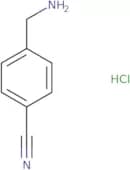
CAS:<p>4-Cyanobenzylamine HCl is a degradable polymer that has been shown to inhibit colonic adenocarcinoma in mice. This compound was synthesized by the reaction of 4-cyanobenzylamine with 3-mercaptopropionic acid and was characterized using IR, 1H NMR, and 13C NMR spectroscopy. It also showed an inhibitory effect on the proliferation of human colon cancer cells. The polymer was found to gel when mixed with different concentrations of acrylamide and methylene bisacrylamide. Gelation occurred at a lower concentration of acrylamide than the amount used in previous studies. This may be due to its functional groups and morphology, which could have contributed to the inhibition of cell growth.</p>Formula:C8H8N2·HClPurity:Min. 95%Color and Shape:PowderMolecular weight:168.62 g/mol2-Cyanobenzamide
CAS:<p>2-Cyanobenzamide is a corrosion inhibitor that is used in the electrochemical industry to protect metals from corrosion. It has been shown to be suitable for use as a corrosion inhibitor in salt water and other corrosive environments. 2-Cyanobenzamide has been shown to have light sensitive properties, which is why it should not be exposed to direct light or stored in dark containers. It also inhibits enzymes that are involved in the production of reactive oxygen species (ROS) such as superoxide anion and hydrogen peroxide. The reaction of 2-cyanobenzamide with aluminium, sodium sulfide, and polymeric matrices has also been studied extensively.<br>2-Cyanobenzamide can be synthesized by reacting benzoyl chloride with ammonia and cyanogen bromide. This reaction produces a mixture of mono-, di-, tri-, and tetramers of 2-cyanobenzamide. These products can then be separated using analytical methods such as</p>Formula:C8H6N2OPurity:Min. 95%Molecular weight:146.15 g/mol4-Amino-2-cyanotoluene
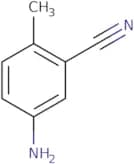
CAS:<p>4-Amino-2-cyanotoluene is a quinazoline compound that inhibits the synthesis of thymine, which is necessary for DNA replication. This compound binds to the enzyme thymidylate synthetase, thereby inhibiting the synthesis of thymine. The inhibitory effect has been shown in a study using calf thymus DNA. 4-Amino-2-cyanotoluene also inhibits the synthesis of other nucleic acids such as adenine and guanine.</p>Formula:C8H8N2Purity:Min. 95%Color and Shape:PowderMolecular weight:132.16 g/molN-(5-Cyano-2-chlorophenyl)acetamide
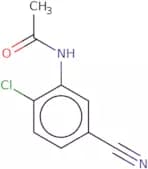
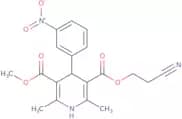
CAS:<p>N-(5-Cyano-2-chlorophenyl)acetamide is a high quality, reagent, and versatile building block. It is a fine chemical that can be used as a building block for the synthesis of other compounds. N-(5-Cyano-2-chlorophenyl)acetamide is also a speciality chemical that can be used in research or as a reaction component. It has been found to be useful as an intermediate in the synthesis of complex compounds.<br>END></p>Formula:C9H7ClN2OPurity:Min. 95%Molecular weight:194.62 g/mol1,4-Dihydro-2,6-dimethyl-4-(3-nitrophenyl)-3,5-pyridinedicarboxylic acid 3-(2-cyanoethyl) 5-methyl ester
CAS:<p>1,4-Dihydro-2,6-dimethyl-4-(3-nitrophenyl)-3,5-pyridinedicarboxylic acid 3-(2-cyanoethyl) 5-methyl ester is a chemical compound that has the CAS number 75130-24-4. It is a white powder with a melting point of 144°C. This chemical is soluble in acetone, ether and chloroform. It can be used as a building block for organic synthesis due to its versatility and useful scaffold.</p>Formula:C19H19N3O6Purity:Min. 95%Color and Shape:White to yellow solid.Molecular weight:385.37 g/mol3-Cyanobenzamide
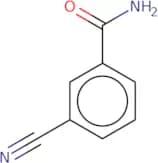
CAS:<p>3-Cyanobenzamide is an organic compound with the formula CHC(N)NH. It is a white crystalline solid that can be obtained by reacting benzamide with cyanoacetylene. There are three possible isomers of 3-cyanobenzamide: 3-cyano-1-(substituted phenyl)benzamide, 3-cyano-2-(substituted phenyl)benzamide, and 3-cyano-3-(substituted phenyl)benzamide. The optimal reaction conditions for the synthesis of 3-cyanobenzamide are in the presence of hydrogen bonding, such as n-hexane, amide, and phase equilibrium. Studies have determined that 3-cyanobenzamide has the potential to cause cancer or liver toxicity in humans. In addition, this chemical has been shown to be an effective inhibitor of alpha glucosidase enzymes in vitro and in vivo.</p>Formula:C8H6N2OPurity:Min. 90%Molecular weight:146.15 g/mol2-Cyano-N-[2-(3,4-dimethoxyphenyl)ethyl]acetamide
CAS:<p>Please enquire for more information about 2-Cyano-N-[2-(3,4-dimethoxyphenyl)ethyl]acetamide including the price, delivery time and more detailed product information at the technical inquiry form on this page</p>Formula:C13H16N2O3Purity:Min. 95%Molecular weight:248.28 g/mol2,5-Dimethoxybenzonitrile
CAS:<p>2,5-Dimethoxybenzonitrile is a polymerized organic compound that belongs to the class of benzene compounds. It is a monomer with two methyl groups on either side of the benzene ring. 2,5-Dimethoxybenzonitrile has been studied in terms of its transition and optimization properties using techniques such as IR and NMR spectroscopy. The frequencies of the chemical bonds have been analyzed, and it has been found that the molecule is centrosymmetric. 2,5-Dimethoxybenzonitrile can also be used to form polymers with other molecules by linking them together through covalent bonds.</p>Formula:C9H9NO2Purity:Min. 95%Color and Shape:PowderMolecular weight:163.17 g/mol7-Cyano-7-deazaguanosine
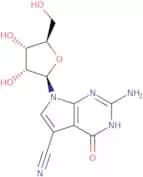
CAS:<p>7-Cyano-7-deazaguanosine is a nucleoside that belongs to the category of 7-deazapurines. It is an optimized nucleic acid analogue that has been shown to act as a translational inhibitor in vitro and in vivo. This compound has been shown to have high yields in chemical synthesis, which makes it an attractive candidate for optimization and future research. 7-Cyano-7-deazaguanosine is a synthetic nucleotide with anticodon properties, which may be useful for the development of new drugs against bacterial infections.</p>Formula:C12H13N5O5Purity:Min. 95%Color and Shape:PowderMolecular weight:307.26 g/mol1-Cyano-4-(dimethylamino)pyridinium tetrafluoroborate
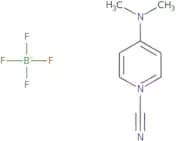
CAS:<p>1-Cyano-4-(dimethylamino)pyridinium tetrafluoroborate (CDAP) is an organic cyanylating agent. It is reactive under acidic conditions giving CDAP an advantage over other sulfhydryl labeling agents, as it can avoid potential thiol-disulfide exchange.</p>Formula:C8H10N3BF4Purity:Min. 98 Area-%Color and Shape:PowderMolecular weight:234.99 g/mol(4-Hydroxy-3-methoxyphenyl)acetonitrile
CAS:<p>Lobetyolin is a phenolic compound that has been found to be an inhibitor of monoamine oxidase. Lobetyolin is an acetylated derivative of 4-hydroxy-3-methoxyphenylacetonitrile. It has been shown to inhibit bacterial growth in vitro, with the exception of Mycobacterium tuberculosis and Mycobacterium avium complex. The optimal reaction time for lobetyolin is 3 hours at a pH between 7 and 8, with a yield of 66% at room temperature. Lobetyolin reacts rapidly with amines, alkylating them as it undergoes oxidation by hydrogen peroxide. Lobetyolin also reacts slowly with dopamine and aldehydes, but more readily with chlorides, yielding lobetyrine and chloroacetaldehyde respectively.</p>Formula:C9H9NO2Purity:Min. 95%Color and Shape:PowderMolecular weight:163.17 g/mol2-(4-tert-Butyl-phenoxy)acetonitrile
CAS:<p>2-(4-tert-Butyl-phenoxy)acetonitrile is a high quality, reagent, complex compound that is useful as a building block in the synthesis of fine chemicals and speciality chemicals. 2-(4-tert-Butyl-phenoxy)acetonitrile can be used as an intermediate in the synthesis of various pharmaceuticals and agrochemicals. It has a CAS number of 50635-24-0. This chemical is also useful for research purposes.</p>Formula:C12H15NOPurity:(%) Min. 85%Color and Shape:PowderMolecular weight:189.25 g/mol2-Bromo-5-cyanonitrobenzene
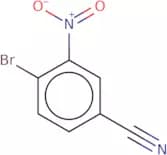
CAS:<p>2-Bromo-5-cyanonitrobenzene is a chemical compound that has been shown to have broad-spectrum activity against drug-resistant bacteria. It is able to kill gram-negative and gram-positive bacteria, including drug-resistant strains. The mechanism of action for 2-bromo-5-cyanonitrobenzene is not well understood but it has been observed that the molecule undergoes an oxidative cyclization reaction in the presence of chloride ions or hydroxides. This process leads to the formation of a nitrosobenzene metabolite which reacts with DNA to inhibit protein synthesis and cause cell death. 2-Bromo-5-cyanonitrobenzene has also been shown to be potent against a wide range of different types of bacteria, including those most commonly associated with skin infections, respiratory tract infections, and urinary tract infections.</p>Formula:C7H3BrN2O2Purity:Min. 95%Color and Shape:PowderMolecular weight:227.02 g/mol(2,3-Dichlorophenyl)acetonitrile
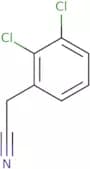
CAS:<p>(2,3-Dichlorophenyl)acetonitrile is a fine chemical that is useful as a building block in the synthesis of more complex compounds. It has been used in research as a reagent and as a speciality chemical. (2,3-Dichlorophenyl)acetonitrile reacts with many different types of compounds to form new molecules. This intermediate can be used in the synthesis of many different types of compounds and also serves as an important scaffold for larger molecules.</p>Formula:C8H5Cl2NPurity:Min. 95%Color and Shape:PowderMolecular weight:186.04 g/mol2-Chloro-4-fluorobenzonitrile
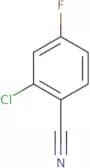
CAS:<p>2-Chloro-4-fluorobenzonitrile is a drug that has been shown to have antitumor effects by binding to the CB2 receptor. It inhibits hydrogenation reduction of the molecule, which may be due to its ability to react with both functional groups. 2-Chloro-4-fluorobenzonitrile has also been shown to inhibit progesterone receptor, which may lead to an increase in progesterone levels and a decrease in estrogen levels. The pharmacokinetic properties of this compound are not yet known.</p>Formula:C7H3ClFNPurity:Min. 95%Color and Shape:White PowderMolecular weight:155.56 g/mol4,4'-Azobis(4-cyanovaleric acid)
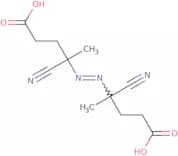
CAS:<p>Azobis(4-cyanovaleric acid) is a chemical compound that has reactive functional groups. It is a particle that is soluble in acetate extract and hydrochloric acid. The synthesis of Azobis(4-cyanovaleric acid) involves the reaction of 4-cyanoacrylic acid with 2,2'-azobis(2-methylpropionitrile). It is used as an intermediate in the preparation of polymers. Azobis(4-cyanovaleric acid) is used for the treatment of infectious diseases such as tuberculosis and malaria. The production of chain reactions with other molecules makes this chemical reactive and unstable. Azobis(4-cyanovaleric acid) also reacts with nucleophilic groups, such as hydroxyl groups, to form a covalent bond. This process can be reversed by adding a strong base or oxidant.</p>Formula:C12H16N4O4Purity:Min. 95 Area-%Color and Shape:PowderMolecular weight:280.28 g/mol3-Ethoxy-4-hydroxyphenylacetonitrile
CAS:<p>3-Ethoxy-4-hydroxyphenylacetonitrile is a versatile building block and reagent that is used in the manufacturing of pharmaceuticals, agricultural chemicals, and other chemical products. It has been shown to be an excellent starting material for the synthesis of complex compounds. 3-Ethoxy-4-hydroxyphenylacetonitrile can be used as a high quality research chemical or useful scaffold for organic synthesis. CAS No. 205748-01-2</p>Formula:C10H11NO2Purity:Min. 95%Color and Shape:PowderMolecular weight:177.2 g/molEthyl 4-cyano-3-nitrobenzoate
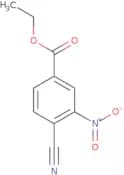
CAS:<p>Ethyl 4-cyano-3-nitrobenzoate is a chemical compound with the structural formula of CHNO. It is a building block for organic synthesis and can be used in the production of high quality research chemicals and speciality chemicals. Ethyl 4-cyano-3-nitrobenzoate has been shown to react with a variety of amines to form urea derivatives that are useful as versatile building blocks or complex compounds. This reagent is also useful as an intermediate in the synthesis of various pharmaceuticals. CAS No. 321162-58-7</p>Formula:C10H8N2O4Purity:Min. 95%Color and Shape:PowderMolecular weight:220.18 g/mol


![2-Cyano-N-[2-(3,4-dimethoxyphenyl)ethyl]acetamide](/_next/image/?url=https%3A%2Fstatic.cymitquimica.com%2Fproducts%2F3D%2Fthumb-webp%2FFC131318.webp&w=3840&q=75)