Cyano-, Nitrile-
Cyano and nitrile compounds are organic molecules that contain cyano (C≡N) or nitrile groups in their structure, characterized by the presence of nitrogen. These groups play important roles in various chemical reactions and industrial applications. In this category, you will find a wide range of cyano and nitrile compounds, ranging from simple to complex structures. At CymitQuimica, we offer high-quality cyano and nitrile compounds tailored to meet research and industrial needs. Our compounds are suitable for a variety of synthesis and analytical applications.
Found 9618 products of "Cyano-, Nitrile-"
Sort by
Purity (%)
0
100
|
0
|
50
|
90
|
95
|
100
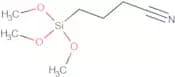
3-Cyanopropyltrimethoxysilane
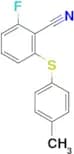
CAS:<p>S05035 - 3-Cyanopropyltrimethoxysilane</p>Formula:C7H15NO3SiColor and Shape:Liquid, ClearMolecular weight:189.2862-Fluoro-6-(4-methylphenylthio)benzonitrile
CAS:Formula:C14H10FNSColor and Shape:SolidMolecular weight:243.32-[(3Z)-1-(ethanesulfonyl)piperidin-3-ylidene]acetonitrile
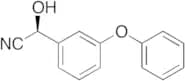
CAS:Purity:97.0%Molecular weight:214.27999877929688(S)-2-Hydroxy-2-(3-phenoxyphenyl)acetonitrile
CAS:<p>Stability Light Sensitive, Moisture Sensitive<br>Applications (S)-2-Hydroxy-2-(3-phenoxyphenyl)acetonitrile is used as a reagent in the synthesis of Fluvalinate (F601100) and its related analogs which exhibit insecticidal activity.<br> Not a dangerous good if item is equal to or less than 1g/ml and there is less than 100g/ml in the package<br>References Anderson, R.J., et al.: J. Agr. Food Chem., 33, 508 (1985)<br></p>Formula:C14H11NO2Color and Shape:Light YellowMolecular weight:225.24Ref: 10-F721268
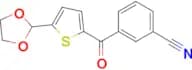
1gTo inquire2gTo inquire5gTo inquire10gTo inquire100mgTo inquire250mgTo inquire500mgTo inquire2-(3-Cyanobenzoyl)-5-(1,3-dioxolan-2-yl)thiophene
CAS:Purity:97.0%Molecular weight:285.320007324218752-Aminopropanenitrile hydrochloride
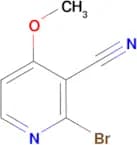
CAS:Purity:95.0%Color and Shape:SolidMolecular weight:106.550003051757812-Bromo-4-methoxynicotinonitrile
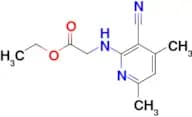
CAS:Formula:C7H5BrN2OPurity:95.0%Color and Shape:SolidMolecular weight:213.034Ethyl (3-cyano-4,6-dimethylpyridin-2-ylamino)acetate
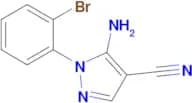
CAS:Formula:C12H15N3O2Purity:95.0%Color and Shape:SolidMolecular weight:233.2715-Amino-1-(2-bromophenyl)-1H-pyrazole-4-carbonitrile
CAS:Purity:95.0%Molecular weight:263.09799194335947'-Methyl-5'-oxo-3',5'-dihydro-2'H-spiro[[1,3]dioxolane-2,1'-indolizine]-6'-carbonitrile
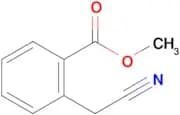
CAS:Purity:98%Molecular weight:232.23899841308594Methyl 2-(cyanomethyl)benzoate
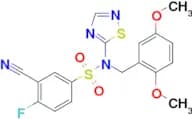
CAS:Formula:C10H9NO2Purity:95.0%Color and Shape:SolidMolecular weight:175.1873-Cyano-N-(2,5-dimethoxybenzyl)-4-fluoro-N-(1,2,4-thiadiazol-5-yl)benzenesulfonamide
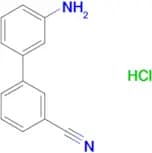
Purity:85%Molecular weight:434.45999145507813′-Amino-biphenyl-3-carbonitrilehydrochloride
CAS:Formula:C13H11ClN2Color and Shape:SolidMolecular weight:230.7Ethyl 3-amino-2-(((2'-cyano-[1,1'-biphenyl]-4-yl)methyl)amino)benzoate
CAS:Purity:95.0%Molecular weight:371.440002441406251-(Chloromethyl)cyclohexanecarbonitrile
CAS:Purity:95.0%Color and Shape:LiquidMolecular weight:157.639999389648444-Chloro-2-methylpyrimidine-5-carbonitrile
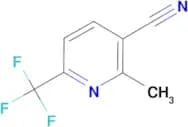
CAS:Purity:95.0%Color and Shape:SolidMolecular weight:153.570007324218752-Methyl-6-(trifluoromethyl)nicotinonitrile
CAS:Purity:95%Color and Shape:Solid, Off white solidMolecular weight:186.136993408203121-[(2-hydroxyethyl)amino]-3-methylpyrido[1,2-a]benzimidazole-4-carbonitrile
CAS:Purity:95.0%Molecular weight:266.30398559570312,6-Difluorobenzonitrile
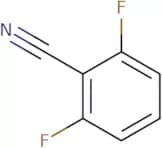
CAS:<p>2,6-Difluorobenzonitrile is a nucleophilic compound that reacts with inorganic acids to form new chemical structures. It has been shown to react with hydrochloric acid, sodium carbonate and phosphotungstic acid. The FT-IR spectroscopy of 2,6-difluorobenzonitrile shows a reaction product with a proton. This means that the molecule is able to transfer a hydrogen ion from one site to another. The reaction between 2,6-difluorobenzonitrile and sodium carbonate produces an insoluble precipitate of sodium phosphate and sodium chloride, which can be analyzed gravimetrically. 2,6-Difluorobenzonitrile has also been shown to have fluorescence properties that are activated by ultraviolet light and naphthalene.</p>Formula:C7H3F2NPurity:Min. 95%Color and Shape:PowderMolecular weight:139.1 g/mol4-Cyano-L-phenylalanine
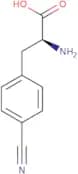
CAS:<p>4-Cyano-L-phenylalanine is an unnatural aminoacid that has been shown to bind to amyloid protein, which is associated with Alzheimer's disease. The binding of 4-Cyano-L-phenylalanine inhibits the synthesis of amyloid protein and prevents the formation of amyloid fibrils. 4-Cyano-L-phenylalanine also irreversibly inhibits the enzyme responsible for the production of hydrochloric acid in bacteria. The x-ray crystal structures of 4-Cyano L-phenylalanine have been determined and show that this compound binds to the active site of the enzyme synthetase, preventing it from forming an amino acid bond. 4-Cyano L-phenylalanine is an analog of 4-L-phenylalanine and, thanks to its cyano (nitrile) group, is a good candidate for use as a fluorescence marker to study the peptide membrane interactions.</p>Formula:C10H10N2O2Purity:Min. 95%Color and Shape:PowderMolecular weight:190.2 g/mol4-Cyano-2-fluorobenzoic acid methyl ester
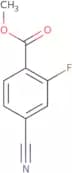
CAS:<p>4-Cyano-2-fluorobenzoic acid methyl ester is a versatile building block for complex compounds. It can be used as a reagent to synthesize other compounds and as a speciality chemical with high quality. This chemical is also an intermediate in the synthesis of other compounds, such as 4-cyano-2-fluorobenzoic acid ethyl ester, which has been shown to be useful in the synthesis of β-lactam antibiotics.</p>Formula:C9H6FNO2Purity:Min. 95%Color and Shape:PowderMolecular weight:179.15 g/mol4-(Benzyloxy)-3-methoxyphenylacetonitrile
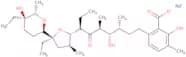
CAS:<p>4-(Benzyloxy)-3-methoxyphenylacetonitrile is an anti-cancer drug that belongs to the class of dihydroisoquinolines. It is used as a monomer in the synthesis of other drugs and it has been shown to be an effective inhibitor of cancer cells when used with carbamic acid. 4-(Benzyloxy)-3-methoxyphenylacetonitrile is synthesised through the reaction of 2,4-dichloroisonicotinic acid and 3-fluoroacetamide in the presence of a strong acid catalyst. This compound has been shown to have a high level of stereoselectivity, which makes it useful for synthesising other compounds.</p>Formula:C16H15NO2Purity:Min. 95%Color and Shape:PowderMolecular weight:253.3 g/molLasalocid A sodium salt - 0.1mg/ml, in acetonitrile
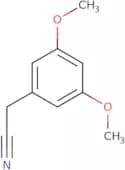
CAS:<p>Lasalocid A sodium salt is a sodium salt of lasalocid, which is a macrolide antibiotic that inhibits bacterial growth by binding to the 50S ribosomal subunit. Lasalocid A sodium salt has intramolecular hydrogen bonds and exhibits high solubility in acetonitrile. The experimental solubility data was obtained using an analytical method with quillaja saponaria as a model system. Lasalocid A sodium salt has been used as an experimental model for congestive heart failure and is also used in biological samples such as blood, urine, or tissue. This drug is highly resistant to degradation by bacteria.</p>Formula:C34H53NaO8Purity:Min. 90 Area-%Color and Shape:Colorless Clear LiquidMolecular weight:612.77 g/mol(3,5-Dimethoxyphenyl)acetonitrile
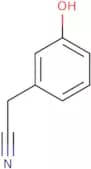
CAS:<p>3,5-Dimethoxyphenylacetonitrile is a synthetic compound that has been shown to be an inhibitor of the demethylation reaction. It is postulated to have anticancer activity and inhibits the biosynthesis of octaketides in vitro. This compound has also been shown to have antibacterial activity and is structurally related to cannabinoids. The mechanism by which 3,5-dimethoxyphenylacetonitrile inhibits cancer cells is not known. However, it may be due to its ability to bind cannabinoid receptors.</p>Formula:C10H11NO2Purity:Min. 95%Color and Shape:PowderMolecular weight:177.2 g/mol3-Hydroxyphenylacetonitrile
CAS:<p>3-Hydroxyphenylacetonitrile is a molecule that is the precursor for a number of isothiocyanates, which are phytochemicals with antibacterial properties. It has been shown to have inhibitory effects on dopamine hydroxylase, an enzyme that catalyzes the conversion of dopamine to norepinephrine and epinephrine. 3-Hydroxyphenylacetonitrile also inhibits the activity of other active enzymes such as cytochrome P450. The inhibition of these enzymes by 3-hydroxyphenylacetonitrile may be responsible for its antibacterial properties. This molecule is inactivated by cyanides, which leads to its inability to produce any isothiocyanates. Kinetic studies show that 3-hydroxyphenylacetonitrile saturates at high concentrations, leading to decreased production of cyanide.</p>Formula:C8H7NOPurity:Min. 95%Color and Shape:PowderMolecular weight:133.15 g/mol3-Methoxy-4-methylbenzonitrile
CAS:<p>3-Methoxy-4-methylbenzonitrile is a reagent that is used in the synthesis of complex compounds, such as pharmaceuticals and fine chemicals. It has been shown to be useful as an intermediate for the synthesis of various drugs, including antibiotics. 3-Methoxy-4-methylbenzonitrile has also been shown to be a useful scaffold for the synthesis of new drugs and other chemical compounds. This compound is listed on the Chemical Abstracts Service registry number 3556-60-3.</p>Formula:C9H9NOPurity:Min. 95%Color and Shape:PowderMolecular weight:147.17 g/mol


![4-(7-bromoimidazo[1,2-a]pyridin-2-yl)benzonitrile](/_next/image/?url=https%3A%2Fstatic.cymitquimica.com%2Fproducts%2F10%2Fthumb-webp%2FF517933.webp&w=3840&q=75)


![2-[(3Z)-1-(ethanesulfonyl)piperidin-3-ylidene]acetonitrile](/_next/image/?url=https%3A%2Fstatic.cymitquimica.com%2Fproducts%2F10%2Fthumb-webp%2FF519455.webp&w=3840&q=75)






![7'-Methyl-5'-oxo-3',5'-dihydro-2'H-spiro[[1,3]dioxolane-2,1'-indolizine]-6'-carbonitrile](/_next/image/?url=https%3A%2Fstatic.cymitquimica.com%2Fproducts%2F10%2Fthumb-webp%2FF606689.webp&w=3840&q=75)
![1-(BENZO[D]THIAZOL-2-YL)CYCLOPROPANECARBONITRILE](/_next/image/?url=https%3A%2Fstatic.cymitquimica.com%2Fproducts%2F10%2Fthumb-webp%2FF305602.webp&w=3840&q=75)

![Ethyl 3-amino-2-(((2'-cyano-[1,1'-biphenyl]-4-yl)methyl)amino)benzoate](/_next/image/?url=https%3A%2Fstatic.cymitquimica.com%2Fproducts%2F10%2Fthumb-webp%2FF321113.webp&w=3840&q=75)


![4-(6-fluoroimidazo[1,2-a]pyridin-2-yl)benzonitrile](/_next/image/?url=https%3A%2Fstatic.cymitquimica.com%2Fproducts%2F10%2Fthumb-webp%2FF517937.webp&w=3840&q=75)
![1-[(2-hydroxyethyl)amino]-3-methylpyrido[1,2-a]benzimidazole-4-carbonitrile](/_next/image/?url=https%3A%2Fstatic.cymitquimica.com%2Fproducts%2F10%2Fthumb-webp%2FF314459.webp&w=3840&q=75)