Cyano-, Nitrile-
Cyano and nitrile compounds are organic molecules that contain cyano (C≡N) or nitrile groups in their structure, characterized by the presence of nitrogen. These groups play important roles in various chemical reactions and industrial applications. In this category, you will find a wide range of cyano and nitrile compounds, ranging from simple to complex structures. At CymitQuimica, we offer high-quality cyano and nitrile compounds tailored to meet research and industrial needs. Our compounds are suitable for a variety of synthesis and analytical applications.
Found 9618 products of "Cyano-, Nitrile-"
Sort by
Purity (%)
0
100
|
0
|
50
|
90
|
95
|
100
N-[[(2R,3S,4R)-4-[Bis[(3-cyanophenyl)methyl]amino]-3-hydroxyoxolan-2-yl]methyl]cyclopropanecarboxamide
CAS:Controlled ProductFormula:C25H26N4O3Color and Shape:NeatMolecular weight:430.499Aminoacetonitrile Hydrochloride
CAS:Controlled Product<p>Applications Aminoacetonitrile is a useful synthetic intermediate. It is a reagent used to synthesize dipeptide nitriles as reversible and potent cathepsin S inhibitors. It can also used to prepare substituted cyclic ureas as possible HIV protease inhibitors.<br>References Ward, Y., et al.: J. Med. Chem., 45, 5471 (2002); Wilkerson, W., et al.: J. Med. Chem., 40, 4079 (1997)<br></p>Formula:C2H5ClN2Color and Shape:White To Off-WhiteMolecular weight:92.536-Fluoro-2-benzothiazoleacetonitrile
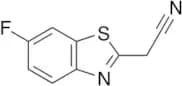
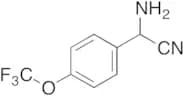
CAS:Controlled ProductFormula:C9H5FN2SColor and Shape:NeatMolecular weight:192.213α-Amino-4-(trifluoromethoxy)benzeneacetonitrile Hydrochloride
CAS:Controlled ProductFormula:C9H7F3N2OColor and Shape:NeatMolecular weight:216.164-Cyanocyclohexanone
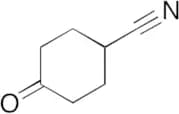
CAS:Controlled Product<p>Applications 4-Cyanocyclohexanone is used to prepare nicotinamides as PDE4 D isoenzymes inhibitors. It is also used as an anthranilic acid replacement in niacin receptor agonist.<br>References Marfat, A., et al.: PCT Int. Appl. (1998), WO 9845268 A1 19981015; Schmidt, D., et al.: Bioorg. Med. Chem. lett., 20, 3426 (2010)<br></p>Formula:C7H9NOColor and Shape:NeatMolecular weight:123.15Pentachlorophenyl Cyanoacetate
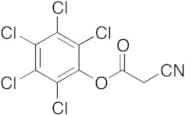
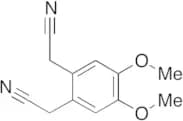
CAS:Controlled Product<p>Applications Pentachlorophenyl Cyanoacetate is an intermediate used in the synthesis of Cefacetrile (C231500), which is a cephalosporin antibiotic. Antibacterial.<br>References Dajan, A., et al.: Vet. Microbiol., 35, 213 (1993), Becker, M., et al.: Anal. Chim. Acta, 520, 19 (2004), El-Shaboury, S., et al.: J. Pharm. Biomed. Anal., 45, 1 (2007),<br></p>Formula:C9H2Cl5NO2Color and Shape:NeatMolecular weight:333.3834,5-Dimethoxy-1,2-benzenediacetonitrile
CAS:Controlled ProductFormula:C12H12N2O2Color and Shape:NeatMolecular weight:216.242-Amino-4-cyano-phenol
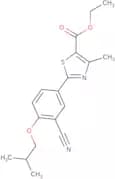
CAS:Controlled Product<p>Stability Air Sensitive, Light Sensitive<br>Applications 2-Amino-4-cyano-phenol<br></p>Formula:C7H6N2OColor and Shape:NeatMolecular weight:134.14Ethyl 2-(3-cyano-4-isobutoxyphenyl)-4-methyl-5-thiazolecarboxylate
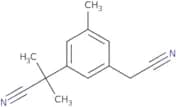
CAS:<p>Ethyl 2-(3-cyano-4-isobutoxyphenyl)-4-methyl-5-thiazolecarboxylate (ECIT) is a derivative of formyl that has been used as a solvent for industrial and laboratory purposes. ECIT is an amorphous substance with the chemical formula CH3COC6H2CH2COCH=N(C=O)C6H4CN. The compound has been quantified in various solvents, such as n-butyl alcohol and acetonitrile. ECIT is a colorless liquid that boils at 140° C. It has a formyl group and an alkynyl group, which are both reactive groups that can be used to synthesize other compounds. ECIT also contains two stereoisomers: the erythro isomer and the threo isomer. The erythro isomer has the structural formula of CH3COC6H2CH</p>Purity:Min. 95%a1,a1,5-Trimethyl-1,3-benzenediacetonitrile
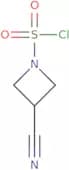
CAS:<p>Please enquire for more information about a1,a1,5-Trimethyl-1,3-benzenediacetonitrile including the price, delivery time and more detailed product information at the technical inquiry form on this page</p>Formula:C13H14N2Purity:Min. 95%Molecular weight:198.26 g/mol3-Cyano-1-azetidinesulfonyl chloride
CAS:<p>Please enquire for more information about 3-Cyano-1-azetidinesulfonyl chloride including the price, delivery time and more detailed product information at the technical inquiry form on this page</p>Formula:C4H5ClN2O2SPurity:Min. 95%Molecular weight:180.61 g/mola-Acetylphenylacetonitrile
CAS:Controlled Product<p>a-Acetylphenylacetonitrile is a bifunctional molecule that can be used in the synthesis of new compounds, such as pharmaceuticals, dyes, and perfumes. It is an analytical technique for measuring the concentrations of cyanides in wastewater. The fluorescence properties of this compound are helpful in detecting the presence of phenylacetone by using a kinetic assay. This compound can also be used to synthesize other organic compounds with high enantiopurity.</p>Formula:C10H9NOPurity:Min. 95%Molecular weight:159.18 g/mol3-Cyanopropionic acid methyl ester
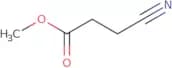
CAS:<p>3-Cyanopropionic acid methyl ester is a compound that belongs to the class of aliphatic carboxylic acids. It is an intermediate in the production of adiponitrile and acrylonitrile. This compound is used as a feedstock for the manufacture of vinylene, which can be used to produce c1-6 alkyl. 3-Cyanopropionic acid methyl ester can be produced from propylene and hydrogen cyanide in a high salt, activated reaction system. It has been shown that this compound may have metabolic disorders due to its ability to inhibit fatty acid oxidation and increase viscosity. 3-Cyanopropionic acid methyl ester is a colorless liquid at room temperature with a boiling point of 154°C and a molecular weight of 98.14 g/mol.</p>Formula:C5H7NO2Purity:Min. 95%Color and Shape:Clear LiquidMolecular weight:113.11 g/molCyanoacetohydrazide
CAS:<p>Cyanoacetohydrazide is a nucleophilic compound that can react with a variety of molecules, including fatty acids and hydroxy methyl groups. The mechanism of this reaction involves the nucleophilic attack of the cyanide ion on the carbonyl group. This type of reaction has been shown to be reversible and involve the formation of an intermediate hemiacetal, which then attacks another molecule. Cyanoacetohydrazide is used as an antimicrobial agent in some products, such as mouthwashes and toothpaste. It also has anticancer activity.</p>Formula:C3H5N3OPurity:Min. 95%Color and Shape:PowderMolecular weight:99.09 g/molMethoxyacetonitrile
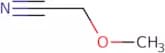
CAS:<p>Methoxyacetonitrile is a chemical that is used in the manufacture of acrylate polymers. Acrylate polymers are used in animal health, such as plastics for veterinary use and as a coating on animal feed. Methoxyacetonitrile can be used to create a cationic polymerization reaction with an organic solution. The resulting polymer film has been shown to have good chemical stability. Productivity depends on the temperature and size of the particles, which can be controlled with an electric field or by changing the concentration of reactants. Methoxyacetonitrile may also be used as a dietary supplement because it has been shown to provide relief from chronic coughs.</p>Formula:C3H5NOPurity:Min. 95%Color and Shape:Clear LiquidMolecular weight:71.08 g/molMethyl-2-isocyanoisobutyrate
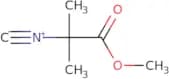
CAS:<p>Please enquire for more information about Methyl-2-isocyanoisobutyrate including the price, delivery time and more detailed product information at the technical inquiry form on this page</p>Formula:C9H9NO2Purity:Min. 95%Molecular weight:127.14 g/molDicyclohexylamine 2-cyanoacrylate
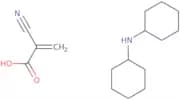
CAS:Controlled Product<p>Please enquire for more information about Dicyclohexylamine 2-cyanoacrylate including the price, delivery time and more detailed product information at the technical inquiry form on this page</p>Formula:C16H26N2O2Purity:Min. 95%Molecular weight:278.39 g/molN'-Cyanobenzenecarboximidamide hydrochloride
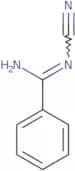
CAS:<p>N-Cyanobenzenecarboximidamide hydrochloride (NCBCH) is an intermediate for the synthesis of azomethine dyes. It can be used to produce azo dyes with a methoxy group at the 3 position and a hydrogen atom at the 4 position. NCBCH is also an excellent substrate for chemical reactions involving fragmentation, extraction, or elimination. NCBCH can be synthesized from methyl ether and benzonitrile in the presence of benzamidine. The product is then treated with methanol to give a tautomeric mixture of benzyl and methyl ether.</p>Formula:C8H7N3Purity:Min. 95%Molecular weight:145.16 g/molEthyl (R)-(-)-4-cyano-3-hydroxybutyrate
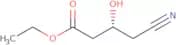
CAS:<p>Ethyl (R)-(-)-4-cyano-3-hydroxybutyrate is an asymmetric synthesis of D-(+)-glyceraldehyde. This compound is an acidic, high cholesterol substrate that binds to disaccharides and has hydroxyl groups. It has been shown to reduce low density lipoprotein levels in the blood by inhibiting the production of cholesterol in the liver. The reaction solution is immobilized on a solid support and is used for kinetic studies. Kinetic measurements were performed at different concentrations of hydrochloric acid and immobilized cells as a function of time. The reaction yield was determined using UV absorbance at 275 nm, which was plotted against time.</p>Purity:Min. 95%Boc-2-cyano-D-phenylalanine
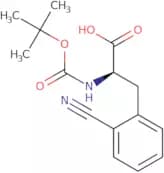
CAS:<p>Please enquire for more information about Boc-2-cyano-D-phenylalanine including the price, delivery time and more detailed product information at the technical inquiry form on this page</p>Formula:C15H18N2O4Purity:Min. 95%Molecular weight:290.31 g/mol
![N-[[(2R,3S,4R)-4-[Bis[(3-cyanophenyl)methyl]amino]-3-hydroxyoxolan-2-yl]methyl]cyclopropanecarboxa…](/_next/image/?url=https%3A%2Fstatic.cymitquimica.com%2Fproducts%2FTR%2Fthumb-webp%2FB400145.webp&w=3840&q=75)