Cyano-, Nitrile-
Cyano and nitrile compounds are organic molecules that contain cyano (C≡N) or nitrile groups in their structure, characterized by the presence of nitrogen. These groups play important roles in various chemical reactions and industrial applications. In this category, you will find a wide range of cyano and nitrile compounds, ranging from simple to complex structures. At CymitQuimica, we offer high-quality cyano and nitrile compounds tailored to meet research and industrial needs. Our compounds are suitable for a variety of synthesis and analytical applications.
Found 9618 products of "Cyano-, Nitrile-"
Sort by
Purity (%)
0
100
|
0
|
50
|
90
|
95
|
100
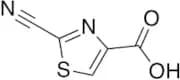
2-Cyano-thiazole-5-carboxylic Acid
CAS:Controlled ProductFormula:C5H2N2O2SColor and Shape:NeatMolecular weight:154.1474-Cyano-N,N-dimethylbenzamide
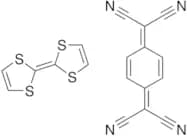
CAS:Controlled Product<p>Applications 4-cyano-N,N-dimethylbenzamide (cas# 24167-50-8) is a useful research chemical.<br></p>Formula:C10H10N2OColor and Shape:NeatMolecular weight:174.19Tetrathiafulvalene - 7,7,8,8-Tetracyanoquinodimethane Complex
CAS:Controlled Product<p>Applications Tetrathiafulvalene - 7,7,8,8-Tetracyanoquinodimethane Complex (cas# 40210-84-2) is a useful research chemical.<br></p>Formula:C6H4S4·C12H4N4Color and Shape:Dark Blue To BlackMolecular weight:408.543-Cyanobenzoic Acid
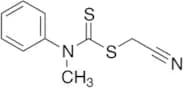
CAS:Controlled Product<p>Applications 3-Cyanobenzoic Acid, is a building block used for the synthesis of a variety of 3,5-disubstituted 1,2,4-oxadiazoles from carboxylic acids, that can be used for the synthesis of a metabotropic glutamate subtype 5 (mGlu5) receptor antagonist.<br>References Ramu, T., et al.: Chem. Lett., 42, 722 (2013);<br></p>Formula:C8H5NO2Color and Shape:NeatMolecular weight:147.13Cyanomethyl Methyl(phenyl)carbamodithioate
CAS:Controlled Product<p>Applications Cyanomethyl Methyl(phenyl)carbamodithioate (cas# 76926-16-4) is a useful research chemical.<br></p>Formula:C10H10N2S2Color and Shape:NeatMolecular weight:222.323,5-Dicyanophenylboronic Acid
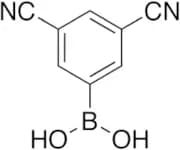
CAS:Controlled ProductFormula:C8H5BN2O2Color and Shape:NeatMolecular weight:171.9482-Phenyl-2-[(trimethylsilyl)oxy]acetonitrile (90%)
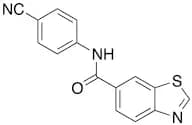
CAS:Controlled Product<p>Stability Moisture Sensitive<br>Applications 2-phenyl-2-[(trimethylsilyl)oxy]acetonitrile (cas# 25438-37-3) is a useful research chemical.<br></p>Formula:C11H15NOSiPurity:90%Color and Shape:NeatMolecular weight:205.33N-(4-Cyanophenyl)-6-benzothiazolecarboxamide
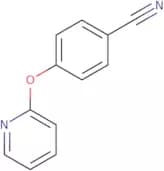
CAS:Controlled Product<p>Applications N-(4-Cyanophenyl)-6-benzothiazolecarboxamide is a compound used in the synthesis of piperazines presenting neuro and psychotropic agent with low toxicity.<br></p>Formula:C15H9N3OSColor and Shape:NeatMolecular weight:279.3174-(Pyridin-2-yloxy)benzonitrile
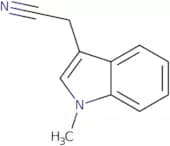
CAS:<p>4-(Pyridin-2-yloxy)benzonitrile is a reagent that is used in the synthesis of heterocycles. It is also a useful intermediate for the preparation of highly substituted pyridine derivatives. 4-(Pyridin-2-yloxy)benzonitrile can be used to synthesize complex compounds, such as pharmaceuticals and agricultural chemicals.</p>Formula:C12H8N2OPurity:Min. 95%Molecular weight:196.2 g/mol1-Methylindole-3-acetonitrile
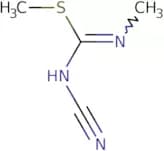
CAS:Controlled Product<p>Please enquire for more information about 1-Methylindole-3-acetonitrile including the price, delivery time and more detailed product information at the technical inquiry form on this page</p>Formula:C11H10N2Purity:Min. 95%Molecular weight:170.21 g/molN-Cyano-N',S-dimethylisothiourea
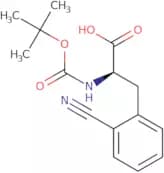
CAS:<p>Please enquire for more information about N-Cyano-N',S-dimethylisothiourea including the price, delivery time and more detailed product information at the technical inquiry form on this page</p>Formula:C4H7N3SPurity:Min. 95%Molecular weight:129.18 g/molBoc-2-cyano-D-phenylalanine
CAS:<p>Please enquire for more information about Boc-2-cyano-D-phenylalanine including the price, delivery time and more detailed product information at the technical inquiry form on this page</p>Formula:C15H18N2O4Purity:Min. 95%Molecular weight:290.31 g/molEthyl cyanoformate
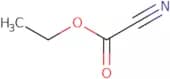
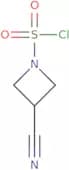
CAS:<p>Ethyl cyanoformate is a reactive compound that is used in organic synthesis. It has been shown to cause muscle cell proliferation and inhibit the production of gamma-aminobutyric acid, which is responsible for regulating neurotransmitter release. Ethyl cyanoformate also has antimicrobial properties due to its ability to form an oxygenated n-oxide tautomer. The reaction mechanism of ethyl cyanoformate involves the formation of a covalent bond with the sulfhydryl group on the enzyme gamma-aminobutyric acid receptor. This prevents the binding of GABA, inhibiting nerve impulses and reducing inflammation in the bowel.</p>Formula:C4H5NO2Purity:Min. 95%Color and Shape:Clear LiquidMolecular weight:99.09 g/mol3-Cyano-1-azetidinesulfonyl chloride
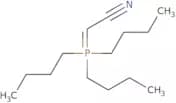
CAS:<p>Please enquire for more information about 3-Cyano-1-azetidinesulfonyl chloride including the price, delivery time and more detailed product information at the technical inquiry form on this page</p>Formula:C4H5ClN2O2SPurity:Min. 95%Molecular weight:180.61 g/molCyanomethylenetributylphosphorane
CAS:<p>Cyanomethylenetributylphosphorane (CMTP) is an agent used for the diagnosis of body formation. It is a chemical compound that can be used to produce images of tissue and organs by detecting apoptosis, or programmed cell death. CMTP binds to the glucose-dependent insulinotropic polypeptide receptor (GIPR), stimulating the release of insulin in the pancreas. CMTP also has therapeutic potential for metabolic disorders, as it has been shown to reduce triglycerides and increase HDL cholesterol levels in human serum. CMTP is synthesized from trifluoroacetic acid, which is then reacted with a cyclic peptide containing an amino acid derivative and 1-methyl-2-pyrrolidinone. This reaction produces a molecule with one free amino group at one end and two free carboxylic acid groups at the other end. The molecule can be reacted with epidermal growth factor (EGF) or insulin to</p>Formula:C14H28NPPurity:Min. 95%Color and Shape:Yellow To Dark Brown Clear LiquidMolecular weight:241.35 g/molPotassium tetracyanoaurate(III)
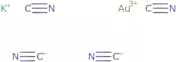
CAS:Controlled Product<p>Potassium tetracyanoaurate(III) (K[AuCl4]) is a crystalline, intermetallic compound that has been used in the production of coatings, spherical particles, and electrochemical materials. The pentahydrate form has a diameter of 4.8-5.2 Å and a melting point of ~115°C. K[AuCl4] is stable in air and water but reacts with strong acids to form potassium chloride and potassium tetracyanocuprate(II). This substance also has an optimal pH range of 6-7 and an average solubility range of 0.05-0.1g/100mL at 20°C. The microstructure of K[AuCl4] is not well understood because it is difficult to isolate from other compounds during synthesis.</p>Formula:C4AuN4KPurity:Min. 95%Color and Shape:PowderMolecular weight:340.13 g/molEthyl (ethoxymethylene) cyanoacetate
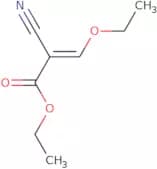
CAS:<p>Ethyl (Ethoxymethylene) cyanoacetate is a chemical compound that belongs to the family of aldehyde compounds. It is a colorless liquid at room temperature, with an odor similar to that of acetic acid. The compound has been used in the synthesis of epidermal growth factor and diazonium salts. It has also been used in the production of anti-cancer drugs such as malonic acid, which inhibits tumor growth by inhibiting protein synthesis. Ethyl (Ethoxymethylene) cyanoacetate reacts with quinoline derivatives to form carbon disulphide, which can be used as an antimicrobial agent and insecticide.</p>Formula:C8H11NO3Purity:Min. 95%Color and Shape:PowderMolecular weight:169.18 g/molDicyclohexylamine 2-cyanoacrylate
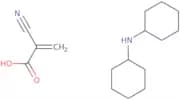
CAS:Controlled Product<p>Please enquire for more information about Dicyclohexylamine 2-cyanoacrylate including the price, delivery time and more detailed product information at the technical inquiry form on this page</p>Formula:C16H26N2O2Purity:Min. 95%Molecular weight:278.39 g/mol(4-Fluoro-3-Nitrophenyl)Acetonitrile
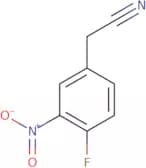
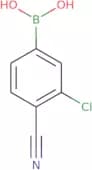
CAS:<p>4-Fluoro-3-nitrophenylacetonitrile is a monomer that can be synthesised from the reaction of carbamic acid and diphenyl ether. It is chiral, stereoselective and nucleophilic. 4-Fluoro-3-nitrophenylacetonitrile can also be synthesised by reacting fluoroacetamide with sodium cyanide in water, forming the corresponding amide, which reacts with acetonitrile to form the nitro compound. The anti-cancer properties of 4-fluoro-3 nitrophenylacetonitrile have been studied in vitro and in vivo. This substance has been shown to inhibit growth of cancer cells and induce apoptosis. In addition, this substance has been used as a synthetic strategy for dihydroisoquinolines, which are important for their anti-cancer properties.</p>Formula:C8H5FN2O2Purity:Min. 95%Molecular weight:180.14 g/mol3-Chloro-4-cyanophenylboronic acid
CAS:Controlled Product<p>Please enquire for more information about 3-Chloro-4-cyanophenylboronic acid including the price, delivery time and more detailed product information at the technical inquiry form on this page</p>Formula:C7H5BClNO2Purity:Min. 95%Molecular weight:181.38 g/mol



![2-Phenyl-2-[(trimethylsilyl)oxy]acetonitrile (90%)](/_next/image/?url=https%3A%2Fstatic.cymitquimica.com%2Fproducts%2FTR%2Fthumb-webp%2FP321065.webp&w=3840&q=75)