Cyano-, Nitrile-
Cyano and nitrile compounds are organic molecules that contain cyano (C≡N) or nitrile groups in their structure, characterized by the presence of nitrogen. These groups play important roles in various chemical reactions and industrial applications. In this category, you will find a wide range of cyano and nitrile compounds, ranging from simple to complex structures. At CymitQuimica, we offer high-quality cyano and nitrile compounds tailored to meet research and industrial needs. Our compounds are suitable for a variety of synthesis and analytical applications.
Found 9618 products of "Cyano-, Nitrile-"
Sort by
Purity (%)
0
100
|
0
|
50
|
90
|
95
|
100
(5-Benzyloxyindol-3-yl)acetonitrile
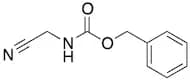
CAS:Controlled ProductFormula:C17H14N2OColor and Shape:NeatMolecular weight:262.306Benzyl Cyanomethylcarbamate
CAS:Controlled Product<p>Applications BENZYL CYANOMETHYLCARBAMATE (cas# 3589-41-1) is a useful research chemical.<br></p>Formula:C10H10N2O2Color and Shape:NeatMolecular weight:190.19p-Cyanobenzoic Acid Trimer
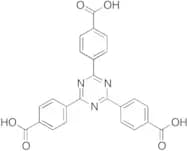
CAS:Controlled Product<p>Applications p-Cyanobenzoic Acid Trimer is used in the synthetic preparation of Terbium Triazinetribenzoate Formate Metal Organic Framework (MOF).<br>References Han, Y., et al.: J. Mater. Chem. A Mater. Energy Sustain., 3, 24525 (2015)<br></p>Formula:C24H15N3O6Color and Shape:NeatMolecular weight:441.39Pentachlorophenyl Cyanoacetate
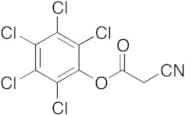
CAS:Controlled Product<p>Applications Pentachlorophenyl Cyanoacetate is an intermediate used in the synthesis of Cefacetrile (C231500), which is a cephalosporin antibiotic. Antibacterial.<br>References Dajan, A., et al.: Vet. Microbiol., 35, 213 (1993), Becker, M., et al.: Anal. Chim. Acta, 520, 19 (2004), El-Shaboury, S., et al.: J. Pharm. Biomed. Anal., 45, 1 (2007),<br></p>Formula:C9H2Cl5NO2Color and Shape:NeatMolecular weight:333.383(5-Cyanothiophen-3-yl)boronic Acid
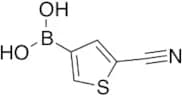
CAS:Controlled ProductFormula:C5H4BNO2SColor and Shape:NeatMolecular weight:152.967Triphenylacetonitrile
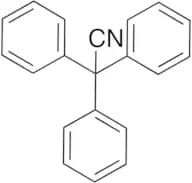
CAS:Controlled Product<p>Applications Triphenylacetonitrile is used as a reactant in the rhodium-catalyzed reductive cleavage of carbon-cyano bonds with hydrosilane.<br>References Tobisu, M., et al.: JACS., 131, 3174 (2009)<br></p>Formula:C20H15NColor and Shape:NeatMolecular weight:269.34Methyl Isocyanoacetate
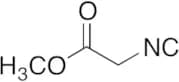
CAS:Controlled Product<p>Applications Methyl Isocyanoacetate, is used in the Cu-catalyzed, diastereoselective synthesis of oxazolines (O846550).<br> Not a dangerous good if item is equal to or less than 1g/ml and there is less than 100g/ml in the package<br>References Ideguchi, T., et al.: J. American Chem. Soc., 135, 12568 (2013);<br></p>Formula:C4H5NO2Color and Shape:NeatMolecular weight:99.096-Cyano-2-oxaspiro[3.3]heptane-6-carboxylic acid
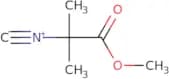
CAS:Controlled Product<p>Applications 6-cyano-2-oxaspiro[3.3]heptane-6-carboxylic acid (cas# 1934971-05-7) is a useful research chemical.<br></p>Formula:C8H9NO3Color and Shape:NeatMolecular weight:167.162Methyl-2-isocyanoisobutyrate
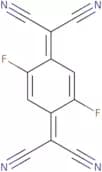
CAS:<p>Please enquire for more information about Methyl-2-isocyanoisobutyrate including the price, delivery time and more detailed product information at the technical inquiry form on this page</p>Formula:C9H9NO2Purity:Min. 95%Molecular weight:127.14 g/mol2,5-Difluoro-7,7,8,8-tetracyanoquinodimethane
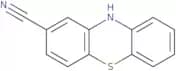
CAS:<p>2,5-Difluoro-7,7,8,8-tetracyanoquinodimethane is a donor molecule that has an acceptor property. It can be used in the fabrication of organic light emitting devices. 2,5-Difluoro-7,7,8,8-tetracyanoquinodimethane is a molecule with a molecular structure that consists of two benzene rings and two quinonediimide groups. The molecule has a fluorine atom at position 5 and another fluorine atom at position 8. This molecule has been shown to have good transport properties and to emit light when irradiated with UV radiation.</p>Formula:C12H2F2N4Purity:Min. 95%Color and Shape:PowderMolecular weight:240.17 g/mol2-Cyanophenothiazine
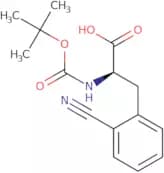
CAS:<p>2-Cyanophenothiazine is an aliphatic hydrocarbon that belongs to the class of industrial chemicals. It is used as a reactant in organic synthesis, such as for the production of 2-cyanophenols and 2-phenylbenzimidazole. This compound can be produced by reacting n-hexane with amide or n-dimethylformamide. 2-Cyanophenothiazine has been shown to have mitochondrial biogenesis effects and increase mitochondrial membrane potential in thp-1 cells. It also has biological properties, such as being anti-inflammatory and having antitumor activity.</p>Formula:C13H8N2SPurity:Min. 95%Molecular weight:224.28 g/molBoc-2-cyano-D-phenylalanine
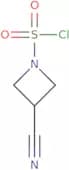
CAS:<p>Please enquire for more information about Boc-2-cyano-D-phenylalanine including the price, delivery time and more detailed product information at the technical inquiry form on this page</p>Formula:C15H18N2O4Purity:Min. 95%Molecular weight:290.31 g/mol3-Cyano-1-azetidinesulfonyl chloride
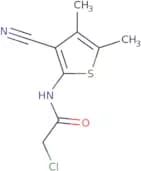
CAS:<p>Please enquire for more information about 3-Cyano-1-azetidinesulfonyl chloride including the price, delivery time and more detailed product information at the technical inquiry form on this page</p>Formula:C4H5ClN2O2SPurity:Min. 95%Molecular weight:180.61 g/mol2-Chloro-N-(3-cyano-4,5-dimethylthien-2-yl)acetamide
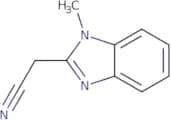
CAS:<p>Please enquire for more information about 2-Chloro-N-(3-cyano-4,5-dimethylthien-2-yl)acetamide including the price, delivery time and more detailed product information at the technical inquiry form on this page</p>Formula:C9H9ClN2OSPurity:Min. 95%Molecular weight:228.7 g/mol(1-Methyl-1H-benzoimidazol-2-yl)-acetonitrile
CAS:Controlled Product<p>(1-Methyl-1H-benzoimidazol-2-yl)-acetonitrile is a nucleophilic compound that reacts with carbanions to form alkyl benzoates. It can also act as an electrophile in the formation of nitroalkenes and amides, as well as an intermediate in the synthesis of phenazines. The potassium salt of this compound is used as a reagent in organic synthesis. (1-Methyl-1H-benzoimidazol-2-yl)-acetonitrile has been shown to react with methylene and aromatize to produce ethyl cyanoacetate, which can be used for the production of malononitrile. This reaction is catalyzed by potassium carbonate and esters.</p>Formula:C10H9N3Purity:Min. 95%Molecular weight:171.2 g/mola-Acetylphenylacetonitrile
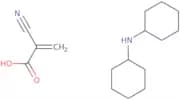
CAS:Controlled Product<p>a-Acetylphenylacetonitrile is a bifunctional molecule that can be used in the synthesis of new compounds, such as pharmaceuticals, dyes, and perfumes. It is an analytical technique for measuring the concentrations of cyanides in wastewater. The fluorescence properties of this compound are helpful in detecting the presence of phenylacetone by using a kinetic assay. This compound can also be used to synthesize other organic compounds with high enantiopurity.</p>Formula:C10H9NOPurity:Min. 95%Molecular weight:159.18 g/molDicyclohexylamine 2-cyanoacrylate
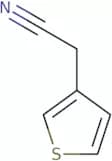
CAS:Controlled Product<p>Please enquire for more information about Dicyclohexylamine 2-cyanoacrylate including the price, delivery time and more detailed product information at the technical inquiry form on this page</p>Formula:C16H26N2O2Purity:Min. 95%Molecular weight:278.39 g/molThiophene-3-acetonitrile
CAS:<p>Thiophene-3-acetonitrile is a reactive intermediate that is used in the synthesis of active enzymes. It has been shown to be an efficient method for the synthesis of antitubercular agents, such as rifamycins and other drugs. Thiophene-3-acetonitrile is an electron acceptor and can be used to generate active enzymes, such as those involved in DNA replication and transcription. This compound also has a variety of functional groups, which can be used for a number of techniques, including coordination geometry studies.</p>Formula:C6H5NSPurity:Min. 95%Color and Shape:Clear LiquidMolecular weight:123.18 g/molN-Cyano-N',S-dimethylisothiourea
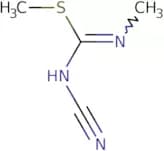
CAS:<p>Please enquire for more information about N-Cyano-N',S-dimethylisothiourea including the price, delivery time and more detailed product information at the technical inquiry form on this page</p>Formula:C4H7N3SPurity:Min. 95%Molecular weight:129.18 g/mol3-Cyanopropionic acid methyl ester
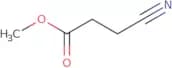
CAS:<p>3-Cyanopropionic acid methyl ester is a compound that belongs to the class of aliphatic carboxylic acids. It is an intermediate in the production of adiponitrile and acrylonitrile. This compound is used as a feedstock for the manufacture of vinylene, which can be used to produce c1-6 alkyl. 3-Cyanopropionic acid methyl ester can be produced from propylene and hydrogen cyanide in a high salt, activated reaction system. It has been shown that this compound may have metabolic disorders due to its ability to inhibit fatty acid oxidation and increase viscosity. 3-Cyanopropionic acid methyl ester is a colorless liquid at room temperature with a boiling point of 154°C and a molecular weight of 98.14 g/mol.</p>Formula:C5H7NO2Purity:Min. 95%Color and Shape:Clear LiquidMolecular weight:113.11 g/mol


![6-Cyano-2-oxaspiro[3.3]heptane-6-carboxylic acid](/_next/image/?url=https%3A%2Fstatic.cymitquimica.com%2Fproducts%2FTR%2Fthumb-webp%2FC277626.webp&w=3840&q=75)