Cyano-, Nitrile-
Cyano and nitrile compounds are organic molecules that contain cyano (C≡N) or nitrile groups in their structure, characterized by the presence of nitrogen. These groups play important roles in various chemical reactions and industrial applications. In this category, you will find a wide range of cyano and nitrile compounds, ranging from simple to complex structures. At CymitQuimica, we offer high-quality cyano and nitrile compounds tailored to meet research and industrial needs. Our compounds are suitable for a variety of synthesis and analytical applications.
Found 9624 products of "Cyano-, Nitrile-"
Sort by
Purity (%)
0
100
|
0
|
50
|
90
|
95
|
100
(2-Isocyanoethyl)-benzene
CAS:<p>Applications (2-Isocyanoethyl)-benzene is a useful synthetic intermediate. It is a reagent used in Ugi reactions to synthesize various compounds such as tetrazole and bisamide.<br>References Zhao, T., et al.: Org. Lett., 15, 639 (2013); Brockmeyer, F., et al.: Helv. Chim. Acta., 95, 1857 (2012)<br></p>Formula:C9H9NColor and Shape:NeatMolecular weight:131.1745(5-Cyanothiophen-3-yl)boronic Acid
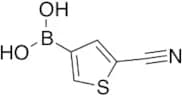
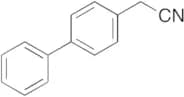
CAS:Controlled ProductFormula:C5H4BNO2SColor and Shape:NeatMolecular weight:152.967p-Biphenylacetonitrile
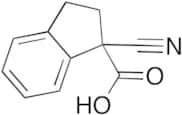
CAS:Controlled Product<p>Applications 4-Biphenylacetonitrile is a useful synthetic intermediate. It was used to study the adsorption orientation of the biphenyl derivatives on the Au colloidal surfaces with α-cyclodextrins. 4-Biphenylacetonitrile on condensation reaction with ethyl phenyl propiolate yields biphenyl derivatives of acetylenic β-ketocyanide.<br>References Lee, J., et al.: Bull. Korean. Chem. Soc., 30, 1637 (2009); Al-Jallo, H., et al.: J. Chem. Eng. Data, 17, 513, (1972)<br></p>Formula:C14H11NColor and Shape:NeatMolecular weight:193.241-Cyano-2,3-dihydro-1H-indene-1-carboxylic Acid
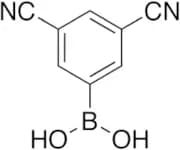
CAS:Controlled ProductFormula:C11H9NO2Color and Shape:NeatMolecular weight:187.193,5-Dicyanophenylboronic Acid
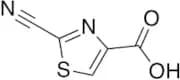
CAS:Controlled ProductFormula:C8H5BN2O2Color and Shape:NeatMolecular weight:171.9482-Cyano-thiazole-5-carboxylic Acid
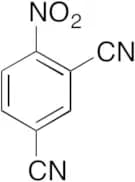
CAS:Controlled ProductFormula:C5H2N2O2SColor and Shape:NeatMolecular weight:154.1472,4-Dicyanonitrobenzene
CAS:Controlled ProductFormula:C8H3N3O2Color and Shape:NeatMolecular weight:173.1281-Cyano-3-isopropylguanidine
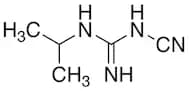
CAS:Controlled Product<p>Impurity Proguanil EP Impurity A<br>Applications 1-Cyano-3-isopropylguanidine (Proguanil EP Impurity A) is an intermediate commonly used for the synthesis of guanide derivatives.An Impurity in the synthesis of Chlorguanide (C329500).<br>References Jensen, N., et al.: J. Med. Chem., 44, 3925 (2001), Paci, A., et al.: J. Pharm. Biomed. Anal., 27, 1 (2002),<br></p>Formula:C5H10N4Color and Shape:NeatMolecular weight:126.16Methyl 5-cyano-2-fluorobenzoate
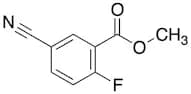
CAS:Controlled Product<p>Applications Methyl 5-cyano-2-fluorobenzoate<br></p>Formula:C9H6FNO2Color and Shape:NeatMolecular weight:179.15p-Cyanobenzoic Acid Trimer
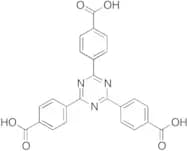
CAS:Controlled Product<p>Applications p-Cyanobenzoic Acid Trimer is used in the synthetic preparation of Terbium Triazinetribenzoate Formate Metal Organic Framework (MOF).<br>References Han, Y., et al.: J. Mater. Chem. A Mater. Energy Sustain., 3, 24525 (2015)<br></p>Formula:C24H15N3O6Color and Shape:NeatMolecular weight:441.39Tert-butyl N-[(5-Cyanothiophen-2-yl)methyl]carbamate
CAS:Controlled ProductFormula:C11H14N2O2SColor and Shape:NeatMolecular weight:238.306N-[4-Cyano-3-(trifluoromethyl)phenyl]-2-oxopropanamide
CAS:Controlled Product<p>Applications N-[4-Cyano-3-(trifluoromethyl)phenyl]-2-oxopropanamide (cas# 87310-69-8) is a compound useful in organic synthesis.<br></p>Formula:C11H7F3N2O2Color and Shape:NeatMolecular weight:256.18tert-Butyl 3-Amino-4-cyanobenzoate
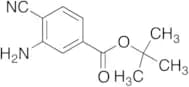
Controlled Product<p>Applications Tert-butyl 3-amino-4-cyanobenzoate is a useful compound for organic synthesis.<br></p>Formula:C12H14N2O2Color and Shape:NeatMolecular weight:218.2522,4,6-Trimethylbenzonitrile
CAS:<p>2,4,6-Trimethylbenzonitrile (TMBN) is a reactive unsaturated ketone that reacts with phosphorus pentachloride to form the corresponding chloroform. It is used in nucleophilic substitution reactions and can be hydrolyzed by hydrochloric acid to form an n-oxide. The reaction mechanism of TMBN with phosphorus pentachloride has been studied using molecular modeling and NMR spectroscopy. TMBN can be converted into an oxide, which can react with hydrogen chloride to form the corresponding chloroform. Reaction products include the 2,4,6-trichlorobenzonitrile (TCBN), which is a carcinogen.</p>Formula:C10H11NPurity:Min. 95%Color and Shape:PowderMolecular weight:145.2 g/mol4-Cyanobutanoic acid
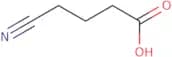
CAS:<p>4-Cyanobutanoic acid is a colorless organic solvent that is not soluble in water or polar organic solvents. It can be used for the immobilization of proteins, as well as for the desymmetrization and chlorination of aromatic compounds. One of its most common uses is in biocatalysis, where it acts as a substrate binding agent to help catalyze reactions. 4-Cyanobutanoic acid has also been shown to inhibit the growth of bacteria by acting as an electron acceptor during metabolism. This compound can be degraded through hydrolysis with hydrochloric acid or biodegradation.</p>Formula:C5H7NO2Purity:Min. 95%Color and Shape:PowderMolecular weight:113.11 g/mol2-Cyano-N-cyclohexyl-N-methylacetamide
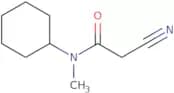
CAS:<p>Please enquire for more information about 2-Cyano-N-cyclohexyl-N-methylacetamide including the price, delivery time and more detailed product information at the technical inquiry form on this page</p>Formula:C10H16N2OPurity:Min. 95%Molecular weight:180.25 g/molPotassium tetracyanoplatinate(II)trihydrate
CAS:Controlled Product<p>Potassium tetracyanoplatinate(II)trihydrate (KTP) is a nanomaterial that is made of metal ions, such as ruthenium and copper, and organic molecules. It has the ability to absorb electrons from water, which are then transferred to carbon sources. This process can be used to remove proton in the water, thereby creating an acidic solution. The KTP particles have been shown to produce cavitation when exposed to ultrasound waves or other high-frequency sound waves. Cavitation occurs when bubbles form and rapidly collapse within a liquid. The resulting shockwaves can break down the cell membrane of microorganisms.</p>Formula:C4H6K2N4O3PtPurity:Min. 95%Molecular weight:431.4 g/molD-2-Cyanophenylalanine
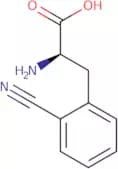
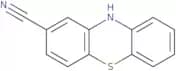
CAS:<p>Please enquire for more information about D-2-Cyanophenylalanine including the price, delivery time and more detailed product information at the technical inquiry form on this page</p>Formula:C10H10N2O2Purity:Min. 95%Molecular weight:190.2 g/mol2-Cyanophenothiazine
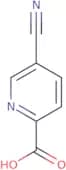
CAS:<p>2-Cyanophenothiazine is an aliphatic hydrocarbon that belongs to the class of industrial chemicals. It is used as a reactant in organic synthesis, such as for the production of 2-cyanophenols and 2-phenylbenzimidazole. This compound can be produced by reacting n-hexane with amide or n-dimethylformamide. 2-Cyanophenothiazine has been shown to have mitochondrial biogenesis effects and increase mitochondrial membrane potential in thp-1 cells. It also has biological properties, such as being anti-inflammatory and having antitumor activity.</p>Formula:C13H8N2SPurity:Min. 95%Molecular weight:224.28 g/mol5-Cyanopyridine-2-carboxylic acid
CAS:<p>5-Cyanopyridine-2-carboxylic acid is a small molecule that has been found to have significant biological activity in a number of different areas, including neurotherapeutics. It is the result of a scalable synthesis and is soluble in water. The molecule has two chiral centers and can exist as four different stereoisomers (enantiomers). In vitro studies show that 5-cyanopyridine-2-carboxylic acid inhibits fatty acid uptake by blocking the proton pump, which transports lipids into cells. This compound also binds to the cytosolic protein pyrazine 2-carboxylic acid receptor 1 (PYZR1), which may provide an explanation for its effects on fatty acid uptake.</p>Formula:C7H4N2O2Purity:Min. 95%Molecular weight:148.12 g/mol


![Tert-butyl N-[(5-Cyanothiophen-2-yl)methyl]carbamate](/_next/image/?url=https%3A%2Fstatic.cymitquimica.com%2Fproducts%2FTR%2Fthumb-webp%2FB815518.webp&w=3840&q=75)
![N-[4-Cyano-3-(trifluoromethyl)phenyl]-2-oxopropanamide](/_next/image/?url=https%3A%2Fstatic.cymitquimica.com%2Fproducts%2FTR%2Fthumb-webp%2FC982160.webp&w=3840&q=75)