Cyano-, Nitrile-
Cyano and nitrile compounds are organic molecules that contain cyano (C≡N) or nitrile groups in their structure, characterized by the presence of nitrogen. These groups play important roles in various chemical reactions and industrial applications. In this category, you will find a wide range of cyano and nitrile compounds, ranging from simple to complex structures. At CymitQuimica, we offer high-quality cyano and nitrile compounds tailored to meet research and industrial needs. Our compounds are suitable for a variety of synthesis and analytical applications.
Found 9618 products of "Cyano-, Nitrile-"
Sort by
Purity (%)
0
100
|
0
|
50
|
90
|
95
|
100
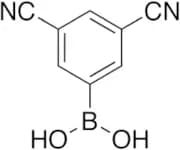
3,5-Dicyanophenylboronic Acid
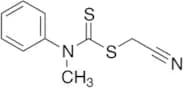
CAS:Controlled ProductFormula:C8H5BN2O2Color and Shape:NeatMolecular weight:171.948Cyanomethyl Methyl(phenyl)carbamodithioate
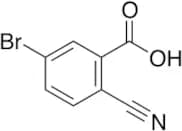
CAS:Controlled Product<p>Applications Cyanomethyl Methyl(phenyl)carbamodithioate (cas# 76926-16-4) is a useful research chemical.<br></p>Formula:C10H10N2S2Color and Shape:NeatMolecular weight:222.325-Bromo-2-cyanobenzoic Acid
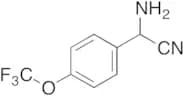
CAS:Controlled ProductFormula:C8H4BrNO2Color and Shape:NeatMolecular weight:226.027α-Amino-4-(trifluoromethoxy)benzeneacetonitrile Hydrochloride
CAS:Controlled ProductFormula:C9H7F3N2OColor and Shape:NeatMolecular weight:216.16Ethyl 2,3-Dicyanopropionate
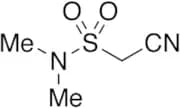
CAS:Controlled Product<p>Applications An intermediate for insecticide.<br>References Cole, L., et al.: Pestic. Biochem. Physiol., 46, 47 (1993), Cole, L., et al.: Life Sci., 56, 757 (1995), Hosie, A., et al.: Br. J. Pharmacol., 115, 909 (1995),<br></p>Formula:C7H8N2O2Color and Shape:NeatMolecular weight:152.151-Cyano-N,N-dimethylmethanesulfonamide
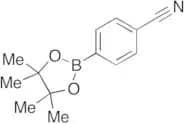
CAS:Controlled ProductFormula:C4H8N2O2SColor and Shape:NeatMolecular weight:148.1844-(Cyanophenyl)boronic Acid Pinacol Ester
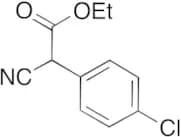
CAS:Controlled Product<p>Applications 4-(Cyanophenyl)boronic Acid Pinacol Ester is used to prepare arylparacyclophanes via Suzuki aryl cross-coupling of bromoparacyclophane with arylboronic acid and arylboronates. It’s also used to prepare tyrosine-modified analogs of α4β7 integrin inhibitor biotin-R8ERY.<br>References Roche, A., et al.: Org. Biomol. Chem.,, 3, 515 (2005); Papst, S., et al.: Bioorg. Med. Chem., 20, 5139 (2012)<br></p>Formula:C13H16BNO2Color and Shape:NeatMolecular weight:229.08Ethyl (4-chlorophenyl)cyanoacetate
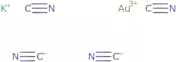
CAS:Controlled ProductFormula:C11H10ClNO2Color and Shape:NeatMolecular weight:223.656Potassium tetracyanoaurate(III)
CAS:Controlled Product<p>Potassium tetracyanoaurate(III) (K[AuCl4]) is a crystalline, intermetallic compound that has been used in the production of coatings, spherical particles, and electrochemical materials. The pentahydrate form has a diameter of 4.8-5.2 Å and a melting point of ~115°C. K[AuCl4] is stable in air and water but reacts with strong acids to form potassium chloride and potassium tetracyanocuprate(II). This substance also has an optimal pH range of 6-7 and an average solubility range of 0.05-0.1g/100mL at 20°C. The microstructure of K[AuCl4] is not well understood because it is difficult to isolate from other compounds during synthesis.</p>Formula:C4AuN4KPurity:Min. 95%Color and Shape:PowderMolecular weight:340.13 g/mol(5R)-6-Cyano-5-hydroxy-3-oxo-hexanoic acid tert-butyl ester
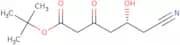
CAS:<p>Please enquire for more information about (5R)-6-Cyano-5-hydroxy-3-oxo-hexanoic acid tert-butyl ester including the price, delivery time and more detailed product information at the technical inquiry form on this page</p>Formula:C11H17NO4Purity:Min. 95%Molecular weight:227.26 g/mol(Triphenylphosphoranylidene)acetonitrile
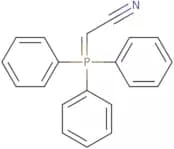
CAS:<p>(Triphenylphosphoranylidene)acetonitrile is a phosphorane that has been shown to have an inhibitory effect on the inflammatory response in animal models of bowel disease. It also has been shown to be effective in treating inflammatory diseases such as arthritis and multiple sclerosis. This drug binds to leukotriene D4, an inflammatory mediator, and inhibits its production by blocking the enzyme 5-lipoxygenase. The compound also has been shown to possess anti-inflammatory properties due to its inhibition of prostaglandin synthesis. (Triphenylphosphoranylidene)acetonitrile is used as a pharmaceutical preparation for the treatment of bowel disease, inflammatory diseases, and other conditions.</p>Formula:C20H16NPPurity:Min. 95%Molecular weight:301.32 g/molPotassium dicyanoargenate
CAS:Controlled Product<p>Potassium dicyanoargenate is an organic acid that is a precursor to silver nanoparticles. This compound is typically used in the production of cellulose derivatives, and for the activation of polymerization reactions. Potassium dicyanoargenate can also be used to produce insoluble polymers and cationic surfactants by combining it with a metal ion, such as sodium carbonate or hydroxyl groups.</p>Formula:C2AgKN2Purity:Min. 95%Molecular weight:199 g/mol2,4,6-Trimethylbenzonitrile
CAS:<p>2,4,6-Trimethylbenzonitrile (TMBN) is a reactive unsaturated ketone that reacts with phosphorus pentachloride to form the corresponding chloroform. It is used in nucleophilic substitution reactions and can be hydrolyzed by hydrochloric acid to form an n-oxide. The reaction mechanism of TMBN with phosphorus pentachloride has been studied using molecular modeling and NMR spectroscopy. TMBN can be converted into an oxide, which can react with hydrogen chloride to form the corresponding chloroform. Reaction products include the 2,4,6-trichlorobenzonitrile (TCBN), which is a carcinogen.</p>Formula:C10H11NPurity:Min. 95%Color and Shape:PowderMolecular weight:145.2 g/molDiethyl cyanophosphonate
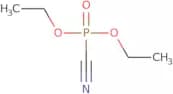
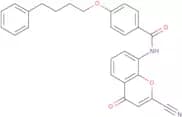
CAS:<p>Diethyl cyanophosphonate is a compound that is used as a fluorescence probe for amides and pyrazole rings. It binds to the ester form of the amide, which can then be detected with a fluorescence detector. The chemical reaction between diethyl cyanophosphonate and the ester form is reversible, so it can be used as a hypoglycemic agent. Diethyl cyanophosphonate has potent antitumor activity and binds to nerve cells, causing them to become electrically active.</p>Formula:C5H10NO3PPurity:Min. 95%Color and Shape:PowderMolecular weight:163.11 g/molN-(2-Cyano-4-oxo-4H-1-benzopyran-8-yl)-4-(4-phenylbutoxy)benzamide
CAS:<p>Please enquire for more information about N-(2-Cyano-4-oxo-4H-1-benzopyran-8-yl)-4-(4-phenylbutoxy)benzamide including the price, delivery time and more detailed product information at the technical inquiry form on this page</p>Formula:C27H22N2O4Purity:Min. 95%Molecular weight:438.47 g/molEthyl cyanoformate
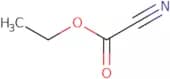
CAS:<p>Ethyl cyanoformate is a reactive compound that is used in organic synthesis. It has been shown to cause muscle cell proliferation and inhibit the production of gamma-aminobutyric acid, which is responsible for regulating neurotransmitter release. Ethyl cyanoformate also has antimicrobial properties due to its ability to form an oxygenated n-oxide tautomer. The reaction mechanism of ethyl cyanoformate involves the formation of a covalent bond with the sulfhydryl group on the enzyme gamma-aminobutyric acid receptor. This prevents the binding of GABA, inhibiting nerve impulses and reducing inflammation in the bowel.</p>Formula:C4H5NO2Purity:Min. 95%Color and Shape:Clear LiquidMolecular weight:99.09 g/mol3-Chloro-4-cyanophenylboronic acid
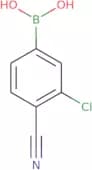
CAS:Controlled Product<p>Please enquire for more information about 3-Chloro-4-cyanophenylboronic acid including the price, delivery time and more detailed product information at the technical inquiry form on this page</p>Formula:C7H5BClNO2Purity:Min. 95%Molecular weight:181.38 g/molThiophene-3-acetonitrile
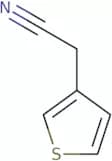
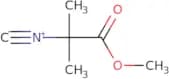
CAS:<p>Thiophene-3-acetonitrile is a reactive intermediate that is used in the synthesis of active enzymes. It has been shown to be an efficient method for the synthesis of antitubercular agents, such as rifamycins and other drugs. Thiophene-3-acetonitrile is an electron acceptor and can be used to generate active enzymes, such as those involved in DNA replication and transcription. This compound also has a variety of functional groups, which can be used for a number of techniques, including coordination geometry studies.</p>Formula:C6H5NSPurity:Min. 95%Color and Shape:Clear LiquidMolecular weight:123.18 g/molMethyl-2-isocyanoisobutyrate
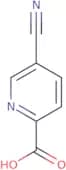
CAS:<p>Please enquire for more information about Methyl-2-isocyanoisobutyrate including the price, delivery time and more detailed product information at the technical inquiry form on this page</p>Formula:C9H9NO2Purity:Min. 95%Molecular weight:127.14 g/mol5-Cyanopyridine-2-carboxylic acid
CAS:<p>5-Cyanopyridine-2-carboxylic acid is a small molecule that has been found to have significant biological activity in a number of different areas, including neurotherapeutics. It is the result of a scalable synthesis and is soluble in water. The molecule has two chiral centers and can exist as four different stereoisomers (enantiomers). In vitro studies show that 5-cyanopyridine-2-carboxylic acid inhibits fatty acid uptake by blocking the proton pump, which transports lipids into cells. This compound also binds to the cytosolic protein pyrazine 2-carboxylic acid receptor 1 (PYZR1), which may provide an explanation for its effects on fatty acid uptake.</p>Formula:C7H4N2O2Purity:Min. 95%Molecular weight:148.12 g/mol