Cyano-, Nitrile-
Cyano and nitrile compounds are organic molecules that contain cyano (C≡N) or nitrile groups in their structure, characterized by the presence of nitrogen. These groups play important roles in various chemical reactions and industrial applications. In this category, you will find a wide range of cyano and nitrile compounds, ranging from simple to complex structures. At CymitQuimica, we offer high-quality cyano and nitrile compounds tailored to meet research and industrial needs. Our compounds are suitable for a variety of synthesis and analytical applications.
Found 9618 products of "Cyano-, Nitrile-"
Sort by
Purity (%)
0
100
|
0
|
50
|
90
|
95
|
100
Benzoylacetonitrile
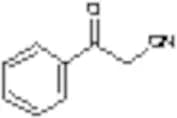
CAS:Controlled Product<p>Applications Used as a building block for the preparation of 4H-pyrans, 2-pyridones, furans and carbocyclics.<br>References Herschhorn, A., et al.: J. Med. Chem., 50, 3402 (2007),<br></p>Formula:C9H7NOColor and Shape:NeatMolecular weight:145.16Diethyl (2-cyanoethyl)phosphonate
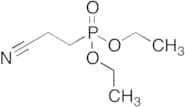
CAS:Controlled Product<p>Applications Diethyl (2-cyanoethyl)phosphonate, is a useful reactant used in various chemical synthesis such as in synthesis of lipophilic oxoamides with activity against phospholipase A2, Triose phosphate isomerase of muscle inhibitors, and also in base-catalyzed stereospecific anti-Markovnikov addition.<br></p>Formula:C7H14NO3PColor and Shape:NeatMolecular weight:191.164-Cyanophenylphosphonic Acid
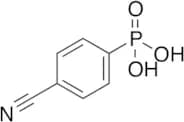
CAS:Controlled ProductFormula:C7H6NO3PColor and Shape:NeatMolecular weight:183.101Methyl 4-Cyanobenzoate
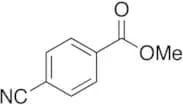
CAS:Controlled Product<p>Applications Methyl 4-Cyanobenzoate (cas# 1129-35-7) is a compound useful in organic synthesis.<br></p>Formula:C9H7NO2Color and Shape:NeatMolecular weight:161.161-Cyano-N,N-dimethylmethanesulfonamide
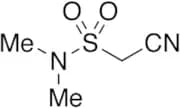
CAS:Controlled ProductFormula:C4H8N2O2SColor and Shape:NeatMolecular weight:148.1846-Cyano-2-oxaspiro[3.3]heptane-6-carboxylic acid
CAS:Controlled Product<p>Applications 6-cyano-2-oxaspiro[3.3]heptane-6-carboxylic acid (cas# 1934971-05-7) is a useful research chemical.<br></p>Formula:C8H9NO3Color and Shape:NeatMolecular weight:167.1621-Cyano-3-isopropylguanidine
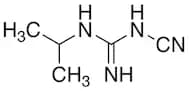
CAS:Controlled Product<p>Impurity Proguanil EP Impurity A<br>Applications 1-Cyano-3-isopropylguanidine (Proguanil EP Impurity A) is an intermediate commonly used for the synthesis of guanide derivatives.An Impurity in the synthesis of Chlorguanide (C329500).<br>References Jensen, N., et al.: J. Med. Chem., 44, 3925 (2001), Paci, A., et al.: J. Pharm. Biomed. Anal., 27, 1 (2002),<br></p>Formula:C5H10N4Color and Shape:NeatMolecular weight:126.16p-Cyanobenzoic Acid Trimer
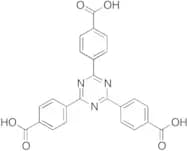
CAS:Controlled Product<p>Applications p-Cyanobenzoic Acid Trimer is used in the synthetic preparation of Terbium Triazinetribenzoate Formate Metal Organic Framework (MOF).<br>References Han, Y., et al.: J. Mater. Chem. A Mater. Energy Sustain., 3, 24525 (2015)<br></p>Formula:C24H15N3O6Color and Shape:NeatMolecular weight:441.392,4,6-Trimethylbenzonitrile
CAS:<p>2,4,6-Trimethylbenzonitrile (TMBN) is a reactive unsaturated ketone that reacts with phosphorus pentachloride to form the corresponding chloroform. It is used in nucleophilic substitution reactions and can be hydrolyzed by hydrochloric acid to form an n-oxide. The reaction mechanism of TMBN with phosphorus pentachloride has been studied using molecular modeling and NMR spectroscopy. TMBN can be converted into an oxide, which can react with hydrogen chloride to form the corresponding chloroform. Reaction products include the 2,4,6-trichlorobenzonitrile (TCBN), which is a carcinogen.</p>Formula:C10H11NPurity:Min. 95%Color and Shape:PowderMolecular weight:145.2 g/molN-Cyano-N',S-dimethylisothiourea
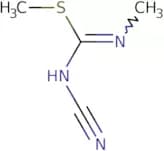
CAS:<p>Please enquire for more information about N-Cyano-N',S-dimethylisothiourea including the price, delivery time and more detailed product information at the technical inquiry form on this page</p>Formula:C4H7N3SPurity:Min. 95%Molecular weight:129.18 g/mol(4S,6S)-6-(Cyanomethyl)-2,2-dimethyl-1,3-dioxane-4-acetic acid tert-butyl ester
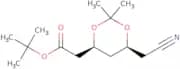
CAS:<p>Please enquire for more information about (4S,6S)-6-(Cyanomethyl)-2,2-dimethyl-1,3-dioxane-4-acetic acid tert-butyl ester including the price, delivery time and more detailed product information at the technical inquiry form on this page</p>Formula:C14H23NO4Purity:Min. 95%Molecular weight:269.34 g/molEthyl cyanoformate
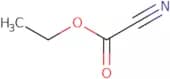
CAS:<p>Ethyl cyanoformate is a reactive compound that is used in organic synthesis. It has been shown to cause muscle cell proliferation and inhibit the production of gamma-aminobutyric acid, which is responsible for regulating neurotransmitter release. Ethyl cyanoformate also has antimicrobial properties due to its ability to form an oxygenated n-oxide tautomer. The reaction mechanism of ethyl cyanoformate involves the formation of a covalent bond with the sulfhydryl group on the enzyme gamma-aminobutyric acid receptor. This prevents the binding of GABA, inhibiting nerve impulses and reducing inflammation in the bowel.</p>Formula:C4H5NO2Purity:Min. 95%Color and Shape:Clear LiquidMolecular weight:99.09 g/mol(Triphenylphosphoranylidene)acetonitrile
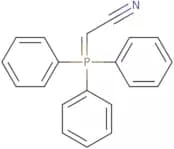
CAS:<p>(Triphenylphosphoranylidene)acetonitrile is a phosphorane that has been shown to have an inhibitory effect on the inflammatory response in animal models of bowel disease. It also has been shown to be effective in treating inflammatory diseases such as arthritis and multiple sclerosis. This drug binds to leukotriene D4, an inflammatory mediator, and inhibits its production by blocking the enzyme 5-lipoxygenase. The compound also has been shown to possess anti-inflammatory properties due to its inhibition of prostaglandin synthesis. (Triphenylphosphoranylidene)acetonitrile is used as a pharmaceutical preparation for the treatment of bowel disease, inflammatory diseases, and other conditions.</p>Formula:C20H16NPPurity:Min. 95%Molecular weight:301.32 g/mol4-Cyanobutanoic acid
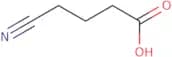
CAS:<p>4-Cyanobutanoic acid is a colorless organic solvent that is not soluble in water or polar organic solvents. It can be used for the immobilization of proteins, as well as for the desymmetrization and chlorination of aromatic compounds. One of its most common uses is in biocatalysis, where it acts as a substrate binding agent to help catalyze reactions. 4-Cyanobutanoic acid has also been shown to inhibit the growth of bacteria by acting as an electron acceptor during metabolism. This compound can be degraded through hydrolysis with hydrochloric acid or biodegradation.</p>Formula:C5H7NO2Purity:Min. 95%Color and Shape:PowderMolecular weight:113.11 g/molα-Acetylphenylacetonitrile
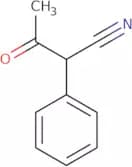
CAS:Controlled Product<p>Alpha-acetylphenylacetonitrile is a synthetic chemical compound that is used as a reagent in the analytical methods of wastewater. It has been shown to be an effective bifunctional agent for the treatment of wastewater, with fluorescence properties that can be used for detection and quantification of cyanide. Alpha-acetylphenylacetonitrile can also be used as a reagent in analytical chemistry techniques, such as gas chromatography and high performance liquid chromatography. This chemical compound has been shown to react with naphthalene to form alpha-naphthol by heating at 190 °C, which can then be used to synthesize phenacyl acetate. The acid catalyst may be either sulfuric acid or hydrochloric acid.</p>Formula:C10H9NOPurity:Min. 95%Molecular weight:159.18 g/molCyanoacetohydrazide
CAS:<p>Cyanoacetohydrazide is a nucleophilic compound that can react with a variety of molecules, including fatty acids and hydroxy methyl groups. The mechanism of this reaction involves the nucleophilic attack of the cyanide ion on the carbonyl group. This type of reaction has been shown to be reversible and involve the formation of an intermediate hemiacetal, which then attacks another molecule. Cyanoacetohydrazide is used as an antimicrobial agent in some products, such as mouthwashes and toothpaste. It also has anticancer activity.</p>Formula:C3H5N3OPurity:Min. 95%Color and Shape:PowderMolecular weight:99.09 g/molThiophene-3-acetonitrile
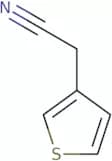
CAS:<p>Thiophene-3-acetonitrile is a reactive intermediate that is used in the synthesis of active enzymes. It has been shown to be an efficient method for the synthesis of antitubercular agents, such as rifamycins and other drugs. Thiophene-3-acetonitrile is an electron acceptor and can be used to generate active enzymes, such as those involved in DNA replication and transcription. This compound also has a variety of functional groups, which can be used for a number of techniques, including coordination geometry studies.</p>Formula:C6H5NSPurity:Min. 95%Color and Shape:Clear LiquidMolecular weight:123.18 g/mol3-Chloro-4-cyanophenylboronic acid
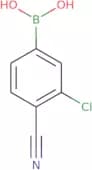
CAS:Controlled Product<p>Please enquire for more information about 3-Chloro-4-cyanophenylboronic acid including the price, delivery time and more detailed product information at the technical inquiry form on this page</p>Formula:C7H5BClNO2Purity:Min. 95%Molecular weight:181.38 g/molPotassium tetracyanoaurate(III)
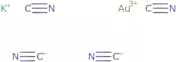
CAS:Controlled Product<p>Potassium tetracyanoaurate(III) (K[AuCl4]) is a crystalline, intermetallic compound that has been used in the production of coatings, spherical particles, and electrochemical materials. The pentahydrate form has a diameter of 4.8-5.2 Å and a melting point of ~115°C. K[AuCl4] is stable in air and water but reacts with strong acids to form potassium chloride and potassium tetracyanocuprate(II). This substance also has an optimal pH range of 6-7 and an average solubility range of 0.05-0.1g/100mL at 20°C. The microstructure of K[AuCl4] is not well understood because it is difficult to isolate from other compounds during synthesis.</p>Formula:C4AuN4KPurity:Min. 95%Color and Shape:PowderMolecular weight:340.13 g/mola,a-Dimethyl-1-piperidineacetonitrile
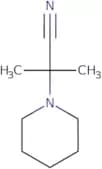
CAS:Controlled Product<p>Dimethylcyanamide is an organic compound that can be synthesized from cyanide or cyanic acid. Dimethylcyanamide is a colorless liquid with a strong odor. It has been used in the past as a precursor to other compounds, but it has since been replaced by cheaper and more convenient methods. Dimethylcyanamide reacts with primary amines to form nitriles, which are useful intermediates in organic synthesis. In addition, the reaction of dimethylcyanamide with secondary amines leads to the formation of primary amines. The transamination of dimethylamine-N-oxide yields a-dimethylaminopropionitrile as an intermediate product. The elimination reaction mechanism for this process involves the conversion of ammonia into hydroxide ions and hydrogen gas. This reaction produces high yields for both products and does not require high temperatures or pressures.</p>Formula:C9H16N2Purity:Min. 95%Molecular weight:152.24 g/mol

![6-Cyano-2-oxaspiro[3.3]heptane-6-carboxylic acid](/_next/image/?url=https%3A%2Fstatic.cymitquimica.com%2Fproducts%2FTR%2Fthumb-webp%2FC277626.webp&w=3840&q=75)