Cyano-, Nitrile-
Found 9687 products of "Cyano-, Nitrile-"
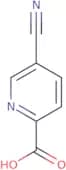
5-Cyanopyridine-2-carboxylic acid
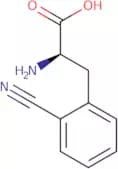
CAS:5-Cyanopyridine-2-carboxylic acid is a small molecule that has been found to have significant biological activity in a number of different areas, including neurotherapeutics. It is the result of a scalable synthesis and is soluble in water. The molecule has two chiral centers and can exist as four different stereoisomers (enantiomers). In vitro studies show that 5-cyanopyridine-2-carboxylic acid inhibits fatty acid uptake by blocking the proton pump, which transports lipids into cells. This compound also binds to the cytosolic protein pyrazine 2-carboxylic acid receptor 1 (PYZR1), which may provide an explanation for its effects on fatty acid uptake.Formula:C7H4N2O2Purity:Min. 95%Molecular weight:148.12 g/molD-2-Cyanophenylalanine
CAS:Please enquire for more information about D-2-Cyanophenylalanine including the price, delivery time and more detailed product information at the technical inquiry form on this pageFormula:C10H10N2O2Purity:Min. 95%Molecular weight:190.2 g/molBarium tetracyanoplatinate(II) hydrate
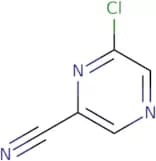
CAS:Controlled ProductPlease enquire for more information about Barium tetracyanoplatinate(II) hydrate including the price, delivery time and more detailed product information at the technical inquiry form on this pageFormula:C4H2BaN4OPtPurity:Min. 95%Molecular weight:454.5 g/mol2-Chloro-6-cyanopyrazine
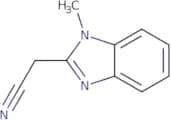
CAS:2-Chloro-6-cyanopyrazine is a compound that has been shown to have antimycobacterial activity against Mycobacterium avium. It may also have tuberculostatic activity and be useful for the treatment of tuberculosis. 2-Chloro-6-cyanopyrazine inhibits bacterial growth by binding to DNA, RNA, and protein synthesis in mycobacteria. The antibacterial effect is due to its ability to inhibit amidation and alkylation reactions, as well as its nucleophilic properties. 2-Chloro-6-cyanopyrazine is an acidic compound with a pKa of 3.2, which makes it more soluble in water than hydrophobic compounds such as alkanoic acids.Formula:C5H2ClN3Purity:Min. 95%Molecular weight:139.54 g/mol(1-Methyl-1H-benzoimidazol-2-yl)-acetonitrile
CAS:Controlled Product(1-Methyl-1H-benzoimidazol-2-yl)-acetonitrile is a nucleophilic compound that reacts with carbanions to form alkyl benzoates. It can also act as an electrophile in the formation of nitroalkenes and amides, as well as an intermediate in the synthesis of phenazines. The potassium salt of this compound is used as a reagent in organic synthesis. (1-Methyl-1H-benzoimidazol-2-yl)-acetonitrile has been shown to react with methylene and aromatize to produce ethyl cyanoacetate, which can be used for the production of malononitrile. This reaction is catalyzed by potassium carbonate and esters.
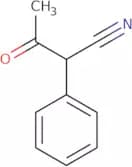
Formula:C10H9N3Purity:Min. 95%Molecular weight:171.2 g/molalpha-Acetylphenylacetonitrile
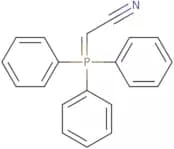
CAS:Controlled ProductAlpha-acetylphenylacetonitrile is a synthetic chemical compound that is used as a reagent in the analytical methods of wastewater. It has been shown to be an effective bifunctional agent for the treatment of wastewater, with fluorescence properties that can be used for detection and quantification of cyanide. Alpha-acetylphenylacetonitrile can also be used as a reagent in analytical chemistry techniques, such as gas chromatography and high performance liquid chromatography. This chemical compound has been shown to react with naphthalene to form alpha-naphthol by heating at 190 °C, which can then be used to synthesize phenacyl acetate. The acid catalyst may be either sulfuric acid or hydrochloric acid.Formula:C10H9NOPurity:Min. 95%Molecular weight:159.18 g/mol(Triphenylphosphoranylidene)acetonitrile
CAS:(Triphenylphosphoranylidene)acetonitrile is a phosphorane that has been shown to have an inhibitory effect on the inflammatory response in animal models of bowel disease. It also has been shown to be effective in treating inflammatory diseases such as arthritis and multiple sclerosis. This drug binds to leukotriene D4, an inflammatory mediator, and inhibits its production by blocking the enzyme 5-lipoxygenase. The compound also has been shown to possess anti-inflammatory properties due to its inhibition of prostaglandin synthesis. (Triphenylphosphoranylidene)acetonitrile is used as a pharmaceutical preparation for the treatment of bowel disease, inflammatory diseases, and other conditions.Formula:C20H16NPPurity:Min. 95%Molecular weight:301.32 g/molPotassium dicyanoargenate
CAS:Controlled ProductPotassium dicyanoargenate is an organic acid that is a precursor to silver nanoparticles. This compound is typically used in the production of cellulose derivatives, and for the activation of polymerization reactions. Potassium dicyanoargenate can also be used to produce insoluble polymers and cationic surfactants by combining it with a metal ion, such as sodium carbonate or hydroxyl groups.
Formula:C2AgKN2Purity:Min. 95%Molecular weight:199 g/molEthyl cyanoformate
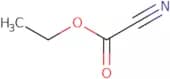
CAS:Ethyl cyanoformate is a reactive compound that is used in organic synthesis. It has been shown to cause muscle cell proliferation and inhibit the production of gamma-aminobutyric acid, which is responsible for regulating neurotransmitter release. Ethyl cyanoformate also has antimicrobial properties due to its ability to form an oxygenated n-oxide tautomer. The reaction mechanism of ethyl cyanoformate involves the formation of a covalent bond with the sulfhydryl group on the enzyme gamma-aminobutyric acid receptor. This prevents the binding of GABA, inhibiting nerve impulses and reducing inflammation in the bowel.Formula:C4H5NO2Purity:Min. 95%Color and Shape:Clear LiquidMolecular weight:99.09 g/mol(5R)-6-Cyano-5-hydroxy-3-oxo-hexanoic acid tert-butyl ester
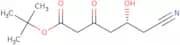
CAS:Please enquire for more information about (5R)-6-Cyano-5-hydroxy-3-oxo-hexanoic acid tert-butyl ester including the price, delivery time and more detailed product information at the technical inquiry form on this pageFormula:C11H17NO4Purity:Min. 95%Molecular weight:227.26 g/mol(4S,6S)-6-(Cyanomethyl)-2,2-dimethyl-1,3-dioxane-4-acetic acid tert-butyl ester
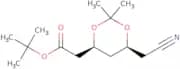
CAS:Please enquire for more information about (4S,6S)-6-(Cyanomethyl)-2,2-dimethyl-1,3-dioxane-4-acetic acid tert-butyl ester including the price, delivery time and more detailed product information at the technical inquiry form on this pageFormula:C14H23NO4Purity:Min. 95%Molecular weight:269.34 g/mola-Acetylphenylacetonitrile
CAS:Controlled Producta-Acetylphenylacetonitrile is a bifunctional molecule that can be used in the synthesis of new compounds, such as pharmaceuticals, dyes, and perfumes. It is an analytical technique for measuring the concentrations of cyanides in wastewater. The fluorescence properties of this compound are helpful in detecting the presence of phenylacetone by using a kinetic assay. This compound can also be used to synthesize other organic compounds with high enantiopurity.Formula:C10H9NOPurity:Min. 95%Molecular weight:159.18 g/mol1-Methylindole-3-acetonitrile
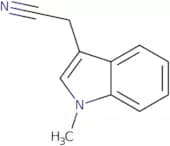
CAS:Controlled ProductPlease enquire for more information about 1-Methylindole-3-acetonitrile including the price, delivery time and more detailed product information at the technical inquiry form on this page
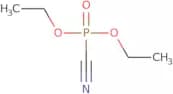
Formula:C11H10N2Purity:Min. 95%Molecular weight:170.21 g/molDiethyl cyanophosphonate
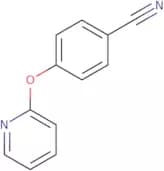
CAS:Diethyl cyanophosphonate is a compound that is used as a fluorescence probe for amides and pyrazole rings. It binds to the ester form of the amide, which can then be detected with a fluorescence detector. The chemical reaction between diethyl cyanophosphonate and the ester form is reversible, so it can be used as a hypoglycemic agent. Diethyl cyanophosphonate has potent antitumor activity and binds to nerve cells, causing them to become electrically active.Formula:C5H10NO3PPurity:Min. 95%Color and Shape:PowderMolecular weight:163.11 g/mol4-(Pyridin-2-yloxy)benzonitrile
CAS:4-(Pyridin-2-yloxy)benzonitrile is a reagent that is used in the synthesis of heterocycles. It is also a useful intermediate for the preparation of highly substituted pyridine derivatives. 4-(Pyridin-2-yloxy)benzonitrile can be used to synthesize complex compounds, such as pharmaceuticals and agricultural chemicals.
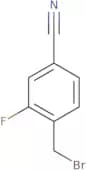
Formula:C12H8N2OPurity:Min. 95%Molecular weight:196.2 g/mol4-Cyano-2-fluorobenzyl bromide
CAS:4-Cyano-2-fluorobenzyl bromide is a methyl ester that can be used as a reagent for the synthesis of chiral α-amino acids. It can also be used as an enantioselective methylating agent for the synthesis of γ-secretase inhibitors. The methodology for the convergent synthesis of this compound includes alkylation with glycine followed by an enantioselective hydrolysis, which results in optically pure 4-cyano-2-fluorobenzyl bromide.
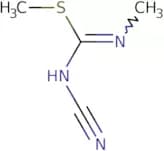
Formula:C8H5BrFNPurity:Min. 95%Color and Shape:PowderMolecular weight:214.03 g/molN-Cyano-N',S-dimethylisothiourea
CAS:Please enquire for more information about N-Cyano-N',S-dimethylisothiourea including the price, delivery time and more detailed product information at the technical inquiry form on this pageFormula:C4H7N3SPurity:Min. 95%Molecular weight:129.18 g/molIminodiacetonitrile
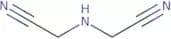
CAS:Iminodiacetonitrile is a chemical compound that is used in wastewater treatment. It is a nitrite-oxidizing agent that reacts with nitrite ion to form nitric acid, which can be then used to oxidize hexamethylenetetramine and iminodiacetic acid to produce ammonia and cyanide ions. Iminodiacetonitrile has an optimum pH of 7.5, so it will not react at higher or lower pH levels. This reaction occurs in the presence of hydroxide solution, hydrochloric acid, and inorganic acids such as sulfuric acid or phosphoric acid. The reaction mechanism for this process is shown below: C6H11N2O2 + HNO3 → C6H11N2O4 + H+ + NO2- C6H11N2O4 → NH3 + HCNFormula:C4H5N3Purity:Min. 95%Color and Shape:Light (Or Pale) Yellow To Brown SolidMolecular weight:95.1 g/mol2-[4-(2-Cyanoethylthio)methyl]thiazolyl guanidine
CAS:2-[4-(2-Cyanoethylthio)methyl]thiazolyl guanidine (HCTZ) is a histamine H2 receptor antagonist that belongs to the class of synthetic compounds. It is an effective anti-histamine and has been shown to inhibit acid secretion in the stomach in response to histamine. HCTZ also inhibits the release of gastric acid by blocking the action of histamine on the H2 receptor of parietal cells, which are located in the lining of the stomach. This drug is also used for treating reflux esophagitis and gastroesophageal reflux disease. Other uses include as a proton pump inhibitor for treatment of peptic ulcers, and as an adjunct therapy for ulcerative colitis. The following product details are about a company that sells organic food products:Formula:C8H11N5S2Purity:Min. 98 Area-%Color and Shape:White PowderMolecular weight:241.34 g/mol2,2'-(Perchloro-1,2-phenylene)diacetonitrile
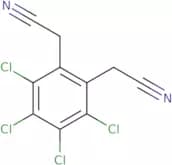
CAS:Please enquire for more information about 2,2'-(Perchloro-1,2-phenylene)diacetonitrile including the price, delivery time and more detailed product information at the technical inquiry form on this page
Formula:C10H4Cl4N2Purity:Min. 95%Molecular weight:293.96 g/mol



![2-[4-(2-Cyanoethylthio)methyl]thiazolyl guanidine](/_next/image/?url=https%3A%2Fstatic.cymitquimica.com%2Fproducts%2F3D%2Fthumb-webp%2FFC21486.webp&w=3840&q=75)