


Cyano-, Nitrile-
Cyano and nitrile compounds are organic molecules that contain cyano (C≡N) or nitrile groups in their structure, characterized by the presence of nitrogen. These groups play important roles in various chemical reactions and industrial applications. In this category, you will find a wide range of cyano and nitrile compounds, ranging from simple to complex structures. At CymitQuimica, we offer high-quality cyano and nitrile compounds tailored to meet research and industrial needs. Our compounds are suitable for a variety of synthesis and analytical applications.
Found 9674 products of "Cyano-, Nitrile-"
Sort by
Purity (%)
0
100
|
0
|
50
|
90
|
95
|
100
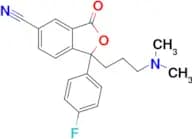
1-(3-(DIMETHYLAMINO)PROPYL)-1-(4-FLUOROPHENYL)-3-OXO-1,3-DIHYDROISOBENZOFURAN-5-CARBONITRILE
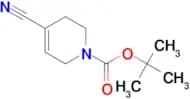
CAS:Purity:95.0%Molecular weight:338.3819885253906Tert-Butyl 4-cyano-5,6-dihydropyridine-1(2H)-carboxylate
CAS:Purity:95.0%Color and Shape:SolidMolecular weight:208.261001586914061-(Phenylsulfonyl)-1H-pyrrolo[2,3-b]pyridine-6-carbonitrile
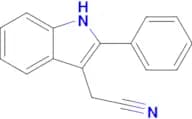
CAS:Purity:95.0%Molecular weight:283.309997558593752-(2-Phenyl-1H-indol-3-yl)acetonitrile
CAS:Purity:98%Color and Shape:SolidMolecular weight:232.285995483398441-Amino-3-p-tolyl-benzo[4,5]imidazo[1,2-a]pyridine-2,4-dicarbonitrile
CAS:Purity:95.0%Molecular weight:323.35900878906252-((7-(5-(Di-p-tolylamino)thiophen-2-yl)benzo[c][1,2,5]thiadiazol-4-yl)methylene)malononitrile
CAS:Purity:97%Molecular weight:489.61999511718751-Cyanotetraline
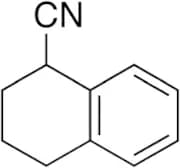
CAS:Controlled Product<p>Applications 1-Cyanotetraline is used in the synthesis of aldose reductase inhibitors. Also reductase enzymes are believed to catalyze the formation of sorbitol from glucose leading to the chronic complications of diabetes mellitus. It is also used in the synthesis of baclofen analogs, potent GABAB agonists.<br>References Sarges, R. et al.: J. Med. Chem., 31, 230 (1988); Mann, A. et al.: J. Med. Chem., 34, 1307 (1991);<br></p>Formula:C11H11NColor and Shape:Colourless LiquidMolecular weight:157.21Dibromoacetonitrile
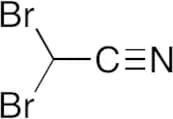
CAS:Controlled Product<p>Stability Light Sensitive<br>Applications Dibromoacetonitrile is a carcinogenic nitrogenous disinfection byproduct. Dibromoacetonitrile in drinking water was linked to oral cavity cancer in rats and forestomach cancer in mice. In addition, Dibromoacetonitrile may cause oxidative damage in rat brain.<br> Not a dangerous good if item is equal to or less than 1g/ml and there is less than 100g/ml in the package<br>References Guo, Z., et al.: Chem. Eng. J. 306, 1180 (2016); Krasner, S. W., et al.: Environ. Sci. Technol. 50, 9583 (2016); Natl Toxicol Program Tech Rep Ser. 544, 1 (2010); Klattisaksiri, P., et al.: Water Res 98, 160 (2016); Sayed, R. H., et al.: Environ Toxicol Pharmacol. 34, 849 (2012)<br></p>Formula:C2HBr2NColor and Shape:ColourlessMolecular weight:198.844-Methoxy-2-oxo-1,2-dihydropyridine-3-carbonitrile
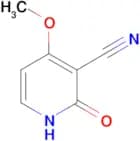
CAS:Formula:C7H6N2O2Purity:97%Color and Shape:SolidMolecular weight:150.1372-(5-Formyl-furan-2-yl)-benzonitrile
CAS:Formula:C12H7NO2Purity:95.0%Color and Shape:SolidMolecular weight:197.1932-{3-hydroxy-1H-cyclopenta[b]naphthalen-1-ylidene}propanedinitrile
CAS:Purity:97%Molecular weight:244.25300598144534-(Benzyloxy)picolinonitrile
CAS:Purity:95.0%Color and Shape:SolidMolecular weight:210.23599243164062Benzyl (2S)-4-(7-(8-chloronaphthalen-1-yl)-2-(methylsulfinyl)-5,6,7,8-tetrahydropyrido[3,4-d]pyrimidin-4-yl)-2-(cyanomethyl)piperazine-1-carboxylate
CAS:Purity:97%Molecular weight:615.1500244140625

![1-(Phenylsulfonyl)-1H-pyrrolo[2,3-b]pyridine-6-carbonitrile](/_next/image/?url=https%3A%2Fstatic.cymitquimica.com%2Fproducts%2F10%2Fthumb-webp%2FF541431.webp&w=3840&q=75)

![1-Amino-3-p-tolyl-benzo[4,5]imidazo[1,2-a]pyridine-2,4-dicarbonitrile](/_next/image/?url=https%3A%2Fstatic.cymitquimica.com%2Fproducts%2F10%2Fthumb-webp%2FF549602.webp&w=3840&q=75)
![2-((7-(5-(Di-p-tolylamino)thiophen-2-yl)benzo[c][1,2,5]thiadiazol-4-yl)methylene)malononitrile](/_next/image/?url=https%3A%2Fstatic.cymitquimica.com%2Fproducts%2F10%2Fthumb-webp%2FF762873.webp&w=3840&q=75)



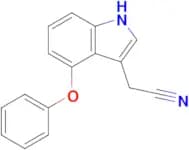
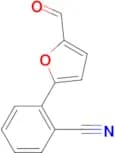
![2-{3-hydroxy-1H-cyclopenta[b]naphthalen-1-ylidene}propanedinitrile](/_next/image/?url=https%3A%2Fstatic.cymitquimica.com%2Fproducts%2F10%2Fthumb-webp%2FF621043.webp&w=3840&q=75)

![Benzyl (2S)-4-(7-(8-chloronaphthalen-1-yl)-2-(methylsulfinyl)-5,6,7,8-tetrahydropyrido[3,4-d]pyrim…](/_next/image/?url=https%3A%2Fstatic.cymitquimica.com%2Fproducts%2F10%2Fthumb-webp%2FF624157.webp&w=3840&q=75)
![5-Phenyl-7-hydroxypyrazolo[1,5-a]pyrimidine-3-carbonitrile](/_next/image/?url=https%3A%2Fstatic.cymitquimica.com%2Fproducts%2F10%2Fthumb-webp%2FF098187.webp&w=3840&q=75)